‘Coyote vs. Acme’ Ending Explained, and Why Wile E. Coyote’s Legal Defeat Might Be the Point


‘Coyote vs. Acme’ finally reached audiences on August 28, 2026, closing out one of the strangest sagas in recent studio history. The film comes from director Dave Green, with a screenplay by Samy Burch and a story credited to James Gunn, Jeremy Slater, and Burch, based on Ian Frazier’s original piece.
The movie centers on Wile E. Coyote deciding he has had enough of faulty products ruining his pursuit of the Road Runner, and instead of another rocket sled, he hires a lawyer. That premise, and the ending it builds toward, has become the subject of plenty of reader questions now that the film is actually playing in theaters.
Wile E. Coyote’s Lawsuit Against Acme
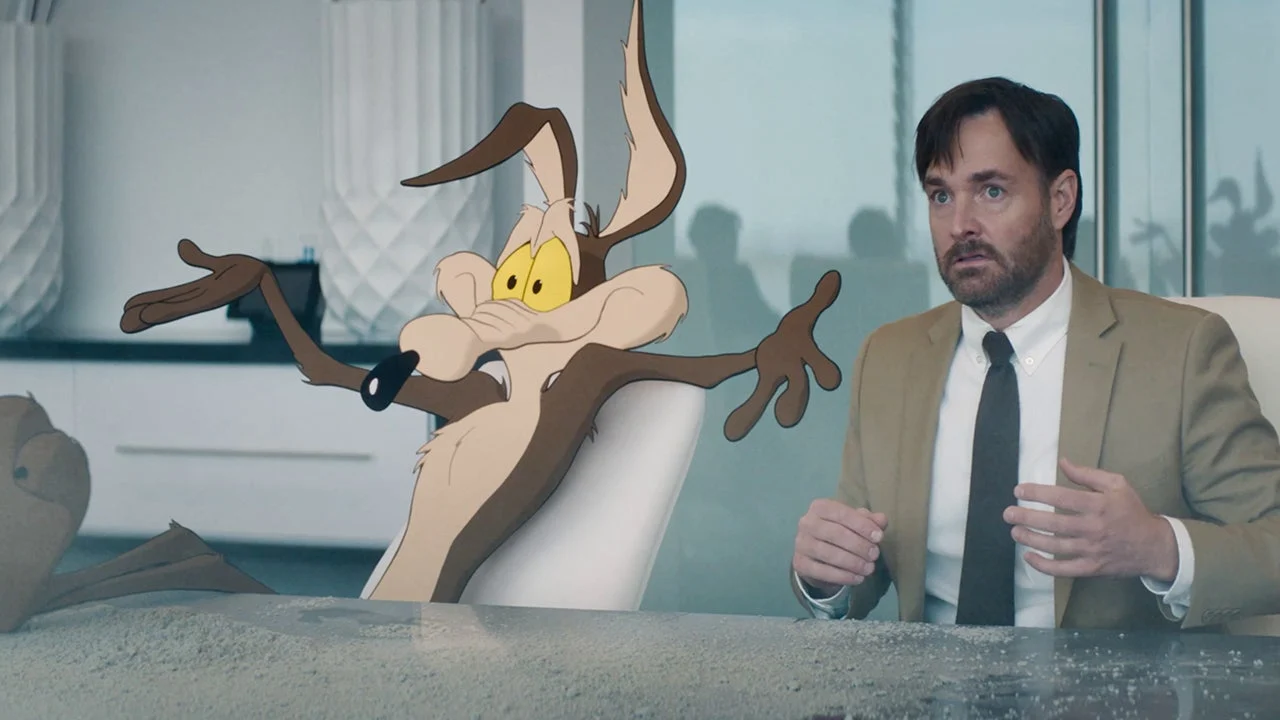
The film opens with a familiar routine, Wile E. Coyote chasing the Road Runner in another failed scheme, before pivoting into new territory. While plotting his next move, Wile E. sees a television commercial for an ambulance chasing lawyer named Kevin Avery, played by Will Forte, who offers his services to cartoon characters who feel they have been wronged, cheated, or blown up.
Looking around his lair at all the useless Acme products he has purchased, including rocket sleds and pogo powered shoes, Wile E. decides to contact Kevin to sue Acme for personal injury, mental suffering, and loss of business income. It is a simple hook, but one that lets the production lean into courtroom comedy while still honoring the character’s silent, slapstick roots.
The case pits Wile E. and his lawyer against Acme’s intimidating former boss, played by John Cena, though a growing friendship between man and cartoon strengthens the pair’s resolve to win. That dynamic, an unlikely alliance between a washed up attorney and a cartoon coyote, becomes the emotional spine of the story once the trial gets underway.
How the Courtroom Battle Plays Out
Without spoiling every beat, the ending hinges on whether Wile E. can actually prove Acme’s negligence in court. Despite the best efforts of Kevin and his co-counsel Paige, Coyote ends up losing his climactic case, and that loss is treated as crucial to the underlying moral of the movie.
Kevin takes a while to fully commit to the case, but his eventual faith in Wile E, combined with his frustration over the ways Acme manipulates the court system, pushes him to throw himself into the fight completely. That arc gives the human lead something closer to a redemption story rather than a straightforward legal procedural.
Even with testimony from Road Runner and a confession from Foghorn Leghorn admitting the company has been experimenting on cartoons, the government ultimately declines to pursue federal charges against Acme. It is a setback, though the heroes still walk away with their heads held high, partly because they manage to humiliate a pair of Acme executives by trapping them in a cage originally meant for the Road Runner.
The film’s central message ends up being that persistence matters even when it does not immediately pay off, which doubles as a fairly pointed commentary on corporations and the people who run them being willing to use their power against those with less of it. Several reviewers have noted that this thread reads as more than coincidental given the movie’s own history with a corporation.
Why the Film Was Shelved and Rescued
The path to release is arguably as dramatic as anything in the finished film. Warner Bros. Discovery announced in late 2023 that it would not release the completed picture at all, taking an estimated thirty million dollar tax write off on a seventy million dollar production, despite test screenings that scored fourteen points above the family movie norm.
The studio’s statement at the time cited a shift toward focusing on theatrical releases following the relaunch of Warner Bros. Pictures Animation, and the decision followed the earlier cancellations of ‘Batgirl’ and ‘Scoob! Holiday Haunt.’ Fans responded with sustained online campaigns, and the film’s own voice cast spoke publicly about the toll the shelving took.
Emmy winning voice actor Eric Bauza, who plays Wile E. Coyote, described the experience as an emotional rollercoaster, working on a movie only to see it shelved, while noting that social media outrage over Warner’s decision just might help save the film. That pressure eventually mattered. Deadline first reported that the film had been sold from Warner Bros. Pictures to Ketchup Entertainment in a deal reportedly worth around fifty million dollars, clearing the way for a 2026 release.
A credit at the end of the finished film dedicates it to everyone who posted, shared, held up signs, and spoke out when it counted, and reports from an advance screening describe that dedication being met with loud cheers. It is a rare instance of a shelved studio project actually making it back to theaters largely because audiences refused to let it go quietly.
Critical Reception of ‘Coyote vs. Acme’
Early reviews have been largely positive, with critics praising the blend of live action and animation as well as the film’s willingness to lean into genuine emotion rather than pure nostalgia. One review summed the film up as executed well enough that viewers may find themselves emotionally invested in Coyote’s never ending pursuit of the Road Runner, while another described it as a spot on metaphor for the little guy standing up to authority.
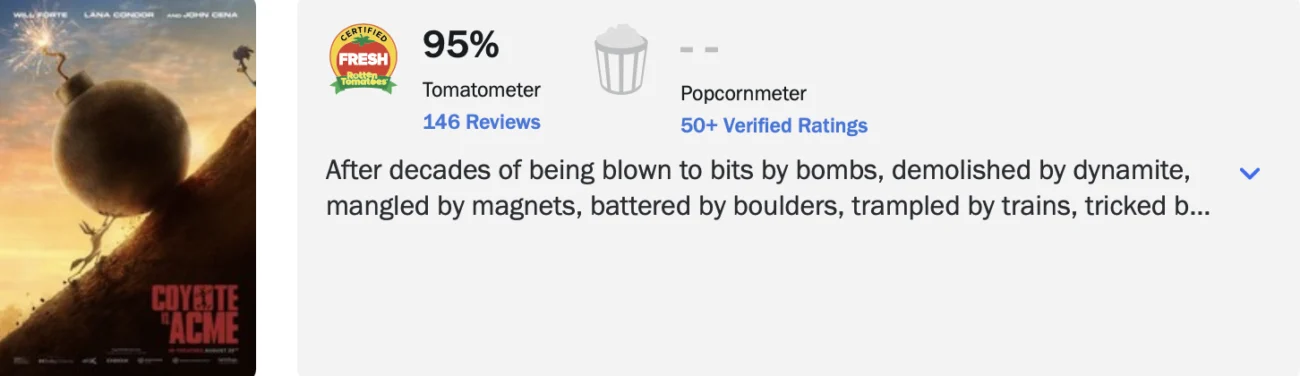
The Boston Globe called it a superb piece of filmmaking and a loving tribute to one of the most hapless Looney Tunes characters, noting there was no reason other than corporate greed for the movie to have been shelved in the first place. That framing has become common among critics covering the release, many of whom treat the film’s backstory as inseparable from its themes.
One detail that has drawn particular attention is a small joke buried in the opening credits, where the Warner Bros. logo is followed by a card reading that the studio is a fully owned subsidiary of the Acme Corporation, a wink that goes unmentioned again until a dedication in the closing credits. It is the kind of self aware touch that has helped the film stand out from a typical franchise revival.
Given how close ‘Coyote vs. Acme’ came to never reaching audiences at all, it feels fitting to ask what viewers made of watching Wile E. finally get his day in court, and whether his loss in that courtroom landed as the right ending for a character built on falling short.