


DC Heroes Shamelessly Ripped Off from Marvel



Comic book history is full of characters who look like they were cut from a familiar template. When one publisher strikes gold with a new kind of hero, another often answers with a figure who shares similar powers, aesthetics, or origin beats. Sometimes the timelines are close and sometimes they are years apart, but the family resemblance is hard to miss.
This list rounds up DC heroes who arrived after a very similar Marvel figure was already on the shelves. For each entry you will find who created them, where and when they first appeared, and what they can do. You will also see the earlier Marvel counterpart that set the pattern, along with the key parallels that link the pairs.
Aquaman

Aquaman debuted in More Fun Comics 73 in 1941, created by Mort Weisinger and Paul Norris. The character is the king of Atlantis, commands sea life through a form of telepathy, and moves with superhuman speed underwater while wielding a trident in many interpretations. His early stories focused on maritime rescues and undersea crime, later expanding into Atlantean politics and surface world alliances.
Marvel’s Namor the Sub-Mariner predates him, premiering in 1939. Namor is also an oceanic powerhouse from an advanced undersea civilization with enhanced strength, aquatic physiology, and a long history of surface conflict. Both characters operate as intermediaries between the deep and the surface world and front countless adventures rooted in oceanic settings and Atlantean style kingdoms.
Swamp Thing

Swamp Thing first appeared in House of Secrets 92 in 1971, created by Len Wein and Bernie Wrightson. The character is a plant element entity born from a scientist’s apparent death in a swamp, with abilities that include plant manipulation, regeneration, and environmental consciousness on a global scale. Later stories positioned him as an avatar of the Green, tying his powers to all plant life on Earth.
Marvel’s Man-Thing surfaced earlier the same year in Savage Tales 1. That creature also began as a scientist transformed in a swamp and possesses superhuman resilience and a connection to the environment. Both series use horror tones, tragic origins, and ecological themes, with transformations that leave each lead more monster than man while defending their swamplands.
Guardian

The Guardian arrived in Star-Spangled Comics 7 in 1942 from Joe Simon and Jack Kirby. Jim Harper is a Metropolis cop who dons a blue and gold suit, carries a shield, and protects his neighborhood alongside the Newsboy Legion. He has no superpowers, relying on peak conditioning and his emblematic shield for offense and defense.
Marvel’s Captain America predates him from 1941 with the iconic shield, patriotic color scheme, and street level to wartime missions. Both are human heroes who use a round shield as signature equipment and fight crime with a disciplined tactical style, with origins tied to creators who worked on both sides of the aisle during that era.
Cyborg

Cyborg made his debut in DC Comics Presents 26 in 1980, created by Marv Wolfman and George Pérez. Victor Stone survives a catastrophic accident through advanced cybernetic augmentation from S. T. A. R. Labs, gaining super strength, built in weapons, and a direct interface with computers. He is a core member of the Teen Titans and later the Justice League, often serving as a technology hub for his teams.
Marvel’s Deathlok appeared earlier in 1974 in Astonishing Tales 25 as a cybernetically enhanced soldier. Both characters center on the fusion of human and machine, with ethics and identity challenged by prosthetic weaponry and computer integration. Their stories frequently explore government projects, experimental procedures, and the costs of turning a person into hardware.
Steel

Steel as John Henry Irons entered continuity in The Adventures of Superman 500 in 1993 from Louise Simonson and Jon Bogdanove. A brilliant engineer, he forges a powered suit with flight, strength amplification, and a large hammer, stepping up as a protector of Metropolis during a crisis. His narrative often highlights responsibility, engineering ingenuity, and community defense.
Marvel’s Iron Man dates to 1963 in Tales of Suspense 39 with a genius inventor who fights in an armored suit of his own design. Both heroes are engineers who build high tech armor to compensate for the lack of innate powers, and both suits feature flight, durability, and energy systems that enable frontline heroics in urban and global threats.
Red Hood

Jason Todd resumed life as Red Hood in Batman 635 in 2005 after a long absence from Gotham’s streets. The character uses tactical gear, firearms, and combat training to pursue crime with aggressive methods, creating friction with former allies. His return involved covert manipulation and a mystery around identity before an eventual reveal.
Marvel’s Winter Soldier emerged earlier in 2005 in Captain America vol. 5 issue 1 as a resurrected former sidekick turned covert operative. Both stories revive a presumed dead protégé and reintroduce him as a masked figure tied to clandestine programs and darker methods. Each journey traces brainwashing, deprogramming, and a complicated path back to uneasy alliances.
Vixen

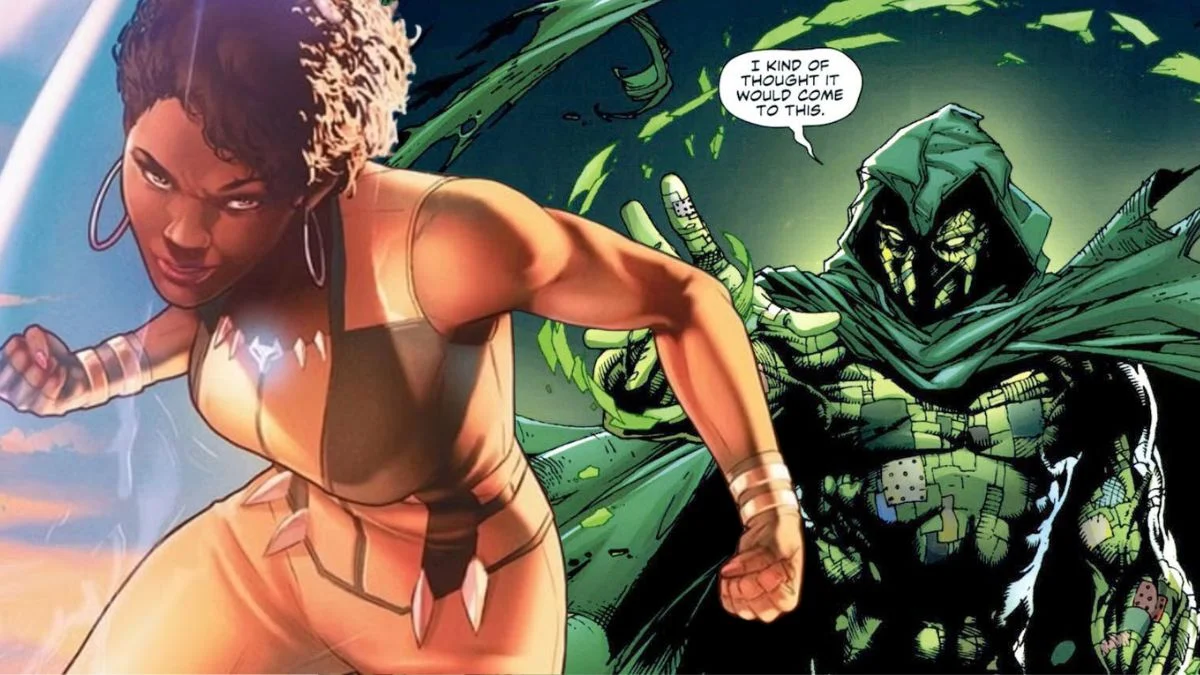
Vixen first appeared in Action Comics 521 in 1981, created by Gerry Conway and Bob Oksner. Mari McCabe channels the abilities of the animal kingdom via the Tantu Totem, allowing her to mimic speed, strength, flight, and senses of a wide range of creatures. Her adventures weave fashion world settings with international missions and Justice League work.
Marvel’s Black Panther originated in 1966 in Fantastic Four 52 as a royal hero whose identity and power are tied to a culturally significant artifact and ancestral tradition. Both heroes connect to African heritage and use a totemic power framework, with stories that balance modern urban life and global threats while showcasing agility, tactical prowess, and leadership.
Katana

Katana debuted in The Brave and the Bold 200 in 1983 from Mike W. Barr and Jim Aparo. Tatsu Yamashiro wields the Soultaker, a sword said to contain the spirits of its victims, and she brings expert martial arts and disciplined ethics to teams like the Outsiders and the Birds of Prey. Her narratives frequently involve revenge, restitution, and honor codes.
Marvel’s Elektra appeared earlier in 1981 in Daredevil 168 as a master assassin with exceptional sword and sai proficiency. Both characters are elite close quarters fighters with deep ties to East Asian training and clandestine operations. Their stories often feature personal loss, organized crime, and redemption through focused mission work.
Black Lightning

Black Lightning launched in Black Lightning 1 in 1977, created by Tony Isabella and Trevor Von Eeden. Jefferson Pierce commands bioelectric generation and manipulation, enabling ranged attacks, enhanced movement, and protective fields. He is also an educator and community figure who combats crime in neighborhoods often overlooked by larger organizations.
Marvel’s Luke Cage began in Hero for Hire 1 in 1972 as a street level powerhouse rooted in urban communities. While powers differ, both heroes were developed to headline solo series centered on inner city settings and social realities. Each title foregrounds crime prevention at the neighborhood scale and leadership roles beyond costumed battles.
Lobo

Lobo arrived in Omega Men 3 in 1983 from Roger Slifer and Keith Giffen. The character is an interstellar bounty hunter with extreme strength, regeneration, and a penchant for chaotic pursuits across space. He regularly crosses paths with cosmic teams and operates on jobs that put him at odds with heroes and villains alike.
Marvel’s Wolverine predates him from 1974 in The Incredible Hulk 180 and 181 as a compact, ferocious fighter with accelerated healing and a rough edge that translated into antihero missions. Both figures embody hard charging combat styles, rapid recovery, and frequent off world or covert assignments. Their publication histories showcase popularity driven team guest spots and solo runs with a focus on gritty action.
Ragman

Ragman first appeared in Ragman 1 in 1976 from Robert Kanigher and Joe Kubert. Rory Regan wears a suit composed of rags imbued with spiritual properties that can absorb the souls of evildoers, granting enhanced agility and strength. His stories blend folklore, mysticism, and neighborhood vigilantism rooted in family legacy.
Marvel’s Moon Knight showed up earlier in 1975 in Werewolf by Night 32 as a vigilante operating with occult and urban crime elements. Both characters patrol city streets at night while weaving supernatural motifs into street level justice. Their narratives feature morally complex foes, haunted artifacts, and identities shaped by trauma and duty.
Fire

Fire began as Green Fury in Super Friends 25 in 1979 and later took the name Fire, created by E. Nelson Bridwell and Ramona Fradon. Beatriz da Costa generates green flame that supports flight, blasts, and a fiery aura, often serving with the Justice League International. Her background touches on espionage and media work, broadening her mission contexts.
Marvel’s Human Torch existed decades earlier, with the modern version appearing in 1961 in Fantastic Four 1. Both characters ignite their bodies to create offensive flames and aerial mobility. Team dynamics and public facing roles are prominent in their stories, with missions that test control of volatile energy on crowded urban stages.
Atom Smasher

Atom Smasher started as Nuklon with early appearances in 1983 before adopting the Atom Smasher name, created by Roy Thomas and Jerry Ordway. He can increase his size and mass, gaining proportional strength and durability, and has served with Infinity Inc and the Justice Society. His arcs often examine responsibility when power literally grows beyond normal limits.
Marvel’s Giant-Man identity for Hank Pym goes back to 1963 in Tales to Astonish 49. Both characters are size changing heroes whose abilities enable heavy lifting, battlefield area control, and quick scaling between covert and overt roles. Their histories include team service and scientific or mentorship ties within their respective communities.
B’wana Beast

B’wana Beast debuted in Showcase 66 in 1967 from Bob Haney and Mike Sekowsky. Mike Maxwell gains a helmet and elixir that grant animal communication, enhanced strength, and a unique power to fuse two animals into a new hybrid creature. His adventures take place in jungle regions with conservation and anti-poaching themes.
Marvel’s Ka-Zar returned to comics in the silver age in 1965 within X-Men 10 as a jungle lord who partners with a powerful big cat and protects a remote prehistoric land. Both characters are tied to wilderness domains and animal alliances, operating in stories that emphasize survival skills, ecological threats, and guardianship over endangered habitats.
Dr. Light (Kimiyo Hoshi)

Dr. Light appeared in Crisis on Infinite Earths 4 in 1985, created by Marv Wolfman and George Pérez. Kimiyo Hoshi manipulates light across the electromagnetic spectrum, creating constructs, blinding flashes, and energy beams, while also working as an accomplished scientist. She has served on the Justice League and contributed expertise on space and physics driven missions.
Marvel introduced Monica Rambeau in 1982 in The Amazing Spider-Man Annual 16 with the ability to transform into and control various forms of energy, including light. Both characters are scientists linked to photonic powers with roles on major teams and space adjacent operations. Their stories highlight leadership, technical problem solving, and the tactical use of light based abilities.
Azrael

Azrael entered in Batman: Sword of Azrael 1 in 1992 from Dennis O’Neil and Joe Quesada. Jean-Paul Valley is trained by a secret order and augmented through conditioning, wielding the flaming Sword of Sin and advanced combat techniques. His tenure includes a period acting as Gotham’s primary costumed defender and later solo missions focused on dismantling conspiracies.
Marvel’s Punisher arrived earlier in 1974 in The Amazing Spider-Man 129 as a highly trained vigilante who employs lethal tactics, military hardware, and covert strategies against organized crime. Both characters bring a more severe approach to crime fighting, with training by shadowy organizations and equipment that shifts superheroics toward paramilitary methods. Their publication runs explore moral boundaries, indoctrination, and the struggle to reclaim personal agency.
Starfire
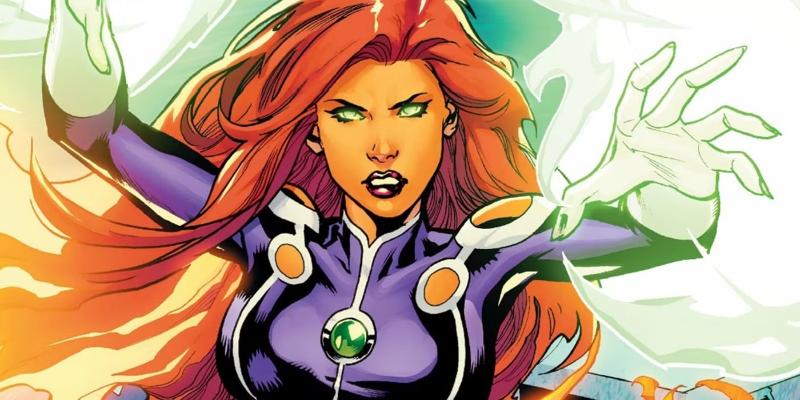
Starfire joined DC canon in DC Comics Presents 26 in 1980 from Marv Wolfman and George Pérez. Koriand’r is an alien warrior princess from Tamaran who absorbs solar energy to fly and project starbolts, and she is closely associated with the Teen Titans. Her stories balance interstellar politics, cultural displacement, and alliance building on Earth.
Marvel’s Carol Danvers existed earlier as an Air Force officer in 1968 and later operated as Ms. Marvel beginning in the 1970s, with energy absorption and projection alongside flight. Both are energy powered flyers with ties to military and cosmic storylines, and both carry arcs that navigate identity, exile, and leadership within team centric titles.
Share your picks in the comments and tell us which other DC heroes you think clearly echo an earlier Marvel template.