


Did You Know These 10 Things About ‘Jurassic Park III’?

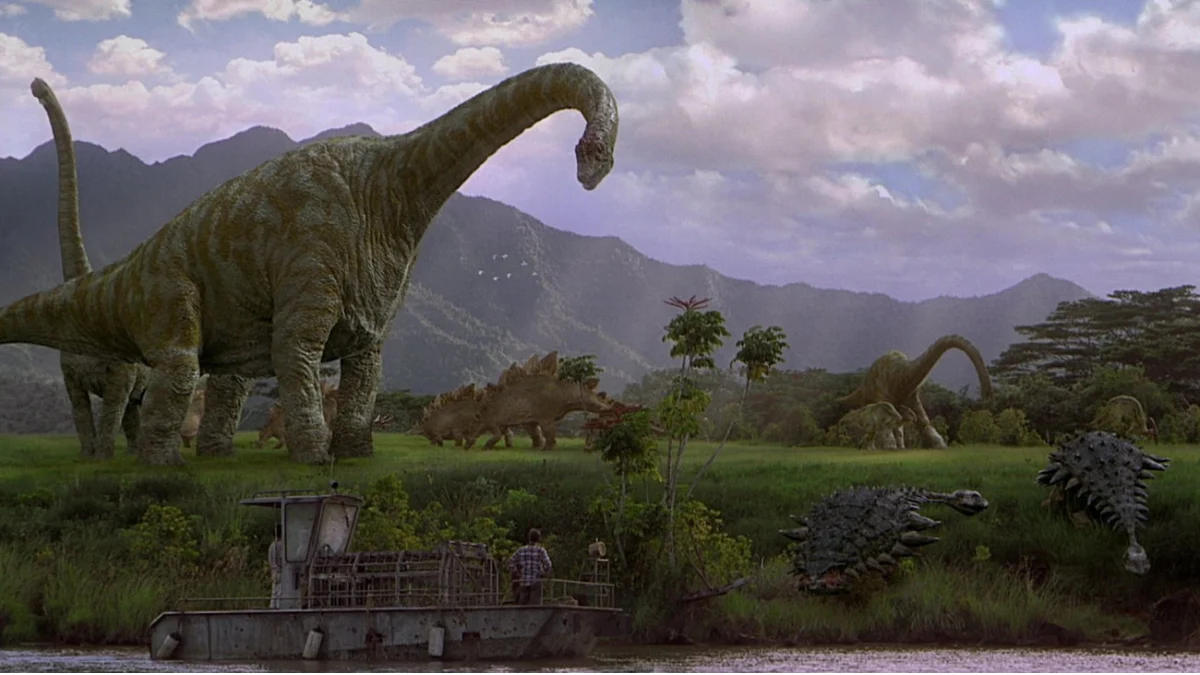


When ‘Jurassic Park III’ premiered in 2001, it delivered a faster, leaner dinosaur adventure that focused more on action and survival than scientific wonder. Directed by Joe Johnston, the film followed Dr. Alan Grant’s reluctant return to Isla Sorna after being tricked into helping a desperate couple search for their missing son. With new dinosaurs, relentless chase scenes, and practical effects, it brought fans back into the chaos of Jurassic Park in thrilling fashion.
Although it was smaller in scale than Steven Spielberg’s first two films, ‘Jurassic Park III’ carved out its own identity with darker tones and new prehistoric stars. Here are ten things you might not know about ‘Jurassic Park III’.
Joe Johnston Took Over Directing Duties

After directing the first two films, Steven Spielberg handed the reins to Joe Johnston, who had long expressed interest in directing a Jurassic sequel.
Spielberg stayed involved as executive producer, but Johnston brought a more horror-like, stripped-down intensity to the franchise.
The Script Changed Constantly During Filming

The screenplay went through multiple rewrites, even while scenes were being shot.
Writers reshaped the story to emphasize non-stop tension and survival over lengthy exposition or moral themes.
The Spinosaurus Replaced the T. Rex as the Main Predator

The new apex predator, Spinosaurus, was introduced as even larger and more dangerous than the T. Rex.
Its shocking battle with the T. Rex early in the film made it clear that a new king ruled Isla Sorna.
Sam Neill Returned as Dr. Alan Grant

After skipping ‘The Lost World,’ Sam Neill returned as Dr. Grant, once again bringing his skeptical, grounded energy to the story.
His character’s experiences and lingering trauma from the first film added emotional weight to the adventure.
The Raptors Were Redesigned for Accuracy

The velociraptors featured new color patterns, quills, and updated designs based on evolving paleontological theories.
They were also shown to communicate through vocalizations, highlighting their intelligence and social structure.
The Pteranodon Aviary Was a Standout Sequence

The scene inside the massive birdcage-like aviary became one of the film’s most memorable moments.
It was inspired by a scene left out of the original ‘Jurassic Park’ novel and finally brought to life in this installment.
Animatronics Played a Big Role

Stan Winston’s team created some of the most advanced animatronic dinosaurs ever made at the time.
The Spinosaurus animatronic was enormous, capable of moving its head, body, and tail independently in real water.
The Kid Survived Eight Weeks on the Island

Eric Kirby, the 12-year-old boy the group came to rescue, had survived on Isla Sorna for nearly two months.
He used resourcefulness and dinosaur knowledge to stay alive, making him one of the series’ toughest human characters.
It Was the Shortest Film in the Trilogy

At about 92 minutes, ‘Jurassic Park III’ was significantly shorter than the previous two entries.
This tight runtime kept the pacing brisk and focused entirely on suspense and action.
It Performed Well Despite Mixed Reviews

While some fans missed Spielberg’s sense of awe, the film still earned nearly $370 million worldwide.
Its success proved that audiences were still eager for dinosaur mayhem, paving the way for the later ‘Jurassic World’ series.
What fact about ‘Jurassic Park III’ did you find the most surprising? Share your thoughts in the comments!