


15 Fastest Star Trek Ships (Ranked from Slowest to Fastest)

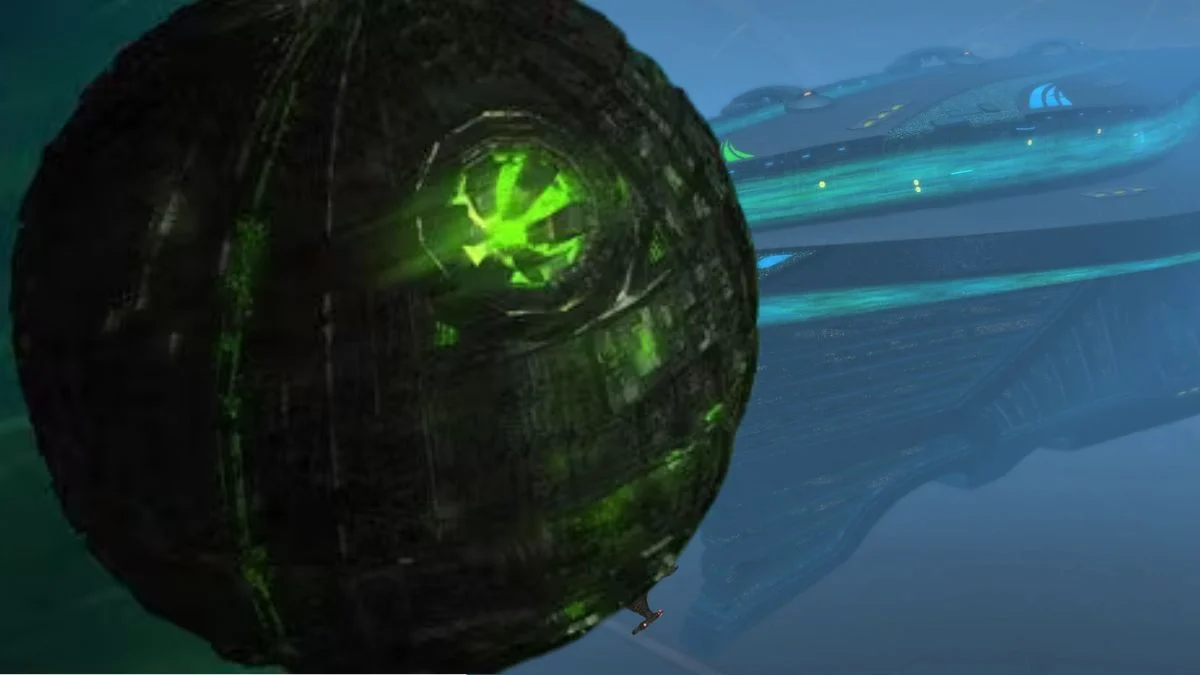


From classic Federation workhorses to wild experimental drives, Star Trek ships have used everything from refined dilithium to living mycelial networks to cross impossible distances. This countdown starts with high performance warp cruisers and moves through transwarp, slipstream, and more exotic systems until we hit near instant travel. Each entry focuses on what the ship has actually shown on screen or been stated to achieve, so you can trace how speed escalates across the franchise.
Defiant-class (USS Defiant)
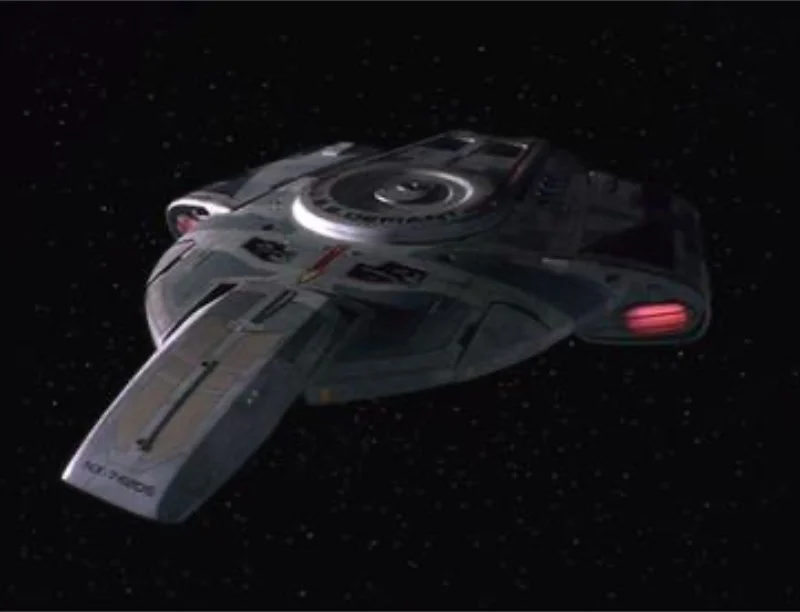
Designed as a compact escort, the Defiant-class is built around a powerful warp core that lets it keep up with larger explorers. On screen it is shown cruising comfortably at high warp during deployments between Deep Space 9 and Federation territory. Its compact frame and high power density help with quick accelerations to tactical warp speeds during combat maneuvers. Although not the absolute peak of warp performance, it routinely operates at the upper end of conventional warp travel for its era.
D’deridex-class Romulan Warbird
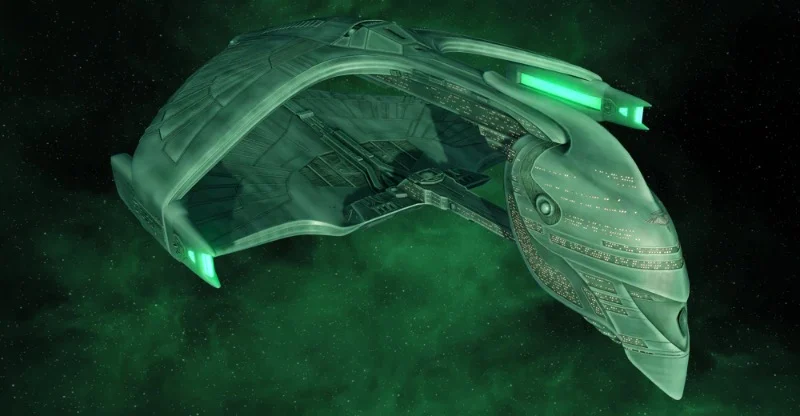
The D’deridex uses an artificial quantum singularity as its power source, which gives it substantial endurance at high warp. Romulan patrols and rapid border responses in ‘The Next Generation’ establish that this huge ship can sustain long range warp transits without frequent stops. Tactical retreats and pursuits show it matching or outpacing contemporary Galaxy-class cruisers when needed. Its mass limits agility but not straight line warp speed over interstellar distances.
Galaxy-class (USS Enterprise-D)

The Galaxy-class is built for long range exploration with sustained high warp and roomy fuel reserves. Episodes depict multi-sector responses within short timeframes, indicating efficient high warp cruising over vast areas. Emergency runs push the ship to its redline for brief periods when lives are at stake. Technical dialogue across the series consistently places it among the fastest standard-warp vessels of its generation.
Intrepid-class (USS Voyager)
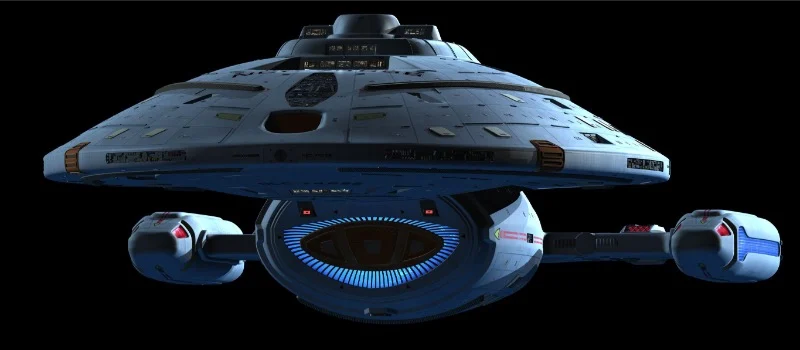
The Intrepid-class features variable geometry warp nacelles that reduce subspace stress and raise top-end efficiency. ‘Voyager’ repeatedly performs long stints at very high warp while stranded far from Federation support. The ship’s compact frame and advanced computers allow precise field tuning that helps it sustain near-ceiling warp factors for extended legs. Multiple episodes record unusually quick interstellar hops compared with earlier Starfleet explorers.
Sovereign-class (USS Enterprise-E)

Starfleet’s later flagship platform carries a next-generation warp core and tightly engineered plasma systems for extreme performance. On screen it performs rapid redeployments across Federation space, often arriving far sooner than older designs could. The class is repeatedly tasked with crisis response, implying confidence in both its speed and endurance. Its nacelle design and field stability place it at the top tier of conventional warp ships.
Prometheus-class
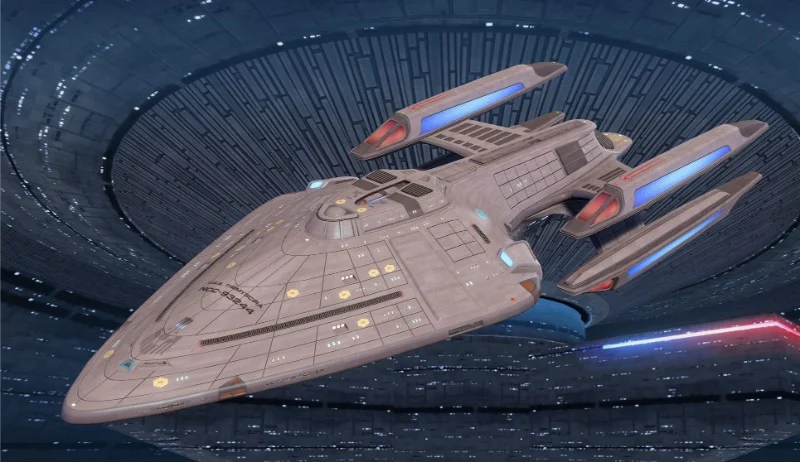
The Prometheus prototype introduces advanced automation and a lightweight spaceframe optimized for pursuit. Field tests and a rogue hijacking show it executing rapid sector-to-sector jumps while remaining battle ready. Systems integration across its split sections keeps warp fields aligned during multi-vector flight, which demonstrates unusual efficiency. Its published capabilities and on screen performance mark it as one of Starfleet’s quickest pure warp platforms.
Krenim Temporal Weapon Ship
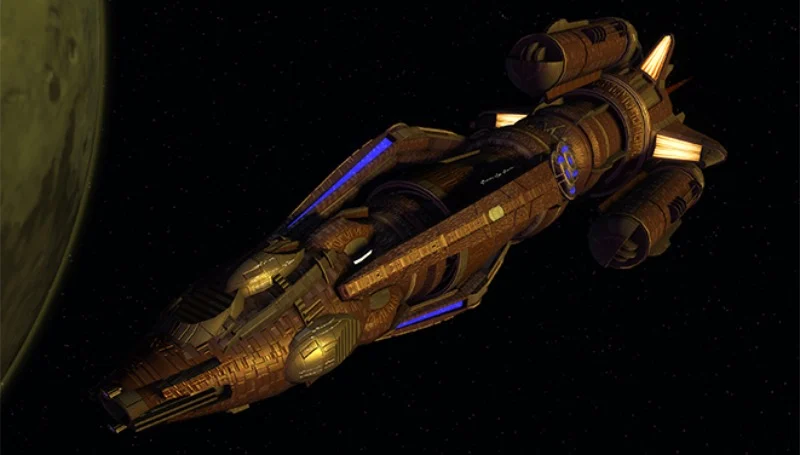
Although known for time manipulation, the Krenim vessel also exhibits very high strategic mobility while hunting targets across wide regions. Its long campaign distances and quick reappearances indicate strong warp performance supporting its temporal systems. The ship’s infrastructure maintains power hungry operations during extended deployments without visible slowdown. Its ability to reposition rapidly is central to how it executes repeated timeline alterations.
Voth City Ship
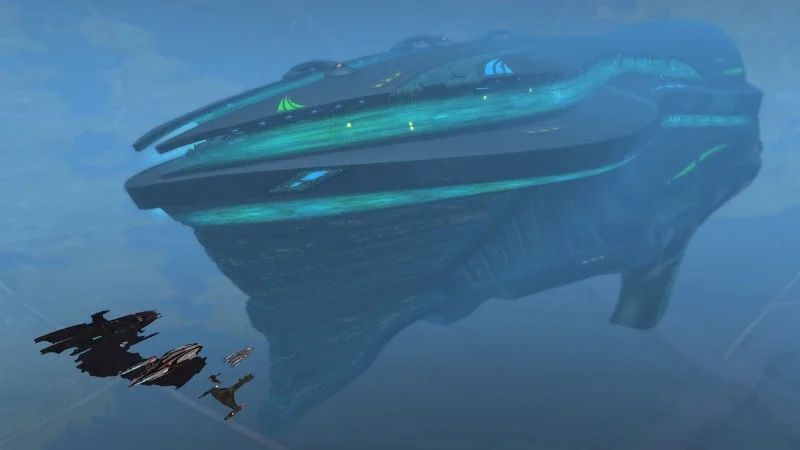
The Voth operate a massive city-sized vessel with independent transwarp capability. Encounters in the Delta Quadrant show it crossing huge spans to intercept targets with little warning. Its internal ecosystem and industrial base suggest energy reserves that comfortably support repeated transwarp jumps. The scale and reach displayed on screen place it well above conventional warp fleets.
Borg Cube

Borg Cubes routinely use transwarp conduits to appear anywhere from the Delta Quadrant to the Federation core with minimal transit time. Multiple series depict Cubes engaging in near strategic-level teleport across the galaxy via the network. Even outside conduits, a Cube’s raw power lets it hold extreme velocities for long periods. Their logistical reach depends on this speed, allowing rapid reinforcement and relentless pursuit.
Borg Sphere

Spheres share the Cube’s access to the transwarp network and often act as fast couriers or scouts. They are shown exiting conduits directly into target star systems with almost no delay. Their smaller mass and optimized shape contribute to quick acceleration and nimble high warp maneuvers. On missions requiring urgent retrieval or insertion, Spheres consistently arrive with startling speed.
Species 8472 Bioship
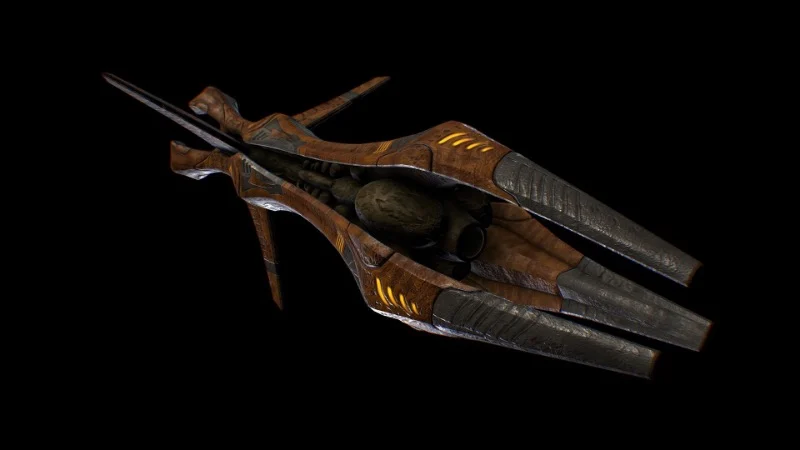
These organic ships traverse fluidic space and enter normal space with remarkable velocity. Engagements with the Borg reveal rapid system-to-system appearances that overwhelm opponents before they can react. The bioships generate enormous power for sudden bursts and sustained chases alike. Their unique medium and drive physics put them beyond the limits of standard warp or transwarp benchmarks.
USS Dauntless (Quantum Slipstream)

The Dauntless showcases quantum slipstream, a drive that forms a focused quantum field for ultra fast transit. In ‘Voyager’, this ship demonstrates point to point travel over distances that would take years at warp. Slipstream requires precise phase adjustments, but when tuned correctly it slashes travel times to a fraction of conventional methods. Its demonstration proves a practical path far beyond standard warp velocities.
USS Voyager with Quantum Slipstream
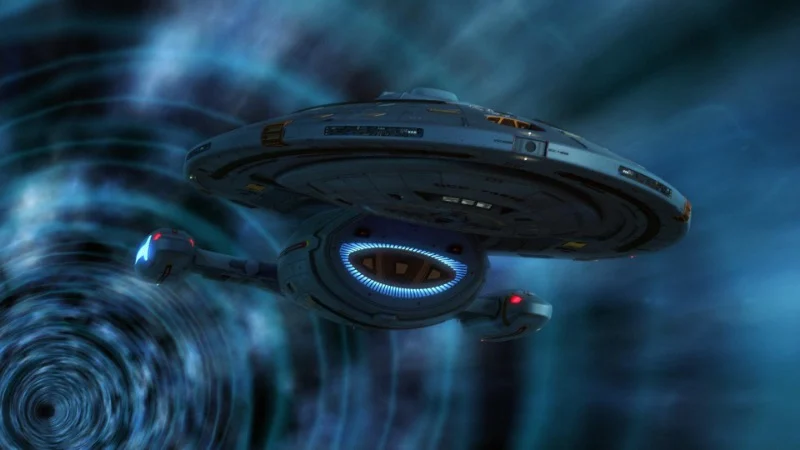
Voyager briefly equips a homebuilt slipstream drive using benamite crystals and advanced field control. In ‘Timeless’ and other references, test runs cover hundreds of light years in minutes before stability issues intervene. The crew documents how slight phase errors can collapse the corridor, which limits routine use despite the speed. The results confirm that even a retrofitted Intrepid can achieve extreme slipstream performance.
USS Protostar
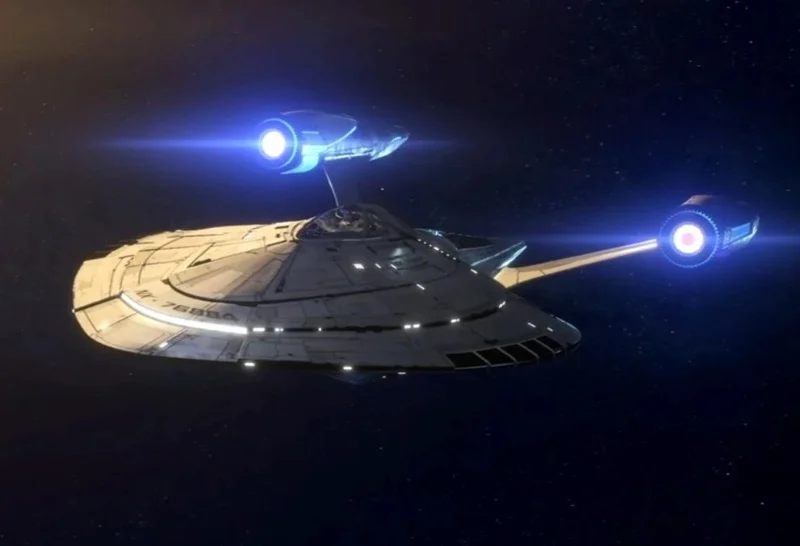
The USS Protostar carries a compact protostar engine that triggers a proto-warp jump with extraordinary range. ‘Star Trek: Prodigy’ shows the ship executing leaps that outclass known slipstream demonstrations. The drive’s energy density and quick spin-up let the crew reposition across quadrants with minimal warning. Its combination of acceleration and jump length places it among the fastest vessels ever fielded by Starfleet.
USS Discovery (Spore Drive)

Discovery’s experimental spore drive navigates the mycelial network to move from coordinate to coordinate almost instantly. Throughout ‘Star Trek: Discovery’, the ship appears inside distant systems in the time it takes to execute a single jump. The system bypasses normal space, so there is no warp factor to compare, only near instantaneous relocation. As demonstrated on screen, no other operational ship travels faster between two points.
Share which ship you think deserves the top spot in the comments.