


‘Frozen’ Mistakes You’ll Never Be Able to Unsee




Even a huge hit like ‘Frozen’ is packed with tiny continuity slips and animation shortcuts that many viewers miss on the first watch. Once you know where to look, you start seeing how different shots were stitched together, how digital hair and snow are managed, and how the animators sometimes bend physics or geography to keep a musical number flowing smoothly. These moments don’t change the story, but they do give a peek behind the curtain at how complex computer-animated movies really are. Here are some of the most talked-about glitches and goofs hiding in plain sight in Arendelle.
Elsa’s Braid Phasing Through Her Shoulder
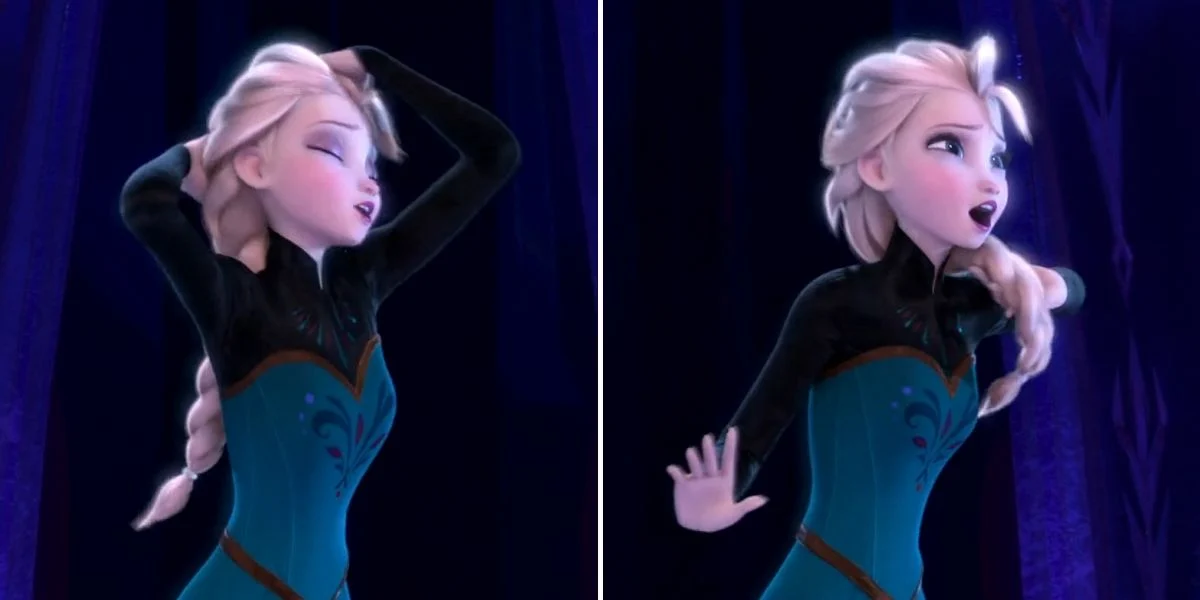
During the ‘Let It Go’ sequence, Elsa pulls her loose hair into a braid and swings it from behind her back to over her shoulder, but the braid passes straight through her shoulder instead of flipping over it. This is an example of a common CG issue called geometry “clipping,” where one 3D object intersects another instead of colliding realistically. Elsa’s hair was famously complex, with hundreds of thousands of individual strands driven by advanced simulation tools, which increases the chance of intersections like this in fast movements. Animators sometimes choose a minor intersection rather than risk breaking a shot’s performance, especially in a big musical moment. In interviews and fan discussions, people working with the film’s assets have even explained that the controls for her hair, dress, and body made it easier to accept the intersection and frame it so most viewers wouldn’t notice.
Kristoff’s Lute With a Missing Tuning Peg
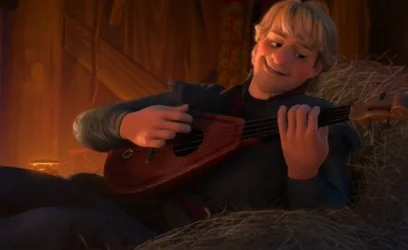
When Kristoff sings to Sven with his little lute before meeting Anna, the instrument shows four strings but only three tuning pegs. Stringed instruments normally have one peg per string so each can be tuned independently, which makes this design inconsistent with real-world construction. The likely explanation is that the 3D model for the lute was simplified or adjusted for silhouette and readability, and the mismatch slipped through review. Small props like this are often lower priority in a shot, since the audience is meant to focus on the character’s face and acting. Later in the film, the instrument gets used as a visual gag and then disappears entirely, which means there was little incentive to refine its design after initial approval.
The Disappearing Safety Rope on the Cliff
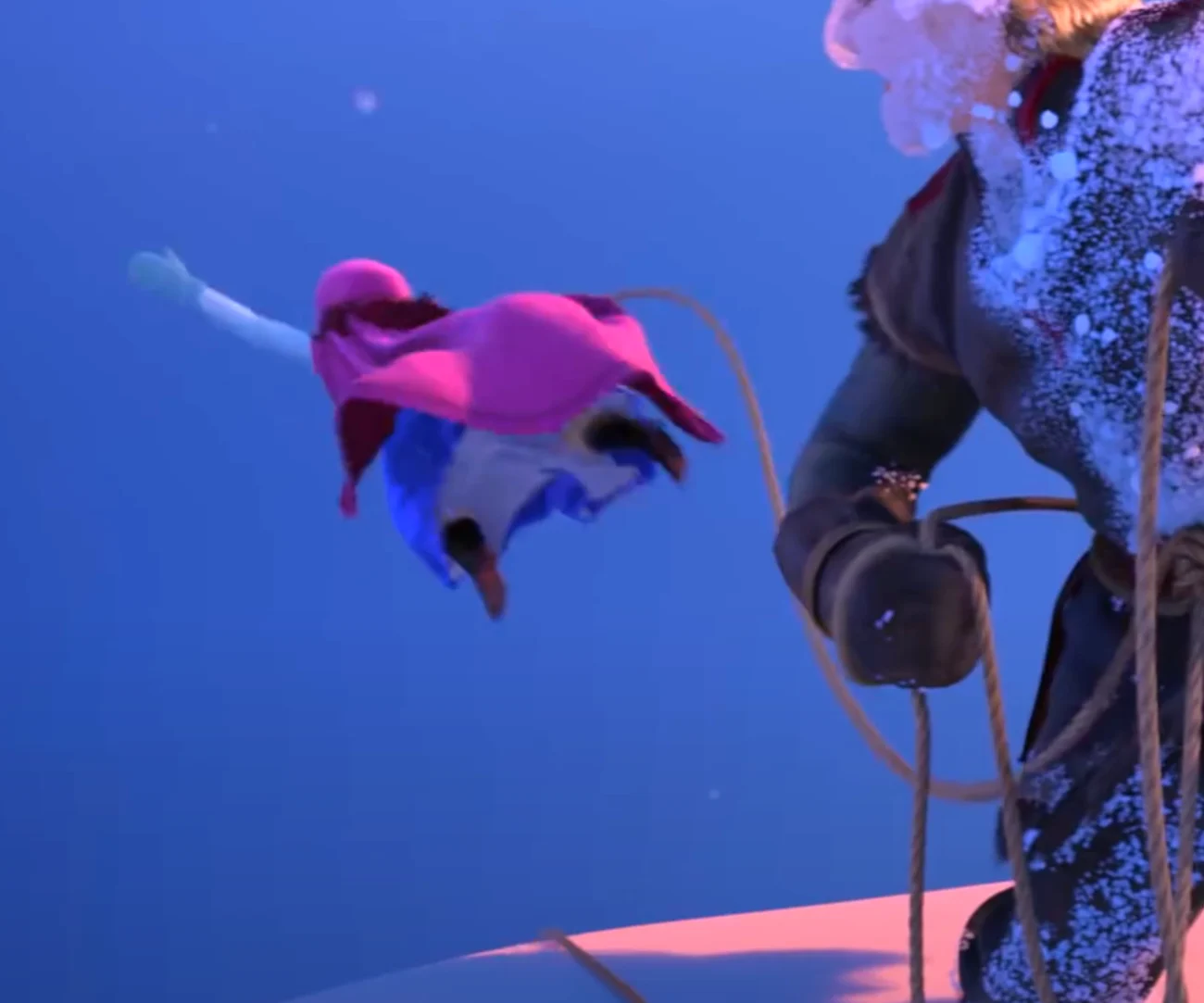
During the wolf chase, Anna and Kristoff are roped together on the sled as they race across the snowy landscape. When they crash and fall off the cliff, several shots clearly show the rope still tying them as they tumble through the air. Once they land in the snow, however, that rope is suddenly gone, and neither character has to untie or remove it. This kind of continuity problem often happens when action scenes are storyboarded for drama first and only later checked for prop consistency. Because each shot is animated separately, a missing element like a rope can vanish if it is not consistently tracked in the layout and animation notes.
Anna’s Ever-Moving Hair on the Sled
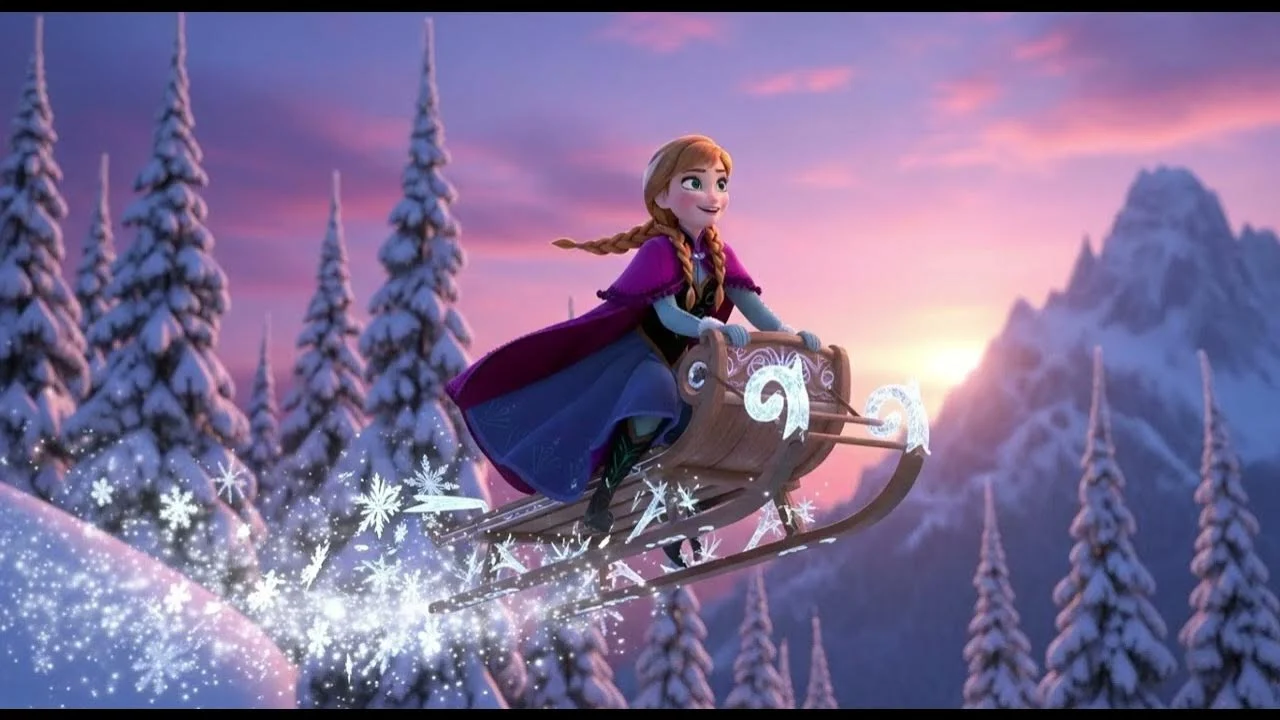
In one sled shot with Anna and Kristoff, Anna’s hair is shown streaming behind her, consistent with the wind of their high-speed ride. In the immediate next shot, her hair has shifted to lie neatly over the front of her shoulders, without any transition. Hair in CG films is controlled by a mix of simulation and manual posing, and artists sometimes “pose” hair to keep a character’s face visible or to match a composition. When shots are animated by different artists or at different times, those hair poses can end up inconsistent if they’re not tracked as a shared reference. The result is a small continuity jump that most viewers skim over because their attention is on dialogue and action rather than on hair placement.
The Vanishing Torch During the Wolf Chase
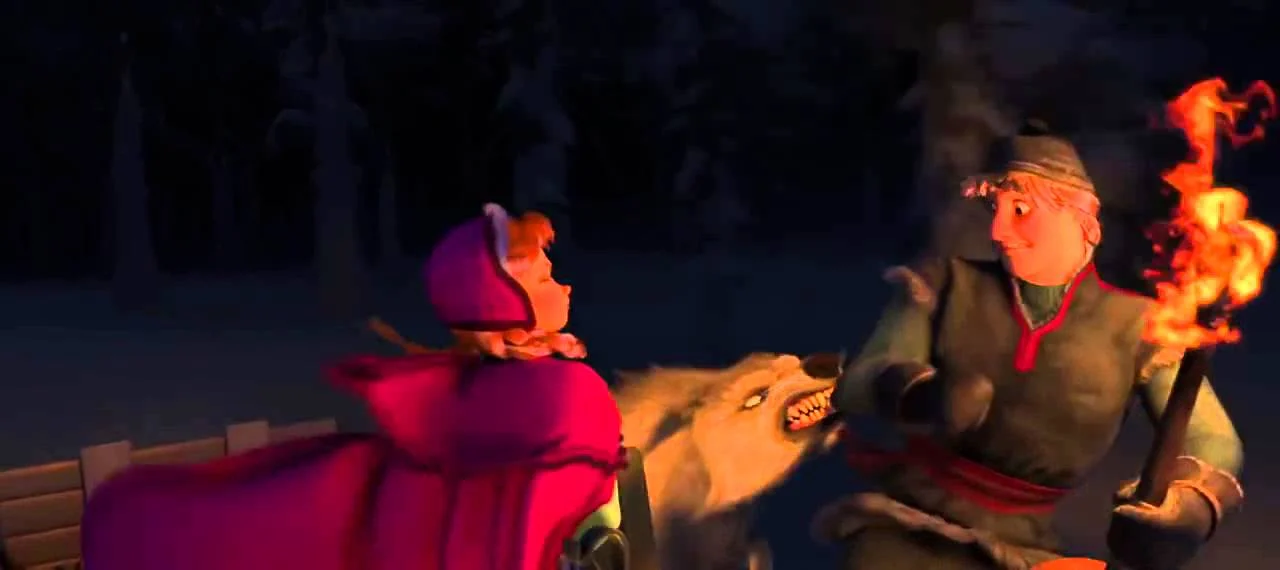
Still in the wolf-attack sequence, Anna lights Kristoff’s sleeping bag with a torch and throws the torch down to cut the rope and save him. In one shot, the burning torch lands on the sled, which sets up the destruction of Kristoff’s beloved vehicle. In the very next wide shot of the sled racing ahead, the torch is nowhere to be found, even though it should still be burning on the surface. Animators and lighters often remove or relocate light sources like flames when they complicate the look of a shot or distract from key action beats. Here, the important story beat is the sled’s loss, so the torch’s specific position and visibility were likely considered less important than keeping the overall action readable.
The Wind That Only Blows Indoors at Wandering Oaken’s
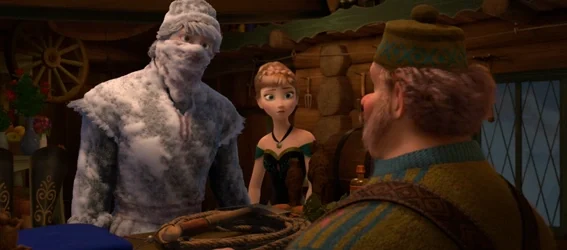
Outside Wandering Oaken’s Trading Post, the weather looks surprisingly calm, with very little visible wind or storm activity. Once Anna and Kristoff go inside, however, the door slams shut behind each of them with loud howling wind, as though a blizzard is raging right outside. This mismatch comes from the way sound design and visuals are sometimes developed on different schedules, with audio teams emphasizing drama with exaggerated environmental sounds. Artists creating exterior shots may prioritize composition and character animation over matching every sound effect precisely. The contrast between the quiet snow outside and the stormy sound inside is a reminder that movie soundscapes are designed more for emotional impact than strict meteorological accuracy.
Reflections That Ignore the Rules of Geometry
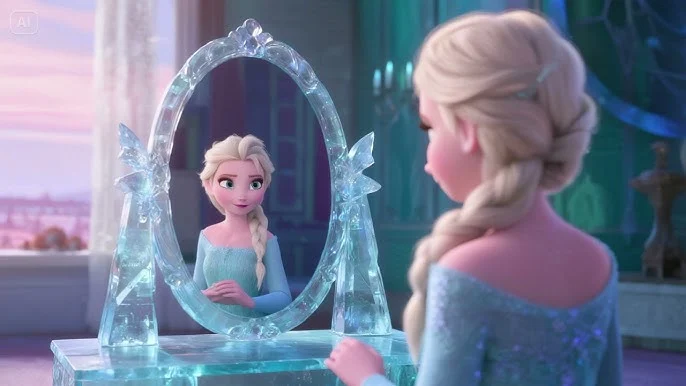
Inside Elsa’s ice castle, Anna climbs an ice staircase flanked by large pillars and walls of ice that act like mirrors. At one point, Anna’s reflection appears to face the camera almost straight-on, even though the reflective surface is off to her side, which doesn’t match how a real mirror would reflect her. Reflections in CG are generated by the rendering engine, but artists can tweak surfaces and shading so characters remain visible and appealing. In tight spaces, they may choose a reflection angle that keeps facial expressions readable rather than obeying precise ray-tracing geometry. This means the ice sometimes acts like an idealized mirror that favors character visibility and composition over physically perfect optics.
The Gallery Painting Jump in ‘For the First Time in Forever’
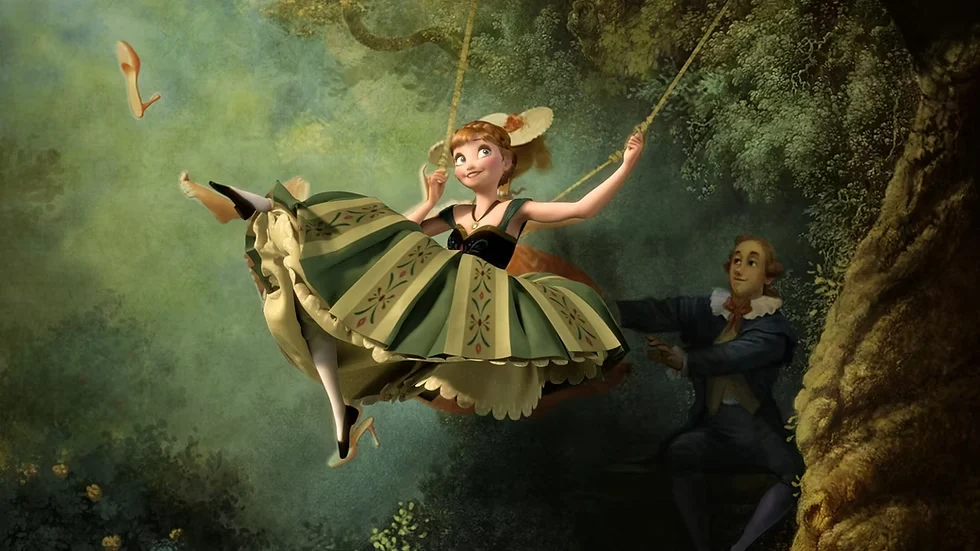
During ‘For the First Time in Forever’, Anna explores the gallery and imitates the poses of several paintings. Early in the scene, a painting of a woman on a swing is shown on one side of the door, and Anna is standing far from it. Later, she is suddenly leaping off a teal seat to match that swing pose, even though there is no shown movement taking her across the room. Musical numbers in animated films are often treated almost like montages, where shots are arranged for rhythm and lyrics rather than continuous geography. As a result, character positions can reset between cuts to match choreography and staging decisions, producing jumps like this that only stand out when you analyze the layout carefully.
Olaf, Anna, and Kristoff’s Impossible Snow Landing
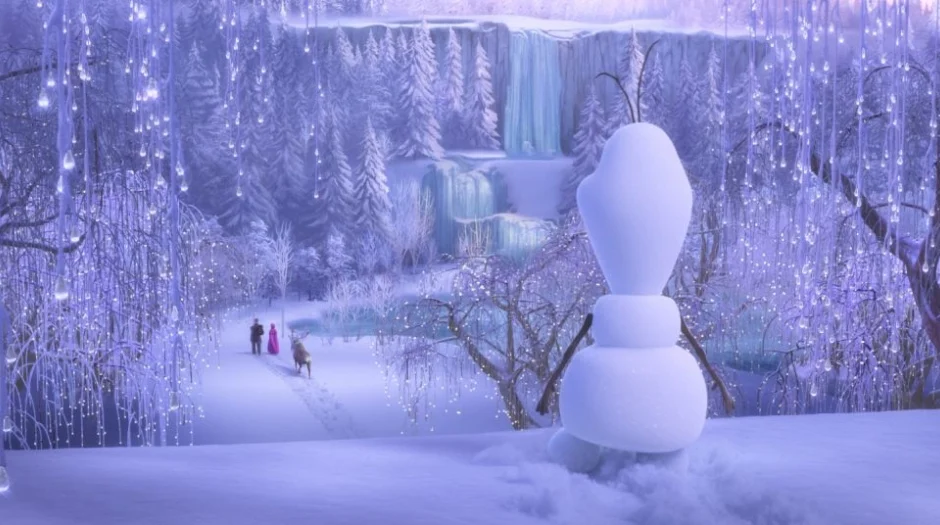
When Marshmallow chases the group off the cliff, Olaf, Anna, and Kristoff fall in a very clear order: Olaf first, Anna second, and Kristoff last. At the bottom, Anna has created a big mound of loose snow where she lands, but Kristoff somehow ends up buried under smooth, untouched snow beneath Olaf. This arrangement doesn’t match the fall order or the way snow would realistically pile up from multiple impacts. Effects animation for snow focuses on making collapses, sprays, and cushions look visually pleasing within each shot. Because each character’s landing is animated for maximum clarity and humor, the exact physical relationship between the three landings is less strictly simulated, which produces this odd final configuration.
The Ship That Appears Under Elsa’s Feet
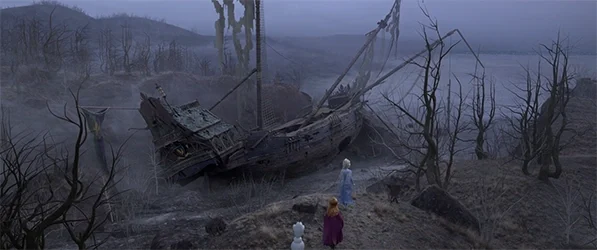
Near the end of the story, Elsa stands on the frozen fjord as she begins to reverse the winter she created, sending a wave of thawing ice across the harbor. At first, she is shown standing out on open ice, with no large ship beneath her. In the very next shot, as the ice fully melts, a ship suddenly appears under her feet and becomes the platform where she and the others stand. This kind of continuity change often happens when layout for a big crowd or harbor scene is revised late in production to improve framing or character spacing. The ship provides a convenient stable surface and focal point for the ending tableau, even though it doesn’t line up perfectly with the earlier wide shots of the area.
Elsa’s Ice Bridge Gap That Quietly Rearranges Itself
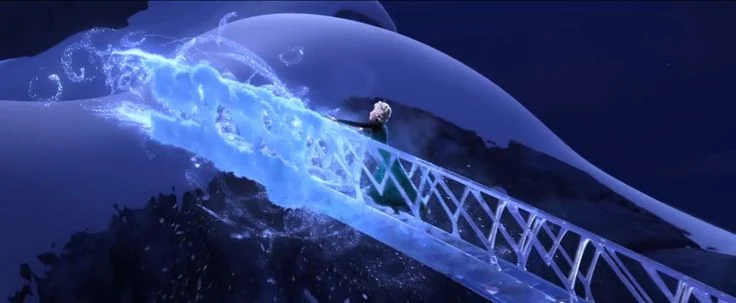
During ‘Let It Go’, Elsa walks toward a large gap in the snowy ridge just before she creates her dramatic ice staircase. An overhead shot shows her walking on fairly flat snow, some distance from the edge, yet later shots have her running up over a lip of snow that wasn’t visible before. This inconsistency comes from how different camera angles can be set up in layout, sometimes changing terrain to suit the needs of a particular composition. In this sequence, the animators needed both a striking overhead reveal and a later low-angle shot that allowed Elsa to crest a ridge before building the staircase. Adjusting the shape of the snow between shots made those images work, but it left the geography of the gap slightly different from angle to angle.
Now that you know where to spot these little glitches, share which ‘Frozen’ mistakes jumped out at you—and any others you’ve noticed—in the comments below.