Heaven Is a House That Won’t Let You Leave: Alisa Kobyliatskaia on the Mythology of Boloto

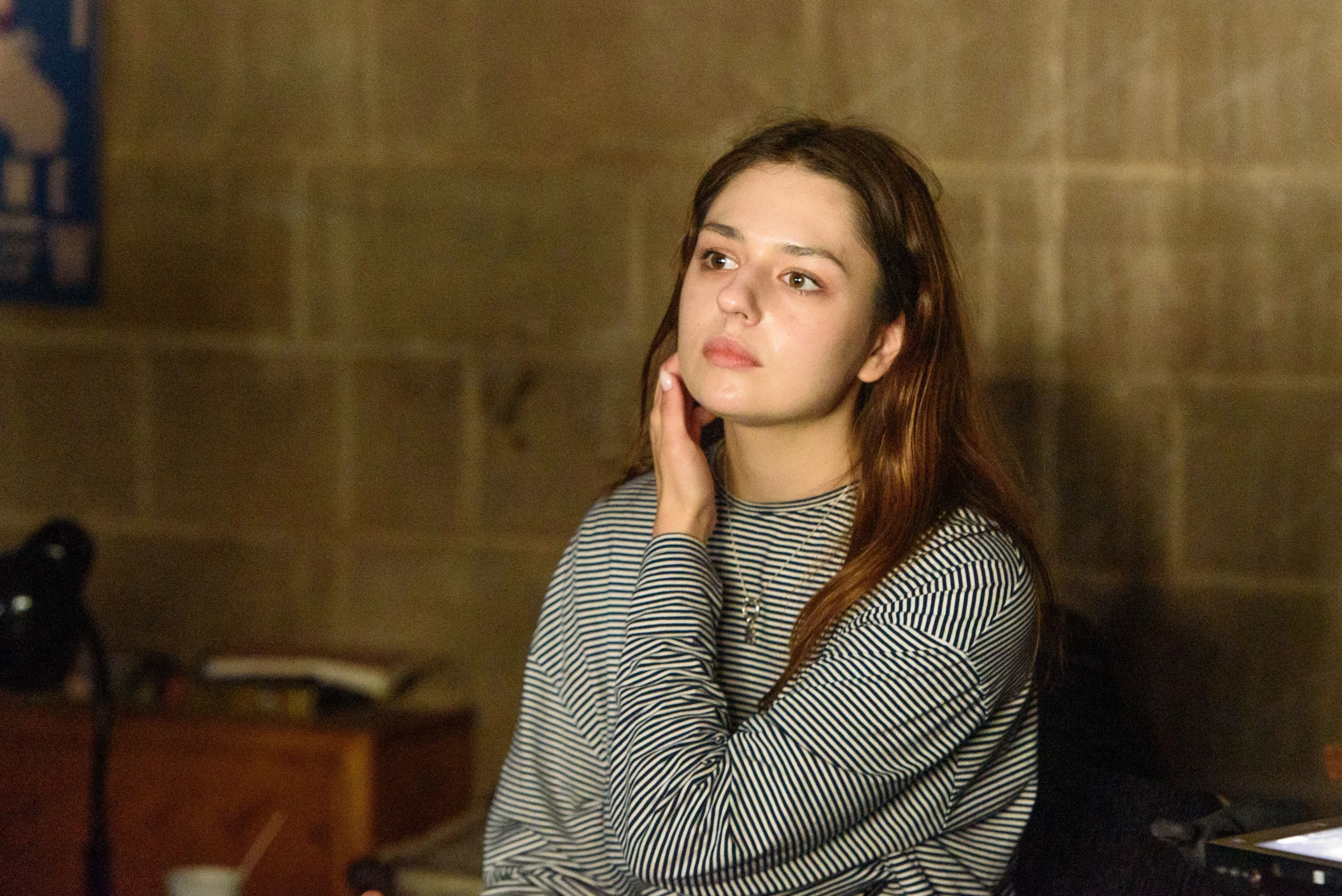

Political cinema is often discussed in terms of subject matter: the regime, the protest, the war, the ideology. But some of its most effective politics happen elsewhere, inside the grammar of a film. A costume can evoke the visual language of an era; a room can reveal the values of the world that shaped it. The way a character moves, the space they inhabit, or the rules of an invented world can communicate something dialogue never has to explain.
That distinction sits at the center of Boloto, a sixteen-minute dark fantasy written and directed by Alisa Kobyliatskaia. The film begins in recognizable reality before moving into an afterlife built from ritual, comfort, cultural memory, and a quiet sense that something is wrong. Authority rarely announces itself through spectacle. Instead, it becomes part of the environment.
Completed in 2025, Boloto has begun making its way through the festival circuit, including an Honorable Mention at the East Village New York Film Festival. Kobyliatskaia spoke with Fiction Horizon about using genre as a cinematic language, building an afterlife from familiar images, collaborating with cinematographer Timofei Romanov, and why political meaning does not always need to be spoken aloud.
FICTION HORIZON: For readers discovering Boloto for the first time, where did the film begin for you?
ALISA KOBYLIATSKAIA: It started with the idea of a place that people should want to escape from, but don’t.
I kept thinking about systems that don’t really need to force people into obedience because they’ve made staying comfortable enough. Once I started imagining that as an afterlife, everything became more interesting. It didn’t need to look frightening. Actually, the opposite made more sense. It had to feel warm and familiar enough that leaving would seem unreasonable.
The title came from the same idea. Boloto roughly means swamp or bog. A swamp can look safe for a while. The ground still seems solid, and staying where you are can feel safer than trying to move. That became very close to how I saw the people in the film.
FICTION HORIZON: Why did fantasy feel like the right form for a story dealing with those ideas?
ALISA KOBYLIATSKAIA: With certain political subjects, people can decide how they feel before the story even starts. They recognize a situation or an image, and immediately there’s a position attached to it.
Fantasy gave me some distance from that. The film begins with something very real and political, but once Erika enters the afterlife, the story doesn’t have to keep explaining itself in those terms. I could focus more on how the system works and how people behave inside it.
I like that genre can take something familiar and move it just far enough away that you have to look at it again.
FICTION HORIZON: The afterlife itself is unusually domestic. It feels less like heaven or hell than somewhere people have simply learned how to live. How did you build that world?
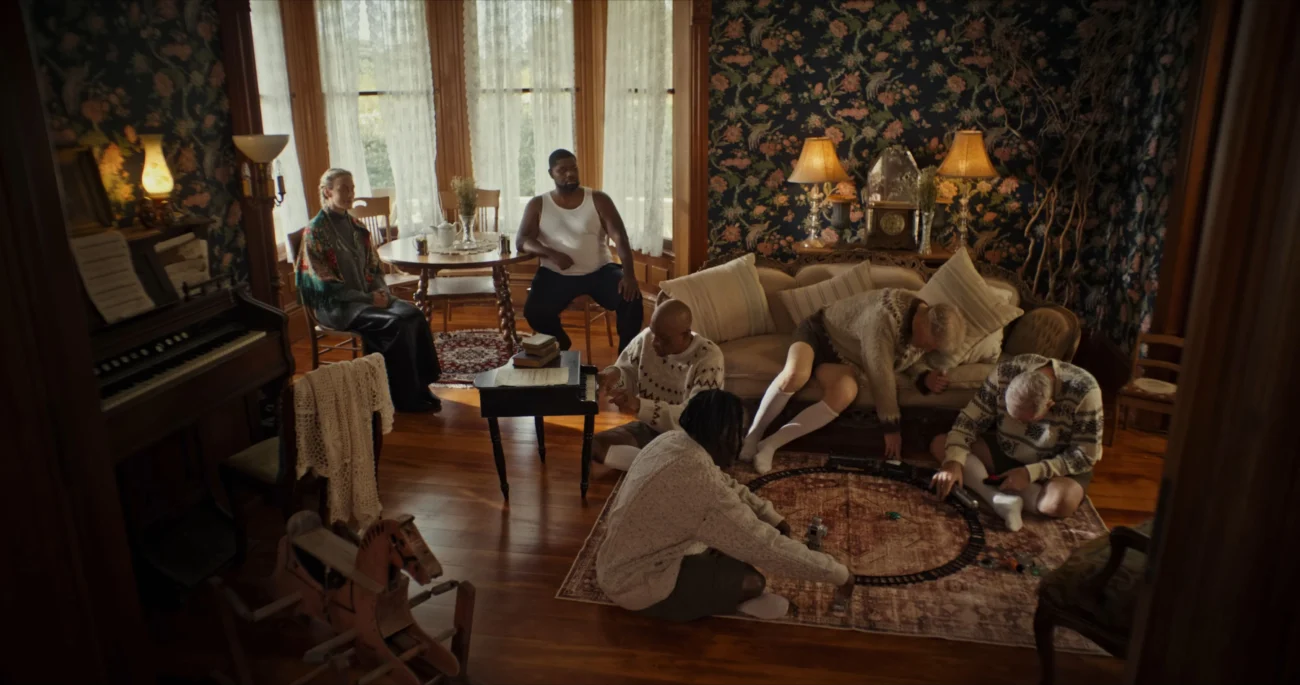
ALISA KOBYLIATSKAIA: I knew very early that I didn’t want punishment or reward to be the organizing idea. That would make morality the center of the afterlife, and I was more interested in management.
So I kept asking what a system would look like if its only job was to keep everyone calm and cooperative. The house couldn’t feel cruel. It had to feel cared for.
That’s what makes it work for me. If something is obviously terrible, resisting it is easy to understand. I’m much more interested in what happens when the thing limiting you is also the thing making you comfortable.
FICTION HORIZON: A lot of the film’s ideas seem to come through images rather than explanation. How did you approach that visual language?
ALISA KOBYLIATSKAIA: I wanted the world to carry cultural references without stopping to explain every one of them.
The adults in the afterlife, for example, have traces of Soviet Pioneer imagery in the way they’re styled. I liked putting something associated with childhood onto adults because it already creates this small sense of wrongness.
For me, those characters have traded responsibility for comfort. They don’t have to make difficult decisions anymore, but somebody else gets to make those decisions for them. The childhood imagery made that idea visible without anyone needing to say it.
I generally prefer when an image can suggest something before the audience has completely decided what it means.
FICTION HORIZON: Cinematography seems to carry a lot of that world-building. How did you and cinematographer Timofei Romanov develop the film’s visual language?
ALISA KOBYLIATSKAIA: Timofei and I had already worked together across several projects by the time we made Boloto, so there was a visual shorthand between us.
I knew I wanted to shoot on Soviet lenses and had a very particular feeling in mind, but Timofei was the person who had to translate that into an actual cinematographic language and make it hold together across the film.
The vintage glass against these very American interiors became one of the things that defined the world for me. He understood that I wasn’t looking for nostalgia or a visual effect. I wanted the image to feel slightly displaced, familiar but somehow reconstructed from memory.
A lot of that came from the way he approached the glass, the lighting, and the spaces together rather than treating any one of those choices as decoration.
FICTION HORIZON: The film also avoids giving the audience a conventional, visibly threatening villain. How did you think about authority when you were building the Creator?
ALISA KOBYLIATSKAIA: I didn’t want him to walk into the film looking evil because then the audience immediately knows what to do with him.
I wanted someone who could sound completely reasonable and genuinely believe that what he’s built works. That’s more interesting to me than someone who knows he’s a villain.
His costume borrows from real political imagery, specifically the image of a leader addressing a country about war while looking incredibly controlled and composed. We pushed it slightly toward theater, but I still wanted him to feel like a person rather than a caricature.
For me, the uncomfortable part is that he never really needs to scream.
FICTION HORIZON: You were nineteen when you made the film. What did directing something this stylized teach you about the kind of filmmaker you wanted to be?
ALISA KOBYLIATSKAIA: Probably that I care a lot about physicality.
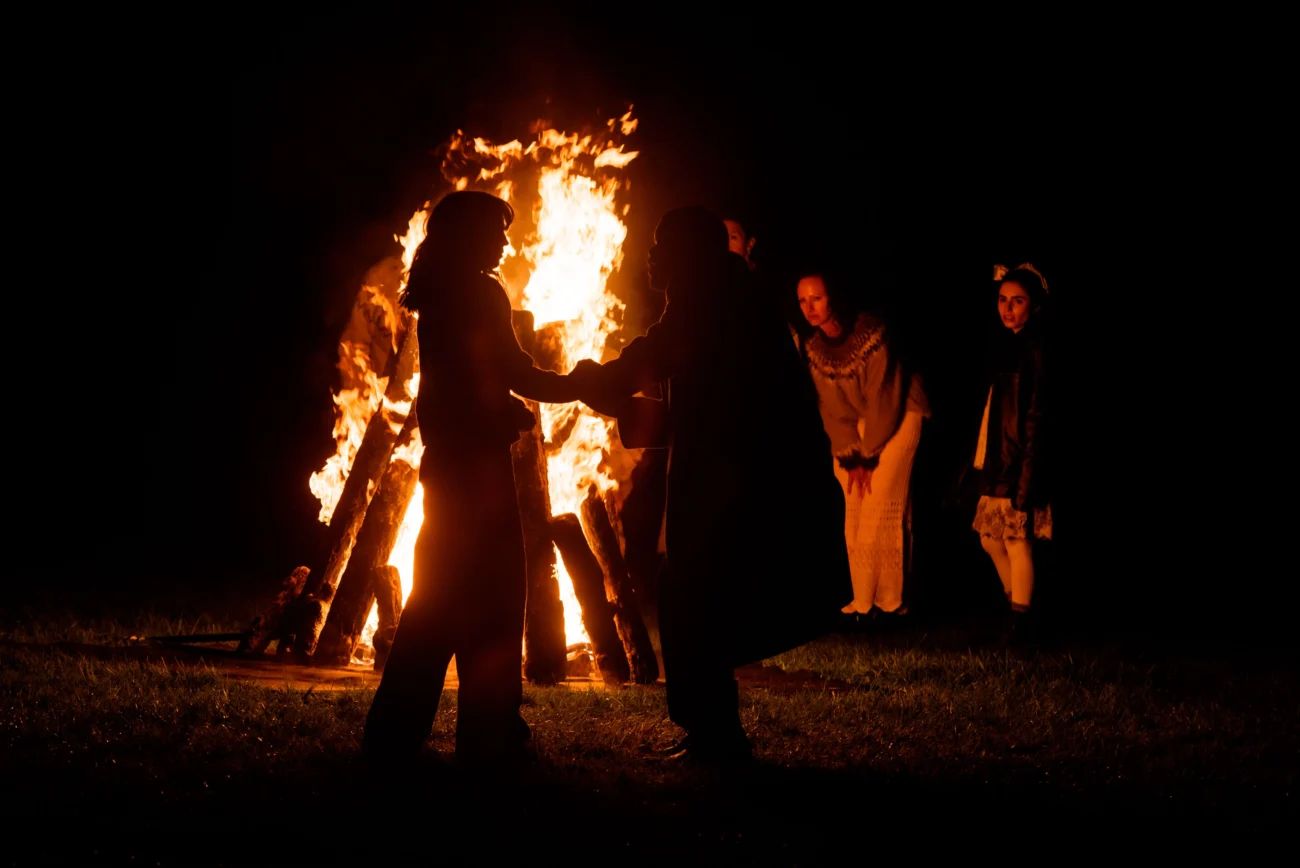
Some of the scenes sounded strange when I explained them out loud. I was asking actors to move in very specific ways, dance around a fire, smile through something uncomfortable, or behave younger than they actually were.
Sometimes demonstrating it physically was much easier than trying to explain every intention behind it.
I was also still figuring out what kind of director I was on set. I think being young made me less afraid of trying something and then admitting it wasn’t working. We could change the rhythm or the movement and keep going until the scene felt right.
FICTION HORIZON: Boloto has started finding an audience on the festival circuit. Has anything about the response surprised you?
ALISA KOBYLIATSKAIA: The most interesting part is when somebody responds to something that felt very specific to me.
When you spend that long making a film, you stop being able to see it normally. You know every cut, every problem, everything that almost didn’t work.
So when someone connects with an idea that I wasn’t sure would translate, it makes the film feel like it can exist outside my own head. That’s probably the part of the response I value most.
FICTION HORIZON: You’re now developing another fairytale, currently under the working title Honey, about immigration and chosen family. Are you continuing some of the same ideas there?
ALISA KOBYLIATSKAIA: There is definitely a connection, but emotionally they’re very different.
Boloto begins with a system that’s already completely built. Erika enters it and has to figure out whether she can exist inside it.
The new project is much more about people who don’t really have a place that was made for them, so they start building something themselves: relationships, family, an idea of home.
There are still political things underneath it, but it’s much more hopeful. That’s new territory for me.
FICTION HORIZON: When you think about Boloto as a genre film rather than simply a political one, what do you hope stays with the audience?
ALISA KOBYLIATSKAIA: I hope the fantasy feels like it has a reason to exist beyond carrying a political message.
I thought a lot about the rules of the afterlife, why people would stay there, what the Creator believes he’s doing, and why the place might actually appeal to someone.
If somebody watches it purely as dark fantasy, I want that version of the film to work. And if they want to look underneath it and read the politics too, that’s there.
I don’t think one has to cancel out the other.