‘Hell Grind’ Made for $500K in Two Weeks Is Hollywood’s Most Unsettling AI Wake-Up Call Yet



The conversation around artificial intelligence and its place in filmmaking has been simmering for years, but in 2026, it has fully boiled over. The arrival of a fully AI-generated feature film at one of the world’s most prestigious cinema gatherings has forced an industry long accustomed to defining what movies are to confront what they might become.
San Francisco-based startup Higgsfield AI is behind the project, and the ambition behind it is hard to dismiss. Their CEO Alex Mashrabov has framed the film as proof that the infrastructure now exists to execute complex cinematic visions at a fraction of traditional costs, pointing out that a comparable production through conventional means would run roughly $50 million. That kind of math is exactly what has studios, unions, and working filmmakers paying very close attention.
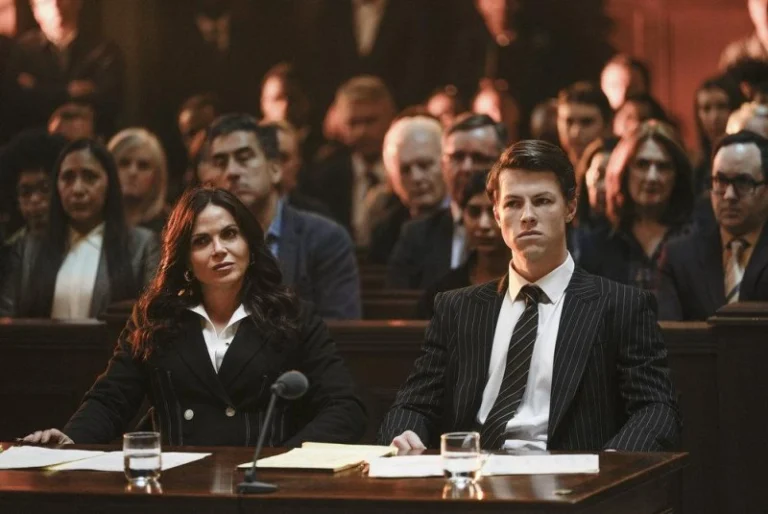
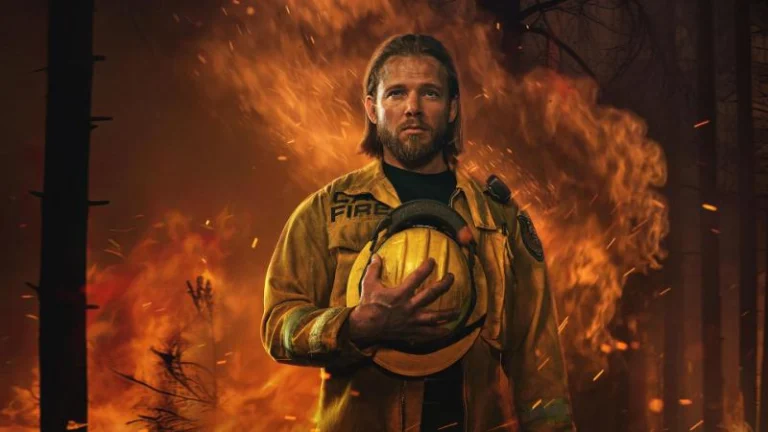
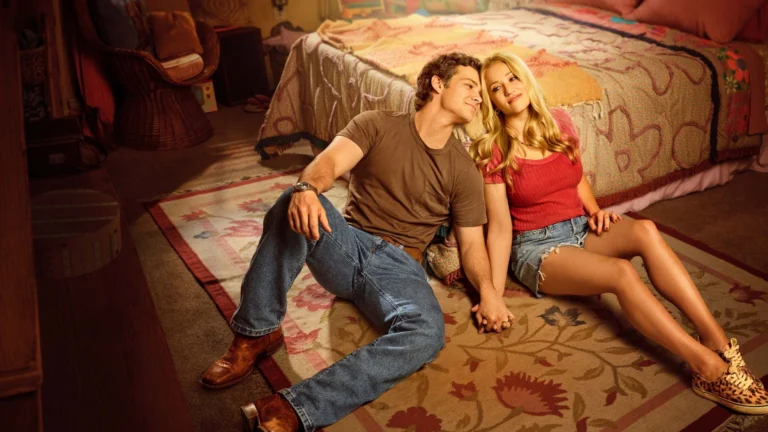
The film in question, ‘Hell Grind’, was made for $500,000, mostly in compute costs, in just two weeks, using a mix of ByteDance’s Seedance video generation model and Higgsfield’s own tools. The 95-minute sci-fi action-fantasy was directed by Aitore Zholdaskali and co-written with Adilkhan Yerzhanov, and the entire production was handled by a team of just 15 people. The plot follows four street thieves whose heist spirals out of control after an ancient artifact tears one of them into the underworld, sending the group through a Tibetan temple and feudal Japan in pursuit.
The film premiered at the Marché du Film, the Cannes Film Festival’s industry marketplace, as the main festival has banned wholesale AI-generated films. Cannes confirmed that ‘Hell Grind’ was not screened as part of the official festival program, with a spokesperson clarifying that it was presented during an industry event organized by third parties. It later screened during New York’s Tech Week alongside Tribeca Festival events, putting it squarely at the center of the loudest cultural argument in cinema right now.
Higgsfield’s goal was never exactly to produce a Hollywood-quality film. CEO Alex Mashrabov told Variety the film was meant to showcase the power of Higgsfield’s technology, not necessarily quality, and that in that regard it merits recognition. The company’s valuation has since reached $1.3 billion, with its annual revenue run rate hitting $400 million, suggesting investors are buying the vision even as critics aren’t fully buying the film.
Viewers have criticized ‘Hell Grind’ for its artificial look, choppy editing, weak story, and lack of emotional depth, though many acknowledge the technical progress it represents as an AI demo. Creatives have broadly slammed such AI-generated products, even as festival executives at both Cannes and Tribeca have worked to lure the creative community into the AI space through screenings and sponsored events.
Director Zholdaskali has spoken about what Higgsfield represents for filmmakers who can’t survive the decade-long climb to their first feature, comparing the platform’s potential to how the laptop democratized the music industry. Content lead Adilkhan Alimzhanov has noted that the process still requires genuine traditional filmmaking knowledge, and that creators cannot simply ask AI to generate a full movie in one step. Whether that nuance is enough to satisfy the creative community remains the central tension here, and it seems unlikely to resolve anytime soon.
Does ‘Hell Grind’ convince you that AI filmmaking deserves a seat at the table, or does it prove that the technology still has no business calling itself cinema?