‘Hotel Coolgardie’ Ending Explained: What Really Happened?

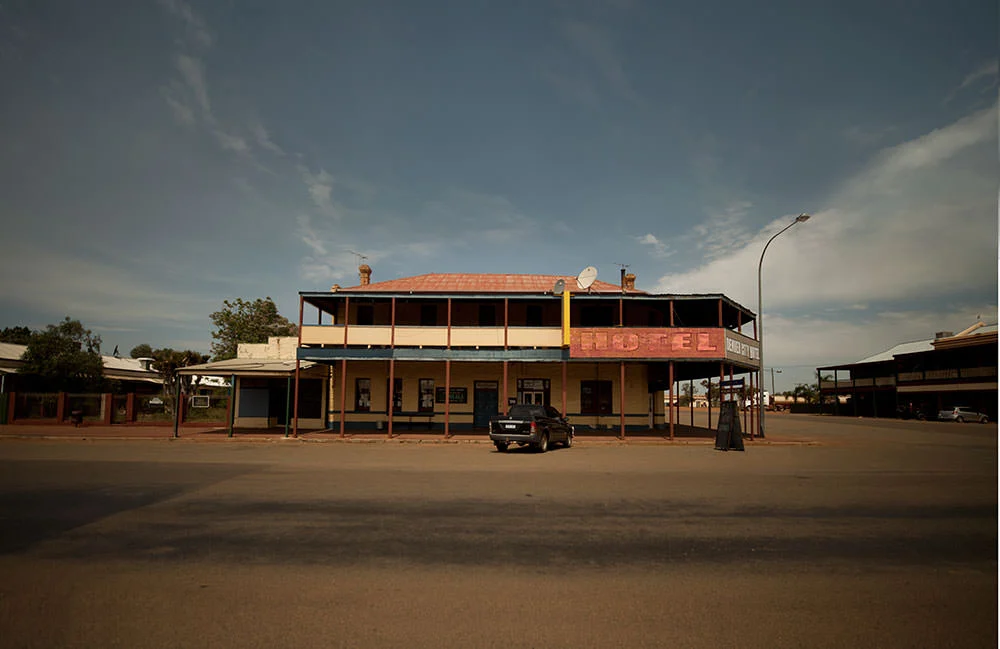

‘Hotel Coolgardie’ is an 83 minute documentary that quietly built a reputation as one of the more unsettling entries in Australian nonfiction filmmaking, and years after its release, viewers are still searching for clarity on how the story actually concludes. Director Pete Gleeson’s 2016 film centers on two foreign backpackers who arrive in the remote mining town of Coolgardie to work behind the bar, an arrangement the local men treat as a recurring event that happens roughly every three months. The renewed interest largely traces back to Kitty Green’s narrative feature ‘The Royal Hotel’, which drew heavily from the real events captured in Gleeson’s film.
The documentary follows Lina and Steph, two young Finnish women whose original travel plans fell apart before they ever reached the outback. The pair had been robbed while traveling through Bali and decided to take on bar work at the Aussie pub for three months in order to earn back their lost savings. What unfolds over the course of the film is a slow, uncomfortable descent as their initial excitement gives way to something far more difficult to watch.
The Setup That Sends Lina and Steph to Coolgardie
Gleeson’s connection to the pub predates the documentary by more than a decade, and his original intent was simply to document the culture surrounding foreign women who cycled through the remote town for short stints as barmaids. He has said he did not anticipate the film taking the turn it eventually did once Lina and Steph became his subjects.
The arrangement between publicans and backpackers has historically functioned as a trade of cheap labor for a bush experience and a chance to rebuild travel funds. Gleeson has described it as a pattern that plays out across the outback, where a beer at a remote pub is often served by a female backpacker rather than a local.
In the real events behind the film, a caretaker at the hotel had specifically contacted job agencies requesting two women in their early twenties, a detail that in retrospect suggests his motivations were not strictly professional. Job agencies matching backpackers with remote postings have faced criticism for sending travelers to isolated locations without adequately accounting for their safety.
The setting itself sits on the road between one of Australia’s most isolated towns and its largest gold mine, a detail that reinforces just how cut off Lina and Steph were from any kind of support system. Beyond the two women, the town of Coolgardie is portrayed as similarly trapped, populated by men described as lost souls without any set end date to their own isolation.
Life Behind the Bar at the Denver City Hotel
Once Lina and Steph settle in, it becomes clear that pulling pints is treated as the least significant part of their job. The environment is described as hardworking and hard drinking, with barmaids expected to entertain a group of men the film frames as bored, frustrated, and emotionally stunted.
The structure of the documentary uses weekly title cards that create a mounting sense of dread, since each passing week tends to bring worse circumstances than the last. Viewers watch Lina and Steph become increasingly cornered and coerced by men in the town, even as some of those same men reveal personal stories rooted in real vulnerability.
One especially tense stretch involves a man referred to as Pikey, who enters the women’s private quarters uninvited and is later found by Lina asleep on their couch. When she asks him to leave, he reacts with hostility before eventually going, an incident that heightens the sense of danger running through the film. Online discussion of the film has noted that the men had openly discussed getting the women drunk with clear intentions, and that Lina had stated beforehand she was not interested, which made a later incident she could not fully remember all the more troubling to viewers.
Critics have praised Gleeson’s editing for moving fluidly between Lina and Stephanie’s individual perspectives, while using day and night shots of the Australian outback to root their experience in a specific cultural setting.
How the Documentary Actually Ends
By the conclusion of their three month agreement, Lina and Steph leave Coolgardie behind, and their time there ultimately becomes something closer to a difficult anecdote than a lasting chapter of their lives. Lina has said that if she could go back and change her decision to take the job, she would, and the experience left such a mark that she has since sworn off camping entirely.
The physical toll on Lina became one of the most talked about elements once details emerged through coverage of ‘The Royal Hotel’. A toe infection she developed during her time in Coolgardie eventually spread through her body and reached her spinal cord, triggering a severe blood infection. As a result, she went completely blind in one eye and lost roughly 30 percent of her vision in the other. According to discussion referencing an interview with the filmmaker, Gleeson and his team ultimately stepped in to provide assistance once medical issues became serious enough to require it.
Both women, last known to be back home in Finland, have chosen not to share further details about their lives since, describing the experience as one that left lasting scars. The finished film was assembled from more than 80 hours of raw footage, condensed to present what the filmmakers describe as an honest picture of what women can face in environments where sexism goes unchecked.
Critical Reception and the Link to ‘The Royal Hotel’
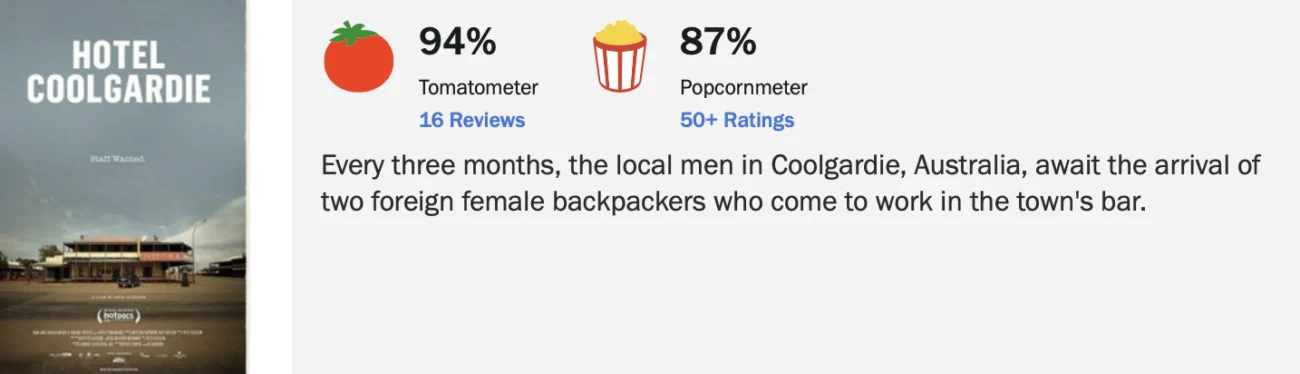
‘Hotel Coolgardie’ holds a 94 percent critics score on Rotten Tomatoes from 16 reviews, alongside an 87 percent audience score. Sydney Morning Herald critic Brad Newsome praised Gleeson for being unflinching in capturing both the men’s thoughtless behavior and their underlying pain and loneliness, while noting the film does allow for moments of levity before what he called an inevitably sad ending. The Australian’s David Stratton gave the film four out of five stars, writing that the interactions between the women and the locals produce a surprisingly riveting dynamic that feels almost scripted despite being entirely real.
Comparisons to ‘The Royal Hotel’ have become almost unavoidable, with some viewers arguing that Kitty Green’s narrative adaptation undercuts the truth of the original story by allowing its characters a clean resolution the real women never got. That same commentary suggests the coda of ‘The Royal Hotel’ reads as more chilling specifically because it departs from what actually happened. Notably, the 2023 film also alters certain factual details, including who greets the women upon arrival and how deserted the town appears compared to its real depiction in the documentary.
What stays with most viewers is not a single twist but the accumulation of small, telling moments, and anyone who has sat through both ‘Hotel Coolgardie’ and its dramatized counterpart likely has strong feelings about which version tells Lina and Steph’s story more honestly.