How ‘American Horror Story’ Turned Elizabeth Short’s Real Murder Into One of Its Most Disturbing Episodes

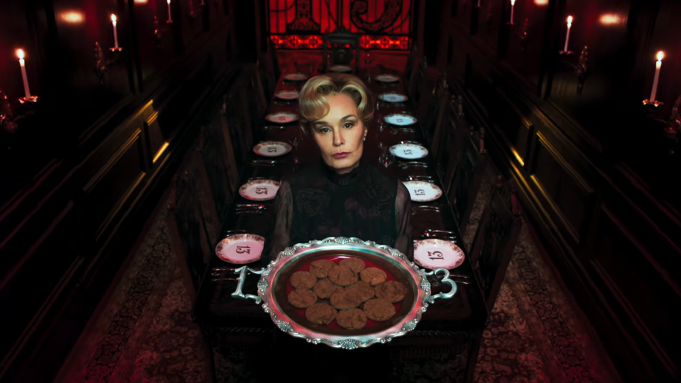

American Horror Story has never shied away from blending real history with supernatural fiction, and few examples illustrate that approach as vividly as its treatment of Elizabeth Short. The ninth episode of the show’s first season, ‘Murder House,’ folded the unsolved 1947 killing known as the Black Dahlia case into the mythology of its haunted mansion, giving the franchise one of its most talked about installments.
The episode, titled ‘Spooky Little Girl,’ aired in November 2011 and was directed by John Scott from a story credited to creators Ryan Murphy and Brad Falchuk along with Halley Feiffer. The show’s fictional retelling imagined what may have happened to Elizabeth Short, who was murdered in 1947 and became known to the public as the Black Dahlia.
Who Elizabeth Short Was Before Becoming the Black Dahlia
Elizabeth Short was a real woman whose unsolved death has fascinated true crime followers for decades. The nickname was not applied to her until after her death, and it was reportedly a play on the title of the film ‘The Blue Dahlia,’ with blue swapped for black because of her dark hair and her habit of wearing black clothing.
Her story has been examined well beyond television. The 1994 nonfiction book ‘Severed, The True Story of the Black Dahlia Murder’ by John Gilmore detailed her life and death, describing how her mutilated body was discovered in Leimert Park, Los Angeles, in 1947, a case that has remained unsolved for decades.
Hollywood has also revisited the case outside of the ‘American Horror Story’ universe. The film ‘The Black Dahlia’ followed two Los Angeles Police Department detectives investigating the killing, with the project originally developed by David Fincher before Brian De Palma ultimately directed it after Fincher moved on to make ‘Zodiac’ instead.
The persistence of the case across books, film, and television speaks to how unresolved the mystery remains. Each retelling, including the one found in ‘Murder House,’ approaches the same unanswered question of who was responsible, filtered through a different genre lens.
How Murder House Reimagined the Black Dahlia Murder
Within the world of ‘American Horror Story,’ the murder is transplanted directly into the haunted mansion at the center of the first season. In the show’s 1947 timeline, aspiring actress Elizabeth Short arrives at the house wearing a dahlia in her hair, seeking dental work from the home’s owner at the time because she is short on cash.
The episode’s events grow considerably darker from there. The dentist sedates her and assaults her while she is unconscious, then realizes she has died after being kept under the gas too long, at which point the resident ghost of Charles Montgomery mutilates her body in the same manner the real Black Dahlia victim was found. Her body is later discovered in an empty lot by a mother and daughter out on a walk.
Other coverage of the episode described a similar sequence of events, noting the doctor’s name within the show’s timeline. Mena Suvari played Elizabeth as a character who visits the house to see a dentist named Dr. Curran for a toothache, unable to pay in cash, before the same fatal chain of events unfolds. In this fictional timeline, the property is home to a dentist named Dr. David Curran.
The episode was framed at the time as a particularly dark turn for the series. Reporting on the episode noted that things were only getting worse for the show’s characters, and that the installment could be considered the most disturbing the series had produced up to that point due to its combination of shocking plotlines.
Mena Suvari’s Portrayal of Elizabeth Short
The role went to Mena Suvari, an actress already well known from earlier film work. Suvari portrayed Elizabeth Short in ‘American Horror Story, Murder House’ in 2011 and later reprised the role in ‘American Horror Story, Apocalypse’ in 2018.
Within the show’s continuity, the character is given a distinct personality beyond the historical figure she is based on. The ‘American Horror Story’ version of Elizabeth Short is written as a naive young woman dreaming of becoming a famous actress in Hollywood, someone not particularly worldly and overly confident. The series also takes creative liberties with her personal life, since the show’s writers gave the character traits not documented in the historical record.
After her death in the story, the character does not simply disappear from the narrative. As a ghost, Elizabeth is confused and unaware that she has died until another spirit, Hayden, reveals her legacy as the Black Dahlia to her, and she retains a seductive nature in death, at one point attempting to seduce Ben Harmon into treating her for free. Ben eventually catches her along with the ghost Moira trying to seduce him and reacts by firing Moira and throwing Elizabeth out of the house.
Suvari’s work on ‘American Horror Story’ sits alongside a career that has spanned multiple horror and drama projects. She also had recurring roles on the fourth season of ‘Six Feet Under’ and the second season of ‘Chicago Fire.’
Elizabeth Short’s Legacy Across the American Horror Story Universe
The character did not stay confined to the first season’s murder house storyline. Her ghost resurfaces later in the season for a jump scare, appearing bisected on a table specifically to frighten off a potential buyer, and the character reappears years later in the franchise, mutilated once again, this time by the villainous Michael Langdon.
That later appearance came in ‘American Horror Story, Apocalypse,’ the eighth installment of the anthology series. Mena Suvari is credited as Elizabeth Short in the cast list for that season, appearing alongside returning franchise players like Evan Peters and Frances Conroy.
The ‘Apocalypse’ season brought several original ‘Murder House’ figures back to help resolve a larger mystery. Former ghosts of the house were given a chance to revisit characters they had left behind years earlier so they could help fill in gaps regarding a central villain’s demonic powers, with surprises among the returning house ghosts including Hollywood star Elizabeth Short.
For longtime viewers, that return functioned as a deliberate piece of continuity. The callback gave longtime viewers a jolt of recognition, tying the mythology of the Murder House back to its earliest and most disturbing chapter.
Nearly a decade and a half after ‘Spooky Little Girl’ first aired, the episode remains a reference point for how the franchise handles true crime material, folding a real unsolved tragedy into its ongoing haunted house mythology rather than treating it as a one off shock. Viewers who remember Elizabeth Short’s arrival at the Murder House, and her unexpected reappearance years later in ‘Apocalypse,’ may have their own thoughts on whether the show handled her story with the weight it deserved, and that seems like the right conversation to continue in the comments below.