How ‘Four Good Days’ Wraps Up Its Emotional Story Of Addiction And Recovery

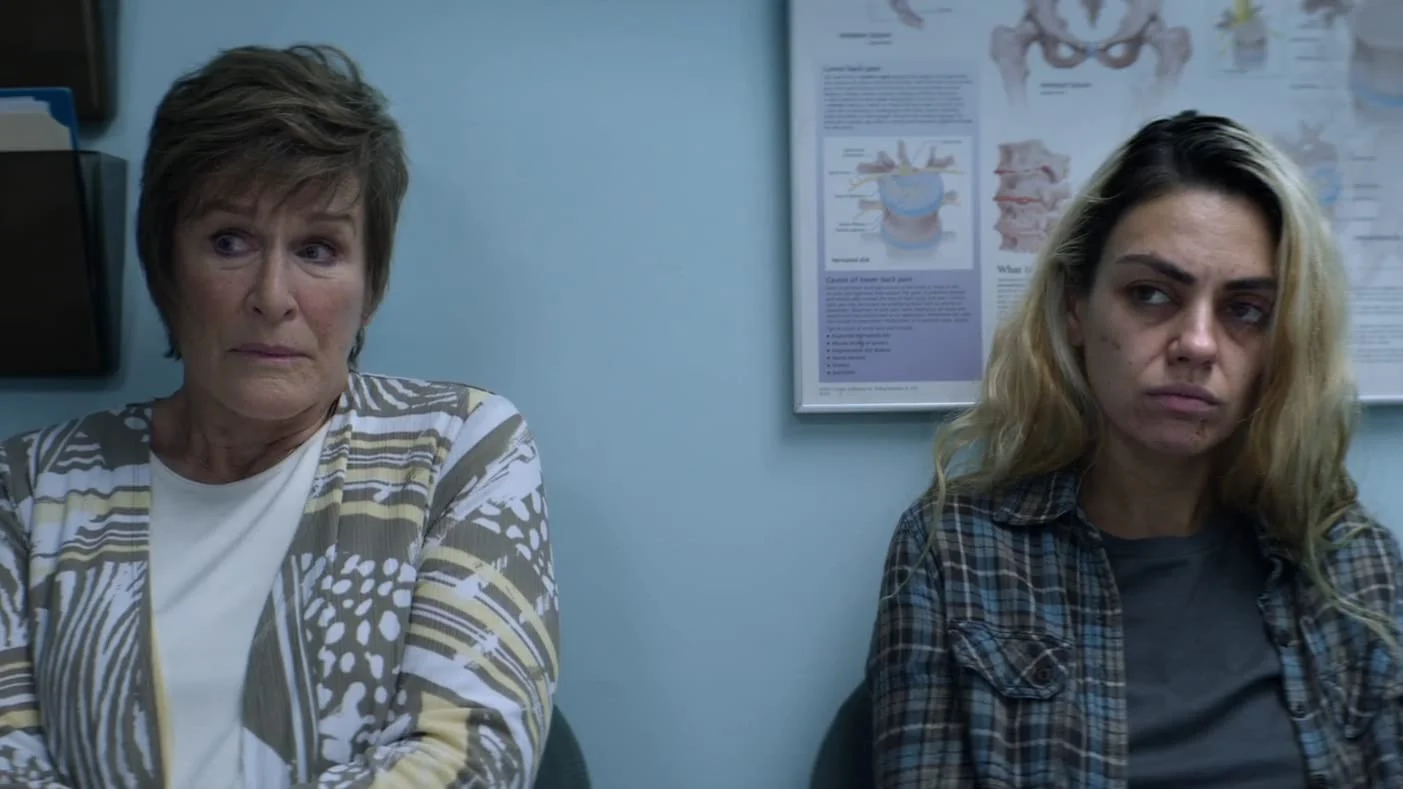

‘Four Good Days’ asks its audience to sit with a mother and daughter through one of the hardest stretches of their relationship, and the ending of the film has become a point of genuine curiosity for viewers who want to know how their story resolves. The drama was directed and produced by Rodrigo García, from a screenplay he wrote with Eli Saslow, based on Saslow’s 2016 Washington Post article about an American family’s struggle with addiction. It stars Glenn Close, Mila Kunis, and Stephen Root, and it premiered at the Sundance Film Festival before reaching theaters and video on demand through Vertical Entertainment.
The film follows Molly, played by Kunis, as she returns to her mother Deb’s home determined to get clean, and the narrative builds toward a specific medical and emotional turning point. Understanding what actually happens in the final act, and how it connects to the true story that inspired it, helps explain why ‘Four Good Days’ has stuck with so many who have watched it.
What Happens At The End Of ‘Four Good Days’
At the center of the film’s climax, Molly receives the opioid antagonist shot she has been working toward, but because she still has drugs in her system, she goes into acute withdrawal and has to be rushed to the hospital. This moment arrives after the mother and daughter have spent the bulk of the film negotiating trust, relapse, and the fragile promise of the naltrexone treatment Molly is trying to qualify for. That treatment is the reason for the film’s title, since Molly must stay clean for four consecutive days while living with her mother in order to receive the naltrexone shot, which blocks the effects of opiates on the body.
The film then jumps forward four months, showing Molly still living with Deb, visiting her own children regularly, and preparing for her next shot as she continues working toward recovery. The jump forward is deliberately restrained rather than triumphant, leaving Molly’s progress framed as ongoing rather than complete. That choice mirrors the film’s broader refusal to offer a tidy resolution to a subject that rarely provides one.
Before the credits roll, the film includes a closing line acknowledging the real mother and daughter who inspired the story, Amanda Wendler and Libby. That final gesture ties the fictionalized version of events back to its journalistic origins and reminds the audience that Molly and Deb’s ordeal was drawn from an actual family’s experience with heroin addiction.
The Real Story Behind ‘Four Good Days’
‘Four Good Days’ is based on the real life story of Amanda Wendler and her mother Libby Alexander, and it was adapted from Saslow’s reporting on their experience. Saslow’s original 2016 Washington Post article focused on a Michigan mother’s efforts to help her adult daughter overcome heroin addiction, and he later co-wrote the film’s screenplay alongside García.
In the film, the story picks up roughly ten years into Molly’s battle with opiates, which began with a prescription for painkillers following an injury before progressing to crack, Adderall, heroin, and methadone, a shift that opened a painful rift between mother and daughter. That extended timeline is part of what gives the film’s climactic four day stretch its weight, since it represents such a narrow window set against a decade of relapse and disappointment.
As the film begins, Deb is shown agreeing, against her better instincts, to take Molly back into her home even though her daughter is not yet clean. Kunis’s character Molly is introduced as a 31 year old woman who has lived on and off the streets for a decade and has stolen from her family while in the grip of her addiction. That introduction sets the emotional baseline the film spends its remaining runtime trying to work through.
Glenn Close And Mila Kunis’s Performances
Kunis has described the role as the most challenging of her career, telling Yahoo Entertainment in a joint interview with Close that she lost twenty pounds from an already light frame and wore prosthetic teeth to capture the physical toll of addiction. She also noted that portraying Molly’s constant state of despair without any emotional release made the shorter production schedule a relief rather than something she wished had lasted longer.
A trailer for the film features Close’s Deb confronting her daughter directly, asking her whether she believes it is Deb’s fault that she became an addict, while Kunis’s Molly pleads with her mother to make the addiction stop. Critics have pointed to the two actresses as the element that elevates otherwise familiar addiction drama material, noting that their performances are honest and grounded enough to make both sides of the mother daughter conflict feel understandable.
Reviewers have also drawn comparisons between ‘Four Good Days’ and the 2018 addiction drama ‘Beautiful Boy’, given how closely the two films’ emotional patterns of lies, pleading, and relapse resemble one another. Even with that familiarity, the specificity of Close and Kunis’s work has been credited with keeping the film from feeling generic.
How Critics Responded To ‘Four Good Days’
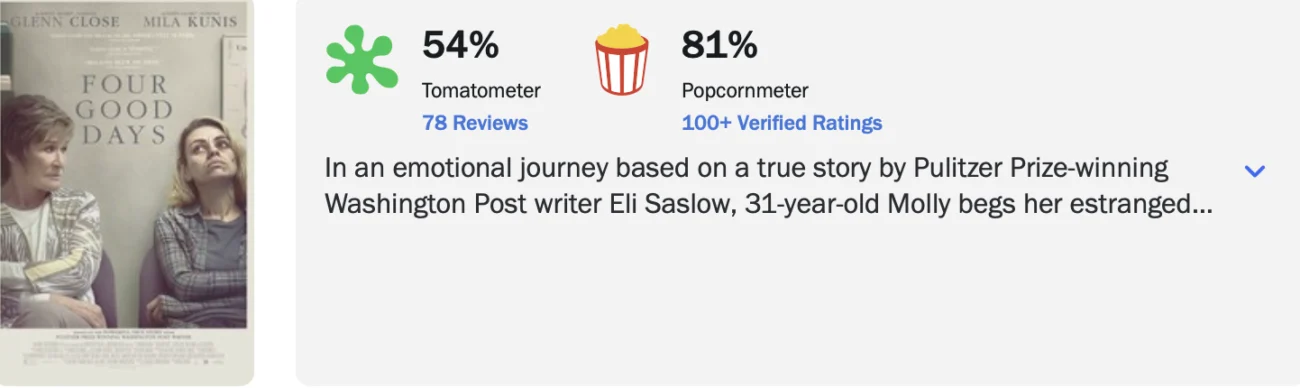
‘Four Good Days’ currently holds a 54 percent critics score, with the consensus describing it as a film that struggles to bring authenticity to its tragic source material and strands its talent in a bland melodrama. By contrast, the audience score sits considerably higher at 81 percent among verified ratings, suggesting a gap between critical and viewer reactions to the film.
IndieWire’s Ryan Lattanzio argued the film leaves one of its more interesting questions unexplored, namely why Deb never examines her own role in Molly’s addiction. Chicago Sun-Times critic Richard Roeper took a more favorable view, calling Kunis’s work alongside Close some of her finest acting to date.
The film had a limited theatrical release on April 30, 2021, followed by a video on demand release on May 21, 2021, and it ran for 100 minutes. Its box office total came to just over 864,000 dollars, reflecting its status as a modest limited release rather than a wide theatrical rollout. That commercial footprint stands in contrast to the attention the film’s performances and true story have continued to draw from viewers seeking it out on demand.
Given how closely ‘Four Good Days’ sticks to the real experiences of Amanda Wendler and her mother, it is worth asking what viewers make of a film that ends on hope without pretending the fight is over, and whether that restraint feels true to how recovery actually works for families living through it.