How Graham Yost Built ‘Silo’ Season 3 Around Two Timelines Separated by 300 Years



‘Silo’ has returned for its third season on Apple TV, and showrunner Graham Yost is opening up about the structural gamble that defines this chapter of the dystopian drama. Rather than staying locked inside the underground bunker that has anchored the series since its 2023 debut, season 3 splits its attention between Juliette Nichols in the present and a story unfolding roughly 300 years earlier.
That decision reshapes how the show tells its story, and Yost has spent recent weeks explaining the thinking behind it across a handful of interviews. The result is a season that asks viewers to hold two very different worlds in their heads at once, one grounded in the claustrophobic present of Silo 18 and the other set in a recognizable, sunlit version of pre-apocalypse America.
Splitting ‘Silo’ Season 3 Between Two Timelines
The season picks up where the finale of season 2 left off, with Juliette and Bernard Holland caught in what looked like a fatal confrontation before the story suddenly jumped backward to a version of Washington D.C. that felt far removed from anything the show had depicted before. That earlier season ended with a cut to a more contemporary setting unusual for the show’s dystopian atmosphere, shifting to more than 300 years in the past.
Yost has described that pivot as the seed of season 3’s entire structure. He said the choice was not entirely calculated, explaining that some of it came down to a best guess and a feeling that there was a convergence, a parallel, or a reflection between the two storylines. That instinct became the backbone of a season built to run two parallel productions at once.
Production on the two timelines was handled almost like running separate shows under one roof. Yost explained that the Silo unit largely covered Juliette’s story along with Camille’s arc, while a separate unit, nicknamed the Dust unit, handled the Before Times material, with most of season 3’s location work concentrated toward the finale.
Keeping both timelines coherent required close coordination among directors and producers who moved between the two units throughout filming. Yost credited executive producers Nina Jack and Joanna Thapa with overseeing the process, while producer Jon Midlane managed the scheduling for what became an unusually complicated shoot.
Juliette’s Present Timeline in Silo 18
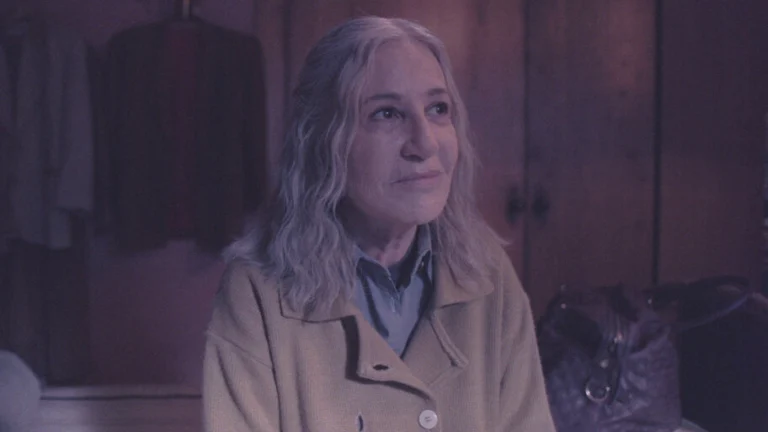
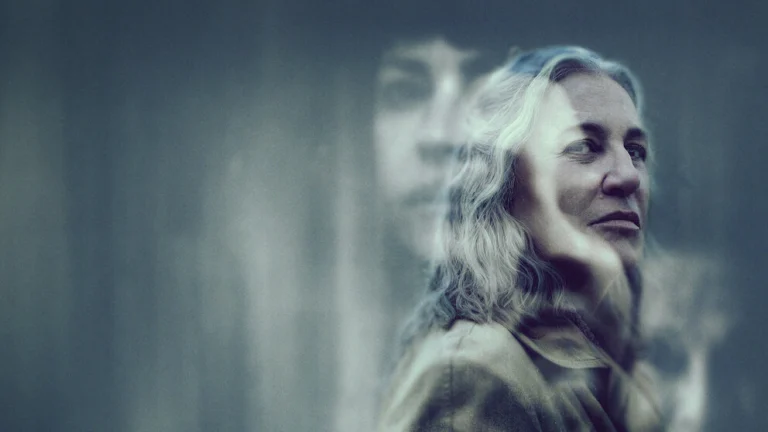
In the present day storyline, Juliette returns to Silo 18 without her memory of what happened to her, a condition that shapes much of the season’s early momentum. She survives the incinerator room incident with Bernard, though his fate remains unknown, and despite her memory loss, early footage suggests she steps into a leadership role, with hints that she becomes the new mayor while trying to reconstruct her past.
Critics have noted that the amnesia device works better here than it typically does elsewhere. Reviewers pointed out that memory loss has been part of ‘Silo’ since its first season, and that season 3 leans into it as a functional piece of the silo system rather than a convenient plot shortcut.
The present timeline also gives more room to supporting characters who have grown into larger roles. Alexandria Riley’s Camille Sims becomes a significantly expanded presence this season, while Chinaza Uche’s Paul Billings returns with a bigger part than he had in season 2.
Rebecca Ferguson has spoken about what it felt like to close out this stretch of the character’s journey. She reflected on the production experience, saying the biggest memory was leading up to the end of filming and realizing how much everything meant and how much fun the cast had together.
The Before Times Origin Story Takes Shape
The Before Times sections follow Daniel Keene, a congressman played by Ashley Zukerman, and journalist Helen Drew, played by Jessica Henwick, as they uncover the political forces that eventually lead to the creation of the silos. In that timeline, Helen and Daniel stumble into a conspiracy that pulls them toward events with catastrophic, irreversible consequences.
Yost has been direct about why he changed the character’s name from Donald, as he appears in Hugh Howey’s source novels, to Daniel. Zukerman, discussing the shift, said the change gave the writers freedom to build the character independently of the books, since the source material’s version of the character could not be translated to screen the same way.
The showrunner has also framed the Before Times as the key to answering long-running mysteries without spoiling everything at once. Yost explained that the writers looked for parallels between Juliette’s present and events roughly 350 years earlier, wanting the audience to know they would get real answers to the show’s central mystery this season while still saving material for the series’ eventual end. According to Screen Rant’s exclusive cover story, that idea originated in the writers’ room before being pitched to Ferguson, who responded well to it.
Yost has said the tone of these sequences is deliberately different from the rest of the show. He wanted the political thriller elements between Daniel and Helen to carry a distinct romantic and political charge, separating that portion of the season from the tone found anywhere else in ‘Silo.’
Blending Past and Present Toward the Finale
Balancing two timelines meant the writers had to work backward from where they wanted season 3 to land. Yost and his team figured out parallel storylines for Juliette based on what they were building in the pre-apocalypse sections, a process that extended into other characters like Camille as the season focused on memories lost and regained.
Tracking who remembers what, and when, became a central logistical challenge given how much both timelines rely on memory loss as a plot engine. Writers Aric Avelino and Shelley Birse were specifically tasked with tracking each character’s memory across the season, information that mattered both for the actors and for what the characters could plausibly say in any given scene.
Season 3 adapts portions of Shift, the second book in Howey’s trilogy, though Yost has acknowledged the novel does not actually feature Juliette. According to IndieWire’s interview with the showrunner, he told author Hugh Howey directly that the show could not follow the book’s structure as written, since Ferguson’s face was central to the series and the story needed to give her a real presence in this stretch of the narrative.
With season 4 already confirmed as the show’s ending point, the choices made in season 3 carry extra weight. The series was renewed for both a third and fourth season in December 2024, with the fourth season set to close out the story. That leaves the two timelines introduced this season with real stakes, since whatever gets resolved now shapes how much room remains for the finale.
How the Before Times conspiracy involving Daniel and Helen ultimately connects to Juliette’s fight inside Silo 18 is shaping up to be one of the season’s biggest questions, and it’s worth hearing what viewers make of that link as new episodes roll out.