


Inside the Heart-Eyes Scene: ‘KPop Demon Hunters’ Directors Speak Out

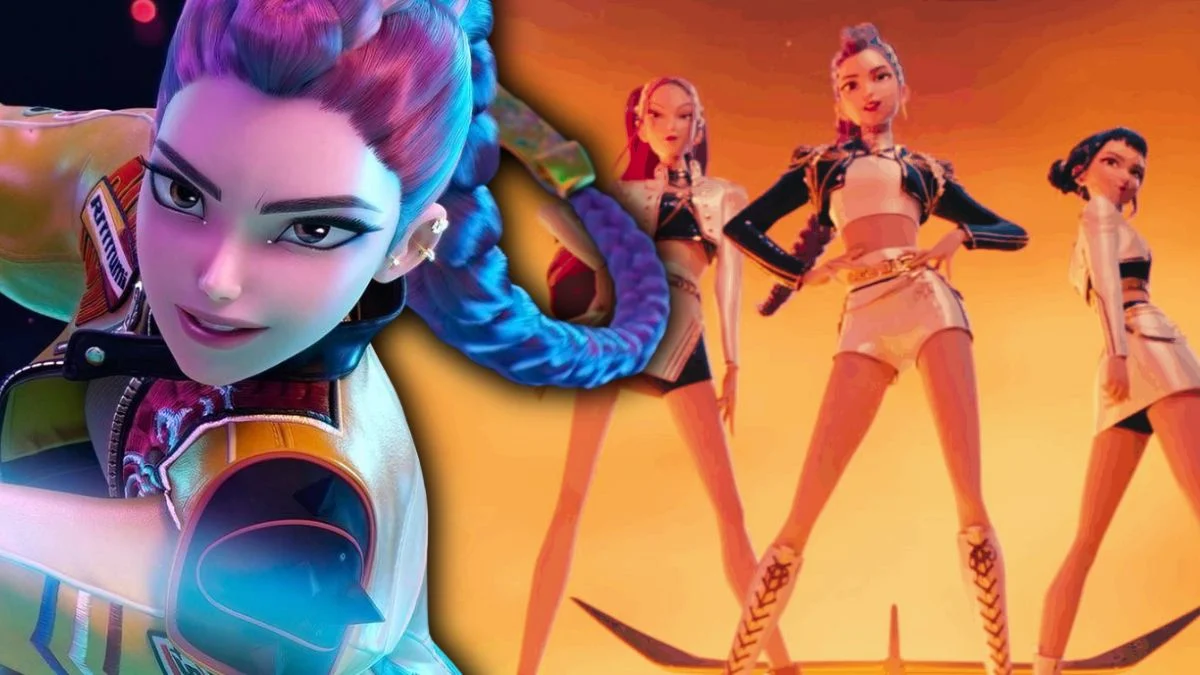


At a packed panel at the Animation Is Film Festival in Los Angeles, the creators revealed some behind-the-scenes secrets, especially about one famous scene where South Korea’s hottest singing group, Huntrix, meets the Saja Boys, a rival band of five attractive demon guys.
“I’ve been waiting to talk about this scene for so long,” said director Maggie Kang. She explained that the idea came from wanting strong female characters in a movie with Korean demons, where the three leads could be talented and funny, but also silly.
“When this movie was first pitched, Kristine Belson, the president of Sony Animation, said, ‘Let’s objectify the crap out of these guys.’ Finally! So that was kind of our goal: to make really thirsty girls.”
In the scene, when Zoey and Mira see the Saja Boys, their eyes turn into hearts, then change into all kinds of shapes as their attraction grows.
At one point, Zoey’s heart-shaped eyes turn into a six-pack, then a corn cob, before finally popping. Kang said this was the first major scene they animated because “we thought that all the jokes were landing really well. And we also just really desperately wanted it in the movie.”
Animation director Josh Beveridge called it a “proof of concept” for the characters. He explained that the team had to figure out how to make glamorous faces do ridiculous things, which was both conceptually and technically tricky.
The look of the movie combines three main influences: K-pop music, K-dramas, and Japanese anime. Beveridge said, “We had to figure out a whole bunch of fancy little animation illusions to pull this off. All that stuff breaks all the rules of everything we’ve ever done before.”
For example, when Zoey’s jaw drops and she drools, the typical 3D character rig doesn’t work. Beveridge explained that “to get those big mouths, that’s basically a fake room floating a foot in front of the face, but it has to [look right] under the same light.”
Production designer Helen Chen added that the team studied exaggerated anime expressions, using a style they called “demi-chibi.” Character designer Omar Smith sculpted characters to the camera for this effect, and Kang compared the rigs to a Mr. Potato Head, with interchangeable parts.
Chris Appelhans, who co-directed with Kang, praised the work of character designer Ami Thompson, who created the female leads, and Scott Watanabe, who made the expressive faces possible in 3D animation.
Appelhans also said that lighting the characters required studying Korean cinematography. “There are different plane changes, different things that flatter, different tricks you do to make people look their best, which was tied into our love of fashion photography, K-drama lighting, music videos,” he explained.
The panel also highlighted some K-drama references in the heart-eyes scene. Kang described a slo-mo moment with Rumi’s purple braid as “fireworks … because if we just did slow-mo, it didn’t feel right.” Appelhans added that they used multiple camera angles, like in K-dramas, to make small moments feel big, even though animators had to create all the coverage themselves.
The movie’s action scenes were inspired by K-pop choreography and Korean action films. Kang said, “You can get pretty violent if you put a lot of glitter on,” and Beveridge joked that the “sparkle dust” made the battles feel like dance fights rather than full violence.
Kang explained that she wanted the story to be very Korean and feature a heroic female lead. “We just went down the list of Korean things and landed on K-pop. And when we added that together, it just felt fun and exciting,” she said. She also joked about working with Appelhans, whose wife is Korean, saying it helped their collaboration feel seamless.
Regarding the possibility of a sequel, Kang mentioned a deleted song in the original movie that she felt didn’t fit emotionally. “There was a moment that was kind of like Rumi’s dark night of the soul … but it just felt emotionally not correct to have that moment and then go right into a climax, so we took it out.”
Appelhans added that any future music videos would stay true to the characters and their world. “We don’t want people to think of these as animated K-pop characters or a virtual band. We just want them to think about Mira, Zoey, Rumi … you saw everybody go straight past all of those things we worried about. They just went for character and the music. That was the goal the whole time.”
Have something to add? Let us know in the comments!