Is This a Film or a Story You Already Know Is True? How Charvee Pandya Works Both Sides of the Screen


Is This a Film or a Story You Already Know Is True? How Charvee Pandya Works Both Sides of the Screen
An Indian-origin producer who worked outside the system to bring a South Asian story to international screens, and her model reveals what the collapse of arts funding demands from the next generation of independent filmmakers.
Feature film production in Los Angeles grew 52.3% year-over-year in Q1 2026, with independent films driving the majority of that activity. However, overall on-location production remains 3.3% below the same period last year, a recovery still fragile enough that independent filmmakers cannot yet rely on an established ecosystem and must build their own.
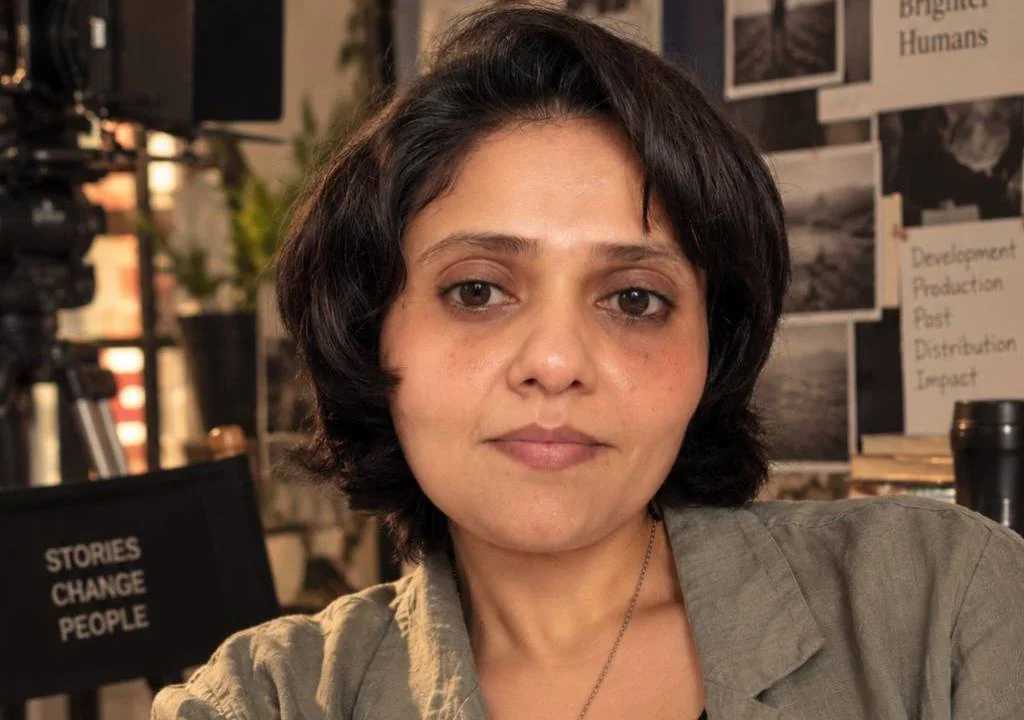
That is the gap the AAPI Renaissance Rally was built for. Among its 2026 finalists: Bhool Chook, a South Asian short produced by Charvee Pandya, shot in Los Angeles, in a city where she knew no one, during that same fragile recovery window. Charvee spent a decade building one of the more unusual careers in contemporary international cinema. She moved through production coordination on Toronto International Film Festival (TIFF)-selected films, studio development at Lionsgate India, festival infrastructure at the Mumbai Academy of Moving Image, and managing producer roles spanning India, the UK, and the Middle East. None of those moves followed a conventional path. Each move crossed a boundary. What was built was not resilience; it was a filmmaker who could keep working when any single layer of the system failed.
The Rarest Combination in Independent Film
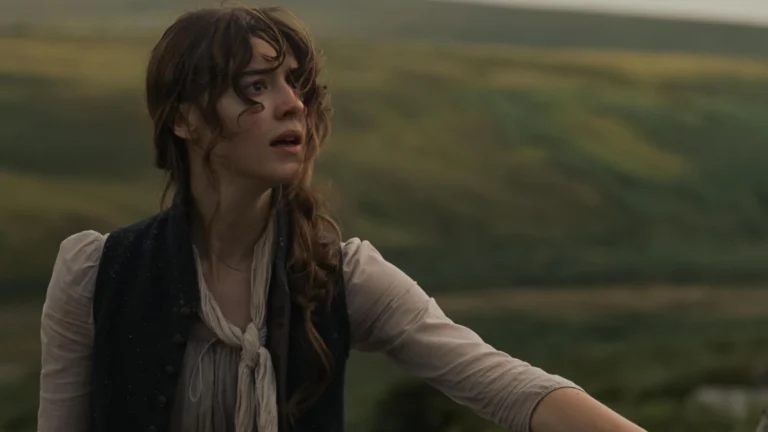
Most film professionals master one side, creative development or physical production. Rarely has Charvee’s decade-long career moved continuously between both. She coordinated internationally mounted features in India, working on projects like The Wedding Guest, directed by Michael Winterbottom, and Maya, directed by Mia Hansen-Løve, both of which traveled through major international festivals, including the TIFF.
Both productions carried real weight once they reached festival audiences, critically and commercially. The Wedding Guest premiered at TIFF in September 2018, a festival that drew more than 5,500 attendees from 87 countries that year, and secured U.S. distribution through IFC Films shortly after. The film went on to a theatrical release in March 2019, crossed $386,000 in domestic box office, and expanded into home video and worldwide streaming through Amazon Prime Video by that October, a full distribution cycle for a festival acquisition of its size. Critics highlighted Dev Patel’s range as a leading man across the film’s tense border crossings. Maya opened at TIFF the same month, and IndieWire’s festival review hailed Mia Hansen-Løve as among the most exciting directors working in contemporary film, pointing to the film’s sun-baked Goa locations as central to selling its story of displacement.
Neither outcome was incidental to the layer underneath it. Shooting across the India-Pakistan border for The Wedding Guest and coordinating an international arthouse crew on location in Goa for Maya required exactly the kind of on-ground execution Charvee was brought in to manage, the difference between a film that reaches a festival programmer’s shortlist and one that never leaves the shoot.
That foundation deepened when Charvee joined Lionsgate India as a studio producer on scripted originals, including the platform’s first Hindi original series. There she worked directly in writers’ rooms, across adaptation processes, long-form narrative development, and the specific demands of OTT storytelling in a market where the format was still new. The series was developed and produced during COVID-19, closing its run with a 7.2/10 IMDb rating at a time when comparable shows in the category were struggling to complete production at all, and lead actress Lara Dutta went on to win at the 2022 ScreenXX Summit & Awards for her performance. Both outcomes trace back to choices made in the room Charvee sat in: how far to localize the source format, which scenes to keep from the original, and who to cast opposite Lara Dutta, decisions that shaped whether the series read as a copy of Casual or found its own identity for an Indian audience.
For a diaspora filmmaker navigating underfunded production, this dual literacy is not a luxury; it is a survival mechanism. It means knowing which corners can be cut, and speaking credibly to every person in the room.
“I can walk into a writer’s room and talk story, then walk onto a production floor and talk logistics, on the same day, on the same film. That combination is rarer than people admit. It’s also what keeps a project alive when everything else is falling apart,” Charvee says.
That dual command of the system is what made independent producing the logical next move, not a retreat from the industry, but an extension of it.
Forty Strangers Before a Single Frame
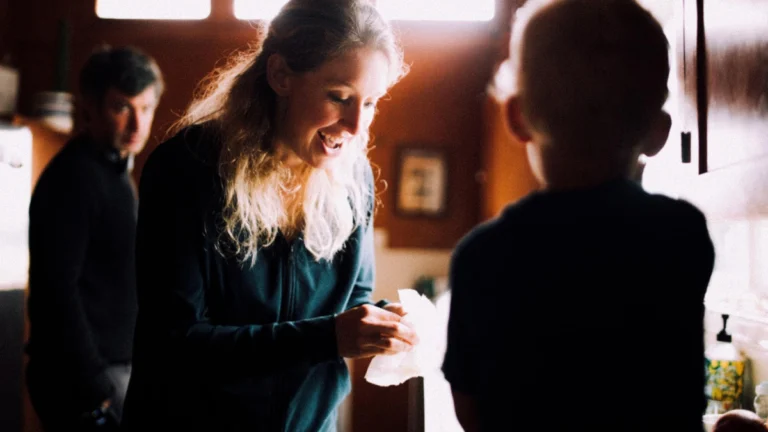
Currently, Charvee is producing Bhool Chook, translated literally as Errors and Omissions, a title that carries more weight than it first appears. The film is written and directed by Rohit Relan, a Mumbai-born, LA-based AFI graduate and 2025 Storylines Lab fellow whose work explores identity, migration, and quiet resilience. His judgment as a director found independent validation this year, when the Directors Guild of America named him a winner of its Student Spotlight Award for Underrepresented Directors for his AFI thesis film Patakha, recognition that landed after Charvee had already committed to him as Bhool Chook‘s director, the kind of confirmation that speaks to a producer’s eye for talent rather than a producer following an already-established name.
Behind the camera is cinematographer Udit Nijhawan, an AFI alum whose credits include The Price of Free, winner of the Sundance Grand Jury Prize; The Hidden Skin, which screened at the London and Dubai film festivals; and Best Eyes, recipient of the DGA Grand Jury Prize. The film follows Rohan, a son who returns to his father’s home after a decade away, broke and estranged, to care for a man who once ruled his childhood through silence and discipline. When the father’s body begins to fail him, the power between them quietly reverses, and neither man has the language for what comes next. It is a story about pride, care, and the things families leave unsaid across generations and geographies.
That premise is not incidental to the funding argument this article is making. Bhool Chook is the kind of film that institutional pipelines are not built to prioritize. It is culturally specific in its emotional architecture, rooted in South Asian family dynamics, and told without the softening that mainstream representation often demands. It is also, by any measure, a universally legible story. Dignity, regret, and the difficulty of love between fathers and sons do not require translation.
Charvee built the project through international crowdfunding on Seed and Spark, securing support from over forty international backers, raising funds for production before a single frame was shot.
“I raised this film across four continents from people who had never met me. What they were investing in wasn’t a budget; it was a story they recognized as true. Getting forty strangers to say yes before you shoot a single frame tells you something no development executive ever could,” Charvee explains.
The film was a finalist in the AAPI Renaissance Rally, organized by Gold House, one of the most prominent Asian American advocacy organizations in the entertainment industry.
That recognition functions as external validation from an institution whose entire purpose is to identify authentic South Asian storytelling that can travel. It is the kind of signal that opens festival programming conversations, attracts distributors, and builds credibility that institutional grants once provided. Charvee shot the film in Los Angeles, entirely unfamiliar territory, having built her career across India, the UK, and the Middle East. The point is worth noting: mounting an independent production in an unfamiliar country is not primarily about location. It is about leadership, team-building, and holding a creative vision steady while solving logistical problems in real time.
Crowdfunding builds a community around a film. Jury work builds a position inside the system that decides which films matter. For diaspora filmmakers operating without institutional backing, both are forms of infrastructure, and Charvee has pursued both deliberately.
Inside the Room Where Visibility Gets Decided
Charvee served as an official juror for the 59th WorldFest-Houston International Film Festival, one of the longest-running independent film festivals in the United States, founded in 1961. She evaluated international submissions across multiple categories: feature film, narrative short, student film, screenplay, and documentary. Her position within that jury, as one of only a small number of South Asian voices in the selection process, gave her structural participation in the systems that decide which films gain visibility and which do not.
“I’ve sat across international submissions as a juror, and I’ve stood on the other side waiting for a response. That double perspective changes how you produce. You understand exactly what makes a film visible, and you build toward that from day one, not in post,” Charvee notes.
Festival juries, selection committees, and story labs build the kind of credibility and network that grants once underwrote, slower and less predictable, but far less vulnerable to political defunding. Together, these are not consolation prizes. They are an alternate architecture.
The larger argument Charvee’s path makes is not about one producer’s career. It is about what independent diaspora filmmaking requires structurally when the institutions that were supposed to support it stop functioning reliably. The model her career demonstrates is not a workaround; it is a reorientation. Dual fluency over single-track specialization. Crowdfunding as audience validation, not a last resort. Jury seats and story labs as credibility infrastructure, not consolation prizes. Stories built to travel without sacrificing the specificity that makes them worth watching.
None of this fills the hole the NEA cuts have left. Systemic defunding is a policy failure, not a creative challenge to be solved by individual resourcefulness. But the filmmakers most likely to keep working, and to keep making work that matters, are not waiting for the infrastructure to return. They are building around its absence, one decision at a time.