


Mel Gibson and the Making of One of History’s Biggest Myths

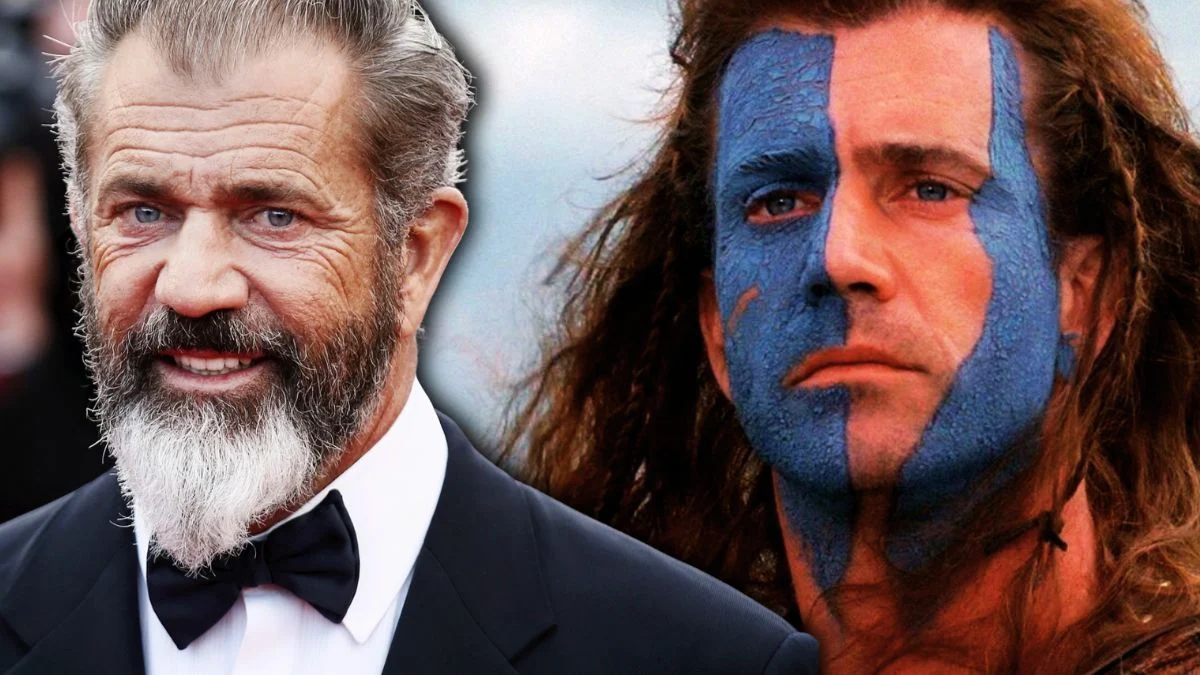


When Braveheart hit theaters in 1995, the Mel Gibson epic became an international hit, winning five Oscars and shaping how millions of people imagine William Wallace. The movie turned the medieval fighter into a global symbol of Scotland’s struggle for freedom.
But behind its stirring speeches and battle scenes, historians have long pointed out that the film takes big liberties with the truth.
One of the clearest examples is the Battle of Stirling Bridge in 1297. In Gibson’s version, the clash takes place in a wide-open field, with no sign of the bridge that gave the Scots their advantage.
In real life, Wallace and Andrew Moray used the narrow crossing over the River Forth to trap the English as they crossed in small groups, leading to a decisive victory. Without the bridge, the story of that win loses its real strategy.
The film also invented a romance that never happened. Princess Isabella of France is portrayed as Wallace’s lover and even suggested to be carrying his child. But historically, Isabella was only around 12 years old at the time and still living in France.
There’s no evidence she ever met Wallace. Historians say this relationship was added purely for drama.
The costumes also get history wrong. In the movie, Scottish fighters are shown in kilts, but those didn’t exist until centuries later.
At the time, the Scots fought in organized formations like the schiltron, proving they were far more disciplined than the ragtag peasants shown on screen. Wallace himself is also presented as a poor farmer, when in fact he came from the lower nobility and held land and responsibilities.
The way the English kings are shown has drawn criticism as well. Edward I is portrayed as an almost cartoonishly cruel villain, while his son, Edward II, comes across as weak and mocked.
Historians argue that both men were far more complex than how the movie painted them. Even Wallace’s men wearing blue war paint is inaccurate, since that was a Pictish tradition that had disappeared centuries earlier.
Perhaps the biggest distortion is the idea of Wallace as the only leader of the Scottish rebellion. In reality, others like Andrew Moray played just as big a role in key victories. By leaving them out, the movie oversimplifies the resistance and makes it seem like a one-man fight.
Still, the cultural impact of Braveheart cannot be denied. The film renewed interest in Scottish history and identity, even while bending the truth. Its legacy, however, remains complicated.
Mel Gibson himself has admitted that the film romanticized Wallace. Speaking in Edinburgh while promoting the Blu-ray release, the director and star said the real man was very different from the hero on screen.
“Wallace wasn’t as nice as the character we saw up there, we romanticised him a bit. Actually he was a monster,” Gibson said. He even described him as “always burning people’s villages down” and compared him to a Viking “berserker.”
But Gibson also defended his choices, saying that film storytelling requires a certain balance. “We kind of shifted the balance a bit because someone has got to be the good guy against the bad guy; that’s the way that stories are told,” he explained.
Not everyone agreed with Gibson’s new comments. Fiona Watson, a historian who wrote a biography of Wallace, said his latest take was just as misleading as the original film. “After 15 years, he’s giving us the other version of the myth, the knuckles dragging across the floor one, which is equally untrue. The real man surely lies in between,” she told reporters.
The debate over Braveheart shows no sign of ending. While the movie remains beloved by audiences, its mix of myth and fact continues to divide historians who argue that William Wallace’s real story is still waiting to be told.
Have something to add? Let us know in the comments!