

15 Most Powerful Guns in Anime

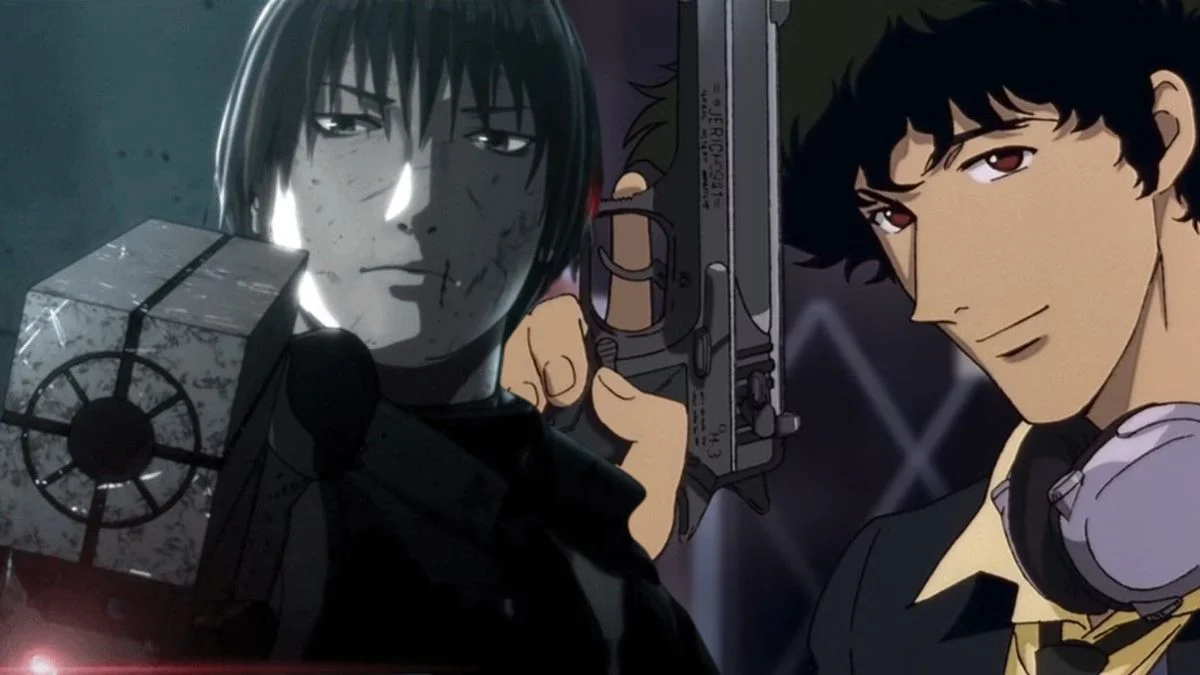


There is no shortage of jaw dropping firepower in anime, from reality bending sidearms to planet threatening cannons. These weapons drive plots, define characters, and often decide the outcome of entire battles. Some are grounded in real world engineering, while others pull from advanced tech or literal magic, but each one leaves a mark the moment it appears on screen.
This list rounds up standout guns that matter because of what they do in their stories, how they work, and the impact they have on the worlds around them. You will find specs that characters mention, how the hardware is used in key scenes, and why these pieces of gear change the stakes whenever they show up. Along the way, you will also see subtle nods to the studios that brought them to life.
Dominator from ‘Psycho-Pass’
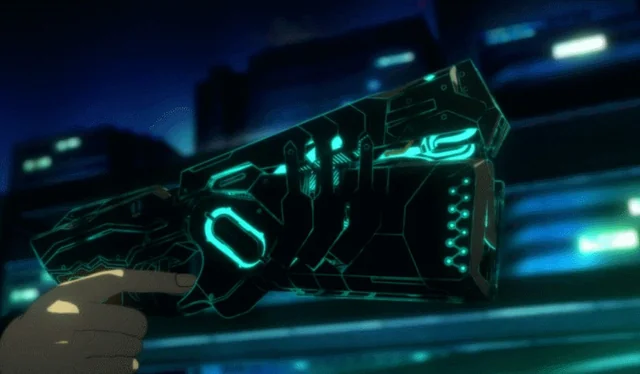
The Dominator is a networked sidearm that reads a target’s Crime Coefficient and unlocks different firing modes based on that number. Inspectors and Enforcers rely on it to paralyze suspects in Non Lethal Paralyzer mode or disintegrate them in Eliminator mode when the system authorizes lethal force. Its biometric lockout, voice guidance, and quick reconfiguration make it as much a terminal as a gun, and it will not function for unauthorized users.
The series renders each transformation with crisp mechanical detail that reflects how integral the weapon is to the plot. The team at Production I.G built the Dominator’s presence around the Sybil System’s rules, so even the reload animations, target scans, and data handshakes reinforce the story’s focus on surveillance and preemptive justice.
Angel Arm and .45 Long Colt from ‘Trigun’
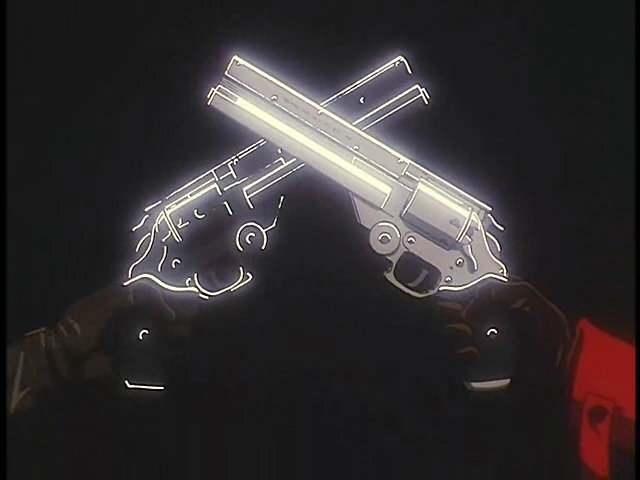
Vash’s everyday sidearm is a custom .45 Long Colt revolver with a break action design and a distinctive cylinder layout. It is accurate, durable, and engineered for quick maintenance, which lets Vash swap parts and keep it running in harsh desert conditions. The revolver’s frame conceals mechanisms tied to Vash’s biology, which becomes critical in confrontations where conventional ammunition would not be enough.
The Angel Arm is the other side of that coin, turning Vash’s arm into a catastrophic energy cannon that can erase city blocks in one discharge. Animation choices by Madhouse emphasize the weapon’s scaling buildup, the containment failures, and the aftermath that echoes across the planet’s settlements, making the Angel Arm a plot engine as much as a weapon.
Caster Gun from ‘Outlaw Star’
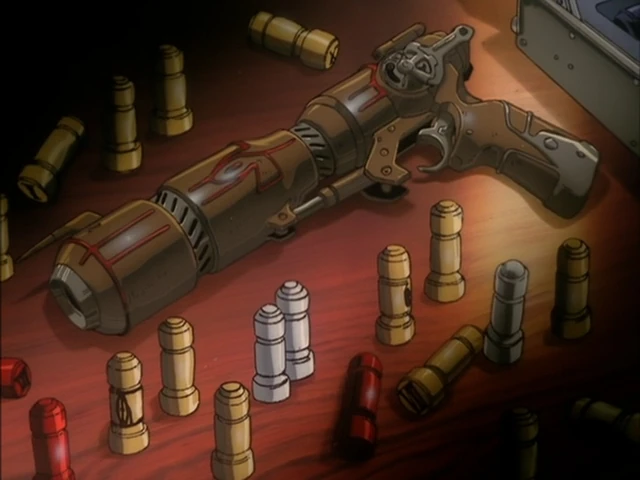
The Caster Gun fires numbered shells that function like single use spells, each with distinct effects that interact with the cosmic rules explained in the show. Lower numbers might deliver force blasts or sealing tricks, while rare high numbers can overwhelm fortified targets at the cost of heavy recoil and user risk. Ammunition scarcity creates tactical tension since every trigger pull is a meaningful resource decision.
When the action moves to space, the weapon’s rules still apply, so characters plan around shell types, counters, and the consequences of expending a limited stock. Sunrise frames the Caster Gun as a bridge between old sorcery and new tech, which is why you see careful visual effects for shell ignition, gating symbols, and spent round residue.
Jackal and Casull from ‘Hellsing’
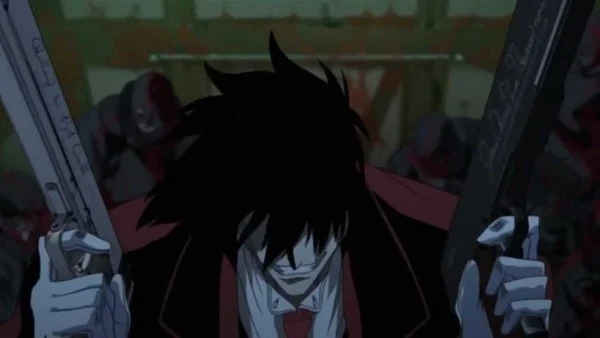
Alucard carries two custom handguns built for vampire hunting. The Jackal is a massive auto pistol designed to fire anti regeneration rounds that combine blessed silver and specialized payloads. The Casull is a high caliber semi automatic built around oversized magazines and reinforced components to handle punishing pressures without failure. Together they cover close quarters shock and sustained fire against enemies that do not stay down easily.
Both weapons integrate with specialized ammunition logistics run by the Hellsing Organization, so rearming is part of mission planning. The original television adaptation by Gonzo showcases the heft and recoil through weighty animation and muzzle blast timing, underscoring that these handguns are purpose built tools for supernatural warfare.
Jericho 941 from ‘Cowboy Bebop’
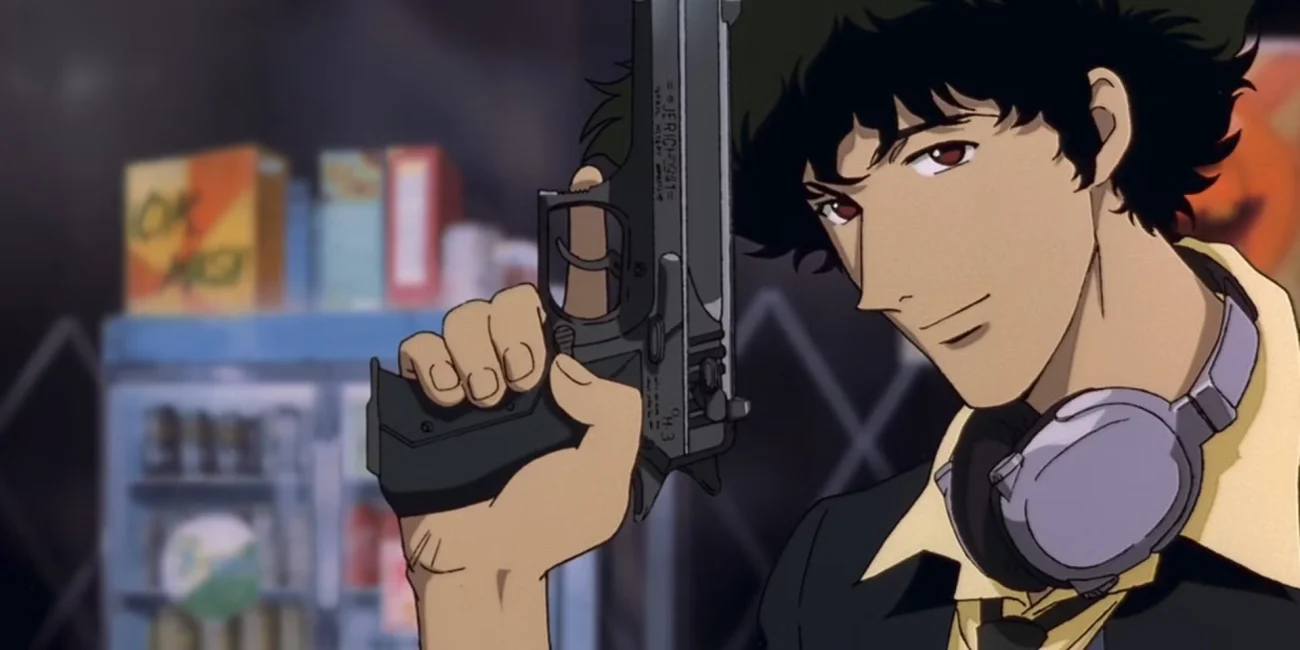
Spike Spiegel’s sidearm is a customized Jericho 941 with refined grips and sight work. The platform balances reliability with manageable recoil, which suits the way Spike engages in short, precise exchanges rather than long bursts. Details like slide serrations, magazine handling, and the pistol’s throat and feed geometry are shown during maintenance and reloads to ground the action.
In urban chases and zero G encounters, the pistol’s predictability matters more than raw caliber. Sunrise uses close up cuts on the ejection pattern, trigger discipline, and the pistol’s telltale profile to keep continuity straight and to show that this handgun is an extension of Spike’s fighting style.
Mateba Autorevolver from ‘Ghost in the Shell: Stand Alone Complex’
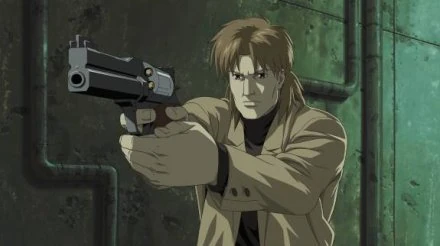
Togusa’s Mateba 2006M is a recoil operated revolver with a low bore axis that helps manage muzzle flip. Firing from the lower chamber aligns recoil closer to the shooter’s wrist, which improves follow up shots. The gun’s old school mechanics contrast with the series’ cyberization theme, and that contrast is part of how Section 9 differentiates roles within the team.
Investigations often hinge on forensic soundness, and the Mateba’s distinct rifling and case footprint show up in evidence work. Production I.G gives the revolver clean linework and deliberate cylinder timing in animation, reflecting a sidearm that keeps up with smart guns by virtue of thoughtful engineering and reliable ballistics.
Sword Cutlass Berettas from ‘Black Lagoon’
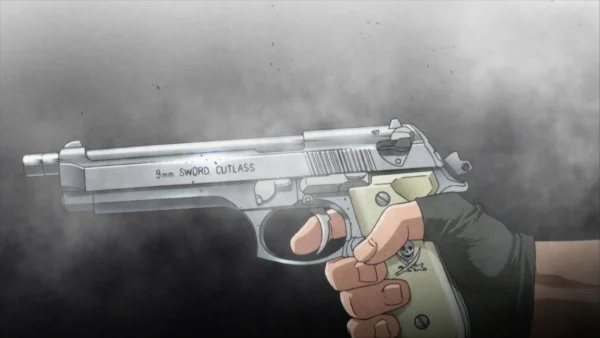
Revy runs twin Beretta 92F pistols tuned for aggressive slide cycles and high round counts. Extended magazines, modified triggers, and adjusted springs support her rapid two gun technique, while the platform’s open slide design aids in cooling and ejection under sustained fire. The show highlights room clearing, water exposure, and vehicle shootouts where those mechanical advantages matter.
The guns’ consistent behavior enables choreography built around movement rather than weapon malfunctions, although stoppages are depicted when appropriate and cleared with practiced motions. Madhouse leans into the metallic ring of slides, the flash cadence, and brass behavior to sell the rhythm of close quarters gunfights in cramped spaces.
Hecate II from ‘Sword Art Online’

Sinon’s rifle is modeled after the PGM Hecate II, a 50 caliber anti materiel platform used for long range interdiction. The in game ballistics simulate drop, travel time, and wind, so shot setup includes range finding, breathing, and timing against moving targets. The weapon’s mass, bipod deployment, and recoil sequences are shown to emphasize the demands of precision shooting.
Boss encounters and player duels demonstrate how the rifle shapes engagements beyond raw damage, since its sound signature and muzzle flash affect stealth and counter sniping. A 1 Pictures uses clean lens flares, scope parallax, and vapor trails that help viewers read distance, making each trigger pull a planned operation rather than a simple click.
Gravitational Beam Emitter from ‘Blame!’
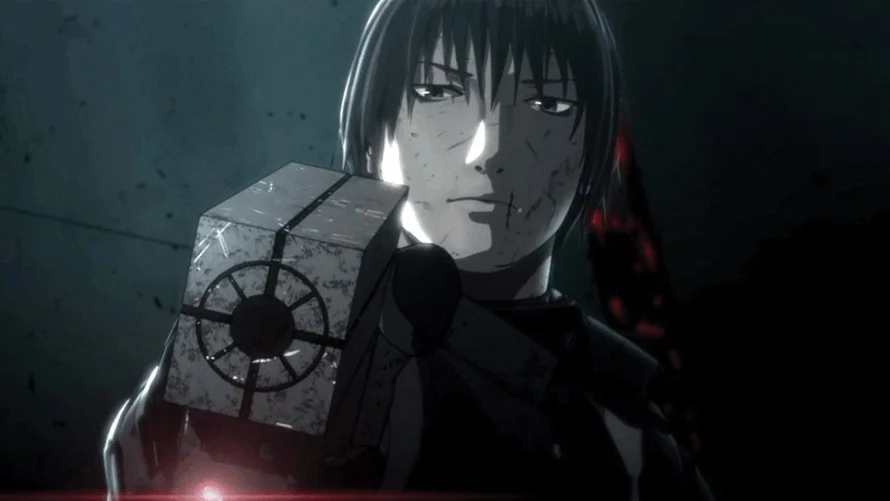
The Gravitational Beam Emitter channels exotic energy into an ultra dense line that pierces megastructures. Firing sequences include capacitor spin up, containment alignment, and a discharge that carves through kilometers of material. The weapon is portable only because of the setting’s advanced materials and power systems, and it often determines whether a path through the City even exists.
Polygon Pictures presents the GBE as a tool with explicit limitations, so shots are timed around power reserves and collateral risks. Visuals linger on heat haze, delayed structural failure, and the eerie quiet after impact, which makes the emitter feel like industrial equipment harnessed for survival rather than a flashy beam for spectacle.
Kaneda’s Laser Rifle from ‘Akira’
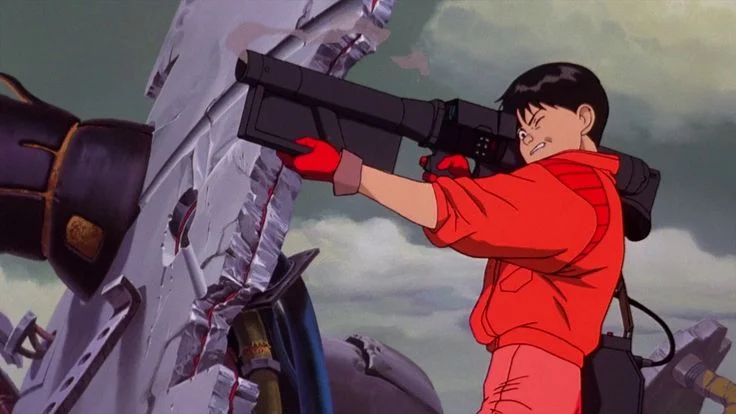
Kaneda’s battery fed rifle emits a coherent beam strong enough to shear through armored targets when connected to an external power pack. The hardware includes a keyed safety system, cooling vents, and an illuminated charge indicator that drops with sustained fire. When the pack runs dry, performance falls off fast, so cable management and charge discipline are part of using it effectively.
TMS Entertainment animates the beam with staged build and decay, plus environmental lighting that sells the rifle’s presence in dark cityscapes. The weapon’s limitations and the way characters reroute to power sources drive tense set pieces that hinge on logistics as much as marksmanship.
Cerberus Pistols and Coffin Arsenal from ‘Gungrave’
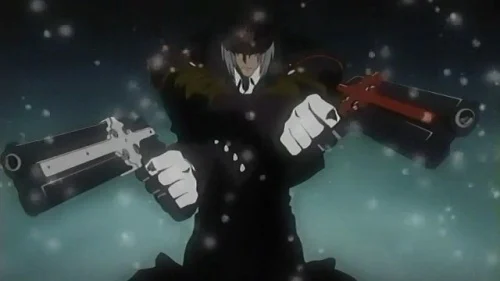
Beyond the Grave carries the Cerberus pistols, oversized handguns engineered to handle heavy custom rounds while maintaining balance for akimbo fire. The guns’ frames and slides are reinforced to keep timing consistent under punishing cycles, and they feed from robust magazines to avoid starvation during extended sequences.
The coffin on Grave’s back conceals a rotating suite of long guns and launchers that deploy for area denial or armored targets. Madhouse animates hinge geometry, locking lugs, and barrel transitions so the coffin reads like a practical armory, turning the character into a walking weapons platform with distinct modes for different threats.
Milkor MGL from ‘Jormungand’
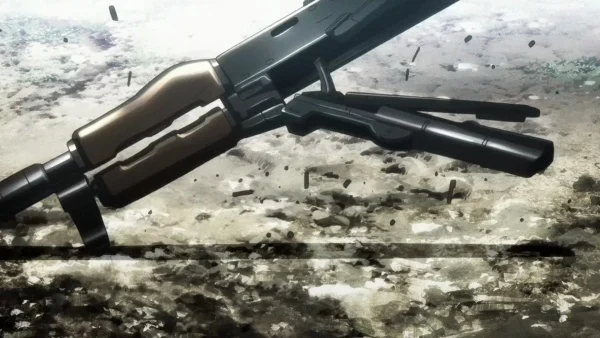
The Milkor MGL gives Koko’s crew a six shot 40 mm launcher capable of cycling a variety of rounds, from high explosive to smoke and less lethal options. Its spring driven cylinder and robust construction allow rapid follow ups without complex electronics, which is ideal for rough field conditions. The show uses it for bounding overwatch, area denial, and vehicle interdiction where blast radius matters more than pinpoint accuracy.
White Fox pays attention to cylinder indexing, leaf sight adjustments, and the way different rounds change recoil and terminal effects. That focus on load selection is why scenes often cut to close ups of markings on the grenades, reinforcing that the platform’s strength is flexibility.
Anti Personnel ODM Pistols from ‘Attack on Titan’
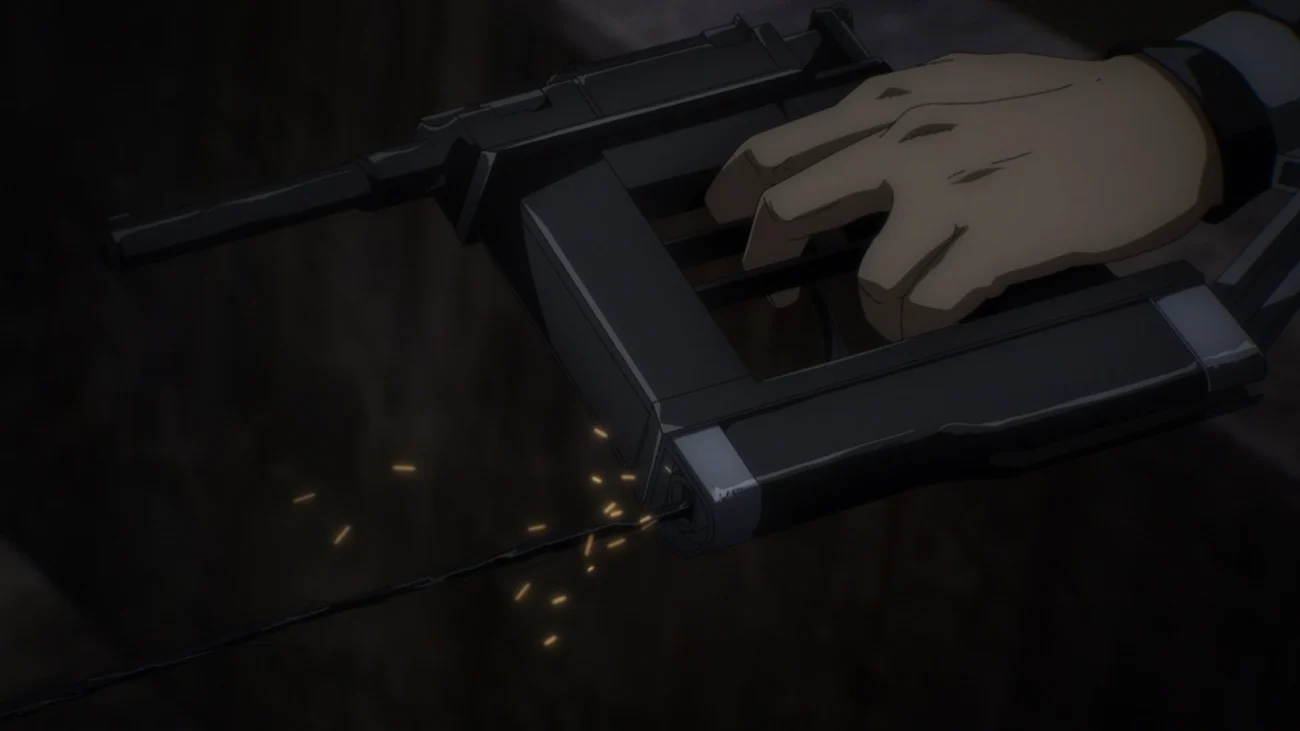
Kenny’s squad uses pistols integrated into the grips of their omni directional mobility gear. The system pairs grappling shots with lead rounds, letting users anchor, pivot, and fire while accelerating through three dimensional space. Magazines sit near the wrists for quick swaps, and the triggers are oriented for stability during high G maneuvers.
Engagements show how the pistols’ effective range and penetration shape tactics in narrow streets and forests. Wit Studio frames the choreography around line of sight and momentum, so you can track when a shooter chooses to fire a grapple, brake with gas vents, and commit to a burst that will land before the opponent clears a rooftop.
Positron Rifle from ‘Neon Genesis Evangelion’
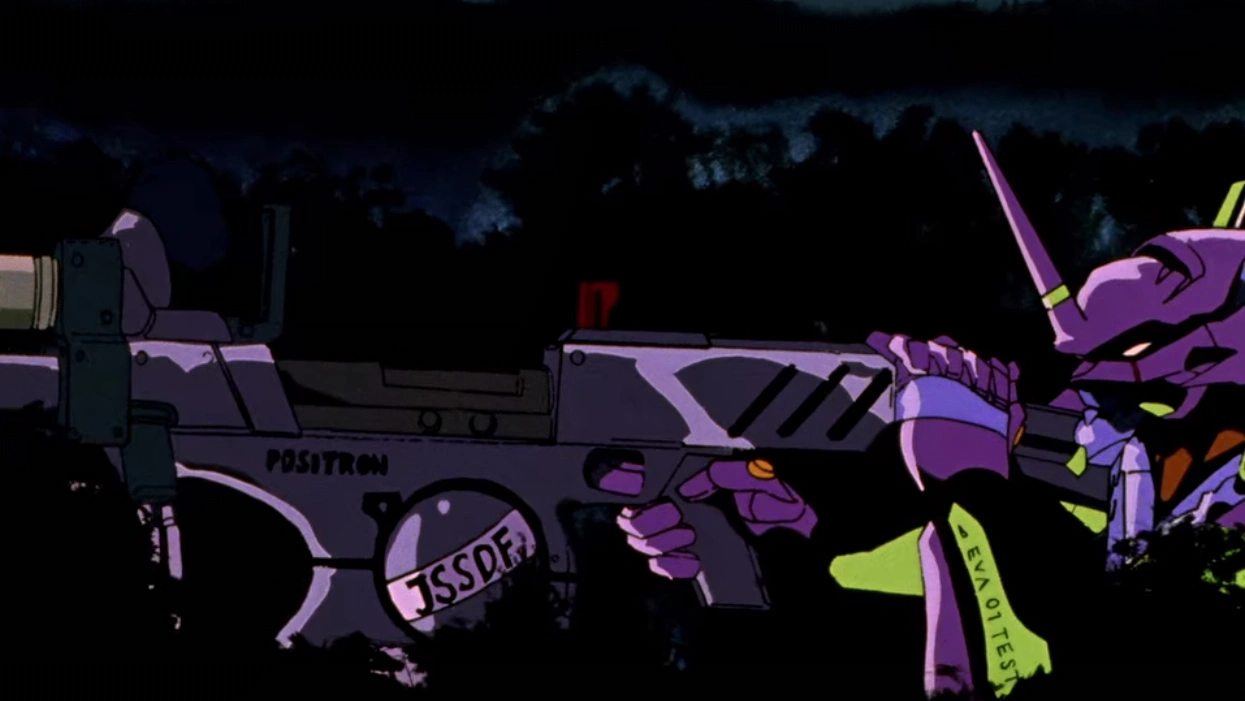
The positron rifle channels grid power through a massive capacitor array to push a focused particle stream across long distances. During critical operations it ties directly into an external power network, which means the weapon’s performance depends on supply stability and cooling windows that must be synchronized with firing solutions.
Because the shot can bore through thick armor, characters stage entire battles around giving the rifle a single clean opportunity. Gainax underscores that dependency with careful setup shots of cabling, radiators, and targeting optics, showing how a superweapon turns into a logistics challenge under live fire.
Beam Rifle from ‘Mobile Suit Gundam’
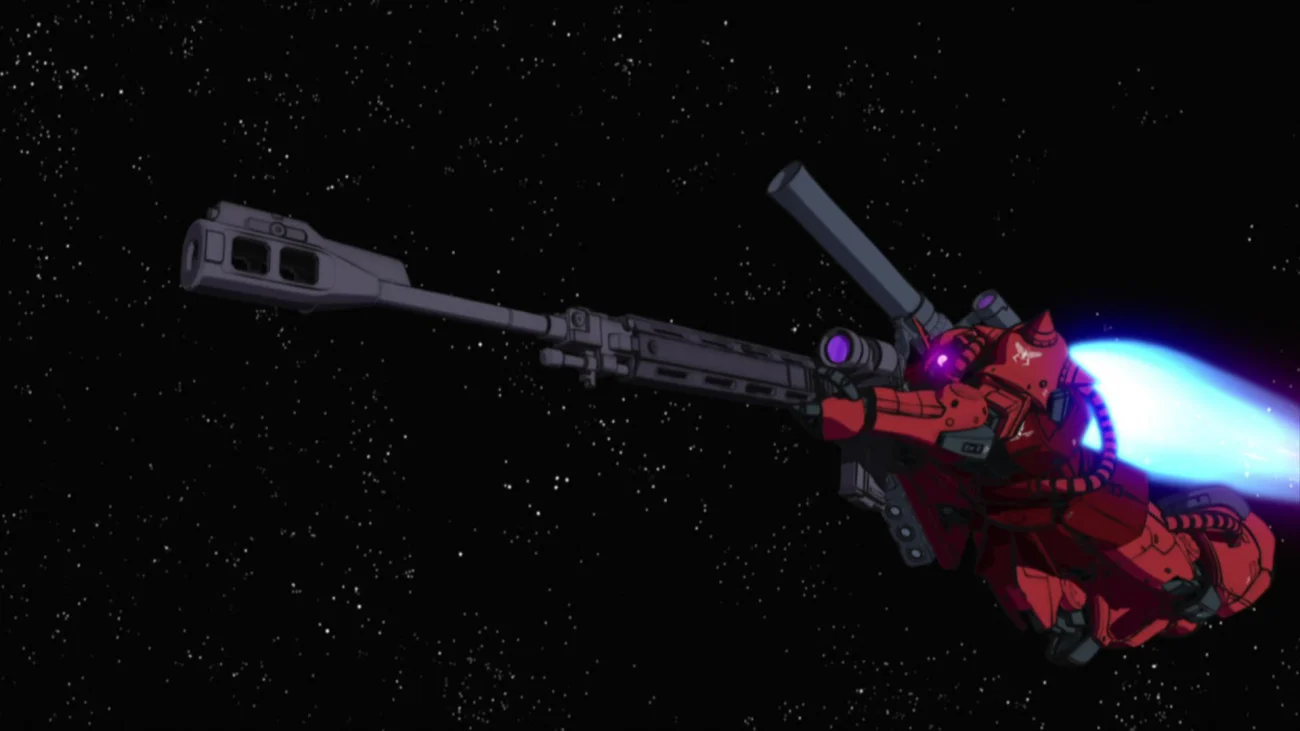
The RX 78 2’s beam rifle uses a compact energy condenser to emit superheated particles that vaporize armor on contact. Its output rivals ship mounted weapons in a portable package, which is why shots are paced around capacitor charge and spare e packs. Pilots manage heat and power so the rifle is ready at decisive moments, and they switch to a beam saber or shield when they need to conserve energy.
Sunrise treats the rifle as a battlefield equalizer by tying its use to tactical setups like flanking, range control, and supply lines. Cutaways to e pack swaps, targeting reticles, and muzzle bloom help you read when a pilot is stretching the system and when they are holding back for the next encounter.
Share your picks for the most powerful guns in anime in the comments and tell us which scenes made you sit up and pay attention.