Netflix ‘Collision Course’ Ending Explained

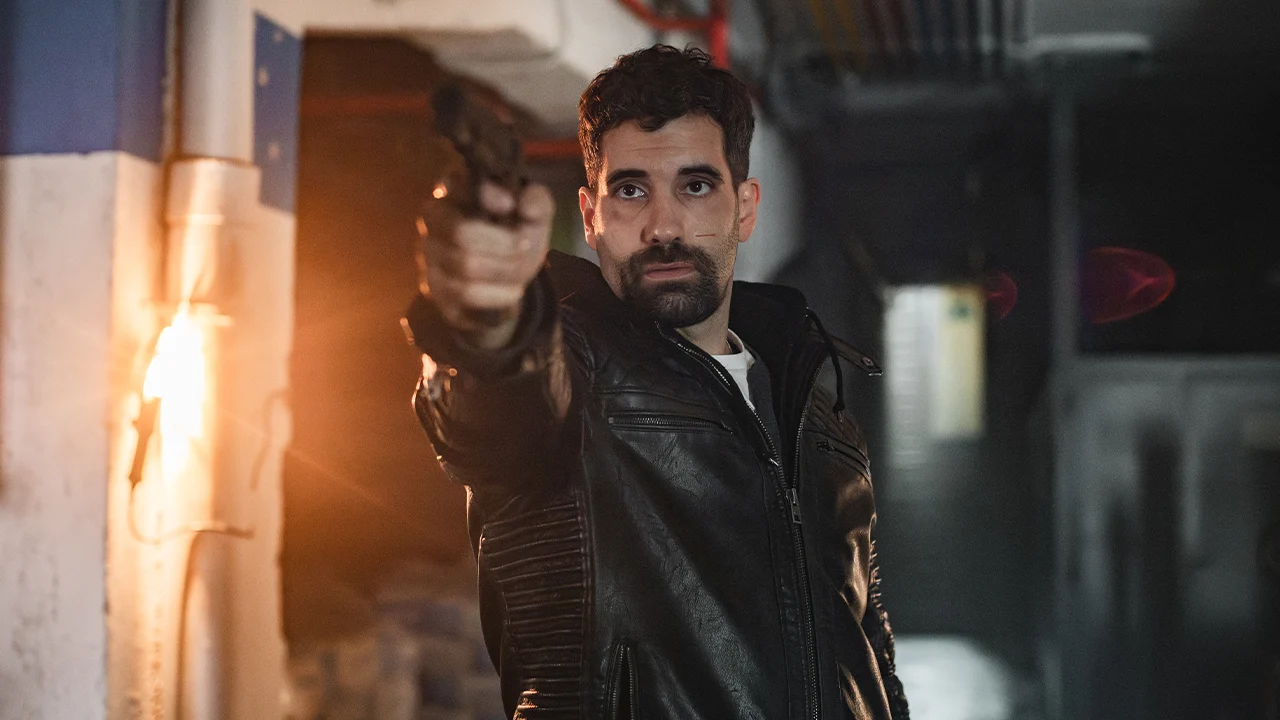

The ‘Collision Course’ ending arrives after a structure that keeps rewinding the same car crash, and it leaves viewers with a final image that plays differently on second thought. Daniel Sánchez Arévalo’s thriller, originally titled ‘Colisión’, debuted on Netflix on October 30 and turns a standard robbery into an intricate psychological puzzle. The film is built around who survives the crash and who does not.
Here is how the closing sequence works, how the earlier chapters feed into it, and what critics have said about the film’s approach to its own twists.
The Madrid Bank Heist That Sets the Netflix Thriller in Motion
The story follows a bank robbery in Madrid in 2013, shortly after the economic collapse and the government bailout of the banks. Four masked perpetrators storm a prominent branch to reach safe deposit box 34, tying up branch manager Ernesto, played by Luis Zahera, during the raid.
The crew is not made up of career criminals. It consists of three active police officers named Carla, Tomás and Raúl, alongside a retired veteran named Pedro. Their positions inside law enforcement mean they expect to steer the investigation and erase evidence from within.
During the getaway, amid mounting arguments, their car is hit by another vehicle and flips over. Netflix’s own description says the crash exposes the hidden side of each thief, along with betrayals and lies that began long before the heist.
How the Alternate Timelines Unfold
Instead of following a linear narrative, the film splits into chapters, each set in an alternative version of events, and each member’s individual death is the distinguishing factor. The structure echoes ‘Run Lola Run’, rewinding time to explore what happens if a different crew member dies.
In one version Pedro is killed on impact, and police track him through the serial number on his knee prosthesis. A panicked Raúl then executes Tomás at their hideout. In another, Raúl dies and Pedro hides the stolen gems inside his son’s coffin before he is arrested.
When Carla dies, Tomás is questioned by inspector Luis, who reveals that she was pregnant and having a secret affair with Raúl. Driven mad by the betrayal, Tomás shoots Raúl and Pedro before fleeing.
The version in which Tomás dies exposes the architect of the whole scheme. Ernesto staged the heist as insurance fraud with his lover Lola and swapped the gems for fakes, then boards a flight with the real fortune while Luis arrests Carla and Raúl at the terminal. One review counts four such chapters, followed by an epilogue of sorts.
What the Final Reality Reveals About the Ending
After the fatal timelines, the film loops back to the instant of impact for a fifth reality. In this one all four robbers survive without injuries, burn the wrecked vehicle and escape in a carjacked automobile. On the surface, the crew finally gets the clean getaway the earlier chapters denied them.
In the back seat, Carla and Raúl exchange subtle smiles that confirm their secret affair and their private plan to steal the diamonds together. In the front, Tomás complains about the smell of dog mess that Pedro stepped in during their escape from the vault.
Pedro tells Tomás to get used to the smell, unaware that the footprint will become the forensic evidence that incriminates them all. Having watched what each secret costs in the other chapters, viewers know the escape is closer to a countdown than a victory.
The economic backdrop adds weight to that irony. Co-star Luis Zahera told Europa Press that “the history repeats itself” when reflecting on the recession’s lingering scars.
Critical Reaction to the Twist Heavy Structure
Early reviews have been split on whether the puzzle format earns its payoff. One review calls the film heavy on plot, sometimes enamored with its twists and light on character work, since motivations and traumas surface mostly through the aftermath of the heist.
Another review argues the film is conceived around twist after twist and says the epilogue’s happy note feels more half baked and false the longer one thinks about it. That reading treats the final sequence as a weak spot rather than a deliberate trap.
A third review takes the opposite view. It describes the film as a crime puzzle that rewards viewers willing to surrender to its game of deception. Sánchez Arévalo has described the premise pitched to him by executive producer Ramón Campos as a rollercoaster built to keep tension unrelenting.
Since every other version of the crash ends badly for someone, was the final getaway ever really a win for Carla and Raúl, or was the dog mess on Pedro’s shoe always going to give them away?