Netflix ‘The Law of Beasts’ Ending Explained: What the Finale Says About Justice and Friendship

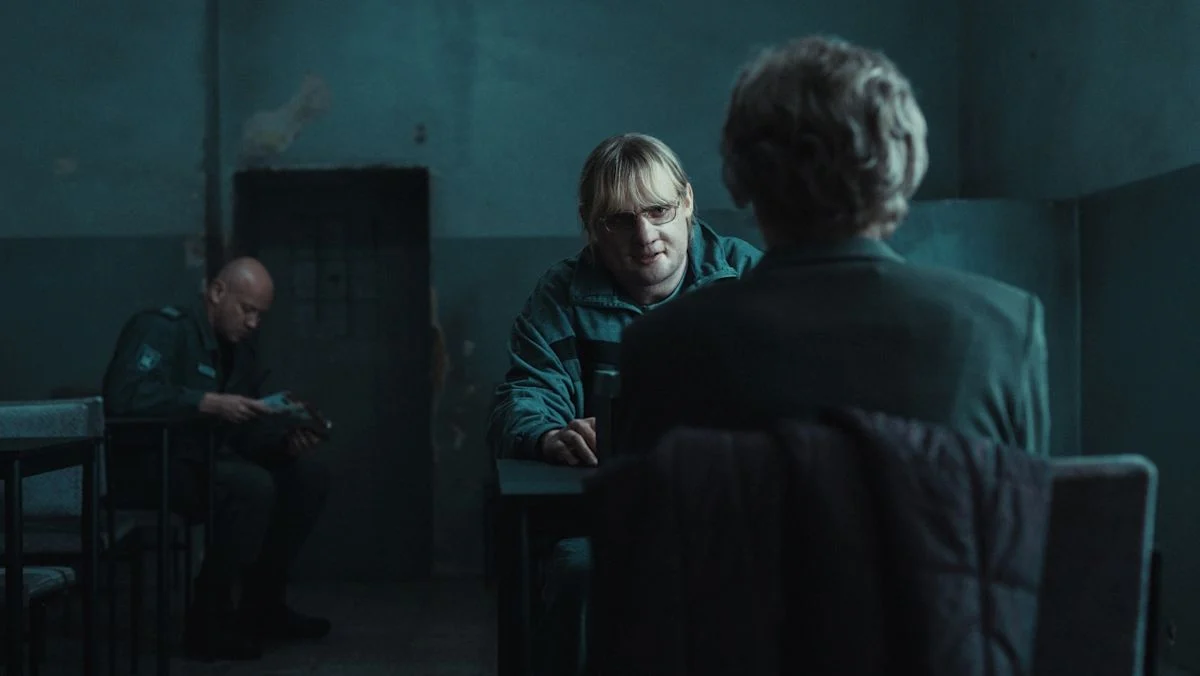
The ending of ‘The Law of Beasts’ closes a four episode Polish drama on a restrained and deliberately uneasy note. Directed by Kasper Bajon, the series arrived globally on Netflix on November 18. Rather than offering a clean victory, the finale asks what a society owes both its victims and its own legal principles.
What follows is ‘The Law of Beasts’ ending explained, with spoilers throughout. It covers how the two timelines converge, what happened between the central characters, and where the real case enters the story.
The Finale Explained Through Two Timelines
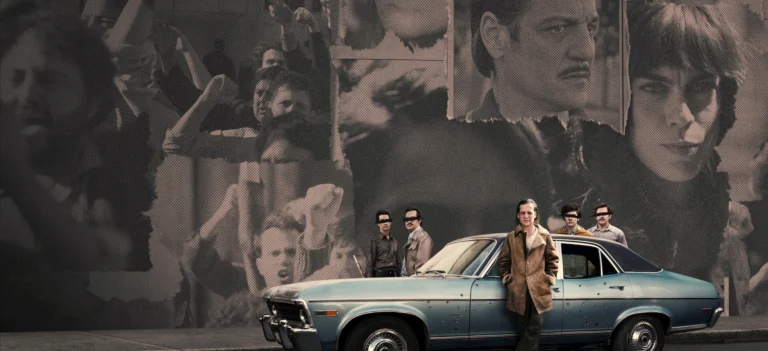
The story moves between 1988 and 2014. In the earlier period, Major Anna Bersz leads an investigation into the murders of four young boys, while her friend, psychiatrist Agnieszka Grabska, assesses the main suspect, Mariusz Trynkiewicz.
Twenty five years later the case returns as his prison sentence nears its end. Anna is now a senior government official and Agnieszka a respected psychiatric expert, and both are pulled back in as the government pursues legislation meant to keep dangerous offenders from returning to society.
The final episode brings the two timelines together and finally shows why the friendship collapsed. Each episode runs about 45 minutes, so the series reaches its conclusion in roughly three hours.
Anna and Agnieszka and the Decision of 1988
In 1988 Anna was determined to secure the harshest outcome, and the approaching political changes in Poland raised the possibility that the death penalty would soon disappear. Agnieszka, as the assigned psychiatrist, was expected to give an independent clinical opinion rather than the one the police or the public wanted.
Under heavy emotional pressure and appeals to their friendship, Agnieszka signed an assessment supporting full criminal responsibility. Trynkiewicz received a death sentence.
Poland’s political transformation in 1989 then changed everything, and the sentence was commuted to a fixed term of 25 years. The result was close to the opposite of what Anna intended, and neither woman could fully accept what the other had done, so their friendship never recovered.
The Beasts Act and Agnieszka’s Testimony
In 2014 Anna backs the Beasts Act, a law that would allow certain offenders to be placed in a specialised closed institution after their prison terms end. Agnieszka sees a danger in letting the state treat a completed sentence as something it can simply extend.
When Agnieszka takes the stand she refuses to repeat her earlier compromise. She acknowledges the seriousness of his psychological profile, but she insists that psychiatry cannot become a convenient tool for prolonging a punishment that has legally ended.
The outcome is that Trynkiewicz is transferred to the National Centre for the Prevention of Dissocial Behaviours in Gostynin. Anna gets the result she fought for, yet she and Agnieszka part outside the courthouse in opposite directions, with no real reconciliation.
The Real Case Behind the Ending
The series is inspired by the true events that led to the creation of Poland’s controversial Beast Law. Anna Bersz and Agnieszka Grabska, however, are fictional characters who did not exist in real life.
In comments shared by Netflix, Bajon described the series as an exploration of what happens when the law, the sense of justice and the need to keep society safe cannot be reconciled. That framing explains why the finale feels so unresolved.
The WP Film review called the series a sensitively made but heavy drama about the responsibility of the state, the duties of a doctor and suffering that cannot be repaired. Netflix has not confirmed a second season, and the production is presented as a four part limited series.
Having seen Agnieszka hold her ground in that courtroom while Anna won the outcome she wanted, do you think the ending of ‘The Law of Beasts’ vindicates the psychiatrist’s refusal to bend, or was Anna right that public safety had to come first?