Netflix’s ‘Avatar: The Last Airbender’ Climbs the Charts Despite Mixed Reviews in Season 2



Netflix’s live-action fantasy universe has always been a complicated proposition for longtime fans of animated classics. The streamer has repeatedly ventured into the territory of beloved animated series, with results ranging from the swift cancellation of ‘Cowboy Bebop’ to the celebrated success of ‘One Piece’. The live-action ‘Avatar: The Last Airbender’ sits in an interesting middle ground, with the series receiving mixed critical reception while being praised for its visual effects, action sequences, and cultural representation. The pressure heading into the show’s second chapter was undeniable, particularly given the enormity of the source material it was tasked with translating.
Season 2 follows Team Avatar as they journey across the Earth Kingdom and attempt to navigate Ba Sing Se, seeking to convince Earth King Kuei of an imminent attack by the Fire Nation. Throughout the season, Aang learns earthbending from Toph while Zuko and Iroh live as refugees, with both groups hunted by Azula and her retinue. Executive producers Christine Boylan and Jabbar Raisani said they were eager to dig into the deeper, more complicated relationships that develop as the journey continues, and promised to show the real-world versions of iconic scenes from the original while also exploring some stories that the animation did not cover.
According to FlixPatrol, the second season debuted at the number two spot on both the global and domestic Netflix viewership charts, behind the holdover hit ‘I Will Find You’, signaling a major streaming debut despite the divisive critical landscape. Collider, the same outlet whose post sparked discussion across social media on June 28, highlighted the tension between that commercial momentum and the show’s inability to substantially move the needle with reviewers.
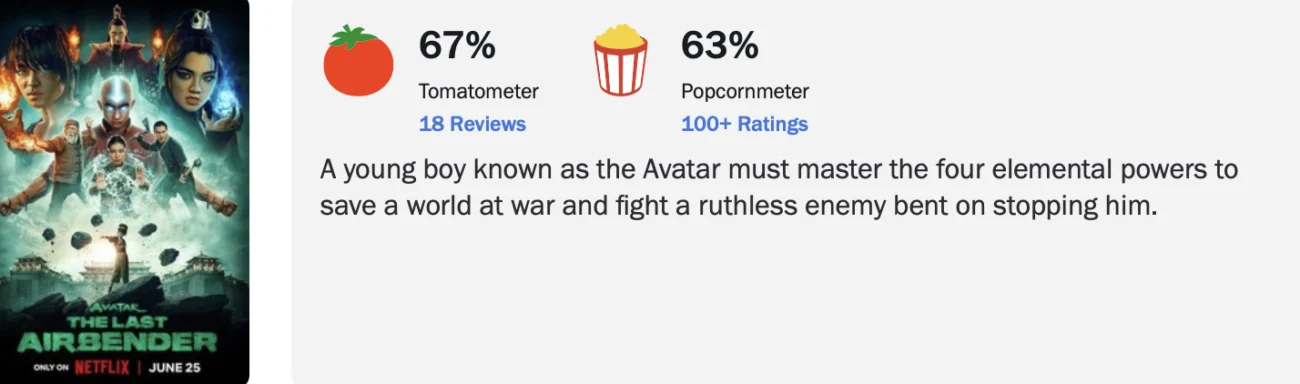
Season 2’s Rotten Tomatoes critics’ score settled at 67%, an improvement over Season 1’s 62%, but the audience score tells a starker story. The animated ‘Avatar: The Last Airbender’ boasts a near-perfect 97% audience score for its first season, 99% for the second, and 99% for the third, making the live-action version’s numbers look comparatively modest regardless of any improvement.
The one aspect of Season 2 that has drawn near-universal praise across reviews is the introduction of Toph Beifong. Miyako nails Toph’s blunt comedic timing and unique perspective on the world, making her a more-than-faithful adaptation of a beloved character. Screen Rant’s review noted that more than any other character, Toph feels like she was lifted from the animation and placed in live-action, thanks primarily to Miyako’s performance, with the reviewer declaring she rises to the challenge and smashes past it. Her dynamic with Gordon Cormier’s Aang has been widely cited as one of the season’s emotional cores.
The casting team has again been recognized for assembling one of the largest and most diverse AAPI and Indigenous casts on television, with new additions including Dolly de Leon, Dichen Lachman, and Rekha Sharma joining a deep ensemble already anchored by Paul Sun-Hyung Lee as Iroh and Dallas Liu as Zuko. All seven episodes of the season dropped simultaneously on Netflix on June 25, continuing the streamer’s all-at-once release model from Season 1.
With Season 3 already confirmed as the concluding chapter, the stakes for the franchise’s endgame are rising fast. Whether the show can fully close the gap between streaming popularity and fan devotion to the original remains the central question heading into its final run. If the journey to Ba Sing Se is any indication, the debate is far from settled, so let us know in the comments whether you think Season 2 brought the live-action ‘Avatar’ closer to earning its place alongside the Nickelodeon legend it’s based on.