Netflix’s ‘Human Vapor’ Is the Godzilla Minus One VFX Team’s Next Big Swing and It Could Change Japanese Sci-Fi Forever


Toho Studios has spent over seven decades building one of the most iconic libraries in genre cinema, from the original ‘Godzilla’ to the sweeping monster epics that shaped how the world thinks about Japanese spectacle. The studio is now venturing into entirely new territory with its first-ever collaboration with Netflix, rebooting one of its most distinctive properties from the golden era of tokusatsu filmmaking. The result is ‘Human Vapor’, a series that carries the weight of a beloved classic while arriving with an ambition that feels genuinely unprecedented for Japanese television.
The original ‘The Human Vapor’ was released in 1960, directed by Ishiro Honda, the same visionary behind the iconic ‘Godzilla’, and was part of Toho’s celebrated “Transforming Human Series,” a run of films from the 1950s and 1960s exploring science-fiction concepts rooted in human transformation and societal fear. That original story told of a man turned into vapor through a scientific experiment, using his abilities to fund a dancer’s career while eluding law enforcement. It was quietly radical for its time, blending creature-feature spectacle with surprisingly melancholic human drama.
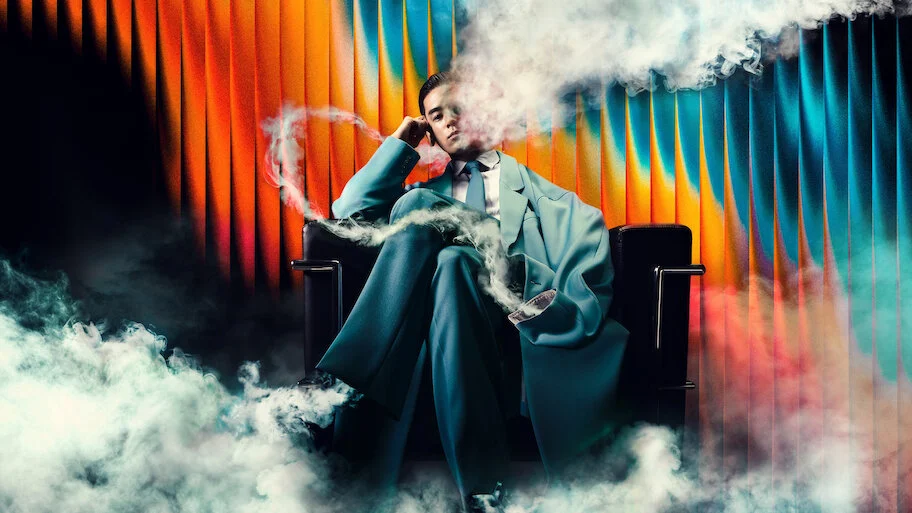
The new series reimagines that core concept with an entirely original story. In it, the world is thrown into shock when a college professor suddenly swells and explodes on live television, and a man calling himself the Human Vapor announces he will carry out a series of murders, sending society into a widespread panic. The production secured the first-ever full blockade of the area in front of Tokyo Station, following a year and a half of negotiations, and filmed across roughly 120 locations drawn from more than 1,000 scouted sites.
The series is written and executive produced by Yeon Sang-ho, the creator behind international hits including ‘Train to Busan’, ‘Hellbound’, and ‘Parasyte: The Grey’. Speaking to Screen Daily, Yeon described the emotional core he wanted to preserve: “While it is a sci-fi and thriller, at its core, it is a story about people. We focused on treating human emotions with care and portraying the characters’ humanity through the script.” Director Shinzo Katayama, known for the unsettling Disney series ‘Gannibal’, is behind the camera, bringing his reputation for merging genre intensity with grounded psychological stakes.
The cast is led by Shun Oguri and Yu Aoi, reuniting on screen together for the first time in more than twenty years. The title role of the Human Vapor itself marks the screen debut of newcomer UTA, a performer specifically selected by the creative team with the goal of finding what they described as a “blank canvas.” On the VFX front, the series enlists Shirogumi, the Academy Award-winning team behind ‘Godzilla Minus One’, tasked with updating the gaseous transformation for a modern global audience.
The origins of ‘Human Vapor’ stretch back to 2018, when Yeon Sang-ho was first approached by Toho about remaking one of the films from the Transforming Human Series, ultimately selecting this title for its skillful blend of speculative science and untapped potential. Filming ran for nearly eight months in and around Tokyo before wrapping in April 2025. All eight episodes arrive on Netflix on July 2, and whether this becomes the breakthrough moment that proves Japanese series can command the same global cultural force as their Korean counterparts is a question worth asking loudly in the comments.