Netflix’s ‘Idaho Murders’ Documentary Reignites Questions Over Why Bryan Kohberger Spared Roommate Dylan Mortensen

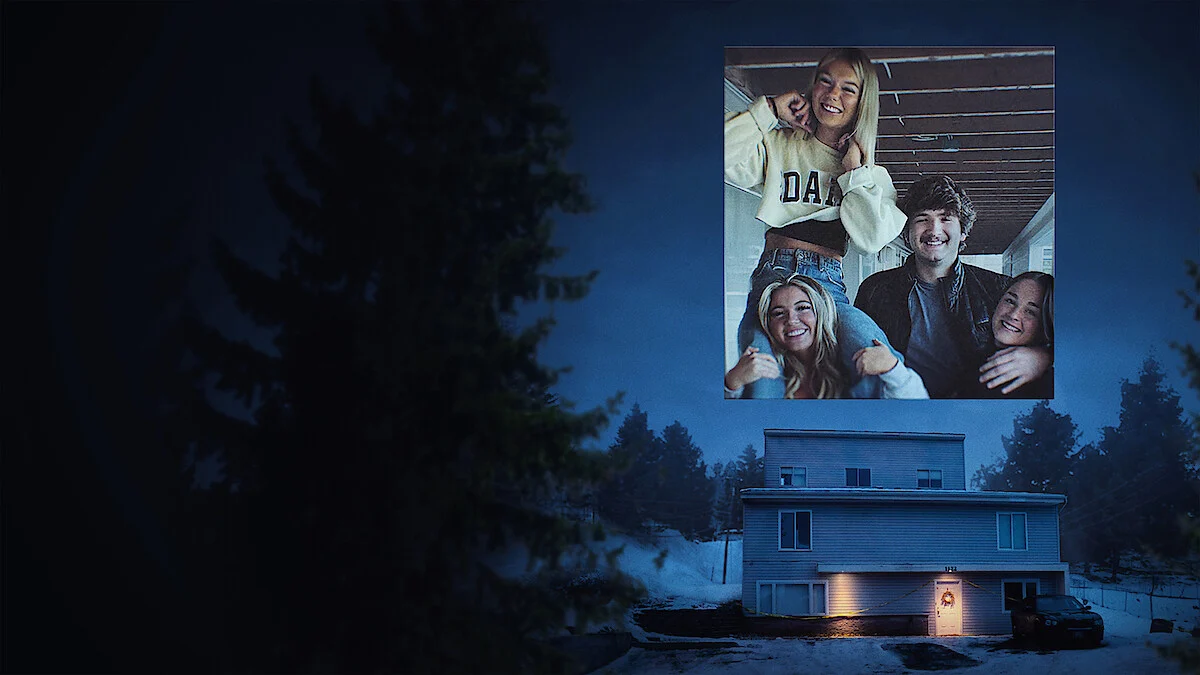

Netflix’s true crime documentary ‘The Idaho Murders: College Nightmare’ has brought renewed attention to one of the most unsettling details of the University of Idaho killings, the moment Bryan Kohberger came face to face with survivor Dylan Mortensen and left her unharmed. The three part documentary includes police interview footage of Mortensen describing hearing Kaylee Goncalves scream and run into a bathroom in the early hours of November 13, 2022, followed by an unfamiliar man’s voice telling her she was going to be okay.
The documentary focuses on the lives of the four University of Idaho students murdered by Kohberger, but it has also pushed viewers back toward a question that has lingered since his arrest, why the killer who took four lives that night chose not to take a fifth.
What Happened Inside The King Road House
About a month before the murders, Kaylee had seen a man staring at her while she was walking her dog outside the King Road house, a concern she shared with her roommate Bethany Funke. A few weeks later, Dylan, Maddie, and Bethany arrived home to find the front door had been left wide open, a detail Dylan later shared with police.
On the night of the attack, Mortensen and Funke were present in the off campus house but were left unharmed while Kaylee Goncalves, Madison Mogen, Xana Kernodle and Ethan Chapin were killed. Mortensen lived on the same floor as Kernodle and Chapin and said she got a look at the killer after hearing strange noises that night.
Moscow Police officer Mitch Nunes wrote in a report that Mortensen peeked out of her bedroom and observed a male approximately six feet tall, of slim build, wearing a black ski mask, leaving the second floor patio area. Mortensen told authorities she noticed the intruder had bushy eyebrows and that he told her he was there to help.
The Prosecutor’s Theory On Why Kohberger Left Dylan Alive
Latah County Prosecuting Attorney Bill Thompson addressed the question directly in an interview with the Idaho Statesman after Kohberger’s sentencing. Thompson said he has a hard time imagining that the killer did not see Dylan, noting that by that point Kohberger had been in the house probably longer than he had planned and had killed more people than he had planned.
Thompson said it would not surprise investigators if the killer was scared at that point and decided he had to leave, not knowing whether law enforcement had already been called. Thompson also said investigators cannot rule out the possibility that Kohberger used a second weapon during the attack, explaining that some injuries observed on Kaylee Goncalves appeared to have been caused by something other than the knife used in the killings, though he stopped short of confirming that a second weapon was involved.
Former FBI agents have offered additional theories, suggesting the attacks may have ended because Kohberger believed everyone in the home had been targeted, because he wanted to leave quickly, or because he feared being caught after spending longer than expected inside the property. None of these explanations have been confirmed as definitive, and the exact reasoning behind Kohberger’s decision remains unresolved even after his conviction.
Dylan Mortensen’s Life Since The Idaho Murders
Publicly, Mortensen has chosen to step away from the spotlight in the years since the murders. Although recordings and previously released material featuring her appear in Netflix’s documentary, she did not participate directly in it. She remains committed to her recovery through therapy and the support of her family, and reporting indicates she has focused on honoring her friends rather than being defined by the night she survived.
Mortensen attended Kohberger’s sentencing hearing in 2025 and delivered a statement to the court. She told the court that what happened that night changed everything, and that because of Kohberger four beautiful, genuine, compassionate people were taken from the world for no reason. She added that he took away her ability to trust the world around her and that his actions shattered her in ways she did not know she could break.
Mortensen told the court Kohberger had shattered her life and said the grief and trauma continue to shape her every day, describing him directly as a hollow vessel without empathy or remorse. A psychologist who commented on the case for outlets covering the documentary noted that Mortensen’s reaction that night, freezing rather than immediately calling for help, is consistent with the body’s freeze response, in which the frontal lobe effectively hands control to more primitive survival instincts. The expert added that in that specific situation, the majority of people would likely have reacted the same way.
The Documentary’s Approach To The Case
The Idaho Murders: College Nightmare comes from director Skye Borgman and executive producer Joe Berlinger, who chose to build the series around the four victims rather than around Kohberger himself. Berlinger, an Academy Award nominated producer previously behind Cold Case: Who Killed JonBenét Ramsey, said it was the stories of Madison, Kaylee, Ethan and Xana that hit him hardest when he first read about the case in November 2022.
Kohberger pleaded guilty to the murders and was sentenced on July 23, 2025, to four consecutive life terms without parole, along with an additional ten years for burglary. He is currently incarcerated at the Idaho Maximum Security Institution in Kuna, held in a restrictive housing unit where he is confined to his cell 23 hours a day, and reportedly filed a request to be transferred in summer 2025 over safety complaints, though no transfer has occurred.
‘The Idaho Murders: College Nightmare’ does not claim to resolve the question of why Kohberger left Dylan Mortensen alive, and the case is likely to keep drawing new viewers who want to reach their own conclusions about what happened on the other side of that bedroom door.