Netflix’s ‘Murder in Galicia’ Ending Explained: How the Justice System Failed Irene

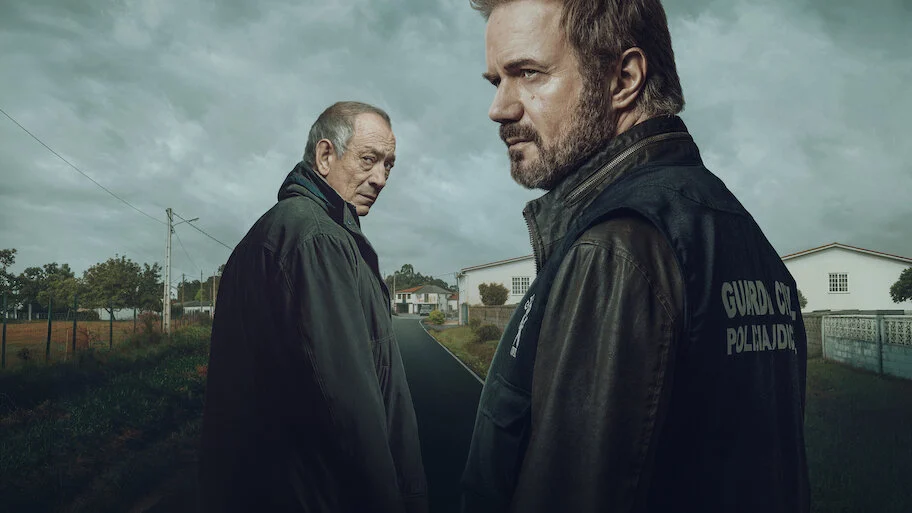
‘Murder in Galicia’ is a three part miniseries that arrived on Netflix on 13 November, starring Tristán Ulloa and produced by Bambú Producciones. It is based on a true crime story set in the quiet village of Pazos. The finale is not designed to offer comfort, and it asks viewers to sit with a case that could have gone differently.
The ‘Murder in Galicia’ ending confirms what its central investigator suspected from the first episode, but it does so at a heavy cost. To understand how the finale lands, it helps to look at the investigation, the decisions made around it, and the real events that inspired the story.
What Happens in the ‘Murder in Galicia’ Series Recap
In Pazos, Aniceto, played by Miguel Borines, and his wife Irene appear to be the perfect couple until one night she suffers a brutal attack during an apparent robbery. Aniceto tells the authorities that a group of intruders attacked her at the house. The story then shifts to the person who refuses to accept that version.
Elías, a sergeant in the Civil Guard played by Ulloa, is convinced that Aniceto is the perpetrator, and he faces a system he perceives as unwilling to heed his warnings or protect the victim. His doubts grow from details such as the bedroom where Aniceto claimed to be sleeping, which sits right next to the drawing room where Irene was watching television.
The series does not try to be a whodunit. The audience is placed alongside Elías, who knows what he believes but cannot yet prove it. That choice shapes everything that follows, because the tension comes from waiting rather than from discovery.
Elías Lago and the Judge’s Decision
Elías wants the judge to sign orders to keep Irene safe, and she refuses because there is no proof. Citing insufficient proof, the judge denies his request to restrict Aniceto’s visits. This refusal is the hinge on which the entire ending turns.
The hospital later informs Elías that Irene’s condition has improved and that she will be moved to the general ward. He fears the worst, because Aniceto could then visit her at any time and try to kill her again. The relief of her recovery becomes the very thing that exposes her.
After intensive care, Aniceto is allowed into Irene’s ward, where he sends her neighbor home and fatally stabs his wife. The scene lands hard because the series has spent its running time showing how avoidable it was. Elías asked for protection, and the answer he received was a request for evidence that arrived too late.
One reviewer noted that part of the unease comes from how ordinary Aniceto appears to everyone around him. No one saw anything strange about the couple before the murder, which makes the sergeant’s concerns increasingly difficult for others to understand.
How the ‘Murder in Galicia’ Ending Treats Elías
The finale does not hand its hero a courtroom victory. The judge does not receive any punishment for her questionable actions, and Elías decides to leave his job as a police sergeant a few years later. The result is quiet and deliberately unsatisfying.
One outlet reads the quiet departure as a sign of how institutions isolate whistleblowers rather than confront their own flaws. That interpretation fits the way the series frames its protagonist. He is right, he is ignored, and he pays a personal price for being right.
The miniseries is more about the investigation and the failure to take correct decisions in time than about the reasons behind Aniceto’s crime. The murder is concluded to have been a case of gender violence, as Aniceto often assaulted his wife in an attempt to control her life and actions. The motive is stated plainly and the story moves on to the question of accountability.
The Real Case Behind the Series
The miniseries dramatizes the 2015 attack on Isabel Fuentes and arrived one week after Netflix’s companion documentary, which premiered on November 6. The fiction renames the victim Irene. One reviewer said that change did not sit well with the real woman’s story.
According to the indictment, her husband struck her with a hammer while she slept on the sofa, then staged a robbery by disordering the kitchen and breaking a window. Thirty seven days later, while she was recovering in a hospital in Ourense, he walked into her room and stabbed her. The gap between those two nights is where the series finds its subject.
Aniceto Rodríguez was found guilty in July 2017 of attempted murder and consummated murder, and he was sentenced to 31 years in prison. He died in prison in 2018. The real sentence arrived, but it could not undo what the earlier warnings failed to prevent.
Coverage of the real case notes that the sergeant tried to warn others and make sure Isabel was better protected, but the warning was not acted upon. Given how closely the finale follows that history, did the series earn Elías’s quiet exit after the judge refused to restrict Aniceto’s visits, or should the ending have forced the system to answer for Irene’s death more directly, and where do you land on that choice.