


‘Oppenheimer’ Mistakes You’ll Never Be Able to Unsee

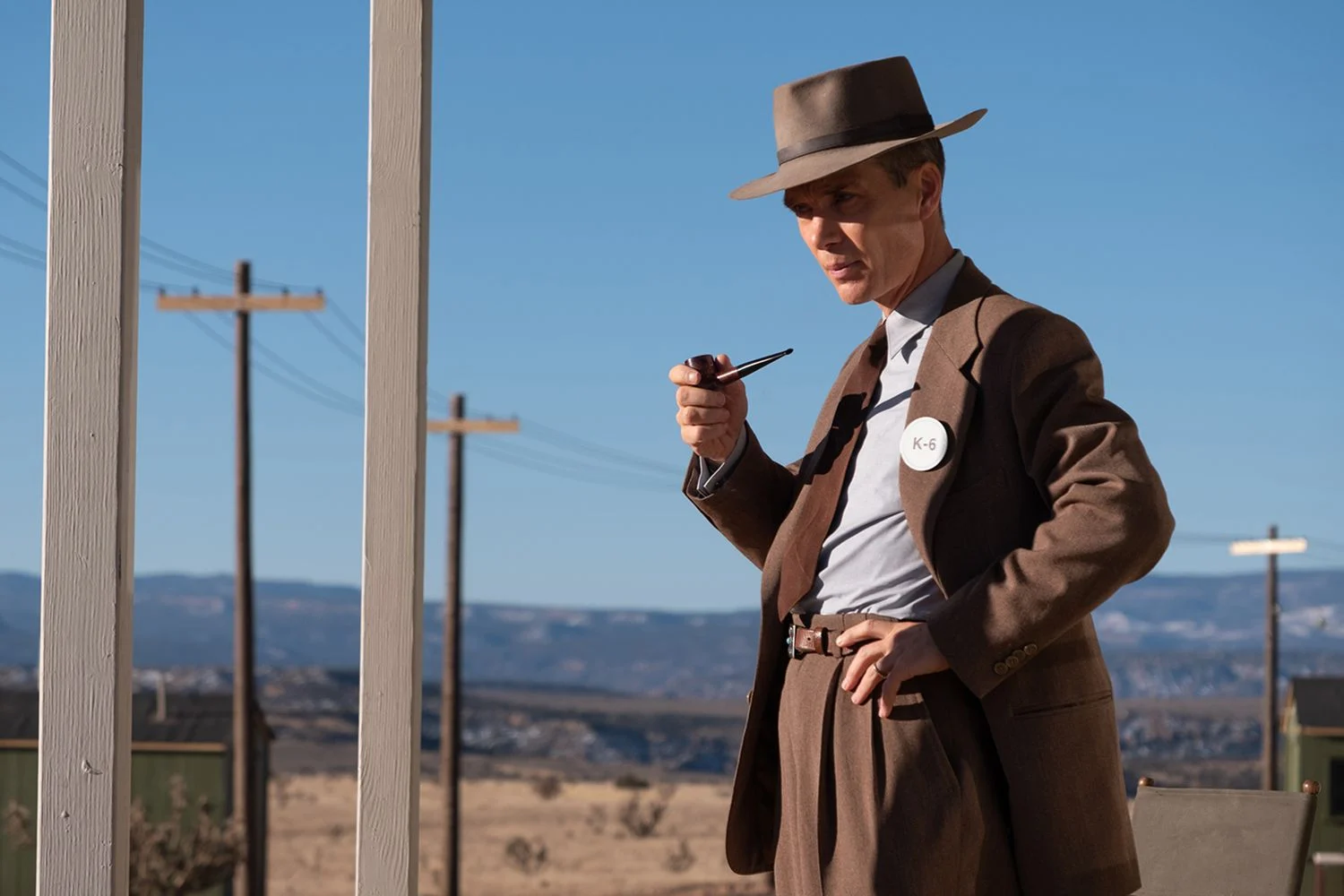


Even a meticulously crafted film like ‘Oppenheimer’ slips up here and there—sometimes with tiny continuity hiccups, sometimes with historical liberties that help the drama but bend the facts. If you’ve watched it once (or five times), these catches will jump out on your next viewing and change how certain scenes play. Below are the most talked-about misses and liberties—what happens on screen, why it’s off, and what actually lines up with the historical record. Consider this your companion guide for a sharper rewatch.
50-Star Flags in a 1945 Scene
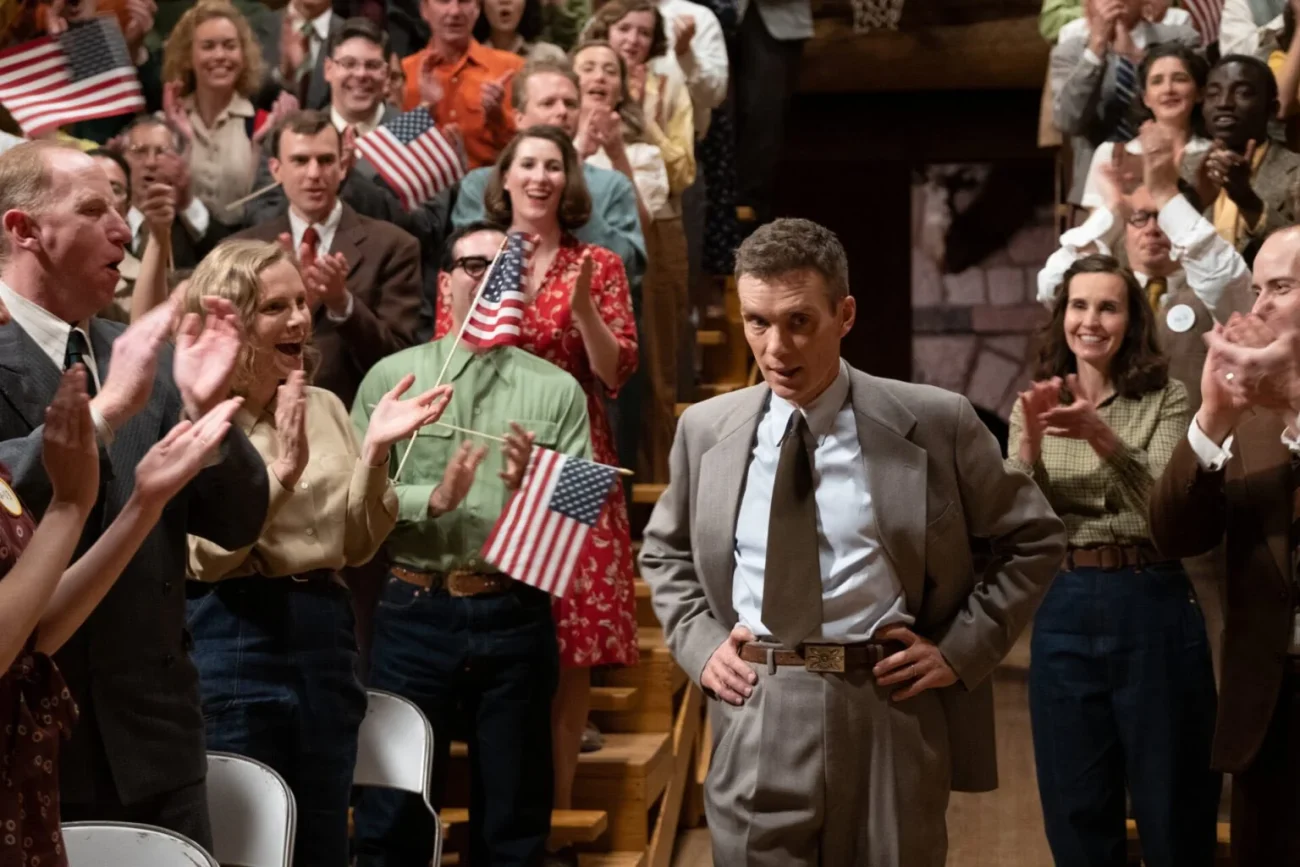
In at least one early theatrical version, a scene set in 1945 shows American flags with 50 stars, even though the U.S. had only 48 states at the time; Alaska and Hawaii were admitted in 1959, and the 50-star flag debuted on July 4, 1960. Coverage at the time highlighted the discrepancy and noted that other scenes do use period-correct flags. Some outlets also reported the apparent error didn’t appear in all prints, suggesting later versions may have corrected it. Once you know what to look for, those star rows are hard to miss.
“I Am Become Death” at Trinity
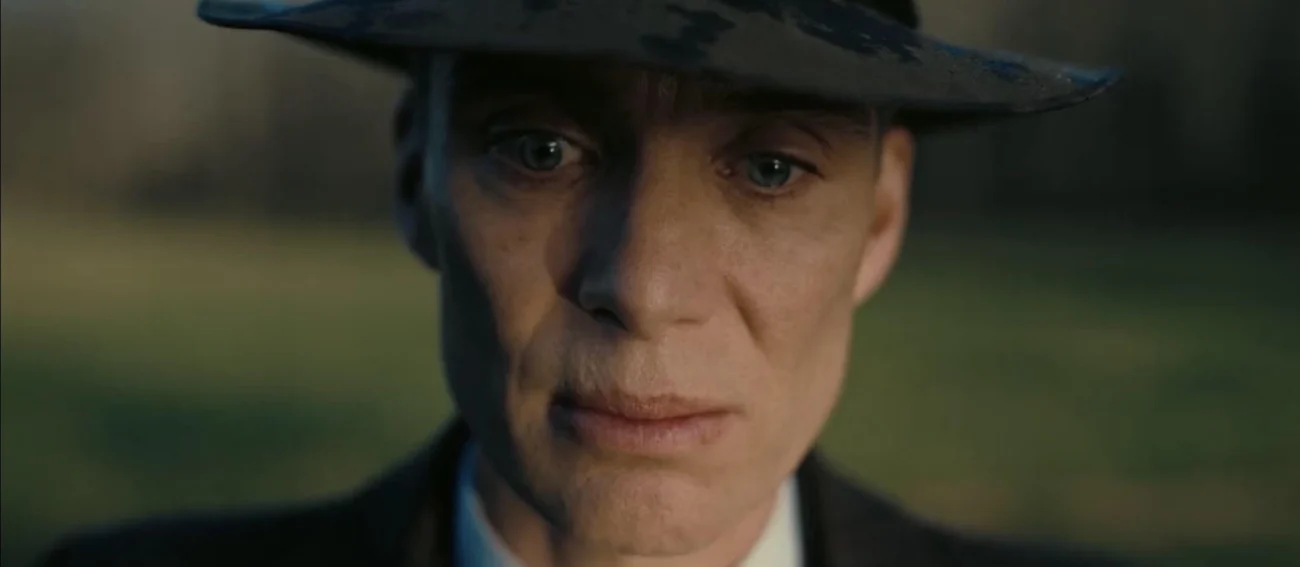
The movie places Oppenheimer’s famous Bhagavad Gita line in conjunction with the Trinity test, but the only confirmed record of him saying it comes from a 1965 television interview reflecting back on July 16, 1945. Historians note it’s unclear whether he uttered the words at the moment of detonation or only recalled them later. Dramatically, the placement heightens the scene; historically, it’s best described as uncertain. Knowing that context changes how the line lands in the theater.
The Pondside Einstein Conversation
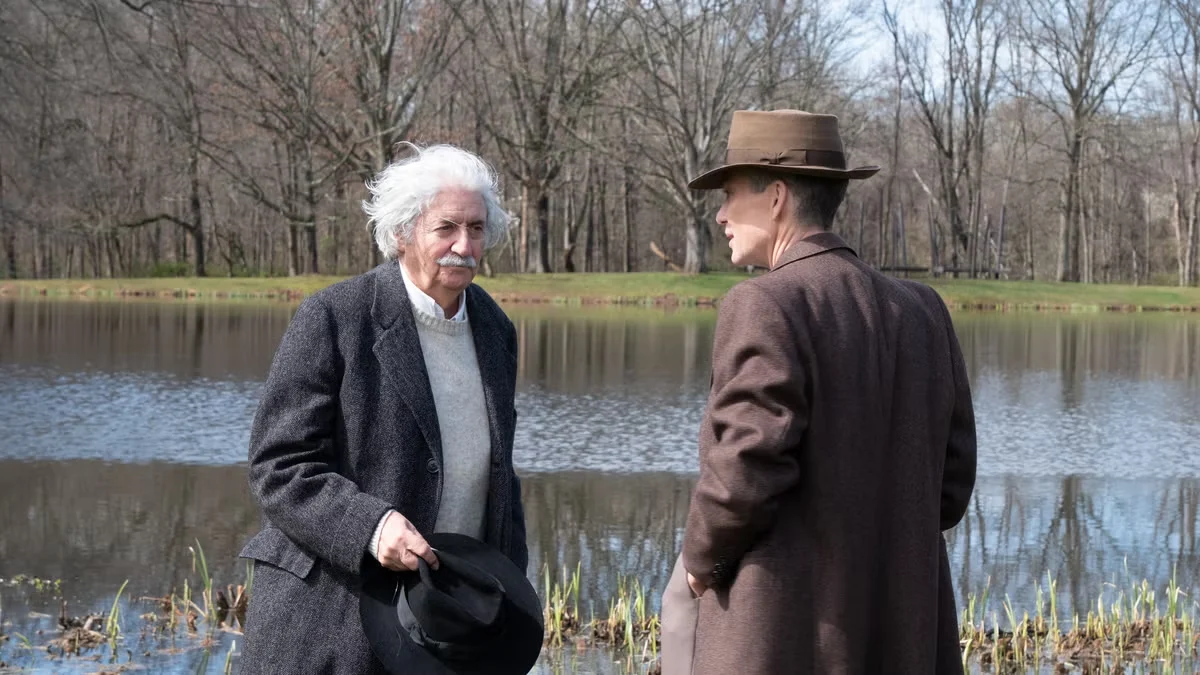
Nolan has acknowledged the climactic, private conversation between Oppenheimer and Einstein as a deliberate invention. The film also shifts an earlier technical anxiety—whether a bomb could trigger a planet-ending chain reaction—from the person Oppenheimer actually consulted (Nobel laureate Arthur Compton) to Einstein for audience clarity. The two men did know each other at Princeton, but the specific exchange and its wording are not documented. It’s powerful storytelling, just not a transcript.
Phone Swaps Ears Mid-Shot
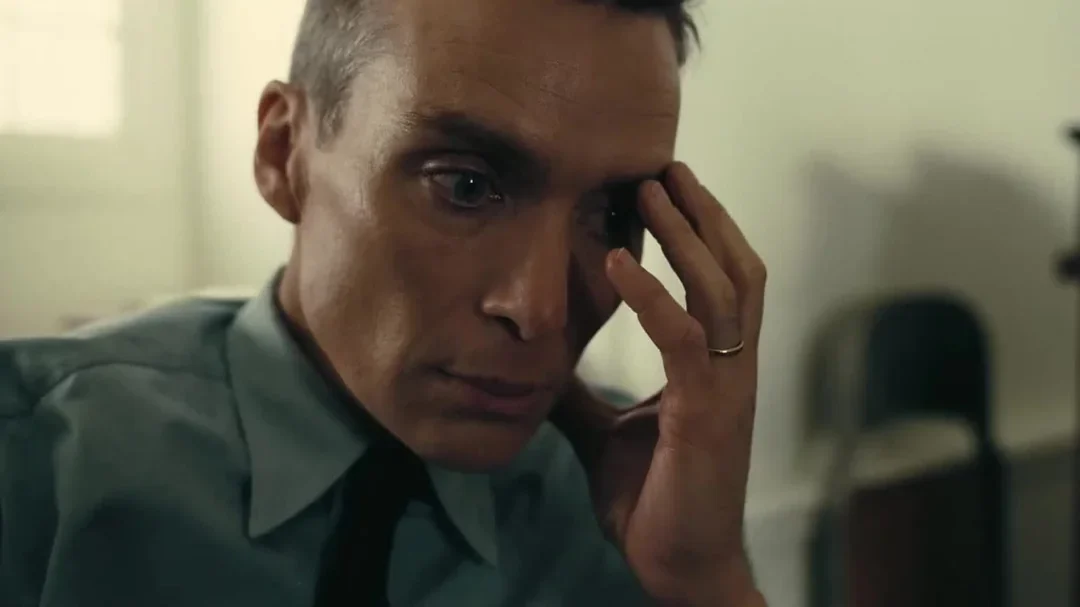
During Oppenheimer’s closed-door security interrogation, a phone passes to him—and jumps from one ear to the other between cuts. The shot-to-shot mismatch is a classic continuity slip: the wide shows the receiver at his left ear, the tight shows it at his right. Editors often conceal such flips with cutaways, but here it’s plain on a close rewatch. Once spotted, it pops every time that scene plays.
Wind Vanishes on the Trinity Tower
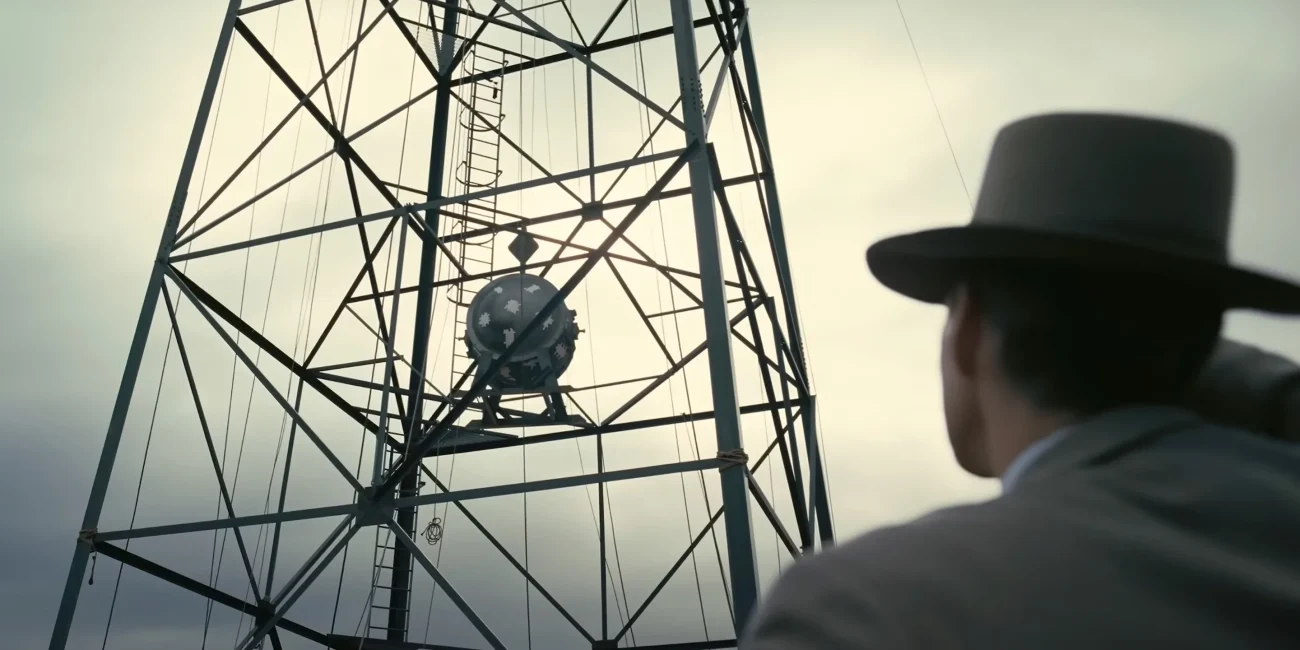
As Oppenheimer climbs the Trinity tower, strong wind whips his coat—then abruptly disappears when he reaches the top. In reality, wind can vary with height, but the on-off behavior here reads like an unintended continuity reset between setups. The cut creates a visual jolt if you’re watching the background movement. It’s a small thing that sticks out in such a carefully staged sequence.
A Scientist’s Position Jumps in the Desert
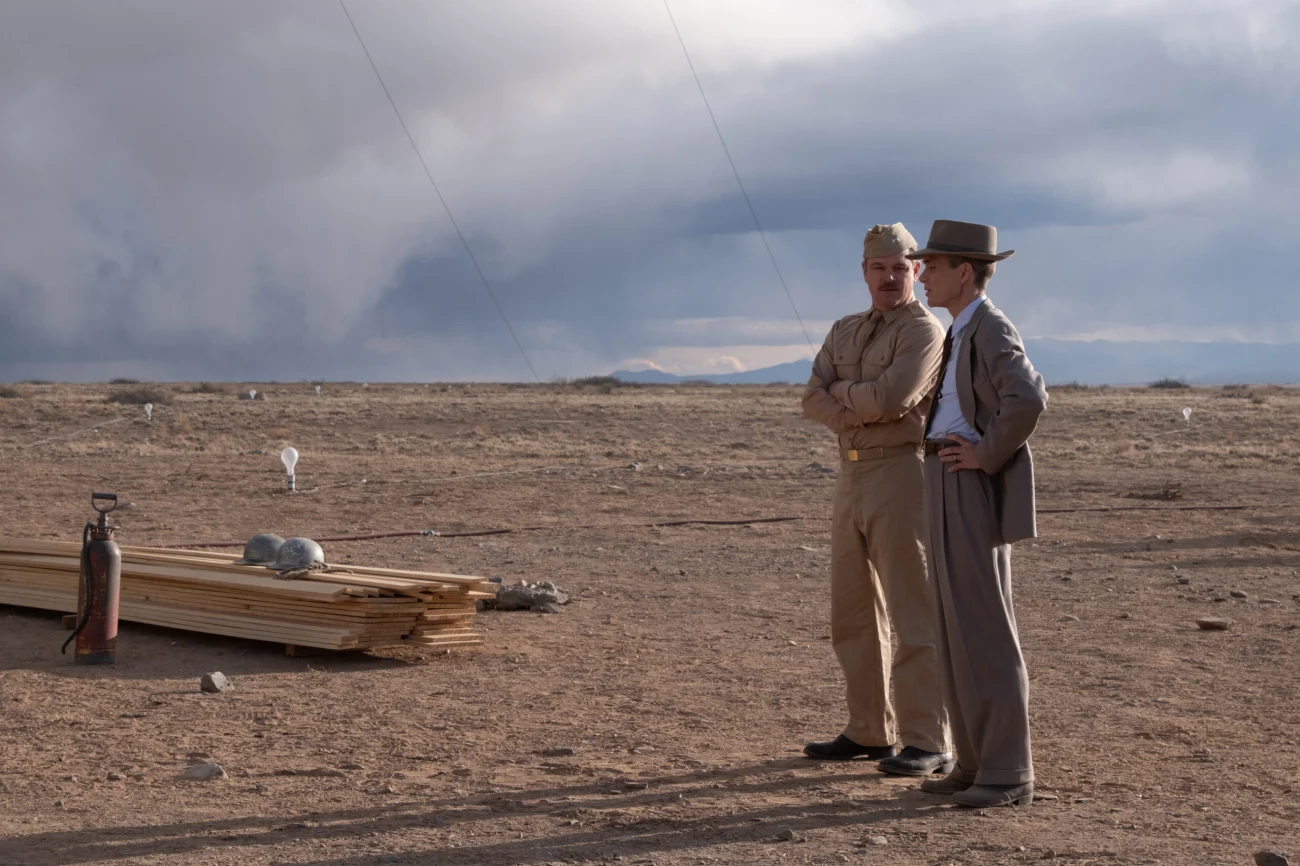
In the aftermath of a desert test sequence, Lilli Hornig is shown cresting a small hill—and, in the very next shot, suddenly standing near George Kistiakowsky closer to the blast site—then back on the hill in a following angle. That’s a screen-direction and blocking mismatch between takes. Cross-cutting can compress space and time, but here the placements contradict one another within seconds. It’s a textbook example of background continuity slipping under the radar.
Chalkboard Letters Change Between Cuts
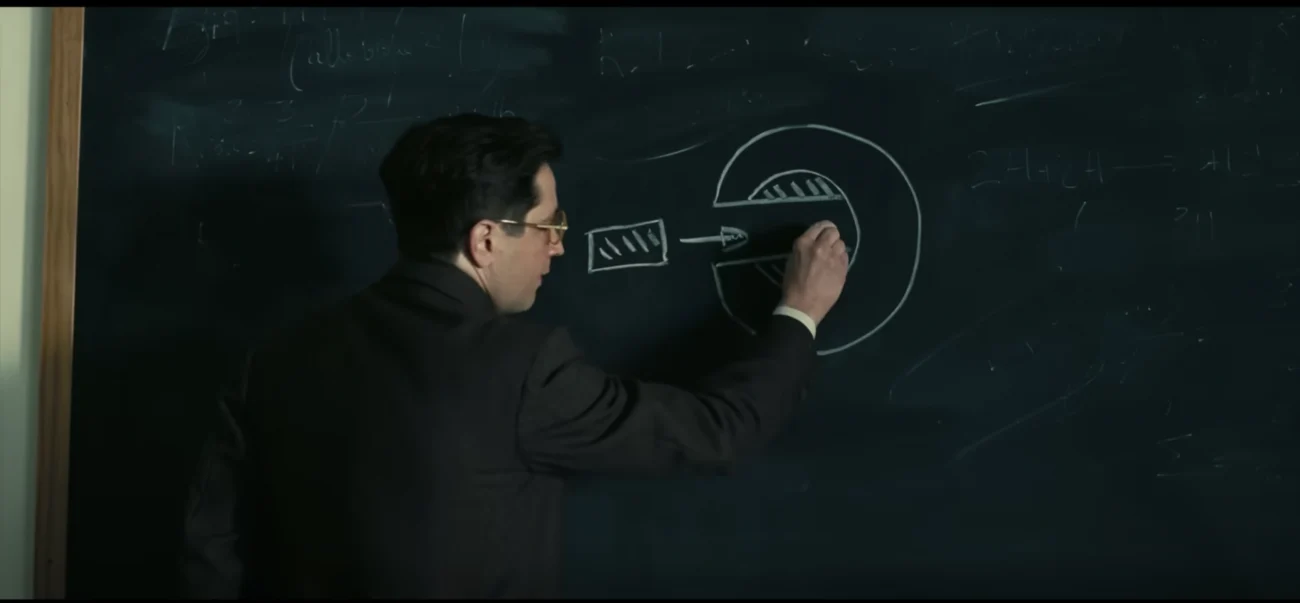
In a Berkeley classroom scene, the letters Oppenheimer writes on the chalkboard (notably the shapes of “C” and “T”) appear with different forms in alternating angles. This indicates the board was re-written (or a stand-in board was used) between shots, and the resets didn’t perfectly match. Chalk continuity is surprisingly tricky in dialogue-heavy scenes. Here, the letterforms give the swap away.
Glasses On, Glasses Off in the Hearing Room
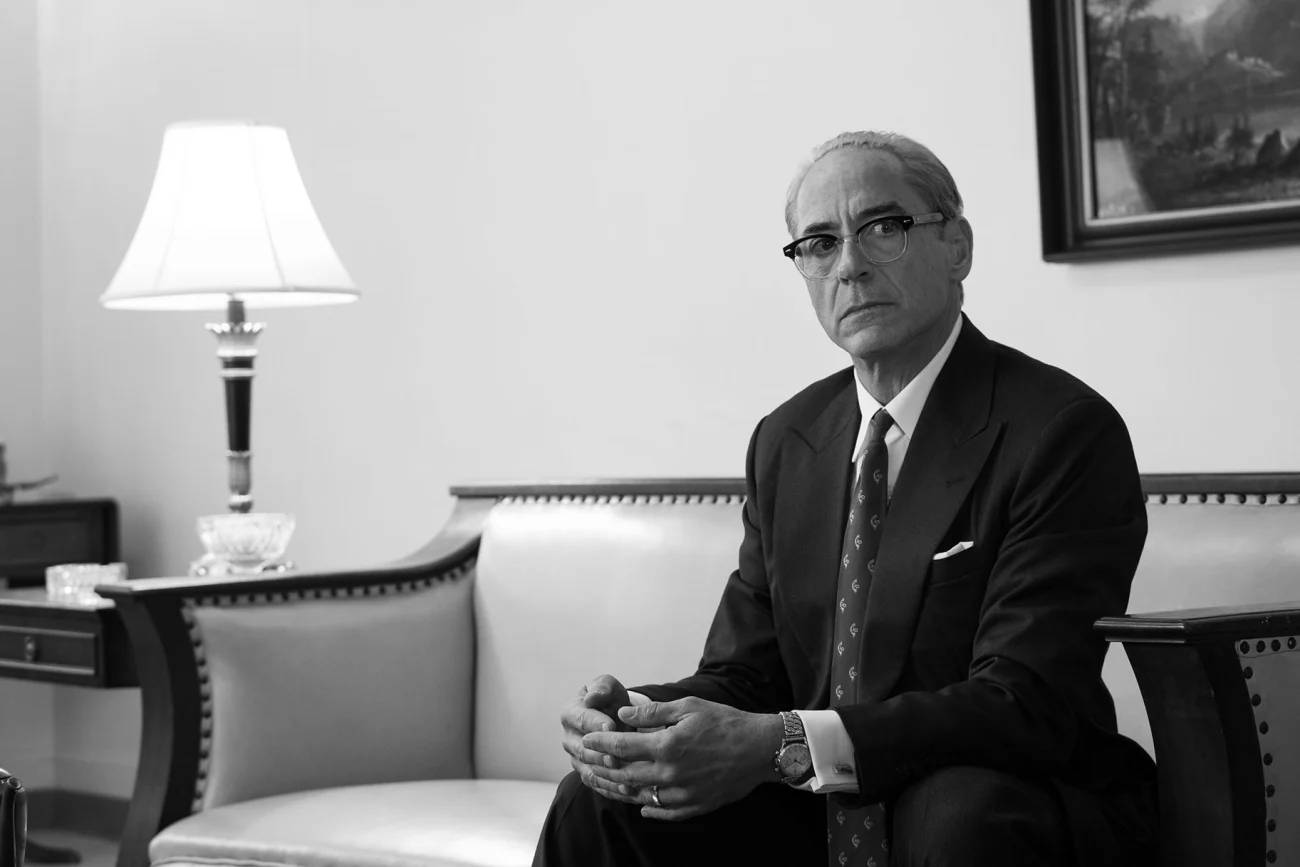
During questioning late in the film, prosecutor Roger Robb is shown without glasses in one shot and with glasses in the next, all within the same line exchange. That kind of prop toggle usually results from splicing together the best performances from different takes. It reads as a blink-and-you-miss-it pop on first viewing—but it’s unmistakable when you’re looking for it.
A Soaked Handout Dries Instantly
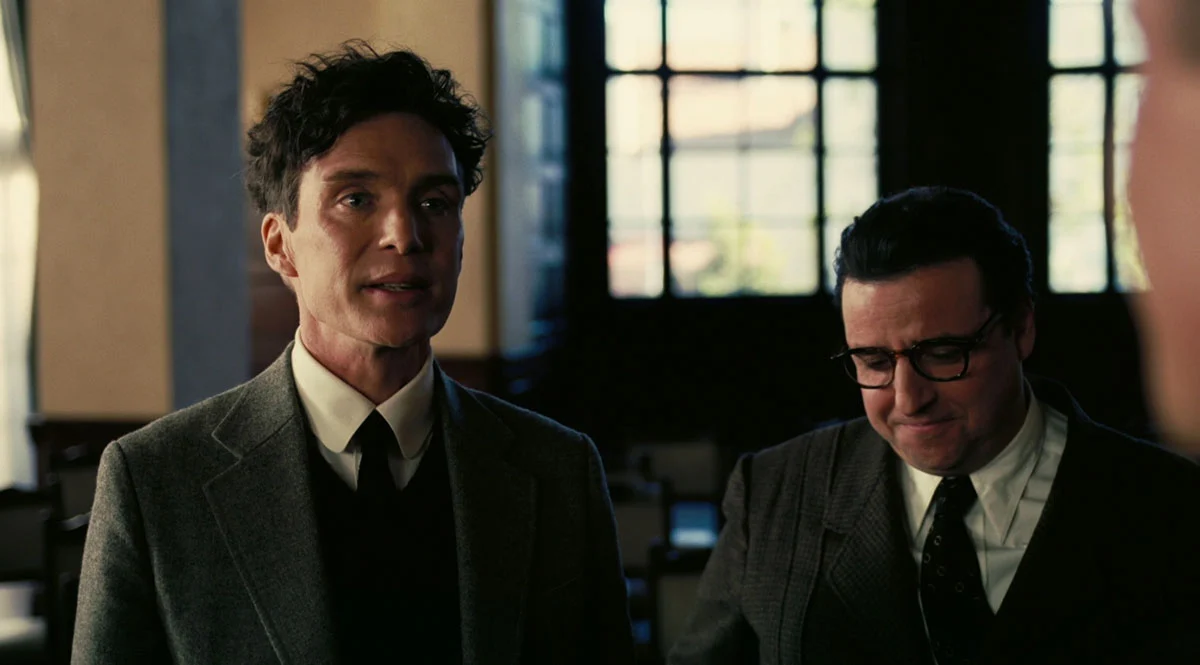
When Oppenheimer lifts a handout titled “The Impact of the Gadget on Civilization,” it appears drenched in one angle and nearly dry in the close-up that follows. Paper saturation is tough to match across takes, since water weight and sheen change quickly under lights. The cut creates a subtle but noticeable texture jump. Keep an eye on the paper’s surface; the inconsistency stands out.
The Ranch Flask Doesn’t Hold Its Place
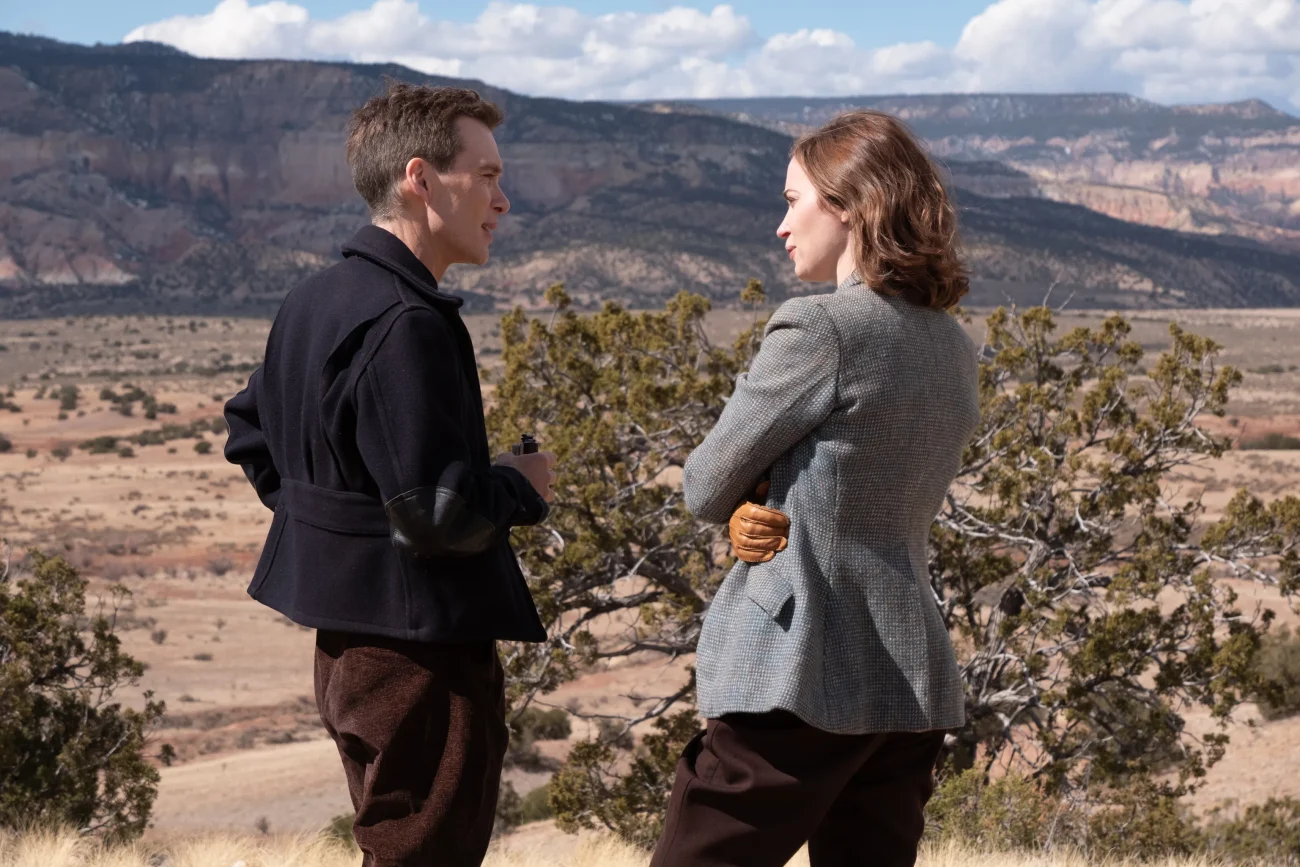
In a quiet ranch moment, Oppenheimer and Kitty share a flask; he raises it to drink, but the reverse angle shows his hand already down. That’s another angle-to-angle continuity reset, where hand position and prop timing didn’t align perfectly between camera setups. The emotional beat still plays, yet the prop’s “teleport” is hard to unsee once caught. It’s one of several small hand-position slips sprinkled through the film.
Tell us which one jumped out at you first—or share the other ‘Oppenheimer’ slips you’ve spotted—in the comments!