


Stellar Sci-Fi Must-Reads That Transcend Time and Space




Science fiction reaches across centuries and light years to ask how people live, adapt, and imagine. The books here span classic epics, sharp thought experiments, and mind bending adventures that shaped the genre and continue to influence films, games, and today’s writers. You will find alien first contact, rogue AIs, far future civilizations, and intimate stories that use futuristic settings to examine real human problems.
Each pick includes quick context that helps you decide what to read next. You will see original publication years, major awards where relevant, and a sense of how each book fits within a larger series or tradition. Every title stands alone as a complete story, and several open the door to larger sagas if you want to keep going.
Dune – Frank Herbert
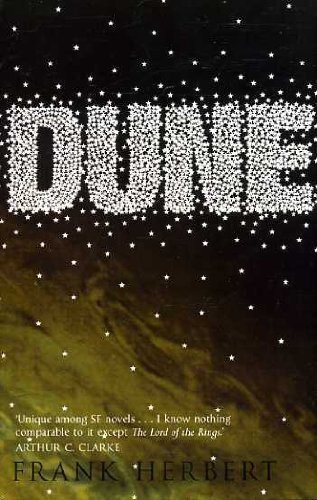
Set on the desert planet Arrakis, ‘Dune’ follows the struggle over control of spice, a resource that enables interstellar travel and powers prophetic visions. First published in 1965, it won the 1966 Hugo Award and the inaugural Nebula Award and launched a long running series that explores ecology, religion, and imperial politics through multiple generations.
Readers encounter intricate feudal houses, desert survival practices, and the Fremen culture that shapes the planet’s balance of power. The book’s glossary, maps, and appendices provide additional world building details, and later sequels continue the story of Paul Atreides and his legacy across shifting galactic eras.
Foundation – Isaac Asimov

‘Foundation’ began as short stories in the 1940s and became a novel in 1951 that introduces psychohistory, a mathematical method for predicting the behavior of vast populations. The narrative follows the Foundation, a group established to preserve knowledge and shorten an age of chaos after the fall of a galactic empire.
Asimov structures the book as linked episodes that move across centuries, highlighting crises that test the plan set in motion by Hari Seldon. The series received a special Hugo in 1966 for Best All Time Series, and additional volumes and prequels expand the timeline and connect to Asimov’s robot universe.
Neuromancer – William Gibson
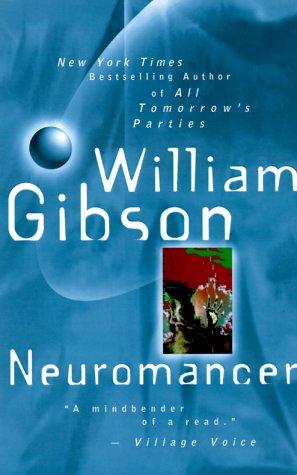
‘Neuromancer’ arrived in 1984 and helped define cyberpunk with its vision of cyberspace, console cowboys, and global corporations that operate above national borders. The novel won the Nebula Award, the Philip K Dick Award, and the Hugo Award, and it introduced terms and visuals that became standard in later media about virtual reality.
The story follows Case, a washed up hacker hired for a high stakes job that leads through urban sprawls and digital constructs. Two sequels complete the Sprawl trilogy, and readers interested in a broader picture can explore related short stories that map the same near future setting.
The Left Hand of Darkness – Ursula K. Le Guin

First published in 1969, ‘The Left Hand of Darkness’ is set on the icy planet Gethen and examines gender and society through its ambisexual inhabitants. The book won the Hugo and Nebula Awards and forms part of Le Guin’s Hainish Cycle, a loose collection connected by themes and an interstellar federation.
The novel follows envoy Genly Ai as he navigates political tensions and a long journey across harsh terrain with Gethenian ally Estraven. Le Guin includes cultural documents and field reports that build a detailed anthropology of Gethen, and other Hainish works provide additional perspectives on contact and communication.
Hyperion – Dan Simmons

Published in 1989, ‘Hyperion’ is structured as a pilgrimage by seven travelers who tell their stories while heading toward the Time Tombs and the enigmatic Shrike. The novel won the 1990 Hugo Award and draws on literary forms from detective fiction to epic poetry to build a layered far future setting.
The book ends at a pivotal moment and is followed by ‘The Fall of Hyperion’ which continues the arc begun here. Two later volumes expand the universe further, and together the sequence explores interstellar politics, artificial intelligences, and the consequences of time manipulation.
Snow Crash – Neal Stephenson

‘Snow Crash’ appeared in 1992 and presents a near future where the Metaverse offers a shared virtual world used for work and social life. The plot centers on a data courier who uncovers a memetic and digital threat that crosses linguistic history and modern networks.
Stephenson fills the novel with technical and historical notes on information systems and ancient languages, and the Metaverse concept influenced later virtual platforms. While the story stands alone, readers can find thematic links with the author’s other explorations of cryptography and network culture.
Childhood’s End – Arthur C. Clarke

First published in 1953, ‘Childhood’s End’ depicts a peaceful alien intervention that accelerates human progress and reshapes global society. The Overlords guide Earth toward a transformation that raises questions about identity, creativity, and the future of the species.
Clarke uses a multi decade timeline that moves from first contact to a final horizon. The novel remains a key example of sense of wonder and cosmic scale in mid century science fiction, and adaptations for television have introduced the story to new audiences.
The Forever War – Joe Haldeman

‘The Forever War’ began in 1974 and follows soldier William Mandella through a conflict where relativistic travel causes time to pass differently for those on the front and those at home. The novel won the Nebula Award in 1975 and the Hugo and Locus Awards in 1976.
Haldeman uses military training, alien battlefields, and return cycles to show the personal effects of time dilation. Later editions gather the full text from the original magazine and book versions, and sequels revisit Mandella’s life after the war as humanity changes around him.
The Three-Body Problem – Liu Cixin

Originally published in Chinese in 2008 and translated into English in 2014, ‘The Three-Body Problem’ begins a trilogy about first contact and a civilization shaped by a chaotic three star system. The English edition won the 2015 Hugo Award for Best Novel and brought the Remembrance of Earth’s Past series to a global audience.
The story links Cultural Revolution era research with modern scientific projects and a virtual world that models alien celestial mechanics. Two sequels continue the arc toward vast time scales and cosmic engineering, and a companion volume of science notes and interviews offers further context for the series.
The Hitchhiker’s Guide to the Galaxy – Douglas Adams

The novel version of ‘The Hitchhiker’s Guide to the Galaxy’ was published in 1979 and grew from a 1978 radio comedy series. It follows Arthur Dent after the demolition of Earth and introduces the electronic guidebook that shares odd and practical entries about life in space.
The book launched a series that adds new destinations and comedic scenarios while maintaining the same core cast. Readers can explore radio scripts, additional novels, and companion materials to see how the story evolved across formats and editions.
Ancillary Justice – Ann Leckie
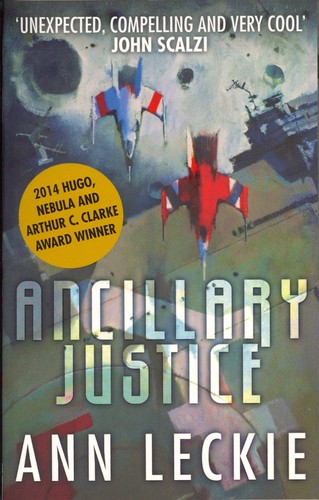
Published in 2013, ‘Ancillary Justice’ presents a starship AI whose consciousness once linked across many human bodies. After a betrayal, one surviving segment seeks answers within an expansionist empire. The novel won the Hugo, Nebula, Arthur C Clarke, and BSFA Awards.
Two sequels complete the trilogy and examine imperial language, identity, and governance through new sectors and characters. A companion novel set in the same universe offers another entry point for readers who enjoy the setting’s focus on etiquette and power structures.
The Dispossessed – Ursula K. Le Guin

‘The Dispossessed’ came out in 1974 and contrasts life on the anarchist moon Anarres with the capitalist world Urras through the experiences of physicist Shevek. The book won both the Hugo and Nebula Awards and connects to the larger Hainish Cycle through its use of interstellar contact.
Le Guin includes academic politics, cooperative labor systems, and scientific collaboration to explore how ideas move across societies. Appendices and later interviews discuss the chronology of Hainish works, which helps readers place this story within Le Guin’s broader timeline.
Ender’s Game – Orson Scott Card

Published in 1985, ‘Ender’s Game’ follows a child selected for an advanced military training program that uses games and simulations to prepare for an alien threat. The novel won the Nebula Award in 1985 and the Hugo Award in 1986 and became a common entry point for new readers of the genre.
Sequels shift to philosophical and diplomatic questions that arise from the events of the first book, while a parallel series retells the timeline from another character’s perspective. Together they create a detailed interstellar history that expands on culture, communication, and governance.
2001: A Space Odyssey – Arthur C. Clarke

‘2001: A Space Odyssey’ was published in 1968 alongside the film directed by Stanley Kubrick. The novel expands on the monoliths, the Dawn of Man sequence, and the mission of Discovery One with HAL 9000, providing additional background and explanations.
Clarke continued the story in later books that follow subsequent missions and the evolving role of the monoliths. Readers interested in development history can look into Clarke’s earlier short story that influenced the project and notes on how the book and film informed each other.
The Martian – Andy Weir
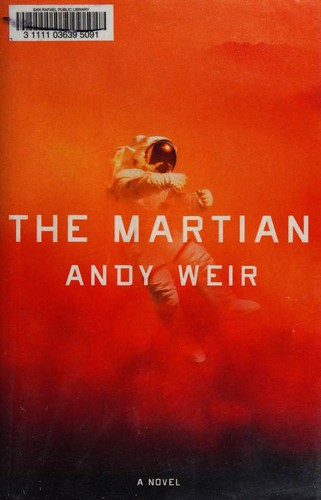
First released as a self published serial in 2011 and later in print in 2014, ‘The Martian’ details the daily problem solving of an astronaut stranded on Mars. The narrative uses mission logs to show life support calculations, botany, and engineering steps required for survival.
The book includes accurate orbital mechanics and mission planning elements that align with current spaceflight practices. A film adaptation brought wider attention to the technical detail, and a classroom friendly edition has been used in science and engineering courses.
Old Man’s War – John Scalzi

‘Old Man’s War’ appeared in 2005 and begins with senior citizens who enlist and receive enhanced bodies to serve in the Colonial Defense Forces. The story introduces a frontier of competing species and human colonies that rely on strategic settlement and military support.
Sequels and companion novels build a mosaic of viewpoints from soldiers, diplomats, and colonists. The series explores governance across scattered worlds and the logistics of interstellar travel, and later entries examine peace frameworks that follow initial conflicts.
Solaris – Stanisław Lem

Published in 1961, ‘Solaris’ takes place on a research station above an ocean planet whose surface appears to be a single sentient entity. The book examines how the planet manifests human memories and how science struggles to interpret a truly alien intelligence.
Multiple translations exist, and readers often seek versions that reflect Lem’s original philosophical tone. Film adaptations by Andrei Tarkovsky and Steven Soderbergh offer different readings, and critical essays discuss how the novel challenges assumptions about contact and understanding.
A Canticle for Leibowitz – Walter M. Miller Jr.

First published in 1959, ‘A Canticle for Leibowitz’ follows a monastery that preserves knowledge after a nuclear catastrophe. The novel spans centuries across three sections and shows cycles of recovery, rediscovery, and renewed technological ambition.
The book won the 1961 Hugo Award and remains a key example of post apocalyptic literature with a focus on memory and records. A later sequel continues the setting with new characters, and annotated editions provide historical notes that illuminate the novel’s Cold War context.
Ringworld – Larry Niven

‘Ringworld’ came out in 1970 and describes an artificial ring that encircles a star and provides a surface area far larger than Earth. The novel won the Nebula and Hugo Awards and introduced engineering calculations and exploration hazards specific to such a structure.
Sequels and companion works connect to Niven’s wider Known Space setting and revisit the ring’s societies and maintenance systems. Technical discussions among readers led to revisions in later editions that address stability questions, which makes this series notable for its engagement with physics.
Kindred – Octavia E. Butler

Published in 1979, ‘Kindred’ uses time travel to link a modern writer in Los Angeles with her ancestors in early nineteenth century Maryland. The novel examines the mechanics and triggers of the time shifts along with the documented historical conditions that surround the central family lineage.
Butler’s approach combines speculative elements with archival detail and personal records. The book appears in both science fiction and historical shelves, and adaptations for television have introduced the story to new audiences while preserving the core timeline and key events.
Brave New World – Aldous Huxley
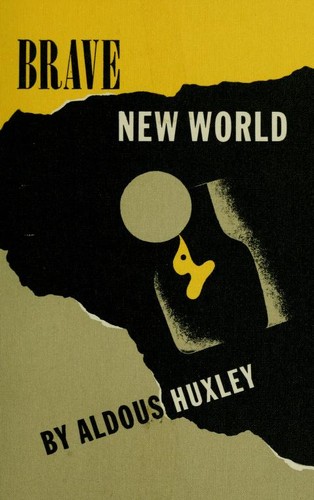
First published in 1932, ‘Brave New World’ presents a society engineered through genetic batches, conditioning, and a state supplied drug that maintains public order. The novel outlines the World State’s castes, the incubation centers that replace families, and the policies that guide consumption and leisure.
Readers see how the system manages reproduction, education, and work assignments with precise targets for stability. Appendices and later notes in many editions explain Huxley’s sources and revisions, which help place the book within early twentieth century debates about eugenics and mass production.
Fahrenheit 451 – Ray Bradbury

Released in 1953, ‘Fahrenheit 451’ follows a fireman whose job is to burn books in a society focused on screens and rapid entertainment. The novel details the legal framework for book seizures, the role of mechanical hounds, and the networks that keep print alive outside official channels.
Bradbury’s text includes descriptions of wall sized televisions, sea shell radios, and municipal procedures for raids and alerts. Later editions collect related short works and author introductions that document the book’s evolution from earlier stories into a unified narrative.
Do Androids Dream of Electric Sheep? – Philip K. Dick

Published in 1968, ‘Do Androids Dream of Electric Sheep?’ is set after a global conflict that leaves many species endangered and encourages off world migration. The story follows a bounty hunter who administers empathy based tests to identify advanced androids that blend into human society.
The novel introduces mood organs, empathy boxes, and the cultural value of owning living animals as status symbols. Readers can trace how these elements create a layered economy of authenticity, with catalogs and guides inside the story that document market prices and care standards.
The Man in the High Castle – Philip K. Dick

First released in 1962, ‘The Man in the High Castle’ imagines an alternate United States under Axis occupation after a different outcome to World War Two. The narrative maps administrative zones, trade routes, and black markets that arise in a divided country.
Characters consult the ‘I Ching’ for decisions, which influences the structure of several scenes. The text also includes a banned novel within the novel that proposes another timeline, and this device shows how information moves under censorship and competing intelligence services.
The Time Machine – H. G. Wells

Published in 1895, ‘The Time Machine’ introduces a device that allows controlled movement along the temporal dimension. The traveler’s journey to the year 802701 presents the Eloi and Morlocks as divergent descendants shaped by environment and labor division.
Wells includes technical descriptions of the machine’s levers, materials, and adjustments for spatial correction as the Earth moves. The closing chapters extend far beyond the distant future of humanity to show geological and astronomical change, creating a record of deep time exploration.
The Moon Is a Harsh Mistress – Robert A. Heinlein

Released in 1966, ‘The Moon Is a Harsh Mistress’ takes place in a lunar penal colony that has grown into a diverse settlement. The plot follows organizers who coordinate resource shipments and plan for autonomy using a self aware computer that manages the facility’s systems.
The novel outlines mass drivers, life support logistics, and the political processes behind coordinated action among disparate groups. Readers see step by step planning for communication campaigns, supply chain adjustments, and the engineering required for sustained habitation.
Red Mars – Kim Stanley Robinson

Published in 1992, ‘Red Mars’ begins a trilogy that tracks the terraforming and settlement of Mars with close attention to science and policy. The narrative introduces the First Hundred, the habitats they construct, and the international agreements that govern research and expansion.
Robinson details areology, atmospheric chemistry, and the economics of resource extraction tied to Earth based interests. The book includes maps and mission timelines that anchor station locations, orbital windows, and key milestones in surface development.
The Diamond Age – Neal Stephenson
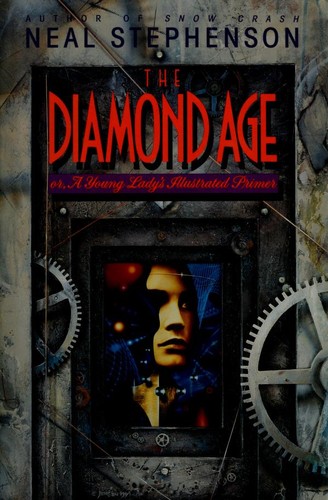
Released in 1995, ‘The Diamond Age’ explores a near future shaped by nanotechnology and decentralized social affiliations. The story centers on a primer that adapts its content to educate a child through interactive narratives and embedded tutors.
Stephenson describes matter compilers, feed lines, and the security concerns that follow ubiquitous fabrication. The book tracks how guild like phyles handle law, customs, and mutual aid, and it shows how infrastructure access shapes opportunity across neighborhoods.
Anathem – Neal Stephenson

Published in 2008, ‘Anathem’ takes place on a planet where scholars live in secluded communities that limit outside contact. The text follows a timeline of concents, rituals, and mathematical traditions that structure daily life and communication with the secular world.
The book includes a glossary and geometric proofs that support the setting’s ideas about cosmology and parallel spaces. Readers encounter protocols for apert openings, protective rules for knowledge exchange, and the technical equipment used during off site journeys.
Blindsight – Peter Watts

Released in 2006, ‘Blindsight’ follows a crew sent to investigate a distant alien signal that alters the outer solar system. The novel catalogs cognitive specializations among the team, including a linguist with multiple personalities and a resurrected vampire contractor with advanced pattern recognition.
Watts presents sensor arrays, field surgeries, and deep space encounter procedures that drive the mission’s decisions. The appendices and author notes often used in study groups outline references for neuroscience and evolutionary models that inform the book’s hypotheses.
Permutation City – Greg Egan

Published in 1994, ‘Permutation City’ examines consciousness through software copies called selves that operate at different clock speeds. The story describes storage markets, processing leases, and legal frameworks for identity and property in virtual environments.
Egan builds a technical foundation for self instantiation, persistence, and the tools used to verify continuity. Readers trace how simulated physics, cost models, and bootstrapped systems create independent realities with their own internal timelines.
The Shadow of the Torturer – Gene Wolfe

Released in 1980, ‘The Shadow of the Torturer’ opens the four book sequence known as ‘The Book of the New Sun’. The setting blends far future technology with guild structures, and the narrative follows an apprentice who records his life in a city with deep layers of history.
Wolfe uses a precise vocabulary and in world artifacts such as botanical catalogs and bestiaries. Readers can map locations through citadel layouts, necropolis corridors, and travel routes that appear in subsequent volumes as the journey expands beyond the city.
Consider Phlebas – Iain M. Banks

Published in 1987, ‘Consider Phlebas’ introduces the Culture universe through a conflict with the Idiran Empire. The book shows how Minds manage ships, how drones operate within mixed crews, and how orbital habitats handle population and ecology.
Banks includes mission logistics, language modules, and salvage operations that reveal technology in use across different societies. Later entries in the series visit other corners of the setting, but this opener establishes the capabilities and constraints that guide Culture interventions.
Leviathan Wakes – James S. A. Corey
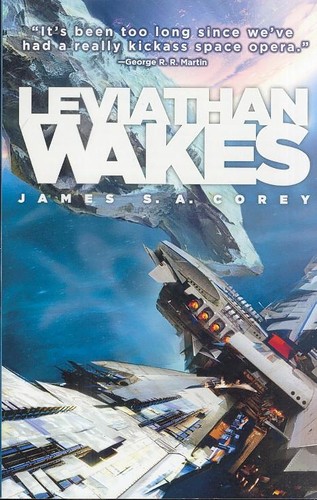
Released in 2011, ‘Leviathan Wakes’ begins ‘The Expanse’ series with a mystery that links station life in the Belt to politics on Earth and Mars. The novel outlines ship drives, air handling systems, and the contracts that govern freight and security across settlements.
Readers follow crew protocols, docking procedures, and investigation methods as events escalate. The series continues with a consistent focus on thrust limits, burn schedules, and the economics that shape alliances among stations, planets, and independent operators.
Revelation Space – Alastair Reynolds
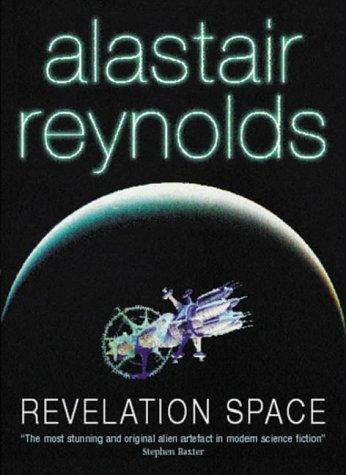
Published in 2000, ‘Revelation Space’ presents a spacefaring civilization that uncovers traces of extinct species and a hidden pattern behind those disappearances. The book describes lighthuggers, cryogenic travel, and the architectural details of planet scale structures.
Reynolds draws on astrophysics for orbital mechanics, star system mapping, and relativistic communication delays. The sequence expands into connected novels and stories that catalog archaeological sites, machine entities, and the long term risks faced by advanced cultures.
Embassytown – China Miéville

Released in 2011, ‘Embassytown’ is set on a distant planet where humans live alongside hosts whose language requires two voices to speak truthfully. The novel details training for Ambassadors, the city’s treaty arrangements, and the biological basis of host communication.
The text tracks how trade, metaphor introduction, and altered speech affect the stability of the colony. Readers see administrative responses to linguistic shifts with quarantine plans, diplomatic sessions, and emergency protocols for contact scenarios.
The Long Way to a Small, Angry Planet – Becky Chambers

Published in 2014, ‘The Long Way to a Small, Angry Planet’ follows a tunneling ship that creates hyperspace routes between distant points. The book lists crew roles, ship maintenance cycles, and the permits required to work in different sectors.
Chambers documents interspecies etiquette, medical practices, and food considerations for long voyages. The setting continues in related novels that focus on different crews and stations, which together outline trade hubs and social frameworks that support travel.
The Calculating Stars – Mary Robinette Kowal

Released in 2018, ‘The Calculating Stars’ begins the Lady Astronaut series with an alternate history where a meteor impact accelerates spaceflight development. The novel presents pilot training, computing teams, and the checks used for early crewed missions.
Kowal incorporates period appropriate technology and procedures for test flights, capsule design, and mission risk management. The series extends into lunar bases and long duration operations with schedules, rosters, and program milestones that mirror historical project planning.
Binti – Nnedi Okorafor
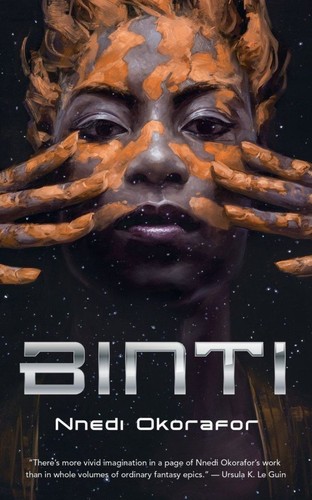
Published in 2015, ‘Binti’ starts a trilogy about a young mathematical prodigy who leaves Earth for an interstellar university. The novella explains astrolabe devices, transport protocols, and the cultural practices that guide Binti’s travel and conflict mediation.
The story introduces alien species with specific communication tools and ceremonial customs. Later installments expand on harmonizer roles, academic structures, and the technologies used to navigate both spaceflight and diplomacy.
Roadside Picnic – Arkady and Boris Strugatsky
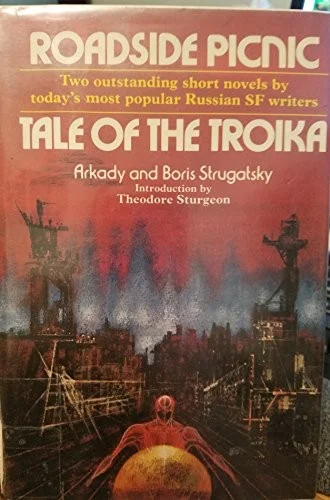
First released in 1972, ‘Roadside Picnic’ examines restricted Zones where unexplained artifacts remain after a brief alien visitation. The plot follows stalkers who enter for hazardous retrievals within landscapes altered by anomalies and traps.
The book catalogs artifacts by function, trade value, and known side effects, creating an underground market with its own terminology. Readers can trace how scientific institutes test items under strict containment and how local economies adapt to proximity with the Zone.
Share your own timeless science fiction favorites in the comments so everyone can compare reading plans.