Steven Spielberg Has a Clear Message for Hollywood on AI, and the Soul Is Non-Negotiable

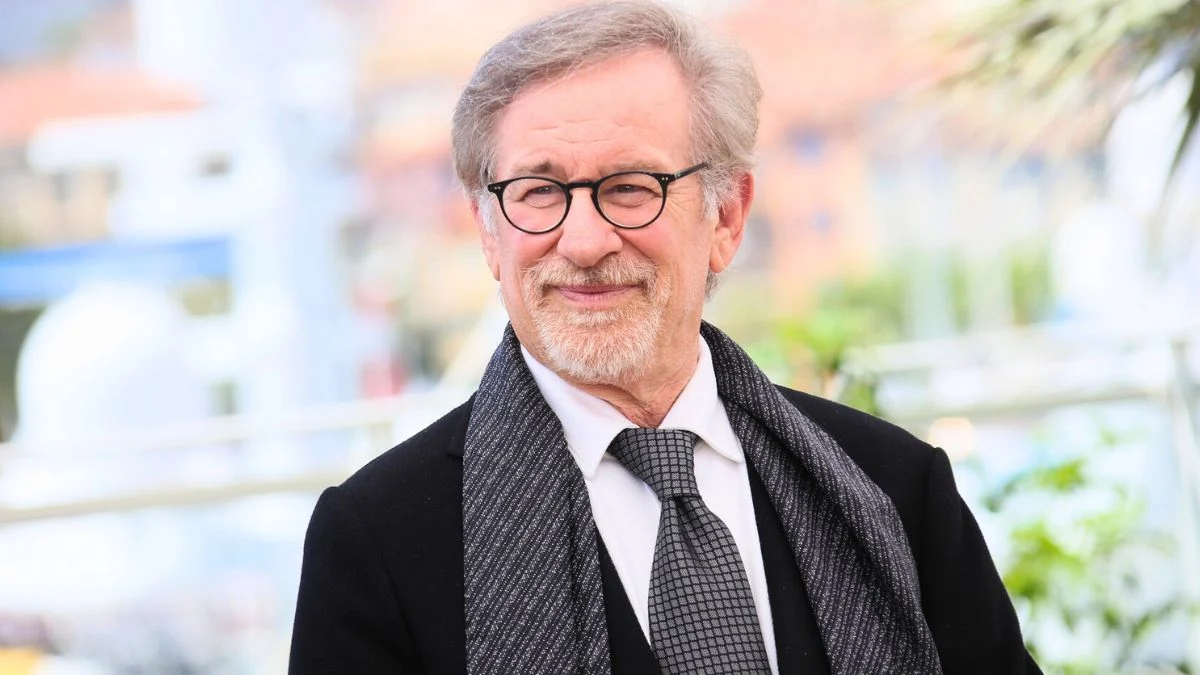

Few filmmakers have spent more time exploring the boundary between human feeling and machine intelligence than Steven Spielberg. His work, from the heartwarming wonder of ‘E.T. the Extra-Terrestrial’ to the philosophical unease of ‘A.I. Artificial Intelligence,’ has long asked what technology can imitate and what remains beyond its reach.
That question has moved off screen and into studio boardrooms as Hollywood intensifies its debate over where artificial intelligence belongs in the creative process. Netflix recently acquired InterPositive, a filmmaking technology company founded by Ben Affleck, as the media industry warms to the idea of using AI for content and storytelling. Netflix Chief Content Officer Bela Bajaria said the company believes new tools should expand creative freedom rather than replace the work of writers, directors, actors, and crews. For many in the industry, the conversation no longer feels theoretical.
In an episode released on May 27, Spielberg sat down with former First Lady Michelle Obama and Craig Robinson on their ‘IMO with Michelle Obama and Craig Robinson’ podcast to discuss his new film ‘Disclosure Day,’ his legacy, and his views on AI in the entertainment business. Spielberg told his hosts he is withholding judgment on AI until he sees how it is really being used, noting that China appears to be ahead of the United States in AI adoption, though he remains uncertain about the specifics. What he is not uncertain about, however, is where creative authority must stay.
His core concern revolves around something he sees as fundamentally irreplaceable. Pointing to the image of a writers’ room with one seat left empty and a laptop in front of it, Spielberg made clear that no machine earns a place at that table. He pushed back against any AI system that would presume to tell him who his antagonist should be, how his dialogue should read, or where his camera should point, calling a computer that believes it feels more than humans do something that is anathema to how he has always worked.
Variety reported his words directly: “Where I don’t love AI is where it takes a position or there’s an empty chair at a writer’s table.” That said, Spielberg is not calling for a complete rejection of the technology. He acknowledged that AI can genuinely help with practical production tasks, noting that if it wants to help find locations, that is welcome, saving cast and crew a significant amount of legwork in the process.
The remarks land just weeks before ‘Disclosure Day’ is scheduled to open in theaters and IMAX on June 12. The science-fiction thriller stars Emily Blunt and Josh O’Connor and marks Spielberg’s return to the genre after years spent on more personal work, reuniting him with writer David Koepp and cinematographer Janusz Kaminski on a story about extraterrestrial life and government secrecy. It is a film built entirely on the kind of human collaboration Spielberg is defending.
At SXSW earlier this year, Spielberg told audiences that he has never used AI on any of his films, drawing cheers from the crowd, and stated plainly that he is not for AI if it replaces a creative individual. His position is consistent, his reasoning personal, and his authority on the subject earned over decades of instinct-driven filmmaking.
As the industry continues filling its pipeline with AI-assisted tools, is Spielberg’s vision of the perfectly occupied writers’ room one Hollywood will actually choose to protect?