Taylor Sheridan’s ‘Lioness’ Draws Sharp Criticism From the Real Veterans Who Inspired the Show

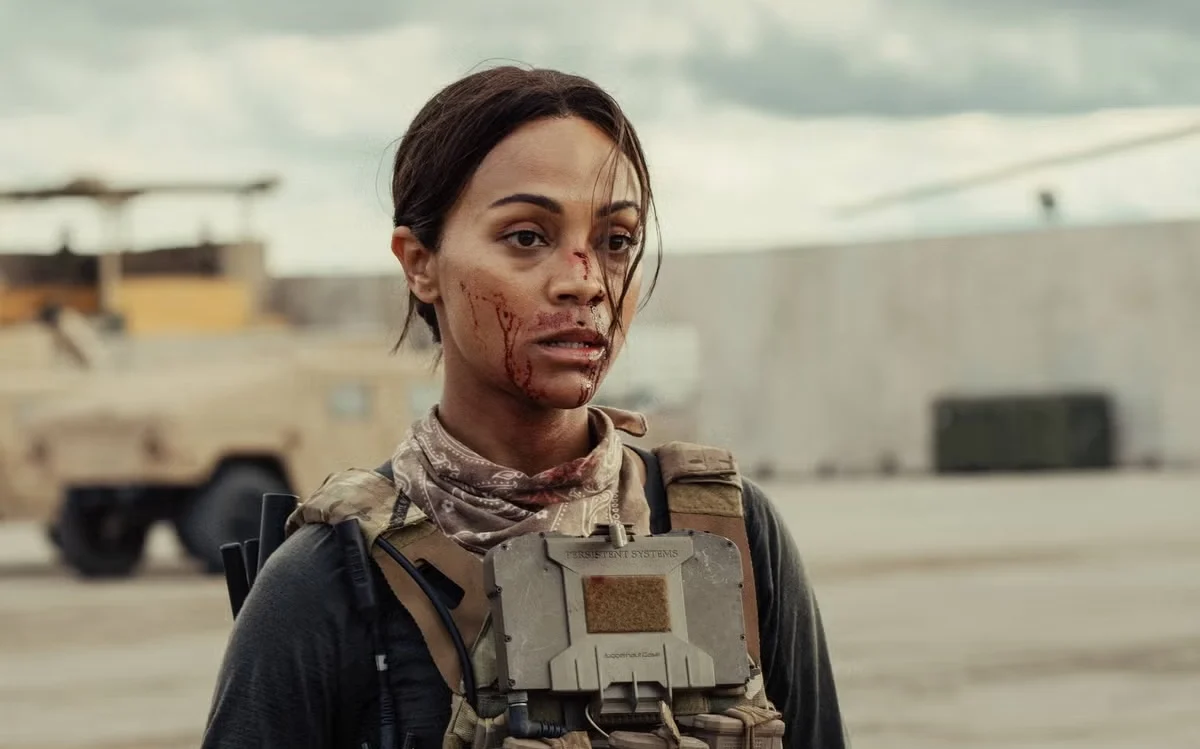

The women who served on the original Team Lioness during the Iraq War are speaking out against Taylor Sheridan’s Paramount+ drama, arguing that the series borrowed their name while telling a story that bears little resemblance to what they actually did. The real-life program was formed by the U.S. Marine Corps during the Iraq War in 2003, and it now finds itself compared against a fictional CIA task force that has turned into one of the streamer’s signature hits.
As the show’s third season continues its run, several veterans who served in the actual unit have gone public with their frustration, and what began as a marketing hook has developed into a genuine dispute over who has the right to tell this history. The criticism has grown loud enough that even members of the show’s own production team have started to acknowledge the gap between fiction and fact.
The Real Team Lioness and Its Iraq War Origins
According to Ranie Ruthig, one of the original Lionesses, her group was the first all-female team to engage in offensive combat ground operations in the history of the U.S. military. These women worked as mechanics, engineers, and medics who were attached to ground combat units so they could search Iraqi women at checkpoints and during other operations.
Their duties extended well beyond that single task, since the teams also protected translators, gathered intelligence, and built relationships with local communities during their deployments. Kate Guttormsen, a captain and the only female company commander in the 1st Engineer Battalion, described a similarly wide range of responsibilities. She recalled that the Lionesses would do anything from going to schools and handing out soccer balls to finding intel.
Daria Sommers, who co-directed the 2008 documentary ‘Lioness’ about the unit, has become one of the most vocal defenders of the original program’s legacy. She noted that the term Lioness has since become honorific among those who served, and stressed that the fictional CIA operation depicted on screen has no basis in reality.
Veterans Speak Out Against the Paramount+ Series
Ranie Ruthig has been the most direct in her criticism of Sheridan’s adaptation. She said it makes her angry that the show doesn’t follow what the real team actually did, adding that the series took the Team Lioness name and twisted it into a spy thing. She was careful to note that she likes Sheridan’s writing and has watched his other shows, but felt he took her history and corrupted it in the process.
Michelle Dallocchio, who served with Team Lioness in 2004 and 2005, framed her objection in terms of erasure rather than simple inaccuracy. She said the use of the name feels like appropriation, and argued that the show repackages a complicated wartime history into something safer and sanitized for mass consumption while leaving the actual women out of the narrative.
Sommers has echoed that sentiment through a podcast she launched with veterans of the program. She has written that the women feared disappearing from their own story as the fictional version of Lioness grew into a hit. She also made clear that her frustration isn’t aimed at the cast, saying she isn’t critiquing Nicole Kidman or Zoe Saldaña, since they should get to play whatever kick-ass adventure roles they want.
Sommers has pointed to the branding itself as the root of the tension. She said the disagreement likely wouldn’t exist at all if Sheridan had simply given the show a different name.
How ‘Lioness’ Season 3 Diverges From the True Program
The Paramount+ series follows a top-secret CIA task force that uses female soldiers to befriend the wives and daughters of terrorists in an effort to stop major attacks from the inside, a structure that has little in common with the support and combat roles the real women filled in Iraq. The official premise describes a marine and a CIA agent working together with the daughter of a dangerous terrorist group to bring the organization down, a scenario built entirely for television.
Do you think the criticisms against 'Lioness' make sense?
‘Special Ops: Lioness’ was created by Sheridan alongside Jill Wagner, and the series has been directed by Paul Cameron and Anthony Byrne. Wagner, notably, is the executive producer who first pitched the concept to Sheridan after hearing about the real unit through her husband, giving her a unique vantage point on how the adaptation came together.
Wagner has since conceded that the show’s use of the Lioness name is symbolic, and has acknowledged that the real Lionesses did not do what the series portrays on screen. That admission has done little to quiet the debate, but it has at least brought the production’s own framing closer to what the veterans have been saying publicly.
The series has built a substantial cast around its premise, including Zoe Saldaña, Nicole Kidman, Morgan Freeman, Michael Kelly, Laysla De Oliveira, Genesis Rodriguez, and Jill Wagner among others. The show has also proven to be a significant draw for Paramount+, with the season two premiere pulling in 12.4 million global viewers.
A Divided Response Among the Original Lionesses
Not every veteran connected to the original program has turned against the show. Kate Guttormsen says she plans to keep watching, largely because her husband is a fan of the series. That kind of split reaction suggests the controversy is less about the show’s quality and more about the specific choice to use the Lioness name.
The series has continued to expand its world in season three, with Ian Bohen joining the cast in the new role of Grady, and Zoe Saldaña reportedly signed on for at least three seasons of the show. Nicole Kidman’s performance as Kaitlyn Meade earned her a Critics Choice Award nomination for Best Supporting Actress in a Drama Series, underscoring the show’s continued critical and commercial momentum even amid the backlash.
For the veterans, though, awards and viewership numbers don’t resolve the underlying issue. Their objection isn’t to Sheridan’s skill as a writer or to the actors bringing the fictional Lioness to life, but to a title they feel was taken from a specific piece of women’s military history without the women themselves being part of the story it now tells.
As ‘Lioness’ moves further into its third season, the question of whether a name carries an obligation to the people who first earned it remains unresolved, and it’s worth asking how far creative license should stretch when the story being borrowed still belongs to women who lived it.