‘Teenage Sex and Death at Camp Miasma’ Ending Explained, What Jane Schoenbrun’s Slasher Really Means


Jane Schoenbrun’s latest film has become one of the most talked about horror releases of the year, and much of that conversation centers on how strangely it chooses to end. ‘Teenage Sex and Death at Camp Miasma’ arrived in theaters on August 7 following its world premiere in May, and it has quickly built a reputation as a film that rewards patience with its ambiguity rather than punishing it.
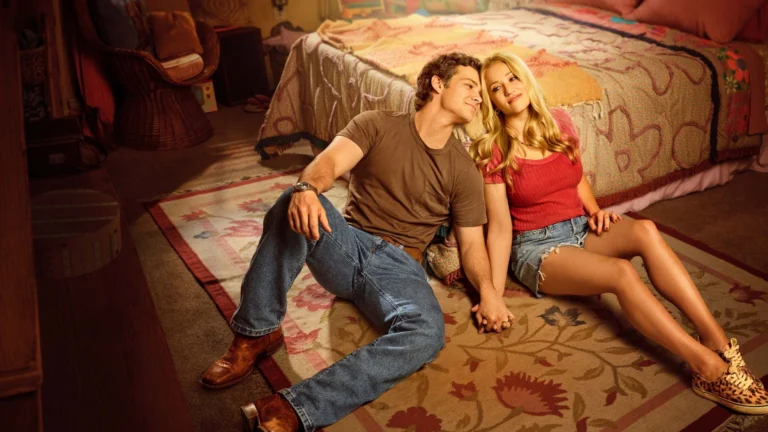
The movie follows Kris, a young queer filmmaker hired to resurrect a fading slasher franchise, and her fraught relationship with Billy, the reclusive actress who played the original film’s final girl. What starts as a professional visit spirals into something far more intimate, and viewers leaving the theater have had plenty of questions about what actually happens by the final scene.
The Plot Setup Behind ‘Teenage Sex and Death at Camp Miasma’
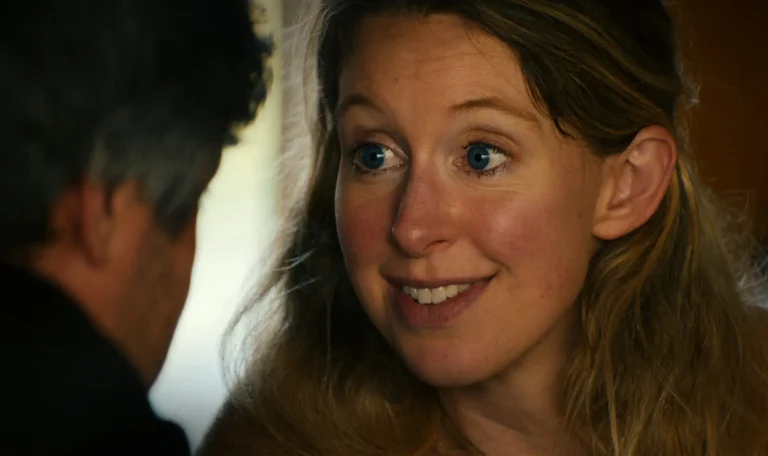
The story centers on Kris, played by Hannah Einbinder, a filmmaker fresh off festival success who is brought in to revive the in-universe ‘Camp Miasma’ slasher series after years of declining sequels and fan interest. She is hired to resurrect the franchise, and her journey leads her to visit the original movie’s star, a now reclusive actress shrouded in mystery.
That actress is Billy Presley, played by Gillian Anderson, who portrayed the franchise’s original final girl and has since retreated from public life. The film stars Einbinder and Anderson alongside Jack Haven and Patrick Fischler, with Schoenbrun both writing and directing. Kris travels to an abandoned summer camp to meet Billy, and as the two women unravel the ways the original film has shaped them, they descend into a frenzied, blood soaked world of desire and delirium.
Kris understands that as a queer artist she has been brought on partly to counter the franchise’s history of transphobia, embodied by a masked killer known as Little Death who was raised by parents intended to represent both genders at once. That premise sets up a film that is as interested in genre critique as it is in the slasher mechanics themselves.
What Happens by the Ending of ‘Teenage Sex and Death at Camp Miasma’
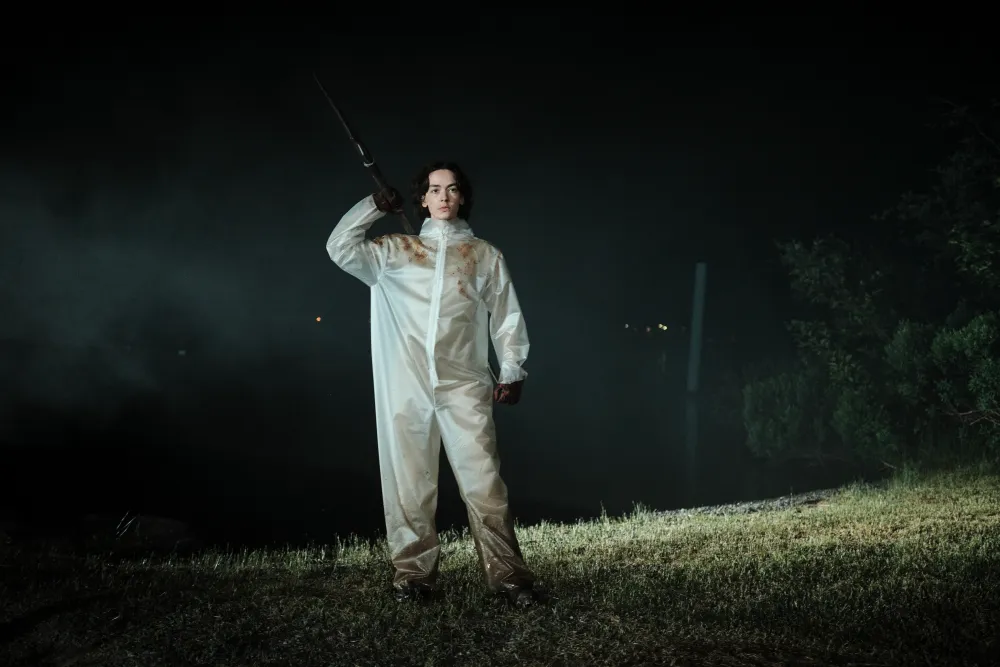
The film’s climax takes place in the same cabin where the original ‘Camp Miasma’ was shot, and it merges intimacy with violence in a way that has become the movie’s defining image. Kris and Billy lie together as Billy coaches her through the moment, telling her “You’re almost there now,” before the perspective shifts into the killer Little Death’s point of view as he approaches with a spear.
Both women are killed in the same instant they reach climax, and once their breathing stops, a fresh videotape emerges from the lake beneath the cabin. That image, along with the smiles on both women’s faces in the film’s closing moments, is central to how critics have interpreted the ending.
Despite their onscreen deaths at the hands of Little Death, the film’s closing scenes suggest that Kris and Billy are still alive in some form, with the meta framing of the killer putting away his video suggesting they remain within the confines of his story, which turns out to be the real world. The ambiguity is intentional, with the film leaving open whether Little Death is meant to be understood as literally real or as a symbol for how icons and struggles outlive the specific people who embody them.
Schoenbrun has been direct about not wanting audiences to over solve the finale. Speaking about the film’s conclusion, the director told Yahoo Entertainment that the ending is a complicated thing that even they do not fully understand, encouraging viewers to sit with the mystery instead of resolving it.
The Cast and Filmmaking Choices Driving the Slasher
Behind the camera, Schoenbrun worked with a production team that helped shape the film’s surreal, lived in atmosphere. Production designers Matt Hyland and Brandon Tonner Connolly discussed building the movie’s surreal, atmospheric sets in an interview about their process on the film. The film was shot by cinematographer Eric Yue, edited by Graham Mason, and features a score from musician Alex G, with Plan B Entertainment producing alongside distributor Mubi.
‘Teenage Sex and Death at Camp Miasma’ follows Schoenbrun’s earlier features ‘We’re All Going to the World’s Fair’ and ‘I Saw the TV Glow,’ and it continues the filmmaker’s interest in identity and transformation while shifting into a more overtly comedic register. Schoenbrun discussed specific scenes with Variety, including a chicken finger dinner sequence and a bloodbath scored to a Counting Crows song, explaining why comedy felt like the tonally appropriate approach for this story.
The project reportedly began in an unconventional way. Schoenbrun has said the film originated from a poll they ran on the social media platform now known as X, asking followers to choose among three potential ideas for their next project. That premise eventually grew into the psychosexual slasher that reached theaters this month.
Critical Reception of ‘Teenage Sex and Death at Camp Miasma’
Reviews of the film have generally praised its ambition even when they have questioned its execution. Bloody Disgusting called it Schoenbrun’s most accessible feature yet while noting the climax veers into a somewhat muddled, saccharine ending that runs a bit too far off the rails.
Other outlets have focused more on the film’s thematic density than its pacing. Slate compared the film’s influences to the 1983 slasher ‘Sleepaway Camp,’ noting how Schoenbrun builds an entire film around the idea that what a piece of media becomes in memory can matter more than what it originally was.
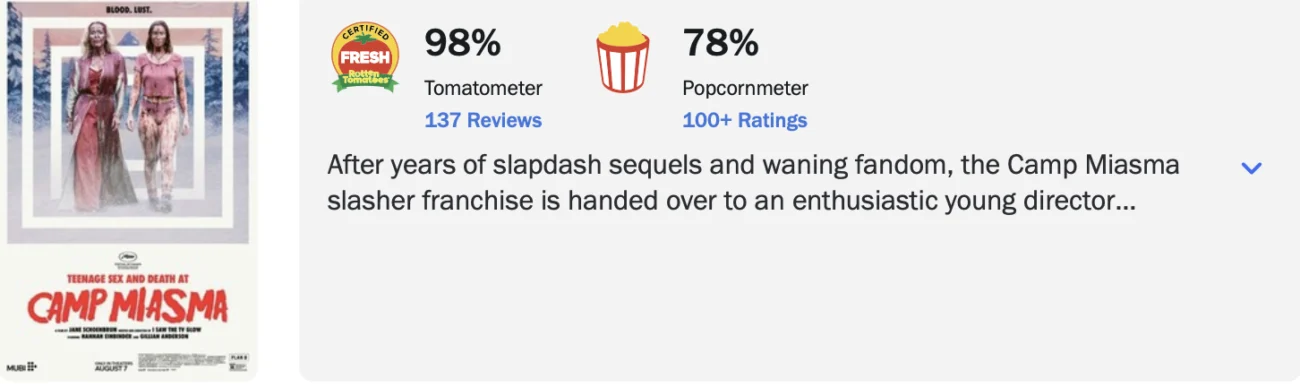
Einbinder and Schoenbrun also spoke with Variety about the future of queer cinema in connection with the film’s release, framing the project as part of a broader conversation about representation in horror. Fan reaction on platforms like Letterboxd has echoed some of that enthusiasm, with several reviewers calling it one of the sharper deconstructions of the slasher genre in recent memory.
With its blend of genre homage, gender exploration, and an ending built to be argued over, ‘Teenage Sex and Death at Camp Miasma’ seems designed to keep audiences talking well past the credits. What did you make of Kris and Billy’s fate in that final cabin scene, and does the film’s refusal to fully explain Little Death work in its favor.