The Academy Just Drew Its Clearest Line Yet, Banning AI Performances and Screenplays From Oscar Eligibility

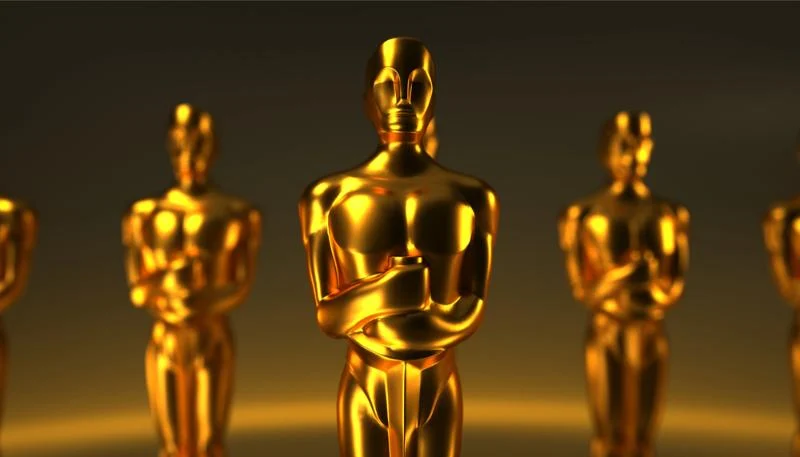

Hollywood’s most prestigious awards body has officially slammed the door on artificial intelligence. The Academy of Motion Picture Arts and Sciences announced an update to its rules and regulations that eliminates any gray area about its position on artificial intelligence, making clear that AI is simply not welcome at the Oscars. The move represents one of the most decisive institutional stances the entertainment industry has taken against generative AI to date.
Under the new guidelines, only performances demonstrably carried out by humans with their consent are eligible for acting nominations, reinforcing that acting awards must recognize real human embodiment of a role. This means that while digital tools or enhancements may still be used in post-production, the core performance must originate from a consenting human actor whose work forms the foundation of what appears on screen.
Under Special Rules for Writing Awards, the updated rulebook now states that in order to be eligible in either writing category, an explicit screenwriting credit must be present in the film’s legal billing and the screenplay must be human-authored. The Academy does leave some breathing room for productions that incorporate digital tools in a supporting capacity, noting that those tools neither help nor harm a film’s chances of achieving a nomination, but the line between acceptable usage and disqualifying reliance on AI is firmly drawn.
The timing of the announcement is not without context. One performance that will need further clarification under these rules is Val Kilmer’s fully AI-generated appearance in the upcoming indie film ‘As Deep as the Grave.’ The actor was initially cast in the movie but had to back out due to medical concerns before dying in April 2025, yet he will reportedly appear in a significant part of the film despite never having stepped foot on set. The Academy had no comment on the current conversation surrounding Kilmer’s posthumous AI double, and it remains unclear whether the movie will be considered by the organization at all.
A major shift also comes in the Best International Feature Film category, where a film can now qualify for consideration by winning the top prize at one of several major international film festivals including Berlin, Cannes, Sundance, Toronto, and Venice. Additionally, the Oscar statuette will now go to the film’s director rather than the country it represents.
The Academy also updated its acting nomination rules so that a single performer can now receive multiple nominations in the same category if more than one of their performances lands in the top five votes, aligning acting with how all other categories already function.
The Academy’s stance puts it in direct opposition to certain pro-AI voices in Hollywood, including Matthew McConaughey, who has predicted that AI will infiltrate the prestigious award ceremony in the near future. For now at least, the Academy has made its answer to that prediction abundantly clear, and the gold statuette remains exclusively a human achievement.