


‘The Hangover’ Mistakes You’ll Never Be Able to Unsee




From continuity slips to timeline hiccups, even a slick comedy like ‘The Hangover’ leaves a trail of little goofs once you start looking closely. These aren’t about nitpicking the jokes—they’re the tiny on-set resets, prop swaps, and geography bends that sneak past most first-time viewers. If you love pausing and rewinding to spot the seams, this roundup gives you clear, concrete places to look. Keep it handy the next time you rewatch the Wolfpack’s legendary Vegas misadventure.
The Mercedes’ front plate that comes and goes
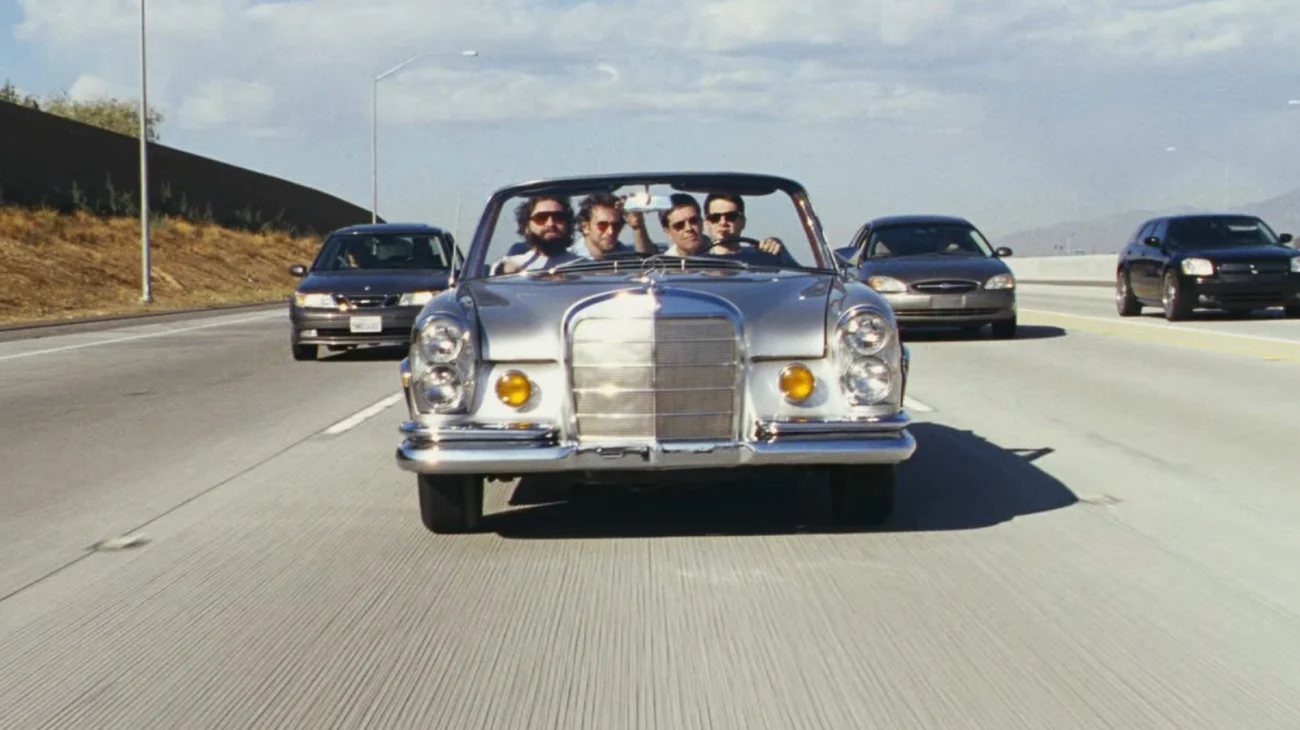
The silver Mercedes the guys borrow shows inconsistent front-plate presence between exterior shots, especially around valet pickups and street driving. Nevada typically uses two plates for most passenger vehicles, and productions often mount a front one for clarity—here it appears, disappears, then reappears in quick succession. Watch the car as it pulls into and away from Caesars; grille close-ups versus wider street angles don’t match. It’s a classic continuity reset when the hero car cycles through different picture vehicles.
Sunglasses swap after the taser demo
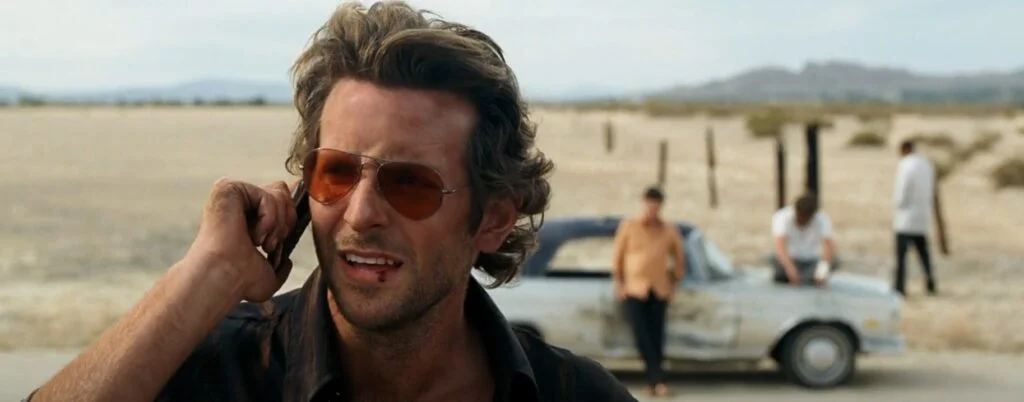
Phil’s aviators don’t stay consistent across the police-station sequence that includes the school field trip and taser demonstration. In close shots the frame shape and lens tint look slightly different than in the wider hallway cutaways. Costume departments often keep multiples, and a stand-in or second unit may use a spare—leading to subtle variations mid-scene. Track the bridge shape and temple thickness as the scene jumps between angles.
Baby carrier continuity in the casino and lobby
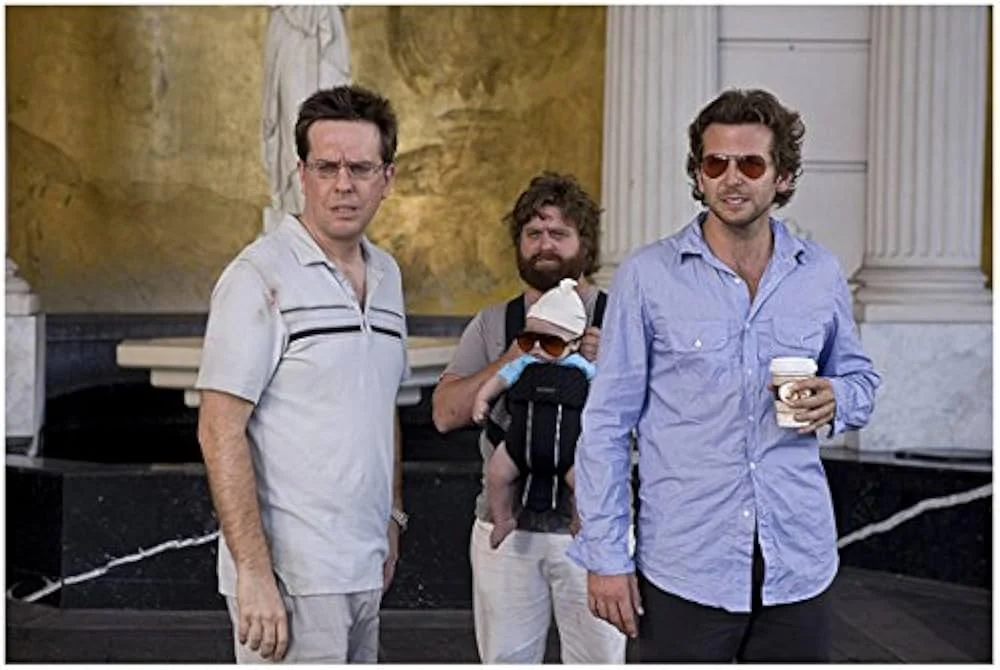
Baby Carlos’ carrier orientation and handle position change between shots as the group moves through Caesars. In one angle the handle is locked upright; in the next it’s partially folded without anyone adjusting it on screen. The blanket wrap and strap lay also reset between cuts, most noticeably when the guys step off escalators into the lobby. These changes point to pickups filmed at different times with the carrier re-dressed slightly each take.
Blackjack chips that magically re-stack
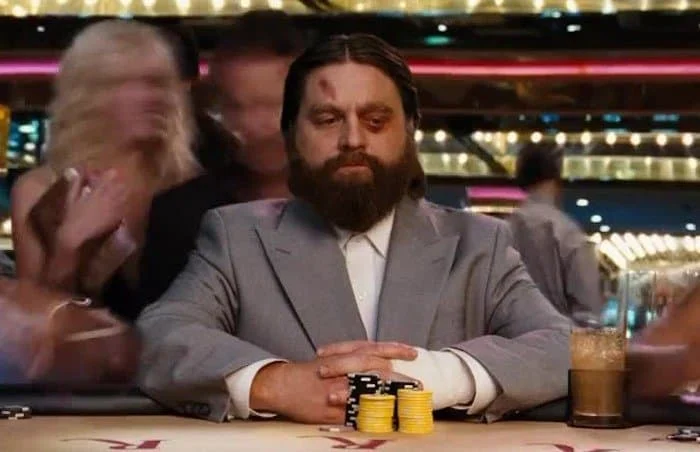
During the blackjack sequence, the stacks of chips on the table shift heights and colors between cuts without bets being placed on camera. Pay attention to the rail and the dealer’s edge-of-felt area: stacks on Phil’s side jump from short to tall across a single line of dialogue. The same thing happens with Alan’s pile as the montage intercuts reaction shots. This is a common continuity ripple when inserts and gameplay coverage are spliced together.
The trashed suite that resets between angles
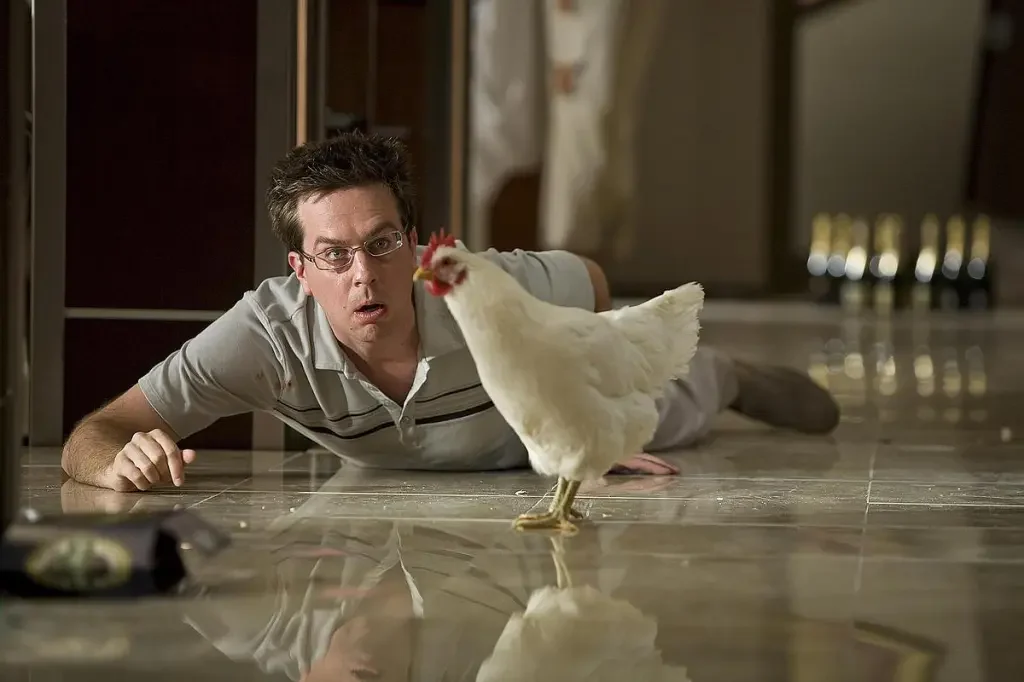
The destroyed hotel suite shows different debris layouts depending on the camera position. A toppled lamp and broken side table trade places across a few cuts in the morning-after walkthrough. Glass on the floor appears concentrated by the sofa in one shot, then scattered near the bar in the reverse. Because wrecked sets are rebuilt for multiple takes, crew photos don’t always capture every shard’s placement before resets.
Mattress on the statue—then not—then back again
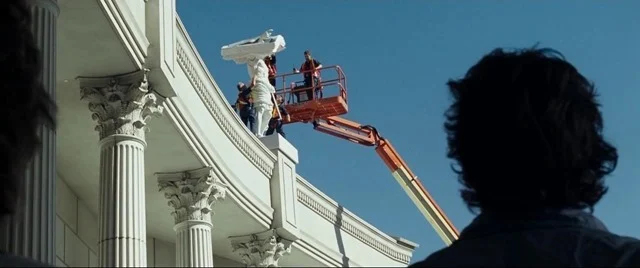
When the guys discover the mattress on a statue outside, establishing shots and reaction cutaways don’t always agree on its exact placement. In one wide, the mattress edge hangs lower over the statue’s arm; in another, it sits higher and flatter. Intercutting city plates with on-location angles can cause small mismatches like this. Look closely when the film jumps between ground-level reactions and the elevated wide.
Police cruiser details that don’t stay consistent
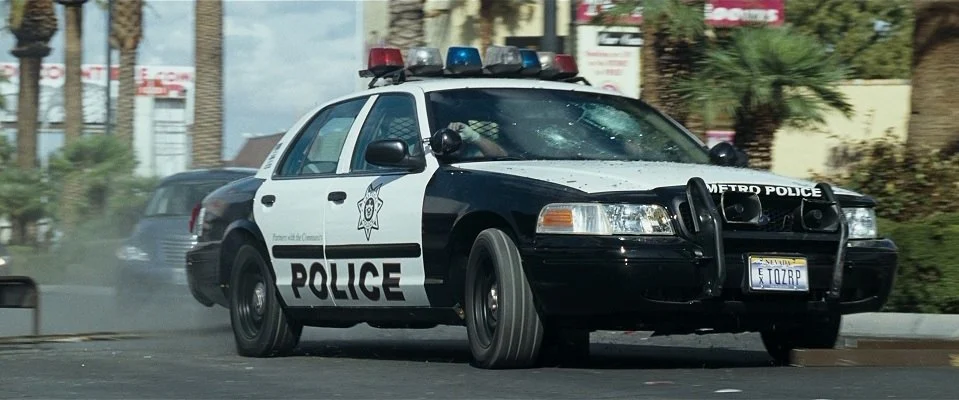
The LVMPD cruiser used in the film shows fluctuating details—push-bar scuffs, hood dings, and spotlight angle—that reset between exterior shots. Badge decals and unit numbers also don’t perfectly match across close-ups and driveway pull-aways. Productions typically field multiple identical-looking cruisers as “A” and “B” picture cars, which explains the telltale differences. You can catch it best when the car is framed head-on versus three-quarter profiles.
Timeline squeeze from roof sunrise to chapel stop
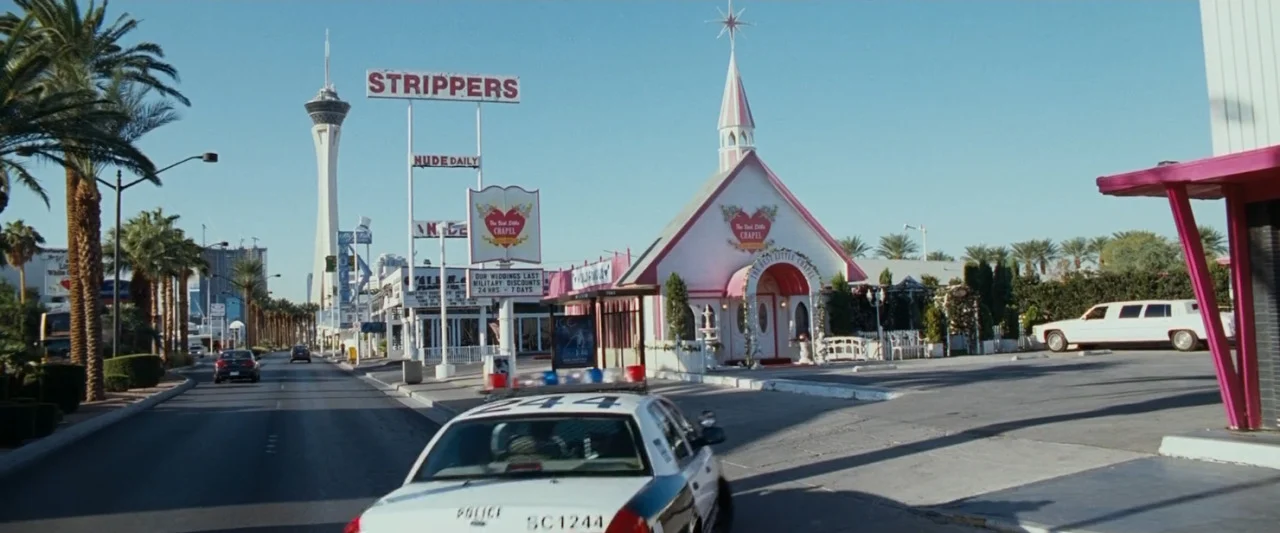
The morning timeline compresses more than the on-screen travel suggests, especially from sunrise on the roof to the quick swing by a wedding chapel and back through Strip traffic. Driving and operating hours shown would require more time than the sequence allows. The film cuts directly from rooftop discovery to multiple errands with minimal time passage cues. It plays fast and loose with Vegas distances and morning congestion, which shows up when you map the route.
Tiger scratches that heal between scenes
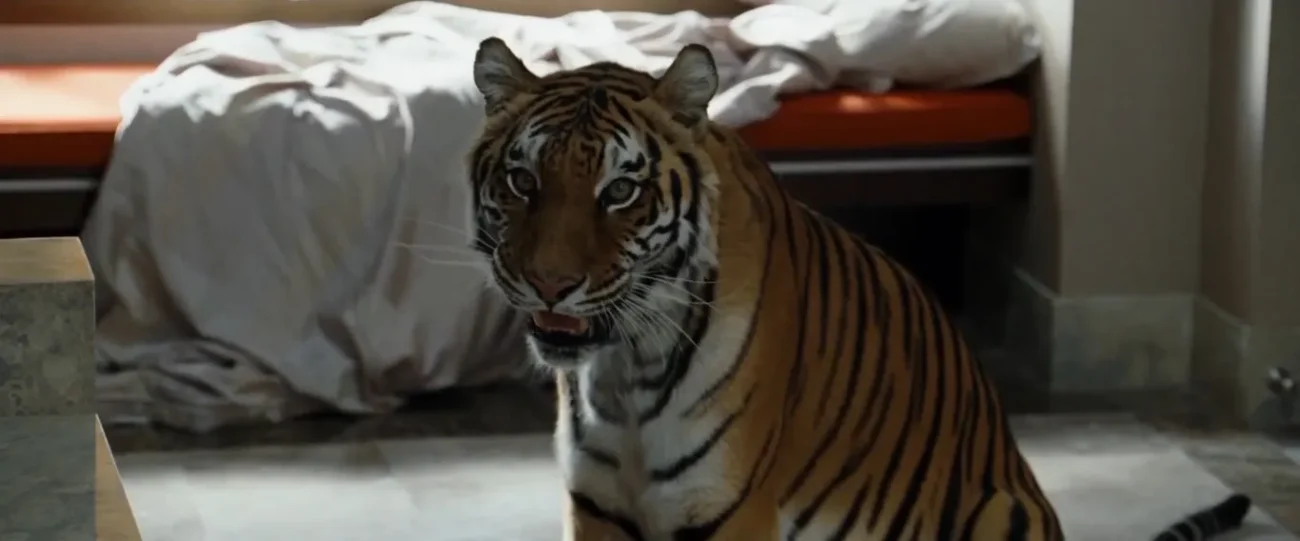
After the tiger encounter, visible clothing tears and scuffs on sleeves don’t stay consistent as the group moves from the suite to the hallway and elevator. In one shot, a rip near the elbow looks frayed and open; later it appears smaller or shifted. Wardrobe departments maintain multiple distressed versions of each costume, and not all takes line up perfectly. Watch the same sleeve across dialogue reverses to see the switch.
Roof access door position changes
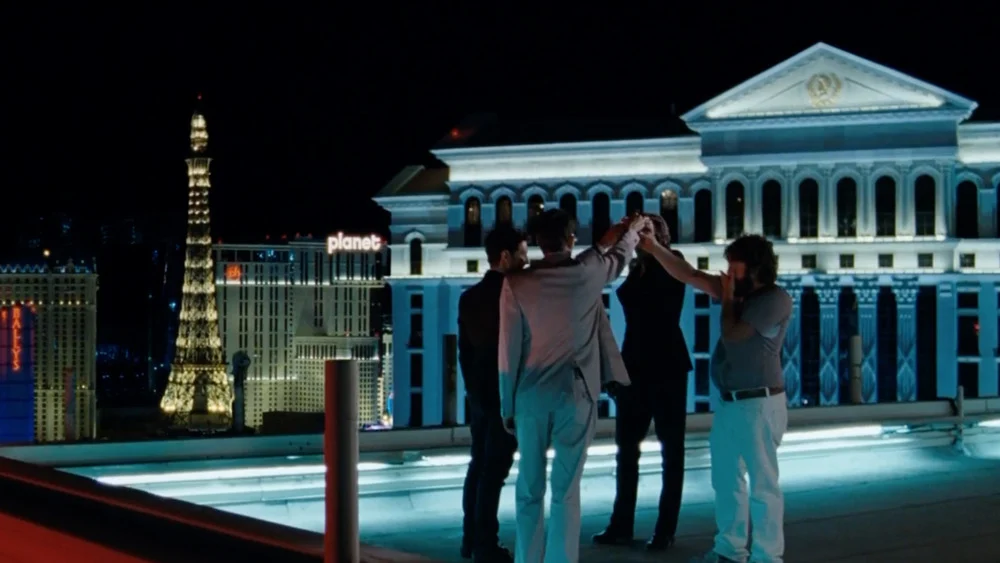
On the rooftop, the access door’s resting angle and handle position alternate between cuts without anyone moving it. In one angle the door sits wide open against the stop; in the next it’s partially swung back toward the frame. The hinge reveal also flips slightly when the camera relocates for the reverse. These micro-changes are typical when a scene is covered over several hours and the set gets reset between takes.
Share your favorite blink-and-you-miss-it flubs from ‘The Hangover’ in the comments!