‘The Idaho Murders: College Nightmare’ Reopens the Debate Over How Bryan Kohberger Knew His Victims

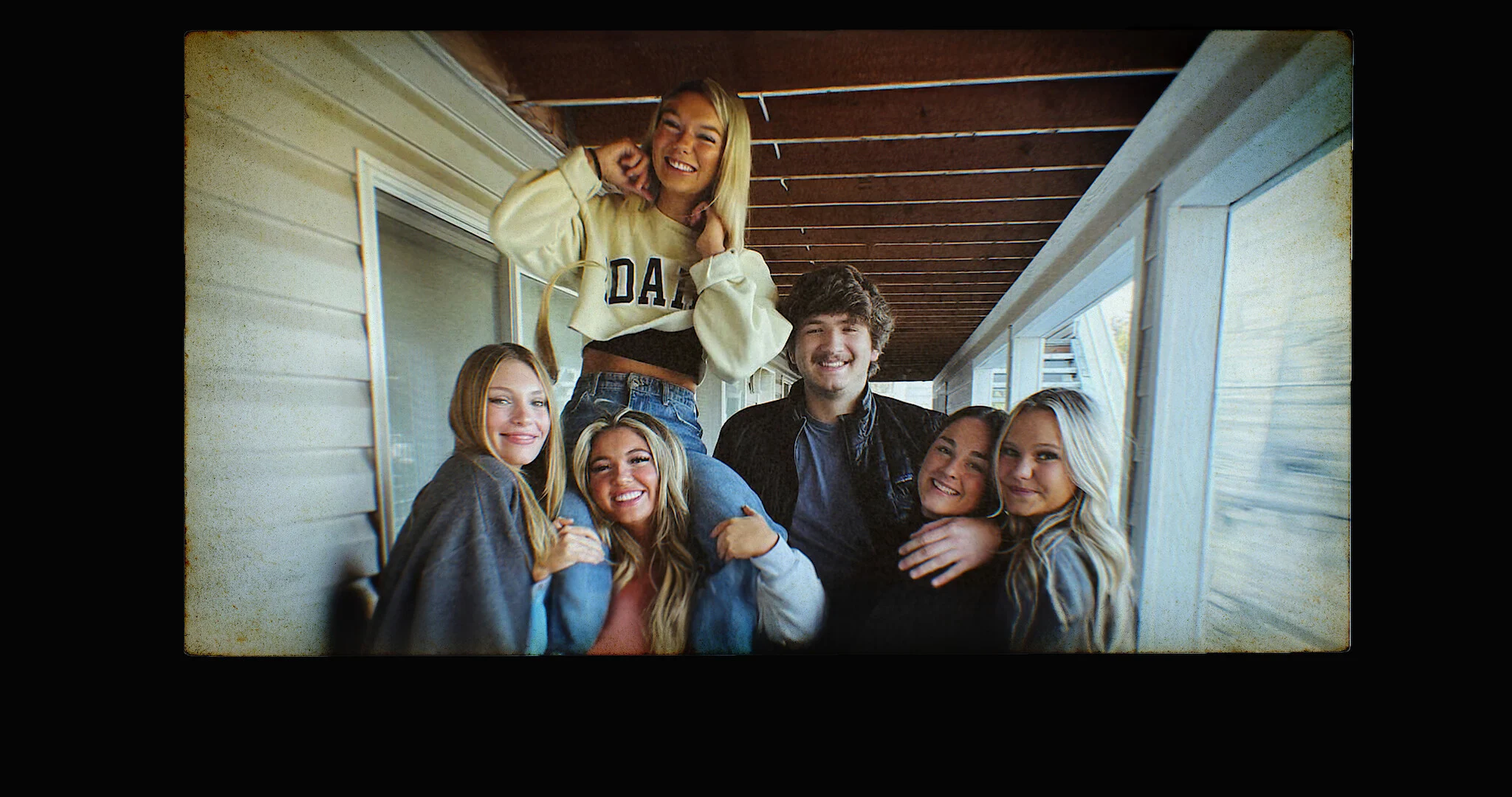

A new Netflix documentary is bringing fresh attention to one of the most persistent unanswered questions in the University of Idaho murders case. The synopsis of the case left key questions hanging that could have been answered at trial, including a motive for the stabbings and why Kohberger picked that particular house and those particular victims, who all appeared to be strangers to him. The three part series, which centers on the four young people killed rather than the man convicted of killing them, has renewed public curiosity about whether Bryan Kohberger had any prior connection to Kaylee Goncalves, Madison Mogen, Xana Kernodle, and Ethan Chapin.
Netflix’s docuseries ‘The Idaho Murders: College Nightmare,’ from directors Skye Borgman and Joe Berlinger, revisits the case with new footage and renewed urgency, especially now that Kohberger has announced he wants to withdraw his guilty plea and has filed a petition challenging his conviction, claiming he is actually innocent and wants a trial. The timing of the release has amplified interest in a case that many viewers thought had reached its conclusion when Kohberger accepted a plea deal last year.
The Idaho Murders College Nightmare Focuses on the Four Victims
‘The Idaho Murders: College Nightmare’ is a three-part documentary focusing on the victims, Madison Mogen, Kaylee Goncalves, Ethan Chapin and Xana Kernodle. Netflix has framed the project as a deliberate departure from typical true crime coverage of the case. Netflix has been clear about its intentions with the series, positioning it as a tribute rather than a study of the killer, and the choice to build the documentary around the four victims shapes every part of the series.
One of the more striking moments described from the series involves Goncalves’ older sister speaking directly to Kohberger. The most cathartic moment, according to Netflix, was when Kaylee Goncalves’ older sister, Alivea Goncalves, spoke directly to Bryan Kohberger, telling him she would not offer him tears or trembling, and that she would not feed what she called his beast.
The series also includes emotional reflections from the families of the other victims. Xana’s father Jeff Kernodle says the victims’ families were hoping to hear more from Kohberger, arguing that he should have to tell them why he did it and tell all of the parents why he did it, while Xana’s sister Jazzmin Kernodle says in the series she was dreading a trial that could last months.
Director Skye Borgman has spoken about the difficulty of deciding how much of Kohberger’s own story to include in a project built around honoring the victims. Borgman says the team wrestled with how much of his backstory to include, noting that ultimately they would have preferred not to mention him at all, but there was a need to do it. That tension between honoring the victims and explaining the case runs through much of the series, according to Netflix Tudum.
The Instagram Theory Behind How Kohberger May Have Known the Victims
The question of a prior connection between Kohberger and the victims has circulated since the earliest days of the investigation. While official investigators never confirmed a direct relationship, Kaylee Goncalves’ parents have pushed a different theory rooted in social media. Their claims center on an account they believe belonged to the man who killed their daughter.
The Goncalves family provided screenshots of an Instagram account they believe belonged to Kohberger, including what they say was his profile and a list of accounts he followed, among them Maddie Mogen and Kaylee Goncalves. Kaylee’s mother has spent considerable time trying to substantiate the theory on her own. Kristi Goncalves has described cross referencing the accounts of all four victims and finding what she believed was direct interaction.
That theory has never been confirmed by law enforcement. According to investigators, there was no confirmed personal relationship between Kohberger and the four victims. Documents released after Kohberger’s sentencing echoed that same conclusion regarding a separate set of unsettling incidents Goncalves described before her death.
In the weeks before she was murdered, Goncalves recounted a series of unnerving events to a housemate and a second surviving roommate, according to a police report, including a belief that someone was following her and a shadow she saw while outside with her dog about a month before the murders. The other surviving roommate told investigators that, around the same time, Goncalves saw an unknown male above their off-campus house staring at her when she took the dog outside, though the documents did not specifically link Kohberger to those incidents.
What the Documentary Reveals About Kaylee Goncalves Feeling Watched
New footage featured in the series adds detail to those earlier reports. New police footage in the documentary shows Kaylee Goncalves told a roommate she felt watched before the murders, as Kohberger now fights to withdraw his guilty plea. As heard in the documentary, about a month before the murders, Kaylee had seen a man staring at her while she was taking her dog for a walk outside the King Road house, a concern she shared with her roommate Bethany.
Other small details from that period also appear in the series. A few weeks later, Dylan, Maddie, and Bethany arrived home to find the front door had been left wide open, a fact that Dylan shared with police. Investigators have not tied that incident directly to Kohberger, but it has become part of the broader narrative fans and researchers use to piece together the weeks leading up to the murders.
The documentary also draws on interviews with people who knew Kohberger before the crime. The documentary includes interviews with former classmates, including Lilly Karaban, who sat near Kohberger in an undergraduate criminology class at DeSales University, and Karaban said Kohberger dominated class discussions and appeared to keep to himself socially. Several female students who knew Kohberger at Washington State told authorities he behaved in an unsettling manner toward them, including one who said he followed her to her car and spoke to her aggressively.
The Evidence That Connected Bryan Kohberger to the Crime Scene
Even without a confirmed prior relationship, investigators built their case using forensic and digital evidence rather than a personal connection to the victims. Using DNA analysis run on the knife sheath and investigative genetic genealogy, the FBI was able to match DNA from the sheath to trash collected from the family home of Bryan Kohberger, a graduate student at the neighboring Washington State University. Cell phone data showed that Kohberger had made several trips to the vicinity of King Road during late-night hours, and showed his phone as active and on the move during the early morning hours of the murders, and after that evening he never returned to Moscow, a fact law enforcement found suspicious.
Kohberger’s academic background has also fed speculation about his motive, even if it does not explain a personal link to the victims. Investigators also learned that Kohberger had a master’s in criminal justice from DeSales University in Pennsylvania and was pursuing a PhD in criminology at Washington State University, where he was under review because of numerous complaints from faculty and students, especially women, about his inappropriate demeanor as a teaching assistant, and he was later fired from his TA position. The documentary also references a questionnaire Kohberger posted on Reddit asking formerly incarcerated people how they selected and approached victims.
Investigators say the crime appears to have been carefully planned rather than impulsive. Investigators came to believe that this was a premeditated crime that Kohberger had meticulously planned, and as described in the documentary, Kaylee’s sister Alivea dug into Kohberger’s life and found old online posts that seemed to describe his feelings of disconnection from society and an unusual interest in what it would feel like to commit crimes. Moscow Police Chief Anthony Dahlinger has been direct about the limits of what investigators ultimately learned. Ultimately we never have been able to answer that question that everybody wants answered, why, and we don’t know why these four, we don’t know why this house, and Dahlinger says he doesn’t think anyone will ever know.
Bryan Kohberger’s Sentencing and His Push to Withdraw the Plea
Kohberger’s legal fate appeared settled after his sentencing last summer. After pleading guilty to the murders of Kaylee, Maddie, Xana, and Ethan, Kohberger was sentenced on July 23, 2025, to four consecutive life terms without parole plus an additional 10 years for burglary. Kohberger is currently incarcerated at Idaho Maximum Security Institution in Kuna, in a restrictive housing unit where he is confined to his cell 23 hours a day, and in summer 2025 he reportedly filed a request to be transferred because of safety complaints, though no transfer has occurred.
That resolution was upended just before the documentary’s release. On July 26, 2026, Kohberger announced he was looking to take back his guilty plea and had already filed a petition challenging his conviction, claiming he is actually innocent and wants to obtain a trial, stating that his actual innocence is his truth and that the plea, hinged on false promises and blatant disinformation, must be withdrawn.
The victims’ families responded sharply to the news. The Goncalves family released a statement likening Kohberger to a mosquito they just cannot seem to swat, writing that if even a fraction of the energy spent trying to free a guilty man were directed toward honoring the victims, there would be statues of them on every corner, parks bearing their names, and days set aside to remember the lives lost at the hands of a narcissist. Moscow Police’s Dahlinger has offered his own framing of the sentence Kohberger is now serving. Dahlinger maintains that in a way Kohberger received a form of the death penalty, saying he is sentenced to die in prison.
For the families involved in the documentary, the goal was never to answer every unresolved question about Kohberger’s connection to the victims. The hope, as expressed by those involved in the project, is that people finish the series feeling they knew Ethan, Xana, Kaylee, and Maddie as more than victims of a notorious crime, and instead as young people whose lives were full of promise, humor, friendships, and love. With the Instagram theory still unconfirmed and Kohberger’s own legal challenge just beginning, viewers who finish ‘The Idaho Murders: College Nightmare’ are left to decide for themselves whether they believe a connection existed, and it seems worth asking what convinced you either way.