The Israeli Show That Inspired ‘Euphoria’ Was Darker, Grittier, and Almost Nobody Watched It

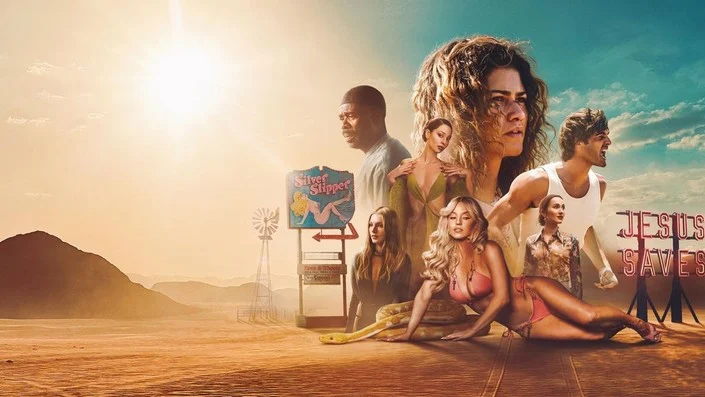

Most viewers who binged the HBO series and became obsessed with Rue Bennett’s fractured orbit through East Highland had no idea they were watching a remake. ‘Euphoria,’ the hit HBO show starring Zendaya, was actually based on an Israeli series of the same name, and the majority of its audience never realised it. That gap between source material and cultural phenomenon says something revealing about what adaptation can do when a creator is given room to make the story entirely their own.
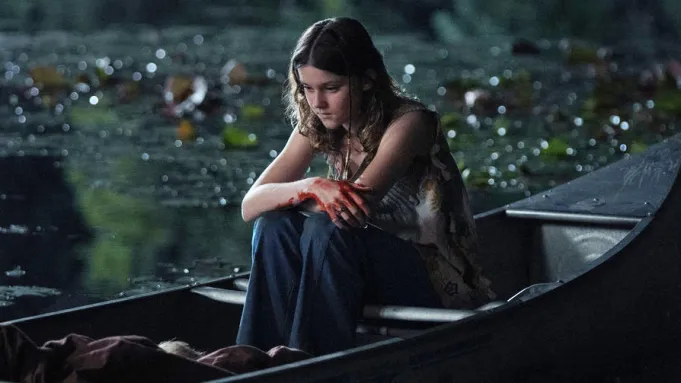
The original ten-episode series was created by Ron Leshem and Daphna Levin, aired on Israeli cable network Hot 3, and was rooted in the true story of a teenager who was murdered outside a club. The show then followed the lives of the teens from that same club a year after the tragedy, tracing the fractured paths each one took to cope. It was raw, documentary-inflected, and largely ignored. The HBO version went on to become one of the most-watched dramas in television history.
How the Israeli Original Came to HBO
The journey from Israeli television to HBO was a long accumulation of rejection, as Leshem and producer Hadas Mozes Lichtenstein spent years trying to shop the concept to studios across the United States. The former HBO chief reportedly said the show would never get made in the American market. It was only when Casey Bloys rose to lead the network that the project was revived from memory and a pilot was greenlit.
Francesca Orsi, the head of drama at HBO, described the Israeli original as “Kids meets Trainspotting,” and it was HBO Drama Director Christine Kim who reached out to Sam Levinson about the project to gauge his interest. Levinson, whose hyperstylized aesthetic had already surfaced in his 2018 thriller ‘Assassination Nation,’ was a sharp creative fit. Speaking about the adaptation, Levinson said that Orsi enjoyed “what a raw and honest portrait it is of drugs and being young,” and that this opened the door to him sharing his own personal history with addiction.
As Ron Leshem later recalled, Orsi asked Levinson to weave in his own personal wound as a teenager, and Rue’s addiction originating with her father’s cancer painkillers was a direct response to the opioid epidemic that had claimed hundreds of thousands of lives in the United States. That decision to anchor the American version in a specific social crisis is one of the clearest reasons the two shows feel so different in texture despite sharing DNA.
The Differences Between the Israeli Original and the HBO Adaptation
The original ‘Euphoria’ used handheld shots that added gritty realism to its scenes, with washed-out visuals and an unflinching camera that gave the show the feel of a raw, ground-level documentary. For the American version, Levinson opted for a sleeker approach, using flashy edits and an emotionally driven style. The contrast captures something essential: the Israeli version prioritises authenticity, while the HBO version prioritises sensation and emotional immersion.
Discussing the major changes in an interview with the Television Academy, Levinson noted that the original series is mostly about young men, with a female character dealing with drug issues and self-harm, while his version shifted that dynamic entirely. Zendaya’s Rue replaced the Israeli lead Hofit, played by Roni Dalumi, as the central figure and narrator of the story. In the Israeli version, it is revealed that the main character died of a drug overdose and is narrating from beyond the grave, an element the adaptation chose to preserve in spirit by keeping Rue as a narrator, though her ultimate fate was left deliberately ambiguous.
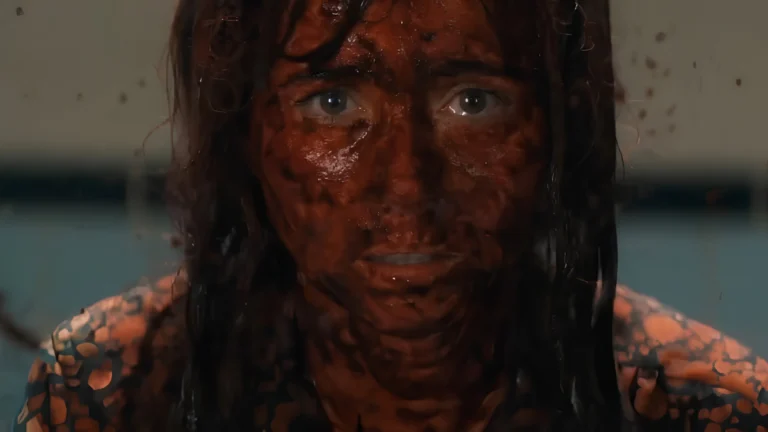
The Israeli series contains some genuinely brutal plot points that the HBO version never approached, including a character’s sexual choices leading to an HIV diagnosis, and a death that plays out on a livestream at the hands of a young kid, a figure parallel to Fezco’s younger associate Ashtray. The original is grimmer and more unforgiving in its consequences, while the American version wraps its darkness in visual spectacle and pop cultural fluency.
Ron Leshem, Sam Levinson and the Question of Creative Ownership
Ron Leshem co-created the original Israeli series with Daphna Levin, and when reflecting on the HBO adaptation, he has expressed more interest in expanding ‘Euphoria’ to other countries and embracing their respective cultures than pursuing American spin-offs or sequels, noting the differences between working in American and Israeli television markets. That perspective is telling. Leshem sees his creation as a framework that takes on meaning differently depending on where it lands.
Leshem described Zendaya as someone who, when on set, projects energy onto hundreds of crew members with a calming force, calling her “incredibly brilliant” and “a true drama creator at heart.” He also credited Levinson as a genius filmmaker and the most generous soul, saying the Euphoria set has the best atmosphere he has encountered across productions in twenty countries. Whatever creative tensions the show generated publicly, Leshem’s account paints a picture of a production where the source material’s author felt genuinely respected.
The debate around the show’s origins resurfaced sharply during Season 3, with viral posts questioning the show’s roots and some online corners connecting the Israeli origin to wider political debates, though many fans pushed back arguing that the HBO version clearly reflects Levinson’s personal storytelling rather than functioning as a copy of the original.
The Scale of What the HBO Version Became
The HBO series generated 25 Primetime Emmy nominations and nine wins across its first two seasons, and became the second most-watched HBO show after ‘Game of Thrones,’ averaging 16.3 million viewers per episode during its second season. Those are numbers the Israeli original, which aired quietly on a cable network and barely registered with local audiences, could never have anticipated as its legacy.
The Season 3 premiere pulled in 8.5 million U.S. viewers across HBO and HBO Max in its first three days, representing a 44 percent increase over the Season 2 premiere, with the global total surpassing 20 million viewers. A four-year gap between the second and third seasons only amplified fan appetite, and during the finale weeks, the show dominated streaming metrics with more than 1.3 billion minutes watched in a single week according to Nielsen.
The show also served as a career springboard for much of its ensemble, with Jacob Elordi, Hunter Schafer, Sydney Sweeney, and Colman Domingo among those who emerged as significant industry names on the back of it. The Israeli original launched no such careers, and was not built to. It was a single-season document of a specific cultural wound, and in that sense it did exactly what it was designed to do. The fact that it quietly seeded one of the defining television events of the last decade is either a remarkable accident or proof that the right story, given the right interpreter, will eventually find its audience.
If you watched every episode of the HBO version and felt like you knew ‘Euphoria’ completely, it might be worth asking how differently you would have understood Rue if you had met Hofit first.