‘The Vampire Lestat’ Finally Answers a Long-Running Question About Paul’s Death


Fans of AMC’s gothic drama have spent years debating whether Lestat de Lioncourt had a hand in the death of Paul de Pointe du Lac, and the show’s newest chapter has given that theory fresh relevance. Paul, Louis’ younger brother, has remained a quiet but persistent presence in the fandom’s imagination since his death in the very first episode of ‘Interview with the Vampire.’
With the series now rebranded as ‘The Vampire Lestat’ for its third season, Paul’s story has resurfaced in a way that has reignited the conversation among viewers who never quite let the theory go. The renewed attention offers a good opportunity to separate what the show has actually confirmed from what remains speculation.
Paul de Pointe du Lac’s Death and the Theory It Sparked
Paul was introduced as Louis’ righteous, deeply religious younger brother, a man whose undisclosed mental illness pushed him toward increasingly intense delusions. He believed God was speaking to him through birds inside his head, a delusion that eventually motivated him to take his own life. He was played by Steven G. Norfleet across the show’s run.
The details of his final moments have long fueled speculation. Paul climbed to a rooftop with Louis, and after Louis assured him he believed his visions were real, Paul jumped to his death, but not before warning his brother that Lestat was the devil and telling him that he loved him. That warning, delivered moments before his fall, is a large part of why fans began questioning whether Lestat played any hidden role in what happened.
The show itself planted some of the seeds for suspicion, since Paul’s description of hearing voices in his head, like a family of birds, echoes the way the series later frames the mind sharing powers vampires like Lestat possess. That parallel, drawn early in the series, gave attentive viewers reason to wonder if Paul’s death was not what it appeared to be on the surface.
Louis’ own grief compounded the mystery. He told a priest afterward that he knew he had not killed his brother, but that he could not live with how he had treated him before Paul died. That guilt, rather than any confirmed involvement by Lestat, became the emotional throughline of the aftermath.
The Fan Theory That Refuses to Die
The theory that Lestat orchestrated or caused Paul’s death has circulated across fan communities for years, with some versions suggesting Lestat pushed Paul during a confrontation Louis later repressed. One widely shared theory proposed that a dissociative episode explained why Louis had no memory of Lestat being involved, and that Lestat later learned the truth through his mind reading abilities but chose never to reveal it out of respect for Louis’ privacy.
That theory has never been supported by the text or the series itself, and it has been directly addressed by the person behind the character. A post attributed to Lestat’s own voice, shared through the character’s official social media presence, dismissed the rumor that he killed Paul outright. That same post reportedly acknowledged that Lestat was infatuated with Louis, but stopped well short of confirming any involvement in Paul’s death.
Fans remain divided on how firmly to treat that dismissal. Some corners of the fandom continue to argue that Lestat had nothing to do with Paul’s death, pointing out that Louis stayed with Lestat for years despite his doubts, which they read as evidence Louis never truly believed Lestat was responsible. Others still find the ambiguity of the rooftop scene too suggestive to dismiss entirely.
Do you think the fan theories are right?
What is clear is that the show has never depicted Lestat as physically present at Paul’s death, and no confirmed on screen evidence supports the murder theory. The mystery persists largely because ‘Interview with the Vampire’ is built around unreliable narration, a structural choice that leaves plenty of room for doubt even when the plainest reading of events points elsewhere.
Paul’s Presence in The Vampire Lestat
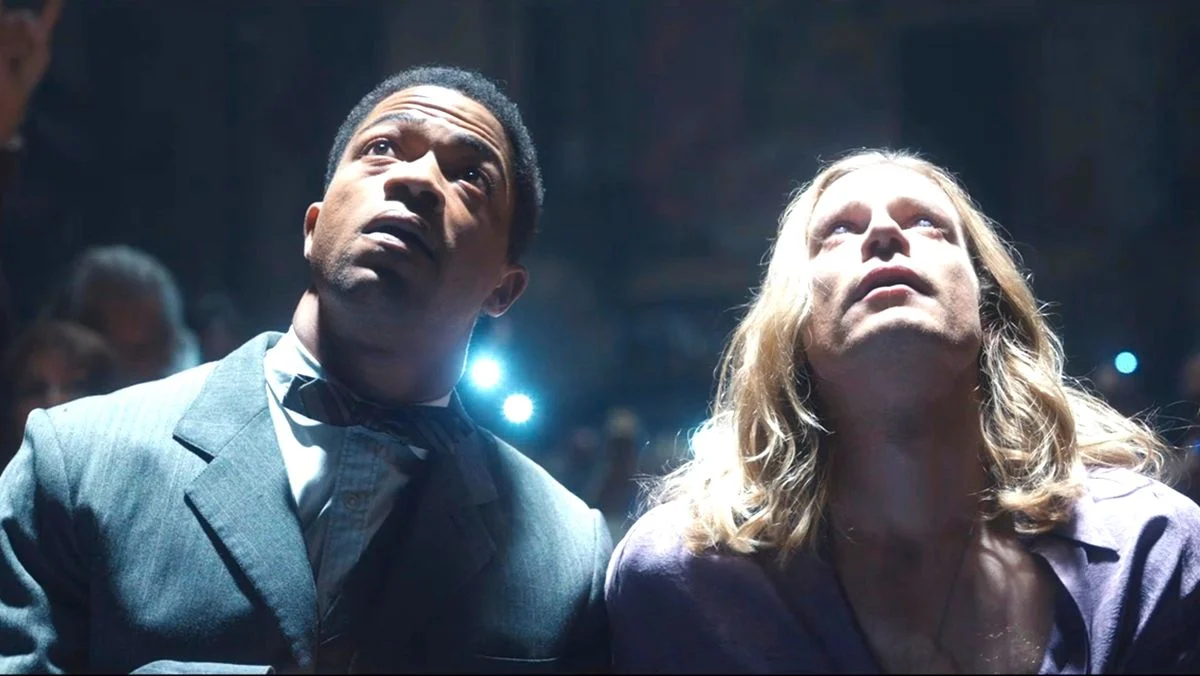
Paul’s death did not end his relevance to the story, and the newly retitled season has brought him back in a striking way. In the season’s finale, Paul appears among the dead people Lestat sees during a near death, cataclysmic performance late in the episode, a haunting callback to the brother Louis lost in the show’s very first hour. His reappearance, even as a vision rather than a living character, underscores how much his death still weighs on the story years later.
Louis’ arc heading into this chapter has been shaped directly by that loss. The character enters this new season having finally accepted his vampiric nature while still healing from the deaths of both Paul and his adopted daughter Claudia. That framing suggests the show has no interest in quietly moving past Paul, even as the narrative shifts its focus toward Lestat’s own perspective.
The season itself represents a significant structural pivot for the franchise. AMC’s official description for the season states that Lestat, resentful of his portrayal in the bestselling book Louis gave to journalist Daniel Molloy, sets out to tell his own version of events by starting a band and going on tour. The shift places ‘The Vampire Lestat’ in a very different register than the two seasons that preceded it.
Sam Reid and the Show’s New Direction
The tonal shift required a different kind of preparation from Sam Reid, who has played Lestat since the series began. Speaking about the character’s rock star storyline, Reid told Variety that getting into the role involved a lot of drugs and being flown around on a private plane, a description of the season’s more hedonistic tone. That kind of firsthand detail from the actor gives a sense of how far the show has moved from its earlier, more restrained seasons.
The season’s renewal came together quickly after the second season’s success. AMC Networks renewed ‘Anne Rice’s Interview with the Vampire’ for a third season just days ahead of the season two finale, with the season’s story built around Gabrielle, Nicholas, Magnus, Marius, and other figures central to Anne Rice’s original novel. That renewal set the stage for the show’s rebrand and its deeper dive into Lestat’s own telling of events.
Reid has spoken about wanting the storyline to eventually bring the show’s timeline together rather than adding new narrators. He has said he hopes future seasons keep all of the vampires living in the same time period, a preference that reflects how much the show has relied on shifting perspectives across its run so far.
Paul’s brief return as a vision in Lestat’s mind, even without any new confirmation about the circumstances of his death, keeps his story part of the larger conversation fans have been having since the show’s first season. Given how much unresolved tension still surrounds that rooftop scene, it seems worth asking readers directly whether they think the show has truly closed the book on what happened to Paul, or whether Lestat’s own version of the story still has more to reveal.