‘The Walking Dead: Dead City’ Season 3 Episode 6 Recap and Ending Explained: What Genesis Really Means for Maggie and Negan

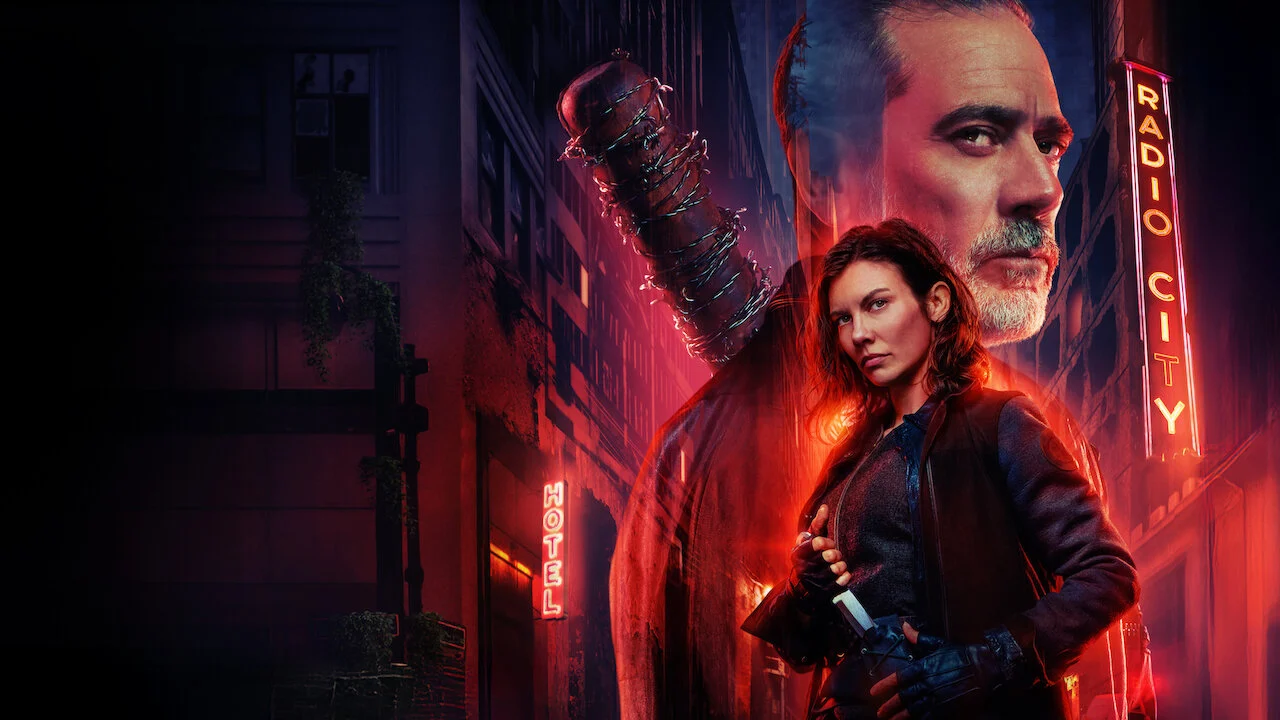

‘The Walking Dead: Dead City’ has spent its third season testing whether Maggie and Negan can actually build something lasting out of the wreckage of Manhattan, and episode six pushes that question into strange new territory. Rather than continuing the ongoing struggle to hold their fledgling community together, the episode steps outside the post apocalyptic setting entirely to imagine a version of these characters’ lives that never involved walkers at all.
The result is one of the more divisive hours the franchise has produced, and it arrives at a moment when the season had already been building toward a reckoning over Negan’s violent choices. Here is what actually happens in the episode, and what the ending means once the story returns to the world viewers know.
What Happens in the ‘Dead City’ Season 3 Episode 6 Recap
The episode, titled ‘Genesis,’ abandons the ruined Manhattan setting that has defined the series and instead imagines a present day New York where the outbreak never occurred, Beth Greene is alive, and Glenn’s death never became the event that reshaped Maggie’s life. Maggie and Negan meet as strangers in this world, and the episode does not present the sequence as a permanent replacement timeline or suggest that Maggie has crossed into another universe.
Instead, the hour builds on a conversation from the previous episode, where Maggie and Negan wondered aloud whether they could have been friends under different circumstances. What begins as a warm holiday detour gradually turns into something considerably darker as the episode progresses.
Beth is central to this alternate version of events, since ‘Genesis’ gives viewers a glimpse of the future she was denied in the show’s actual timeline. She performs professionally in New York, later sings alongside Maggie, and encourages her sister to choose something for herself instead of devoting her entire life to the family farm. Maggie also pushes Negan in this world, telling him that his son Joshua needs a father in his life, which prompts Negan to place a call to him.
That fragile moment of growth does not hold. A man named Alan resurfaces, and Negan ends the call after overhearing a troubling exchange, with the episode hinting that Alan’s story does not end well without ever making that outcome explicit.
Inside the Genesis Alternate Reality
A visit to a fortune teller gives the alternate timeline its clearest thematic explanation. The reading describes Maggie as caught in a kind of karmic cycle and tells her she has just met someone significant, framing the relationship as one that repeats until both people learn what they are meant to take from it.
The episode uses that idea to justify why Maggie and Negan keep circling back into each other’s orbit even in a reality where they have no shared history. ‘Genesis’ is not introducing reincarnation as an actual rule of this universe, but the sequence gives the alternate reality its internal logic.
The Alan subplot becomes the episode’s emotional center. In this version of events, Negan previously broke Alan’s jaw after learning what Alan had done, an act that sent Negan to prison for two years, and when Maggie later asks why he has come back to New York, he admits he has returned specifically to kill him.
That admission sets up the episode’s tensest sequence, when Negan finds Alan outside the venue where Beth is performing. Negan’s anger takes over immediately and he threatens to kill Alan on the spot, while Maggie repeatedly warns him that another violent act could put him back in prison for good.
Maggie and Negan’s History Comes Full Circle
Even without the added pressure of survival, both characters carry the same instincts that have defined them throughout the series. The episode suggests that changing the world around Maggie and Negan does not automatically free either of them from their own patterns of behavior.
That plays out directly in the confrontation with Alan. After Alan insults Maggie, she is the one who responds physically, striking him herself and allowing the pair to leave before Negan can carry out his original plan. It becomes one of the clearest illustrations in the episode of why these two work as a team, even in a life where they never should have met.
This alternate version of their dynamic also echoes what has been happening in the actual Manhattan storyline all season. Negan’s willingness to use violence to protect people he cares about, and Maggie’s role in trying to hold him back from his worst impulses, mirrors the tension that has driven the community building plot since the season began.
The Ending Explained and Critical Reaction
By the episode’s final stretch, the story shifts back to reality. Hershel contacts Maggie and tells her that Negan killed a man named Fabian, and that Dillard was attacked by the same person, pulling the narrative back into the consequences that have been building since episode five. That earlier episode, titled “Imperialis,” had already shown Negan choosing to shoot and kill Fabian after determining that his growing instability had become a direct threat to Maggie’s safety, a decision that left the community’s trust in Negan hanging by a thread.
As for what happens to Alan in the alternate reality, the episode stops short of full confirmation. The sequence strongly implies that Negan ultimately shoots Alan, but it does not linger on the aftermath or explicitly confirm his death, meaning a definitive answer goes slightly beyond what ‘Genesis’ actually shows on screen.
Reaction to the episode has been sharply divided. One critic described “Genesis” as one of the most pointless and poorly justified hours in the franchise’s history, arguing that the season has increasingly leaned into structural choices that undercut its own storytelling. That response stands in contrast to more favorable takes on the season as a whole, with some reviewers praising how this batch of episodes puts Maggie and Negan on the same page for once, calling it a welcome change from the warlords and backstabbing that defined earlier seasons of the franchise.
The season itself arrives under new creative leadership, with franchise veteran Seth Hoffman taking over as showrunner from Eli Jorné heading into season three. That shift in direction may help explain why an episode like “Genesis” was greenlit at all, even as it tests the patience of longtime viewers waiting to see how Maggie and Negan handle the fallout from Fabian’s death.
Whether “Genesis” ultimately reads as a bold risk or a detour the show didn’t need may depend entirely on how the back half of the season handles Negan’s reckoning with what he’s done, and that’s a conversation worth having with fellow viewers who just watched Manhattan’s fragile peace start to crack.