


5 Things About ‘Gone Girl’ That Made Zero Sense and 5 Things That Made Perfect Sense




Gone Girl (2014) is a gripping thriller that keeps you guessing. Directed by David Fincher and based on Gillian Flynn’s novel, it follows Nick Dunne and his wife Amy, whose disappearance sparks a media storm and a twisted tale of deception. The film’s sharp writing and dark tone make it a standout, but not everything adds up. Some moments leave you scratching your head, while others click perfectly.
This list dives into five things in Gone Girl that don’t hold up and five that work brilliantly. We’ll alternate between what makes zero sense and what makes perfect sense, unpacking the film’s highs and lows. Let’s get started.
Nick’s Affair Timing Makes Zero Sense

Nick’s affair with Andie feels oddly timed. He’s under intense scrutiny as a suspect in Amy’s disappearance, with police and media watching his every move. Yet, he’s sneaking around with a college student, risking everything. It’s hard to believe someone in his position would be so reckless when he’s already fighting to clear his name.
The affair also doesn’t fit Nick’s cautious personality. He’s shown as someone who tries to keep up appearances, especially early on. Why would he jeopardize his image with such a careless move? The plot needs drama, but this feels forced and out of character.
Amy’s Manipulative Plan Makes Perfect Sense

Amy’s elaborate scheme to frame Nick is chillingly believable. She’s a meticulous planner, using her intelligence to craft a narrative that paints Nick as a murderer. From faking her diary to planting evidence, every step is calculated to exploit how people perceive relationships and guilt.
Her plan works because it plays on real-world biases. The media and public are quick to judge Nick based on his behavior, not facts. Amy knows this and uses it to her advantage, making her scheme feel scarily plausible in a world obsessed with true crime.
The Pregnancy Test Twist Makes Zero Sense

Amy’s pregnancy reveal at the end feels like a cheap plot device. She claims she’s pregnant with Nick’s child, using it to trap him into staying with her. But the timeline and logistics don’t add up—how and when did she get pregnant? The film doesn’t explain, leaving a gaping hole.
It’s also hard to buy that Nick, already burned by Amy’s lies, wouldn’t demand proof like a DNA test. The twist seems designed to shock rather than make sense. It’s a weak moment in an otherwise tightly written story.
Nick’s Media Mishaps Make Perfect Sense

Nick’s inability to handle the media is spot-on. He comes off as cold or awkward in interviews, which makes people suspicious of him. This feels real because most people aren’t media-savvy, especially under pressure. His smile during a press conference, meant to be reassuring, backfires horribly.
The film nails how public perception can turn against someone based on small missteps. Nick’s mistakes, like not knowing how to act “grieving” enough, show how the media can twist innocent behavior into something sinister. It’s a sharp take on our judgment-obsessed culture.
Desi’s Murder Scene Makes Zero Sense

Desi’s death at Amy’s hands feels over-the-top and poorly explained. Amy kills him to escape his control, but the way she does it—slitting his throat during sex—seems unnecessarily dramatic. How does she pull this off so cleanly without him fighting back? The scene lacks clarity.
Afterward, Amy returns home covered in blood, claiming she was kidnapped. The police barely question her story, despite the messy crime scene she left behind. It’s a stretch that investigators wouldn’t dig deeper into such a suspicious setup.
Amy’s Diary as a Tool Makes Perfect Sense
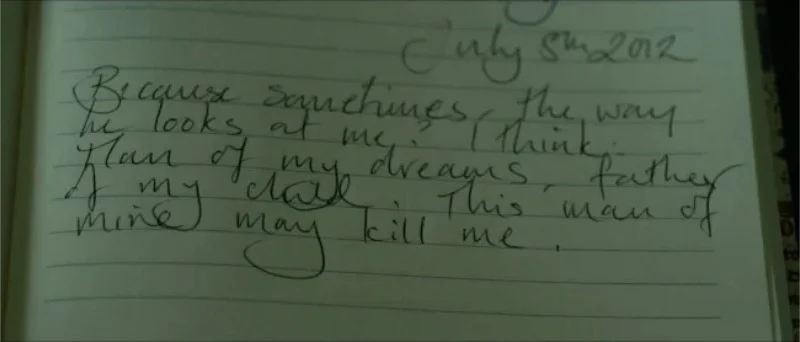
Amy’s fake diary is a brilliant plot device. She uses it to paint Nick as abusive, planting subtle clues that seem authentic to outsiders. It’s a smart way to manipulate the narrative, as diaries are often seen as personal and truthful, making her story hard to dispute.
The diary also shows Amy’s deep understanding of storytelling. She crafts entries that feel real, mixing truth with lies to make Nick look guilty. This tactic is scarily effective, reflecting how easily people can be swayed by a well-told lie.
The Police Investigation Makes Zero Sense
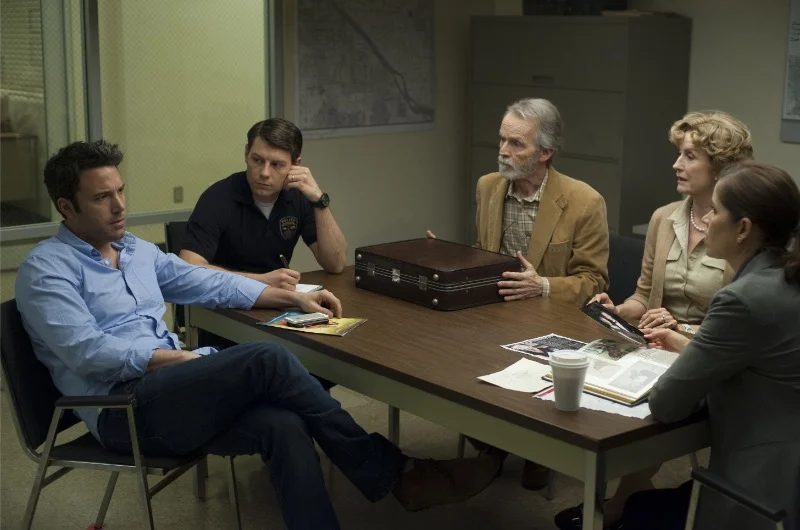
The police investigation into Amy’s disappearance is frustratingly sloppy. They focus almost entirely on Nick without exploring other possibilities, like Amy’s past enemies or her own unstable behavior. It feels like they’re following a script rather than investigating a real case.
Key evidence, like the staged crime scene in the house, isn’t scrutinized enough. The police also miss obvious red flags, like Amy’s history of manipulation. For a high-profile case, their one-track focus on Nick feels unrealistic and lazy.
Amy’s Psychological Depth Makes Perfect Sense

Amy’s character is a standout because of her complex psychology. She’s not just a villain; she’s a product of her environment, shaped by her parents’ expectations and her own need for control. Her actions, while extreme, stem from a clear mindset that the film builds carefully.
This depth makes her feel human, not cartoonish. Her need to win at all costs, even if it means destroying lives, ties into her fear of being ordinary. The film’s exploration of her psyche grounds the story in a way that feels chillingly real.
Nick Staying with Amy Makes Zero Sense

Nick’s decision to stay with Amy at the end is baffling. After everything she’s done—framing him, faking her death, killing Desi—he knows she’s dangerous. Yet, he chooses to live with her, supposedly because of the pregnancy. It’s hard to believe he wouldn’t try to escape or expose her.
The choice feels like it’s there to create a dark ending, not because it fits Nick’s character. He’s shown growth by the end, so staying with a psychopath feels like a betrayal of his arc. It’s a frustrating loose end.
The Film’s Social Commentary Makes Perfect Sense

Gone Girl nails its commentary on marriage and media. It shows how relationships can hide dark secrets behind a perfect facade, which resonates with real-life stories of troubled couples. The film also critiques how the media shapes narratives, turning Nick into a villain based on flimsy evidence.
This commentary feels sharp because it mirrors reality. People are quick to judge based on surface-level impressions, and the film uses this to drive the story. It’s a clever reflection of how society consumes and distorts truth.
What’s your take on Gone Girl—which moments made sense to you, and which left you confused? Share your thoughts in the comments!