


5 Things About ‘Severance’ That Made Zero Sense and 5 Things About It That Made Perfect Sense




The world of ‘Severance’ builds a workplace where memories split at the office threshold and everyday life runs on two tracks. That setup gives viewers a clean look at rules, tools, and routines that define the severed floor and the people who keep it running. It also leaves a trail of details that raise practical questions about how Lumon does business and why certain choices exist at all.
This list walks through what the show clearly lays out and what the show presents without a direct explanation. Each point focuses on what we see on screen, from procedures and devices to memos and room layouts. You will find the puzzle pieces as they appear and how they fit together, plus the places where the picture on the box never shows up.
Zero Sense: What MDR actually produces

Macrodata Refinement workers sort numbers by feel and assign them to bins, yet the team never receives a description of what the bins represent or where the output goes. Their terminals display quads, quotas, and progress percentages, but no downstream client or product name is ever provided to the team in writing or in person.
Supervisors direct questions back to company history lessons and morale perks. Orientation videos and the employee handbook highlight rules and rituals while avoiding any functional explanation of the data source. Rewards like melon and waffle parties stand in for a standard briefing on purpose and impact.
Perfect Sense: Helly R’s identity and decisions

The show reveals that Helly R is Helena Eagan, which explains why her outside self blocks every resignation attempt. Her recorded messages to her innie treat the work as a legacy program rather than a personal job, and that matches company goals that use her placement to promote severance.
Her schedule lines up with public facing events where she serves as proof of concept. The finale places her at a major gathering that showcases the procedure, and her innie uses that moment to speak from inside the system. The reveal ties together her hiring, her outie’s stance, and Lumon’s public relations plan.
Zero Sense: Security gaps that enable the Overtime run
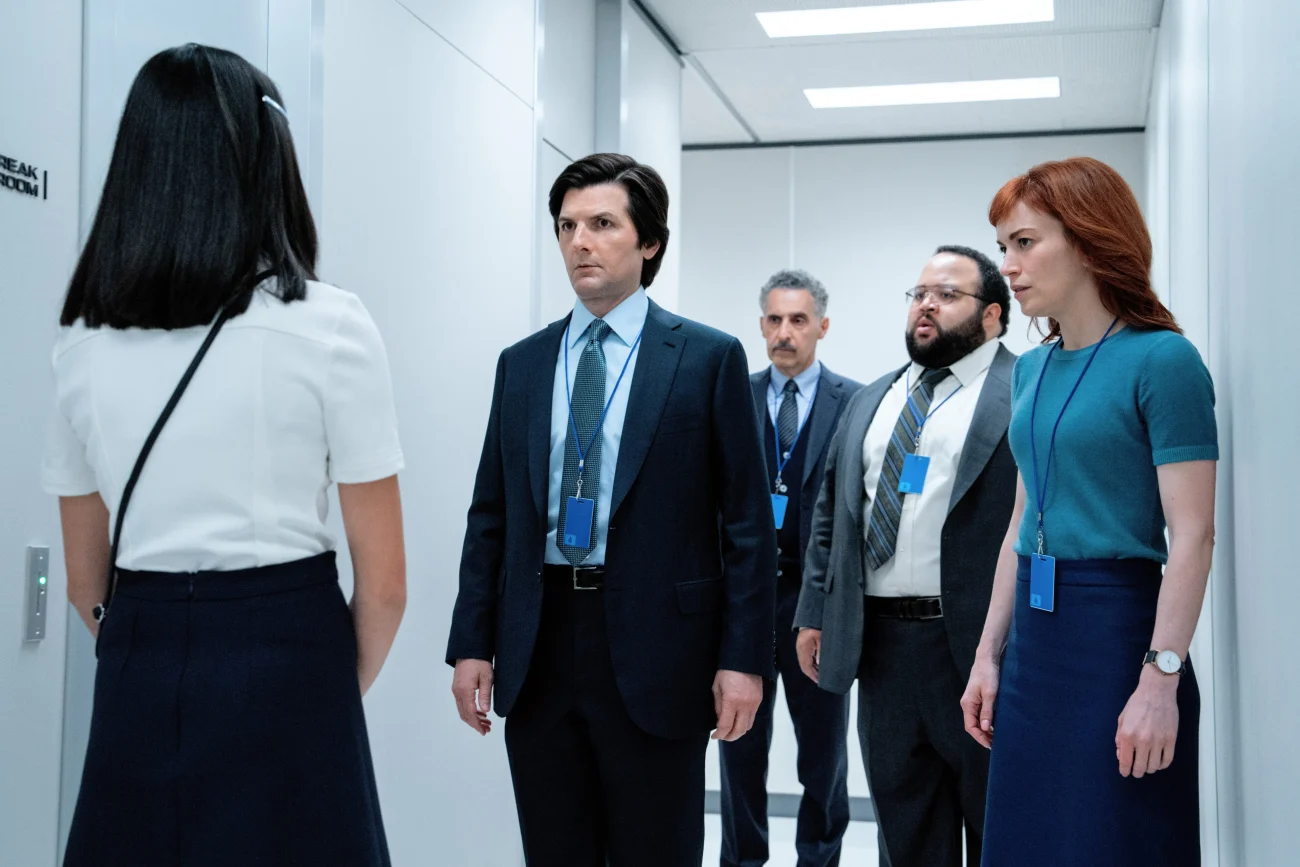
Dylan removes a key card from his supervisor and later uses that single card to enter the security control room. He remains there long enough to operate a manual switch that keeps multiple coworkers awake outside while he is still on the severed floor.
The building uses cameras, patrols, and locked doors, yet no automatic alarm interrupts the session when the switch stays down. Response only arrives when a supervisor notices the missing card and tracks him by sight. The sequence shows access control that works most of the time but does not prevent a long unsanctioned activation.
Perfect Sense: How the Overtime Contingency actually works

The Overtime Contingency requires a physical switch to be held and a matching code tied to a worker’s chip. Activation brings the innie to the surface outside the office while the outie’s control goes quiet. It does not create a third state and it does not persist without the held switch.
The effect ends the moment the operator releases the switch. We see this when the security room door opens and the device stops, which puts every awakened worker back to normal outside. The procedure has clear inputs, limits, and a hard off condition that fits the system’s overall design.
Zero Sense: The goats in R and D
Workers discover a room with baby goats and an attendant who says the animals are not for food or clothing. The room has no posted project name, no lab notes on the walls, and no sign that connects the goats to any product line seen elsewhere in the building.
The room sits in the same basement maze that holds data terminals and storage closets. No supervisor mentions the room in briefings and no document in the office explains why live animals occupy the severed floor. The scene appears once and never returns with a formal write up inside the company’s materials.
Perfect Sense: Ms. Casey’s limits and role

Ms. Casey runs Wellness sessions with strict time caps and a focus on scripted affirmations, and she shows no personal memories beyond her assigned duties. Her work permissions keep her on a short leash, with movement tracked and session length enforced by the clock.
Later the character is identified as Gemma, who is connected to Mark’s life outside. Her flat affect, narrow access, and sudden termination fit a pattern for an employee held as a controlled test subject within the severed environment. The timing and restrictions explain why she appears in short, supervised intervals and why she disappears when rules are broken.
Zero Sense: How the Board communicates

The Board never appears on camera and only speaks through an intermediary device during calls with management. Requests for clarity receive stock phrases and approved summaries rather than direct answers from named individuals.
Policy updates arrive without signatures or titles that assign responsibility. Department heads relay orders that cannot be traced to a person, and that structure makes accountability inside the building hard to map. The result is a chain of command that operates but does not identify its operators.
Perfect Sense: The elevator handoff rules

The elevator serves as the boundary where the chip flips control from outie to innie and back again. The change happens at a fixed point and produces a consistent blackout during the ride, which is why commutes feel like instant jumps for the innies.
This behavior explains why workers cannot carry conscious memories across the threshold and why outside awakenings need a separate device. It also explains tactics like leaving written notes at the elevator to land in the other self’s hands right at the moment of transfer.
Zero Sense: Department separation versus daily movement
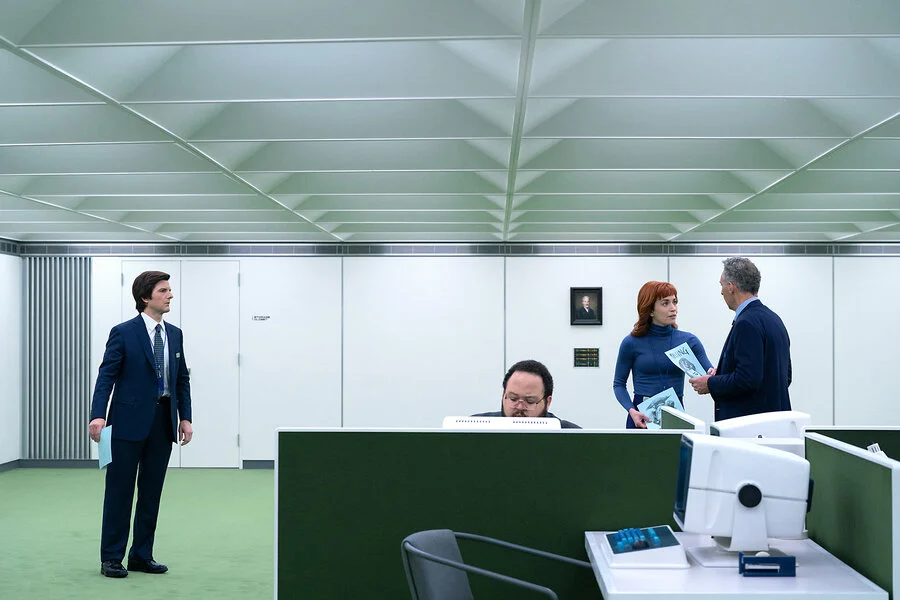
Official rules warn MDR to avoid other groups without approval, and orientation frames certain departments as risky. Even so, workers reach Optics and Design through open corridors, trade items, and hold conversations that last beyond a quick greeting.
Relationships form across teams with only basic barriers like key doors and patrol timing. Maps drawn by workers show a path network that allows exploration on foot, which conflicts with the strict tone of the handbook and training films about isolation.
Perfect Sense: Irving’s outie and innie throughlines

Irving’s outie keeps clippings, notes, and addresses tied to Lumon and to a specific colleague from another department. When awakened outside, he drives to that address and reaches the building lobby, which confirms that his outside life has been tracking workplace details on his own time.
Inside the office, the innie paints the same dark hallway over and over and dreams about black fluid in the walls. The repeated imagery on the severed side and the organized research on the outside side line up as parallel habits, which shows how interests can echo across the split through routine and focus rather than shared memory.
Share your favorite head scratcher or well built detail from ‘Severance’ in the comments and tell us what you spotted that belongs on this list.