


10 Things You Probably Didn’t Know About ‘Interstellar’



When Christopher Nolan’s ‘Interstellar’ premiered in 2014, it immediately stood out as a bold blend of science fiction spectacle and heartfelt drama. Starring Matthew McConaughey, Anne Hathaway, Jessica Chastain, and Michael Caine, the film explored humanity’s survival through space exploration while weaving in themes of love, time, and sacrifice. With its mix of real scientific theory and emotional storytelling, it quickly became one of the most talked-about sci-fi movies of the decade.
Beyond its striking visuals and mind-bending concepts, the making of ‘Interstellar’ is filled with fascinating stories about the lengths Nolan and his team went to in order to make the movie as realistic and impactful as possible. From scientific input to unusual filming techniques, here are ten things you probably didn’t know about this modern classic.
The Film Was Developed With a Physicist
The story of ‘Interstellar’ was developed with theoretical physicist Kip Thorne, who also served as an executive producer. Thorne ensured that the scientific elements, such as black holes and time dilation, were grounded in real physics. His input was so significant that he later published a book explaining the science behind the film.
Thorne’s collaboration with Nolan and the visual effects team even led to new scientific insights. The way the black hole Gargantua was depicted required groundbreaking rendering techniques that provided astronomers with fresh perspectives on how light bends around massive objects.
The Black Hole Visuals Took 100 Hours Per Frame

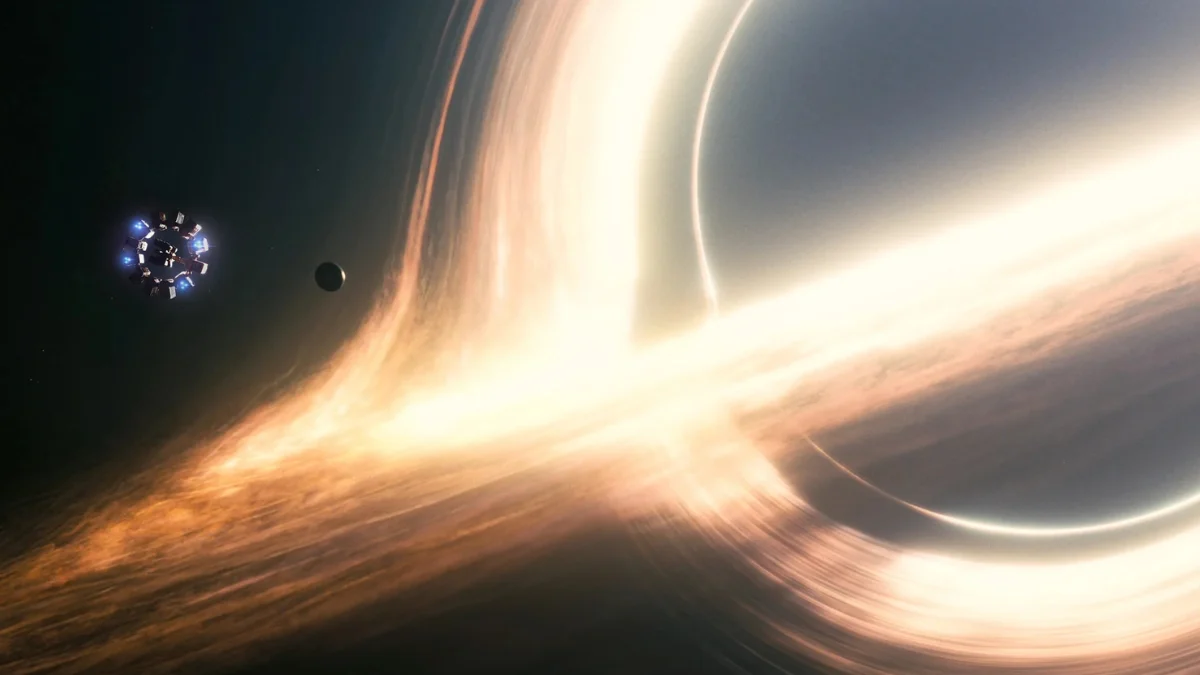
Creating Gargantua, the massive black hole, was one of the most complex visual effects tasks in the film. Each frame of the final rendering took nearly 100 hours to process due to the immense calculations required to simulate realistic gravitational lensing.
The end result was so accurate that it became one of the most scientifically realistic depictions of a black hole ever put on screen. The images even contributed to scientific papers published by Thorne and the visual effects team, blurring the line between cinema and real astrophysics.
Matthew McConaughey Was Cast After a Career Shift

Before ‘Interstellar,’ Matthew McConaughey had transitioned from romantic comedies into more dramatic roles, a period often called the “McConaissance.” His performance in ‘Dallas Buyers Club’ impressed Nolan, who cast him as Cooper without hesitation.
McConaughey brought a mix of ruggedness and vulnerability to the role, grounding the movie’s complex science in human emotion. His casting played a major part in the film’s success, as Cooper’s personal journey became the emotional core of the story.
Real Cornfields Were Grown for the Film
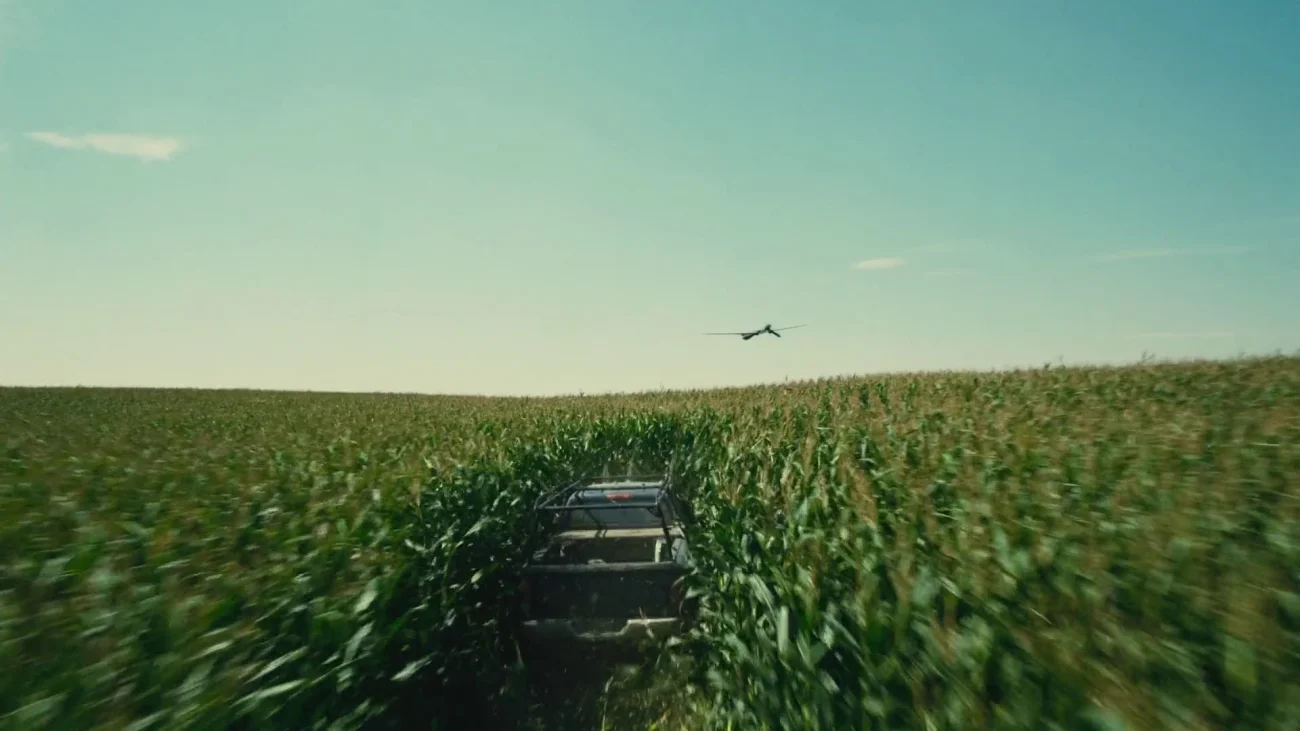
The large cornfields seen in ‘Interstellar’ were not digital effects but actual crops grown specifically for the movie. Nolan wanted authenticity, so the production team planted hundreds of acres of corn in Canada just for the shoot.
After filming, the corn was harvested and sold, making the ambitious decision both visually impressive and financially practical. This detail showed Nolan’s commitment to using real-world locations and props whenever possible.
The Tesseract Was Built as a Physical Set
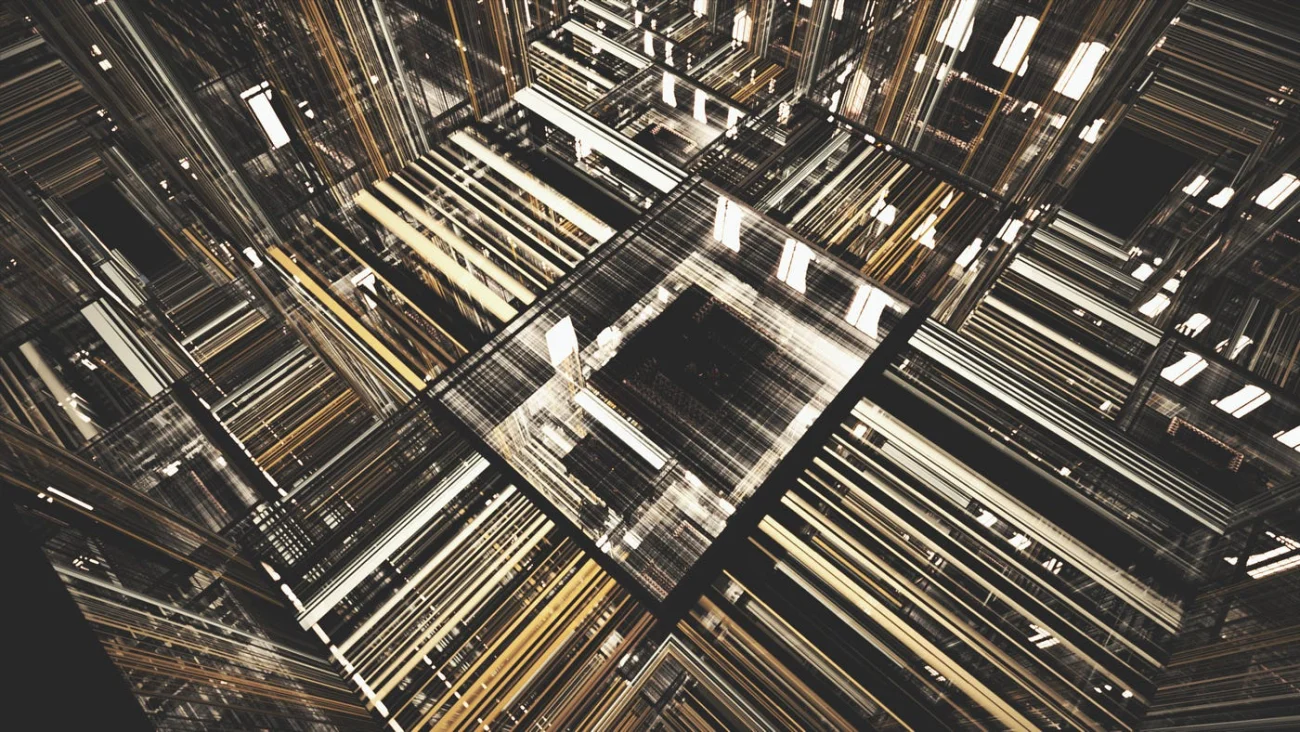
The surreal tesseract scene near the end of the film, where Cooper communicates across time with his daughter, was partly constructed as a massive physical set. Rather than relying entirely on green screens, Nolan built large practical structures that McConaughey could interact with.
This choice helped make the sequence feel grounded despite its abstract concept. The blend of physical design and digital enhancements created a moment that was both visually striking and emotionally powerful.
The Spaceship Interiors Were Functional
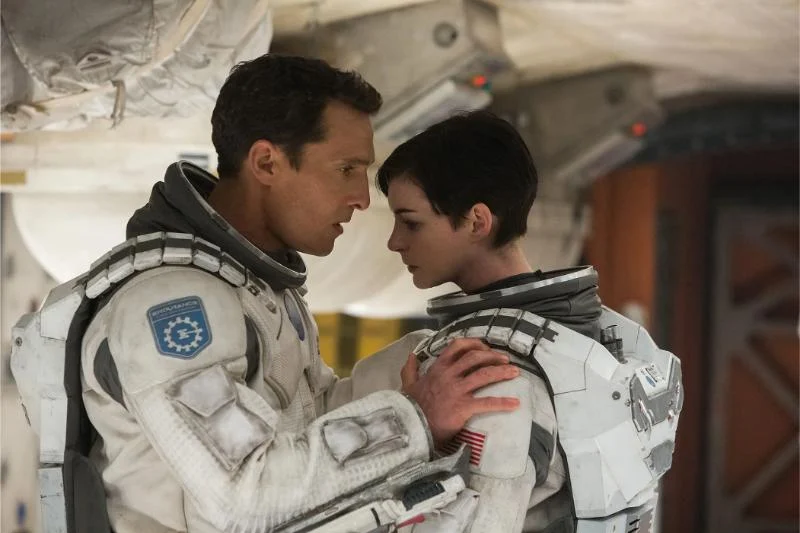
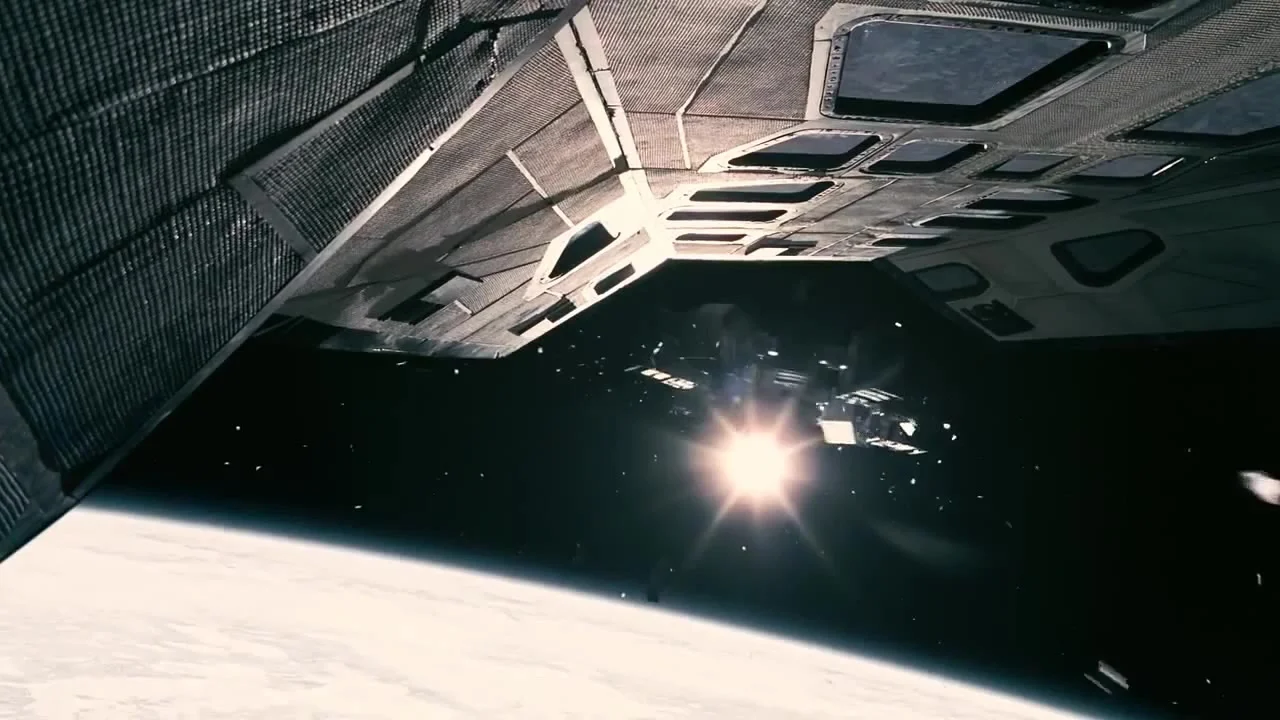
Nolan insisted on building practical spacecraft interiors that actors could actually move around in. The Endurance and Ranger sets were designed with working panels, seats, and even functional lighting. This helped the cast feel immersed in their environment rather than acting in front of blank screens.
Filming with real sets also allowed Nolan to use IMAX cameras inside the spacecraft, capturing wide, detailed shots that gave audiences a sense of being inside the ship with the characters.
Hans Zimmer Composed the Score Without a Script
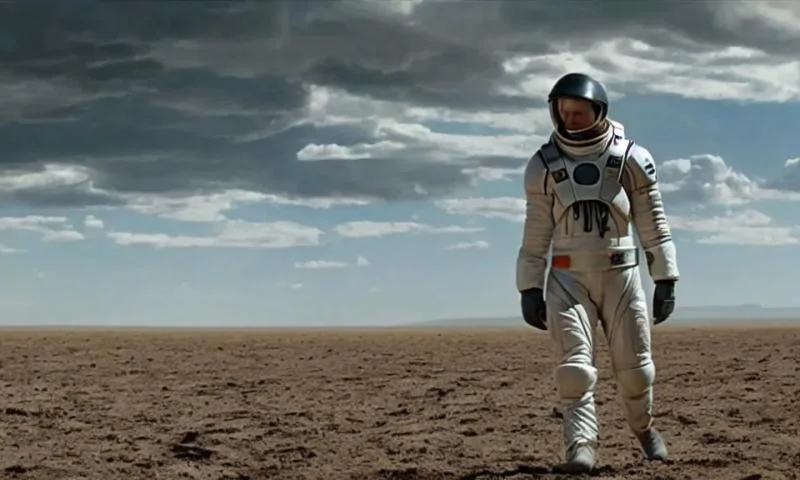
When Nolan approached Hans Zimmer to compose the music, he didn’t give him a script or even details about the story. Instead, Nolan handed him a one-page letter describing themes of family, time, and love. Zimmer then wrote the first pieces of music based on that emotional prompt alone.
The resulting score, with its haunting organ sounds and emotional crescendos, became one of the most iconic aspects of the film. The music not only enhanced the visuals but also underscored the human element at the heart of the story.
Real NASA Technology Inspired the Robots
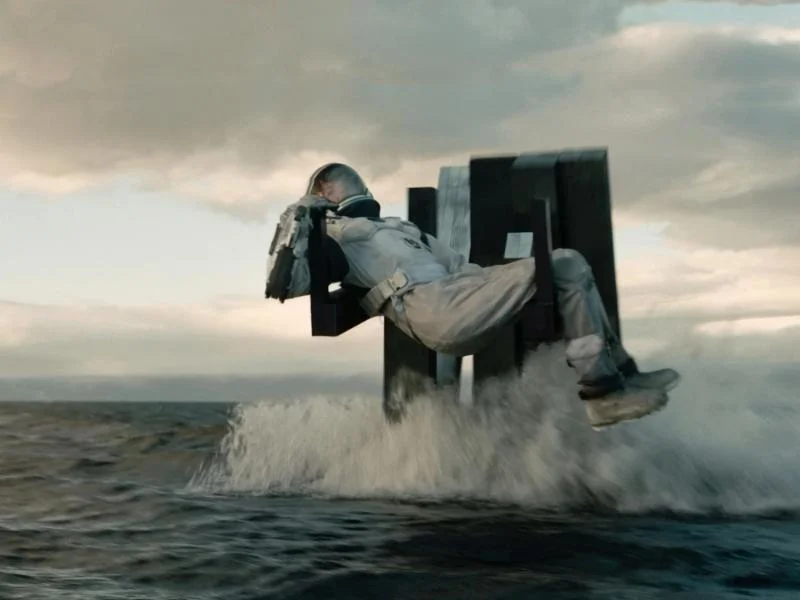
The design of the robots TARS and CASE was inspired by actual NASA engineering principles. Their blocky, modular shapes were chosen for practicality rather than sleek aesthetics, making them look functional rather than futuristic gimmicks.
The robots were brought to life using puppetry and physical rigs on set. Actor Bill Irwin, who voiced TARS, also operated the robot’s movements during filming, giving the character a realistic presence in scenes.
Filming Avoided Green Screen as Much as Possible
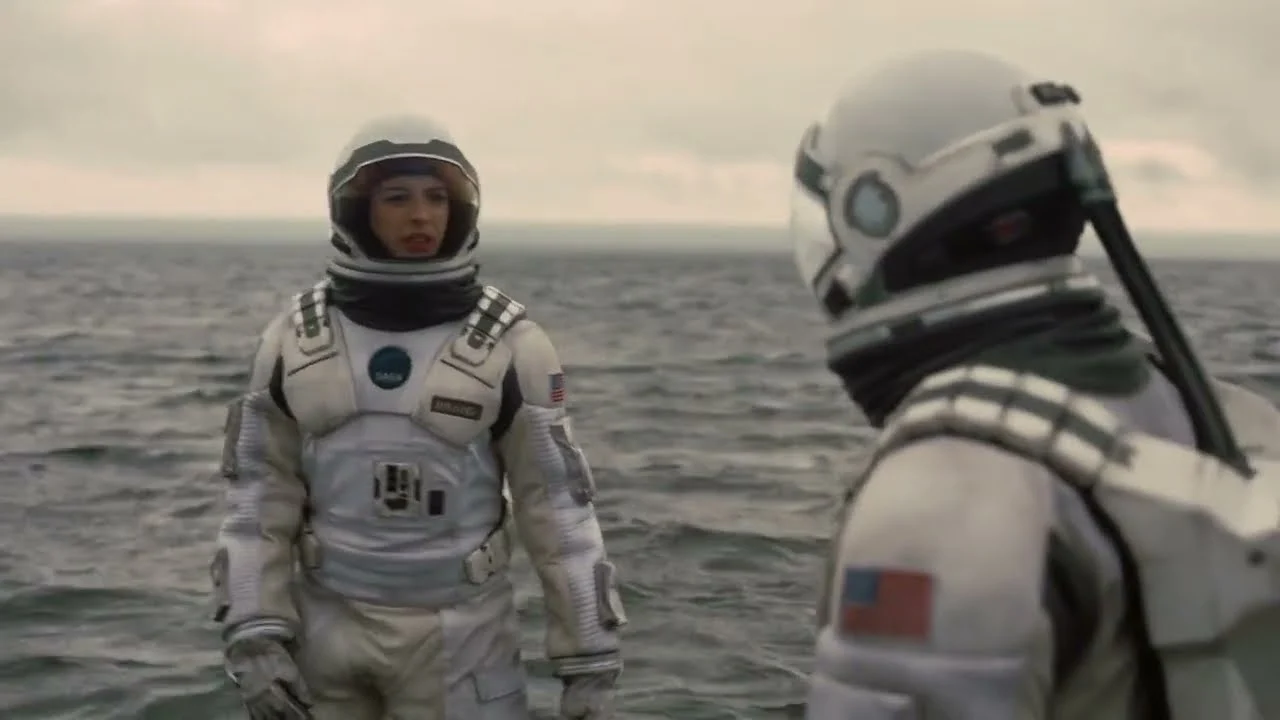
Nolan is known for minimizing digital effects, and ‘Interstellar’ was no exception. Many space scenes were shot with large projection screens displaying pre-rendered visuals outside the spacecraft windows. This gave the actors a real view of what they were supposed to be seeing.
The technique helped both the cast and the cameras capture more natural lighting and reflections, making the visuals feel more authentic. This approach contributed to the movie’s grounded look despite its cosmic setting.
The Film Sparked Scientific Discussions Worldwide
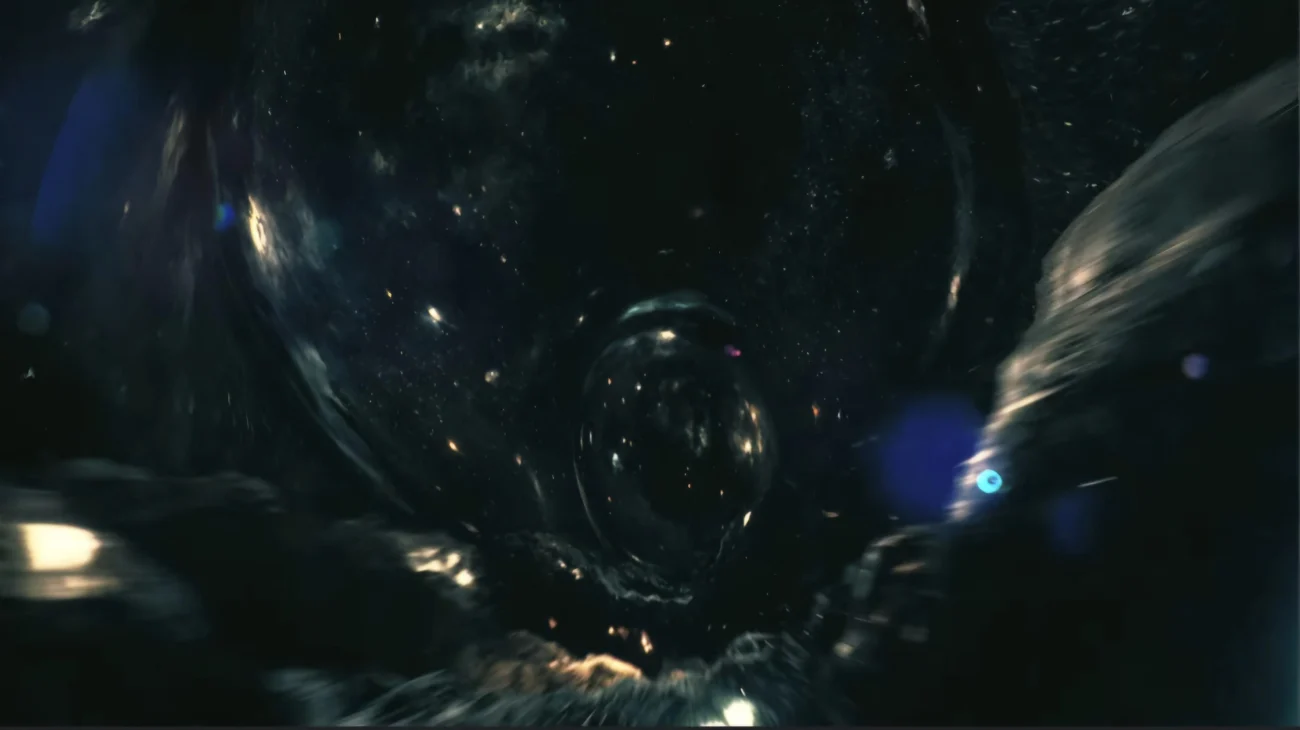
After its release, ‘Interstellar’ inspired renewed interest in space travel, black holes, and relativity. Scientists praised its effort to blend accurate physics with cinematic storytelling, and educators used the film to engage students in astrophysics.
Kip Thorne’s involvement and the film’s realistic visuals made it a rare example of Hollywood influencing real scientific discourse. It sparked public fascination with topics like wormholes and time dilation, making science part of mainstream conversation.
Which of these surprising details about ‘Interstellar’ did you find the most fascinating? Share your thoughts in the comments!