


10 Things You (Probably) Didn’t Know About Pulp Fiction

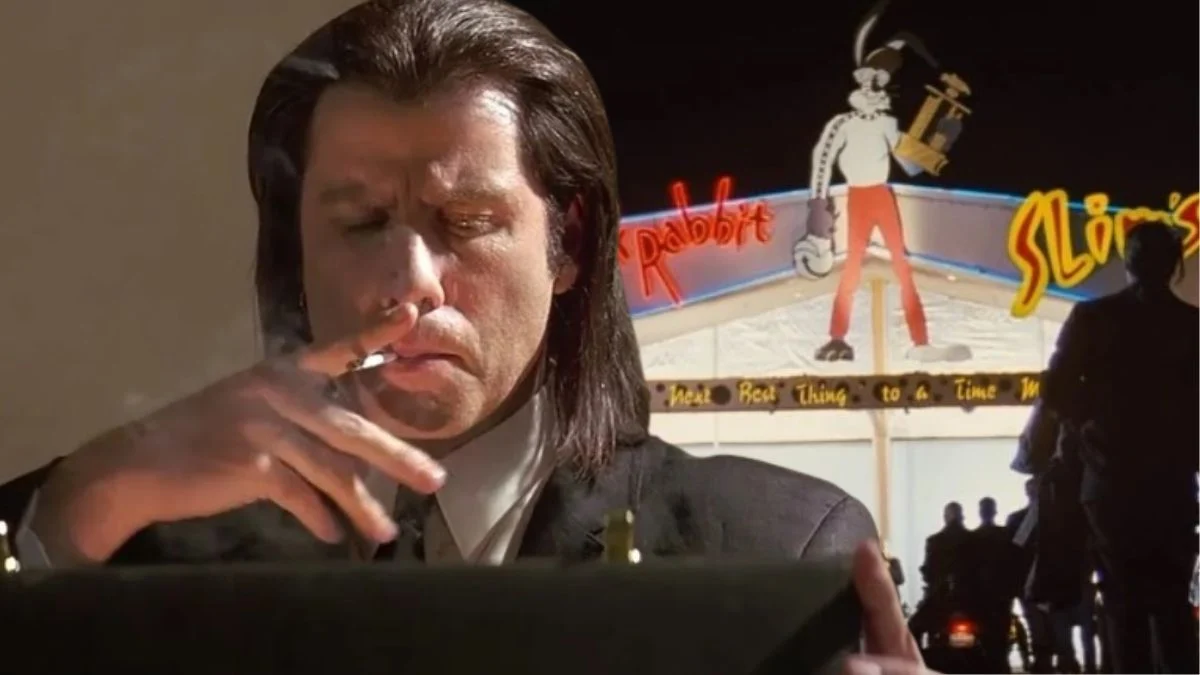


There is a lot more to ‘Pulp Fiction’ than the shared quotes and dance moves everyone remembers. The film grew out of overlapping ideas that Quentin Tarantino and Roger Avary developed into a trio of intersecting stories. It was made on a modest budget and then exploded far beyond expectations. These facts dig into how it was written, shot, released, and how its props and music connected to a larger world across Tarantino’s films.
The script was built as three interlocking stories
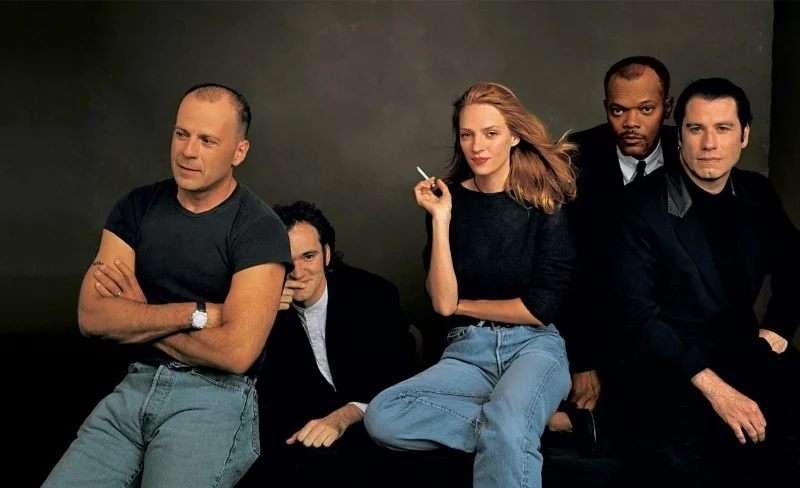
Quentin Tarantino structured ‘Pulp Fiction’ as three major tales that loop through the same timeline. The chapters follow Vincent and Jules, the boxer Butch, and the diner stickup, with scenes arranged out of chronological order. Tarantino and Roger Avary developed the segments so events echo across different viewpoints. Title cards within the film signal these shifts while the larger narrative completes itself by the final scene.
It won the Palme d’Or before its wide release
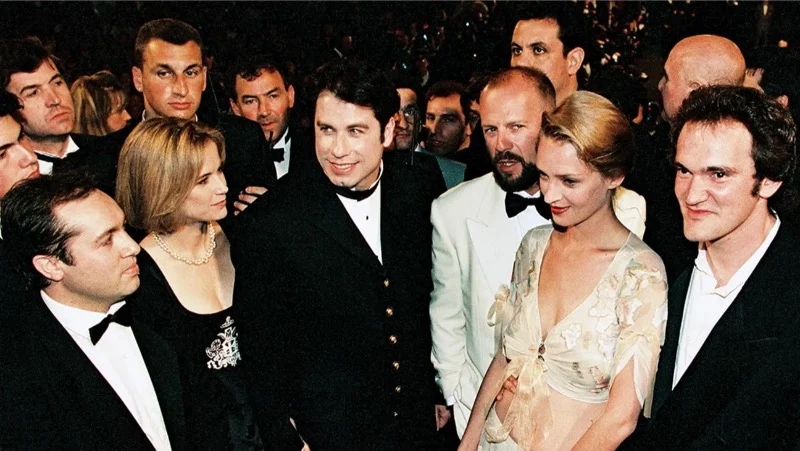
‘Pulp Fiction’ premiered at the Cannes Film Festival in May 1994 and won the Palme d’Or. The honor arrived months before the film opened widely in the United States. The award sharply increased attention from theaters around the world. It also positioned the movie as a key title for Miramax in the 1994 awards season.
A small budget turned into massive global earnings
The production cost was about eight million dollars. The film then earned more than two hundred million dollars worldwide. It became one of the highest grossing independent films of the decade. Those numbers reshaped expectations for American indie releases in the mid 1990s.
The famous Bible passage was rewritten for the movie
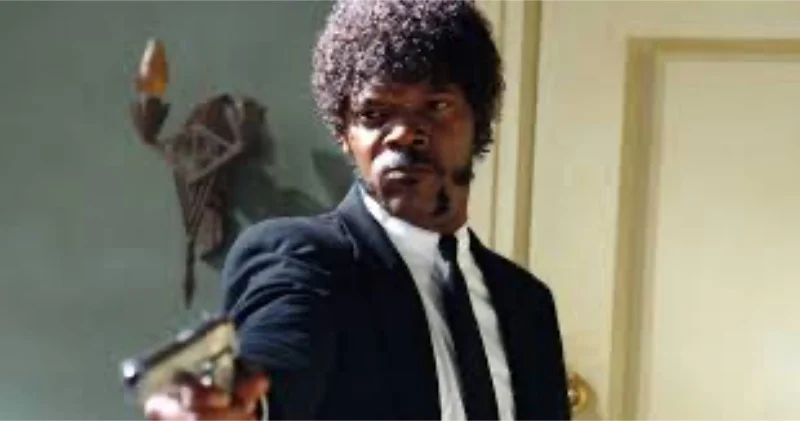
Jules recites a version of Ezekiel 25 17 that does not match a standard Bible translation. The speech blends elements from pop culture sources with a small portion of the scripture. Tarantino repurposed the text to fit the character and the scene. The lines were finalized in the script and are delivered twice with different intent.
The adrenaline needle shot was filmed in reverse
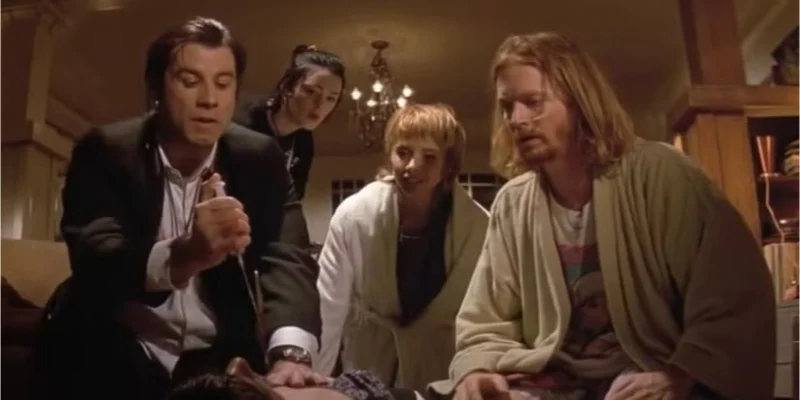
For the scene where Mia receives an adrenaline injection, the needle never actually goes in. John Travolta placed the needle on the mark and then pulled it away while cameras rolled. The footage was reversed in editing to make it appear as a plunge. This approach protected the actors and still achieved a convincing effect.
Jack Rabbit Slim’s was a custom built set
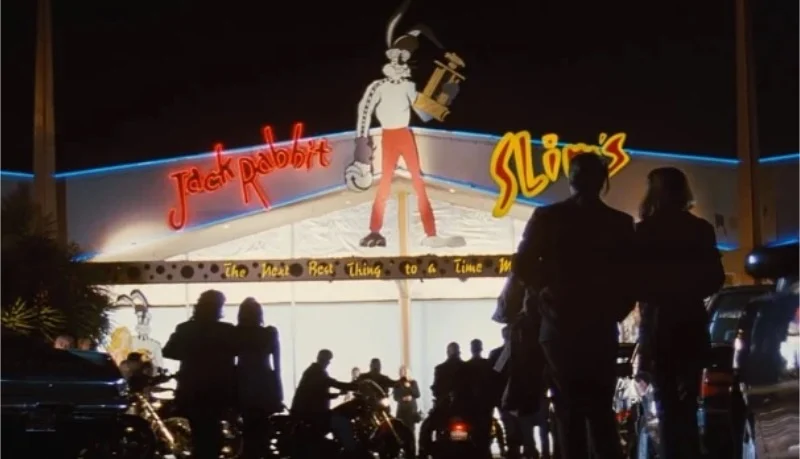
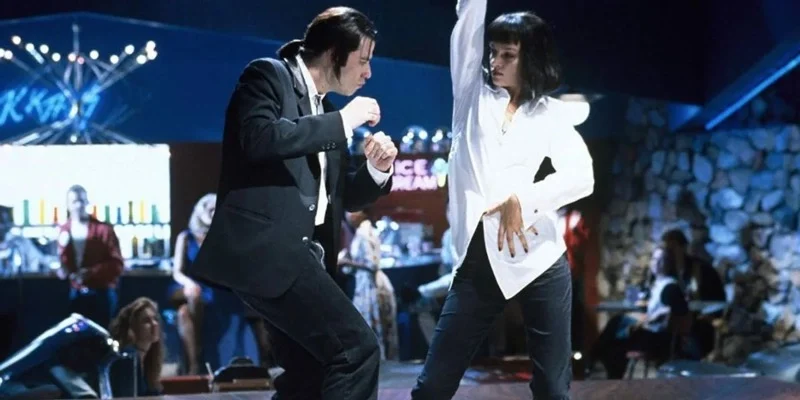
The 1950s themed restaurant where Vincent and Mia have dinner did not exist as a real diner. The production design team built it on a soundstage to control lighting, choreography, and camera moves. The set included working booths, a dance floor, and car shaped tables. Building the location allowed the crew to shoot long takes without closing a real restaurant.
The glowing briefcase used as simple practical trick
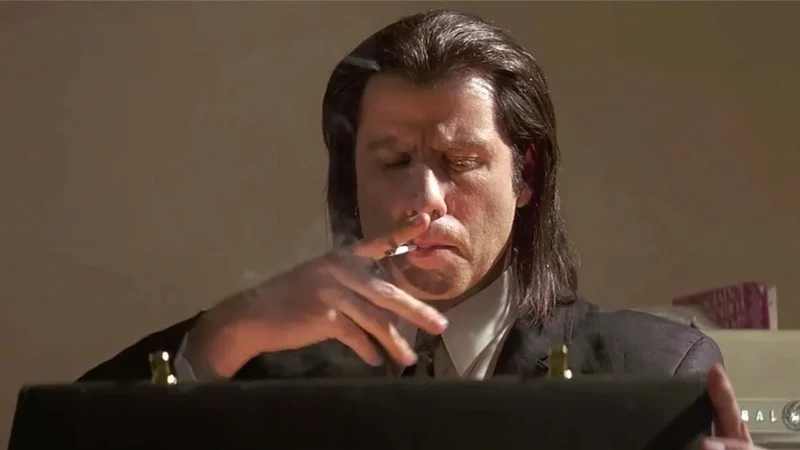
The briefcase glow comes from a light source placed inside the case. When opened, the light flares toward the camera and reflects on the actors’ faces. The combination of practical illumination and careful exposure created the otherworldly look. The case lock code shown on screen is 666, which the audience briefly sees when Vincent opens it.
Red Apple cigarettes and Big Kahuna Burger connect the Tarantino universe
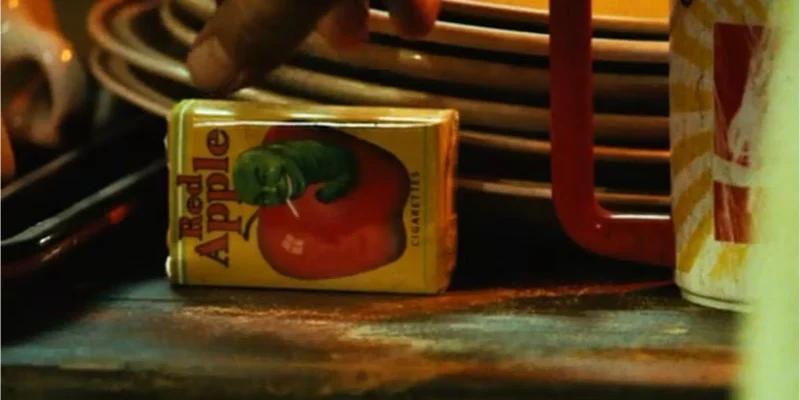
Vincent smokes the fictional Red Apple brand and Brett eats a burger from the fictional Big Kahuna Burger. Both brands appear in multiple Tarantino films and commercials made for those worlds. The repeated use links characters and settings across separate stories. These prop brands became a shorthand for a shared continuity.
Vincent Vega is tied to Vic Vega from ‘Reservoir Dogs’
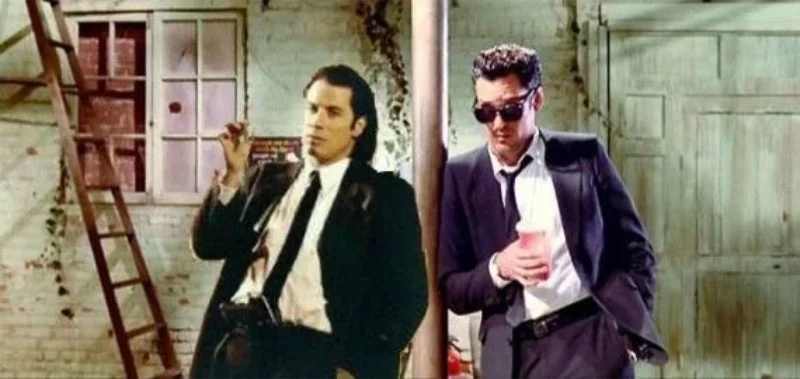
John Travolta’s character Vincent Vega is written as the brother of Michael Madsen’s Vic Vega from ‘Reservoir Dogs’. Tarantino developed a prequel concept that would have paired the two characters. The project was discussed publicly but never moved into production. The connection remains on screen through names and backstory references.
The soundtrack revived surf instrumentals and earned major sales
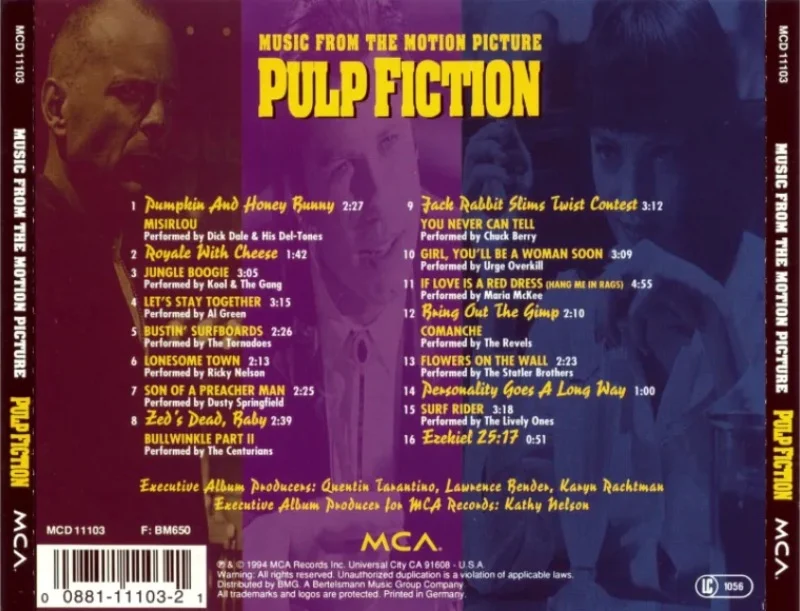
The film leans heavily on surf and rock and roll instrumentals, including tracks by Dick Dale and The Lively Ones. The soundtrack album became a best seller in the United States. It received platinum certification after shipping more than a million copies. Several songs reentered radio rotations and found new listeners through the movie.
Share your favorite lesser known ‘Pulp Fiction’ detail in the comments and tell us what we missed.