


Top 10 Coolest Things About Black Widow




Black Widow stands out because her story balances elite spycraft with superhero stakes. Across comics and the Marvel Cinematic Universe, Natasha Romanoff is consistently shown using tradecraft, languages, and hand-to-hand skills that operate at the same level as her more obviously super-powered teammates. Her history ties together Cold War programs, S.H.I.E.L.D. operations, and Avengers missions, making her a linchpin character in both espionage narratives and world-saving plots.
Beyond the missions, the character has been defined by specific tools, organizations, and relationships that give her depth. The Red Room, the Widow’s Bite, S.H.I.E.L.D. dossiers, and partnerships with figures like Clint Barton and Yelena Belova all feed into a profile built on verifiable training and repeatable tactics rather than mystique. The ten points below break down the concrete aspects that make Black Widow effective on the page and on screen.
Red Room Conditioning and Origin

Natasha Romanoff’s background centers on the Red Room, a covert Soviet program that recruited and conditioned girls for espionage and assassination. Canon sources describe psychological conditioning, false cover identities, and intensive education in languages, weapons, and infiltration. Graduates received specialized combat and tradecraft training that enabled deep-cover assignments, asset handling, and mission endurance under hostile counter-intelligence environments.
The program’s methodology combined classroom instruction with live-fire drills, surveillance evasion exercises, and performance testing against mission scenarios. Records and depictions show the Red Room using handler oversight, memory manipulation techniques in some continuities, and standardized gear packages to ensure operational consistency among “Widow” operatives deployed worldwide.
S.H.I.E.L.D. Defection and Clearance

After her Red Room career, Romanoff defected and obtained S.H.I.E.L.D. clearance, a process that required vetting, debriefing, and formal reassignment to agency tasking. Her files reference participation in joint operations with other assets, including retrieval, counter-terror, and counter-proliferation missions, indicating cross-functional trust from S.H.I.E.L.D. leadership.
Operationally, she is documented using S.H.I.E.L.D. infrastructure—safehouses, encrypted comms, logistics corridors, and air assets—to move between theaters quickly. Her assignment history includes work as a handler and field lead, reflecting a shift from unilateral missions to interagency coordination and rules-of-engagement compliance under oversight.
Hand-to-Hand Systems and Mobility
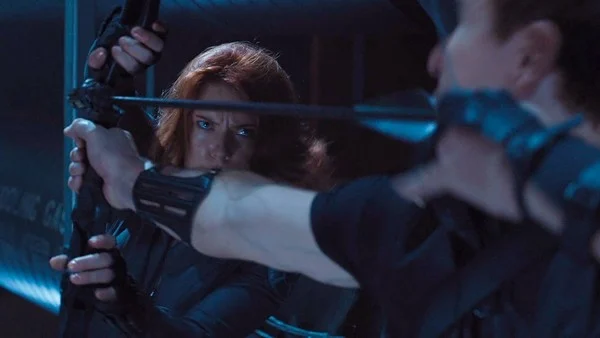
Black Widow’s close-quarters profile combines judo, sambo, and acrobatic striking with weapon disarms and joint manipulation. Fight choreography and comic panels consistently show hip throws, leg scissor takedowns, triangle chokes, and transitions that leverage momentum rather than brute strength. These techniques are compatible with confined spaces such as corridors, rooftops, and transport interiors.
She pairs those systems with controlled mobility—roll recoveries, wall runs, and rappel insertions—so entries and exits match the same efficiency as her takedowns. The approach reduces time-to-neutralize and limits noise signatures, which is why she frequently completes objectives without triggering full security escalation.
The Widow’s Bite and Integrated Gear
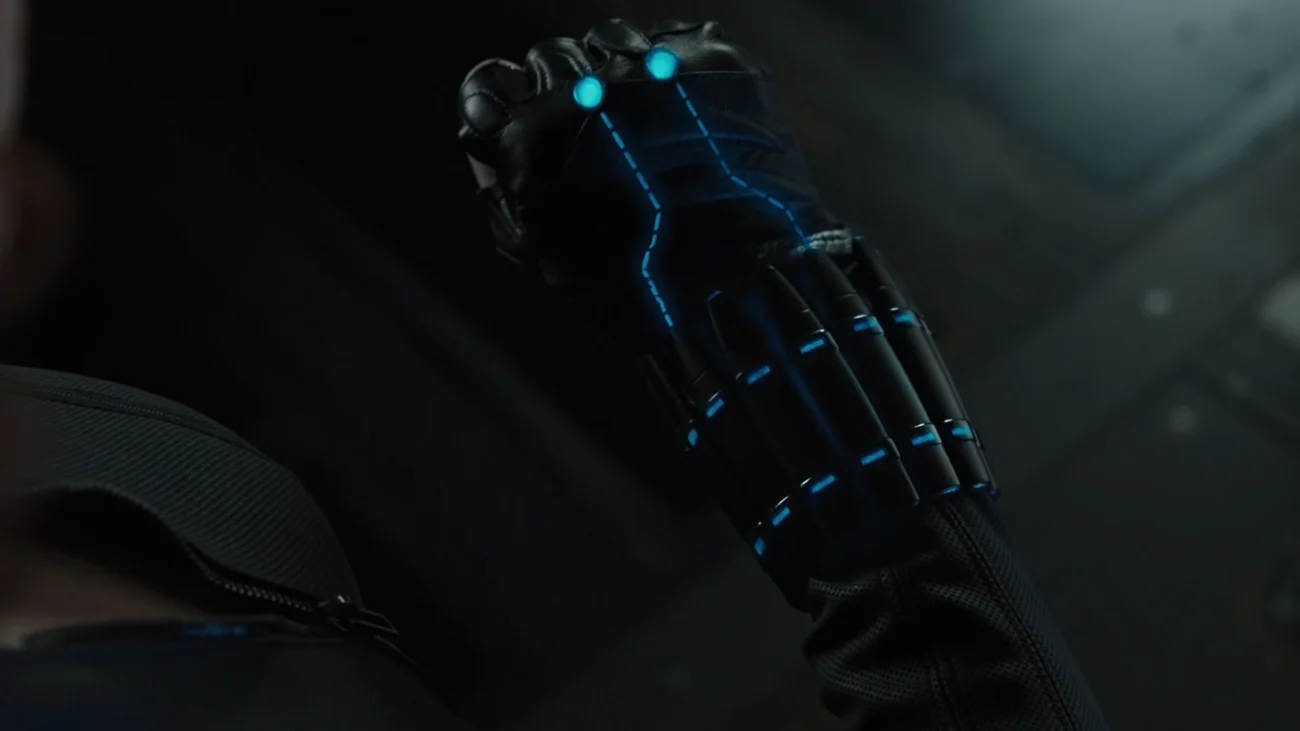
The Widow’s Bite is a wrist-mounted electroshock device used to incapacitate opponents and disrupt electronics at close range. Across appearances, its output is depicted as tunable, enabling non-lethal engagement profiles against human targets and surge effects against unshielded systems. The gauntlets housing the Bite also serve as mounting points for darts and other micro-devices.
Her standard loadout often includes compact pistols, batons that can link into a staff, conductive line for rapid descents, and magnetic grapple systems. The emphasis is on modularity: components attach, collapse, or convert to suit mission parameters, allowing her to shift from infiltration to direct action without a full gear change.
Multilingual Communication and Social Engineering

Black Widow is repeatedly shown switching among languages, including Russian and several European and Asian tongues, to conduct interrogations, pass as local, or read operational materials. This fluency allows her to manage assets, negotiate access, and process intelligence without translation delays that could compromise timing.
She complements language skills with social engineering methods—pretexting, elicitation, and the use of cover stories supported by forged or hacked credentials. These techniques appear in both comics and films, where she defeats access controls not just by force or code, but by persuading gatekeepers to grant entry or reveal information voluntarily.
Counter-Surveillance and Digital Tradecraft

Natasha practices surveillance detection routes, exploiting reflections, timing offsets, and choke points to confirm or break tails. She adapts her SDR patterns to different urban layouts, using public transit transitions and purposeful “burn” maneuvers to flush hostile watchers before proceeding to meets.
Digitally, she uses air-gapped data transfers, burner devices, and credential pivoting to penetrate networks while limiting attribution. She is shown pairing on-site physical access—like badge cloning or terminal taps—with remote exfiltration, which shortens dwell time and reduces the chance of forensic reconstruction of her path.
Key Comic Foundations

The character’s core threads were established through appearances in titles such as ‘Tales of Suspense’ and ‘The Avengers’, which introduced her as an antagonist-turned-ally and fleshed out her espionage ties. These issues laid the groundwork for later reassignments, alliances, and upgrades to her gear and status.
Subsequent solo series under the ‘Black Widow’ banner detail missions against criminal syndicates, former handlers, and rogue state actors. Storylines in these runs catalogue specific operations, safe identities, and adversaries, providing case studies of her methods—asset flips, evidence chains, and targeted takedowns—outside team settings.
The Budapest Operation

References to “Budapest” mark a joint mission with Clint Barton that required prolonged operations under hostile conditions. Dialogue and later depictions outline urban engagements, evasion from organized adversaries, and actions that led to substantial changes in Romanoff’s standing with her former controllers.
Operationally, Budapest is cited as a multi-phase event involving diversions, explosives placement, and coordinated extraction. It functions as a milestone because it demonstrates how she and Barton executed layered tasks—decoys, sabotage, and clean exits—while minimizing civilian exposure in a densely populated environment.
Family Ties and the Belova Connection

Natasha’s history intersects with Yelena Belova, another graduate of the Red Room, creating parallel skill sets and occasional operational conflict. Their interactions document differences in training cohorts and doctrine, particularly around autonomy from handlers and mission selection after emancipation from the program.
Material involving Melina Vostokoff and Alexei Shostakov provides additional context for cover identities and state-sponsored operations that used family constructs as long-term legends. These details explain how embedded roles can be maintained for years, complete with paperwork, social ties, and performance of domestic routines to validate the cover.
The Vormir Mission and the Soul Stone

During the Avengers’ time-heist, Romanoff deploys to retrieve the Soul Stone, a mission constrained by an exchange that requires a life to secure the artifact. The parameters demand a two-person team, on-site assessment, and final compliance with the established condition to complete the objective.
Her actions ensure the stone is delivered to the larger operation, enabling subsequent steps to reverse mass casualties. The mission dossier underscores planning discipline—route selection through hostile terrain, adherence to the objective despite non-reversible costs, and confirmation that the artifact transfer met the condition for later integration into the final device.
Share your favorite Black Widow facts or story beats in the comments so everyone can compare notes.