

Top 10 Coolest Things About Inosuke Hashibira

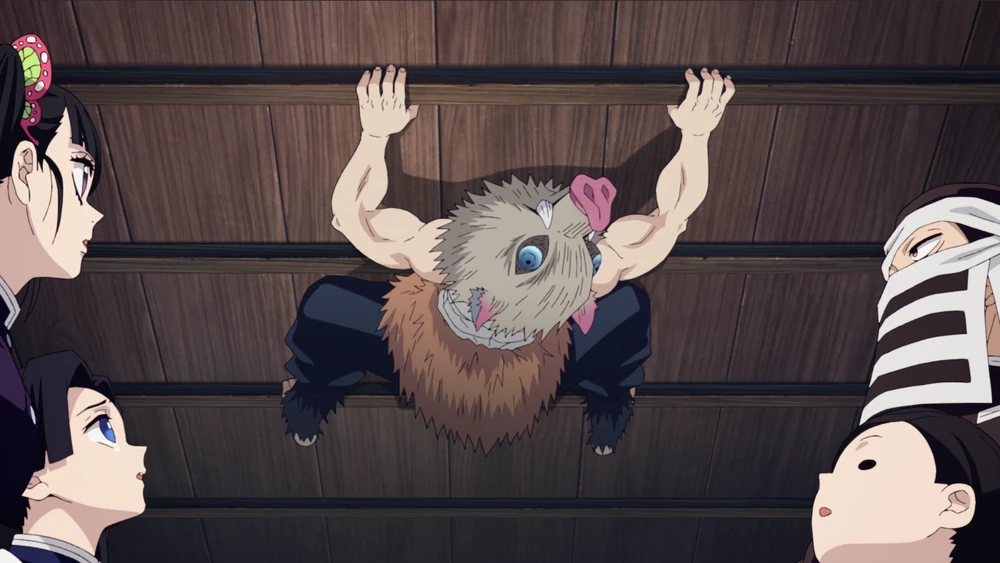


Inosuke Hashibira bursts into ‘Demon Slayer: Kimetsu no Yaiba’ as a ferocious brawler with instincts honed far from towns and training halls. Behind the boar’s head and the bravado is a fighter who built his entire style from scratch, shaped by a childhood in the wild and a constant drive to test himself against stronger foes. He isn’t just loud—he’s technically fascinating.
This list digs into specific, verifiable aspects of Inosuke’s abilities, gear, origins, and track record across major arcs like ‘Mount Natagumo’, ‘Mugen Train’, the ‘Entertainment District Arc’, and the ‘Swordsmith Village Arc’. From the way his blades are modified to how his senses map a battlefield, each entry focuses on concrete details that show how he operates and why he’s so effective alongside Tanjiro Kamado and Zenitsu Agatsuma.
Beast Breathing: A Self-Taught Combat Style
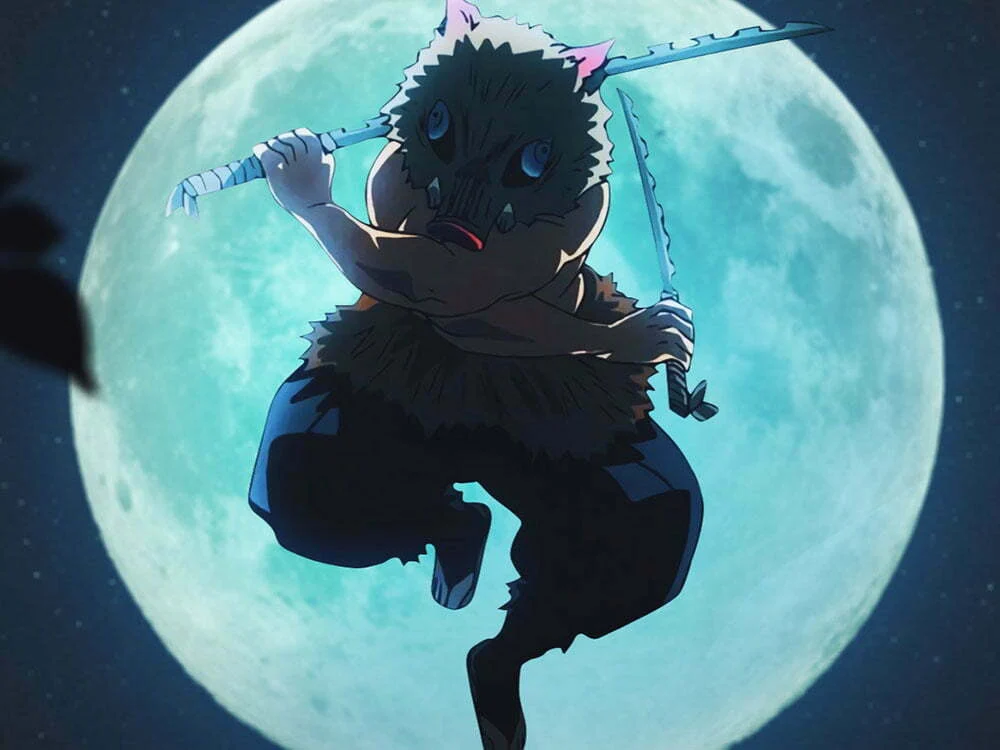
Inosuke practices Beast Breathing, a style he developed himself after growing up isolated in the mountains. The method emphasizes low stances, unpredictable angles, and pouncing footwork, pairing rapid bursts of speed with slashing sequences named as “Fangs.” Its forms—such as “Second Fang: Slice,” “Sixth Fang: Palisade Bite,” “Seventh Form: Spatial Awareness,” and “Eighth Fang: Explosive Rush”—are structured techniques that he applies consistently across battles in ‘Demon Slayer: Kimetsu no Yaiba’.
Beast Breathing also integrates heightened sensory routines that help him read enemy movements while fighting in cluttered terrain like the forests of ‘Mount Natagumo’ or cramped indoor spaces. The style’s emphasis on ambidextrous slashing and body-line changes supports his dual-wielding, making it effective against fast demons and segmented threats such as thread, belts, and projectile patterns encountered across the series.
Dual Serrated Nichirin Katanas
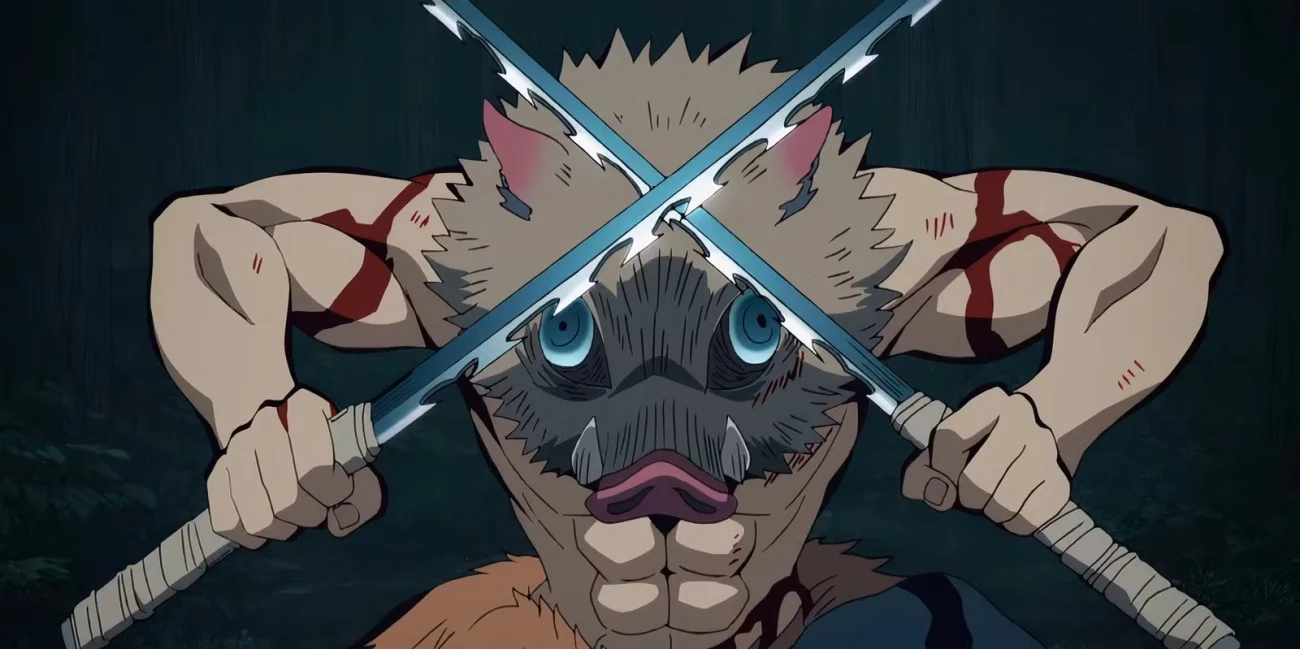
Inosuke wields two indigo-gray Nichirin katanas and deliberately chips their edges to create a serrated cutting surface. He maintains this jagged profile himself—famously striking the blades with rocks—so the teeth-like pattern remains even after sharpening. The serrations leave torn, wide cuts that are useful for hacking through durable demon flesh and fibrous constructs seen throughout ‘Demon Slayer: Kimetsu no Yaiba’.
His paired sword style distributes force across alternating hands, enabling sustained combo attacks without overloading one arm. The shorter reach from the chipped edges complements close-range, chest-to-shoulder arcs, and the twin blades allow cross-guarding against multi-vector attacks, which shows up in train-car combat on ‘Mugen Train’ and street-level skirmishes during the ‘Entertainment District Arc’.
Boar Mask and Mountain Upbringing
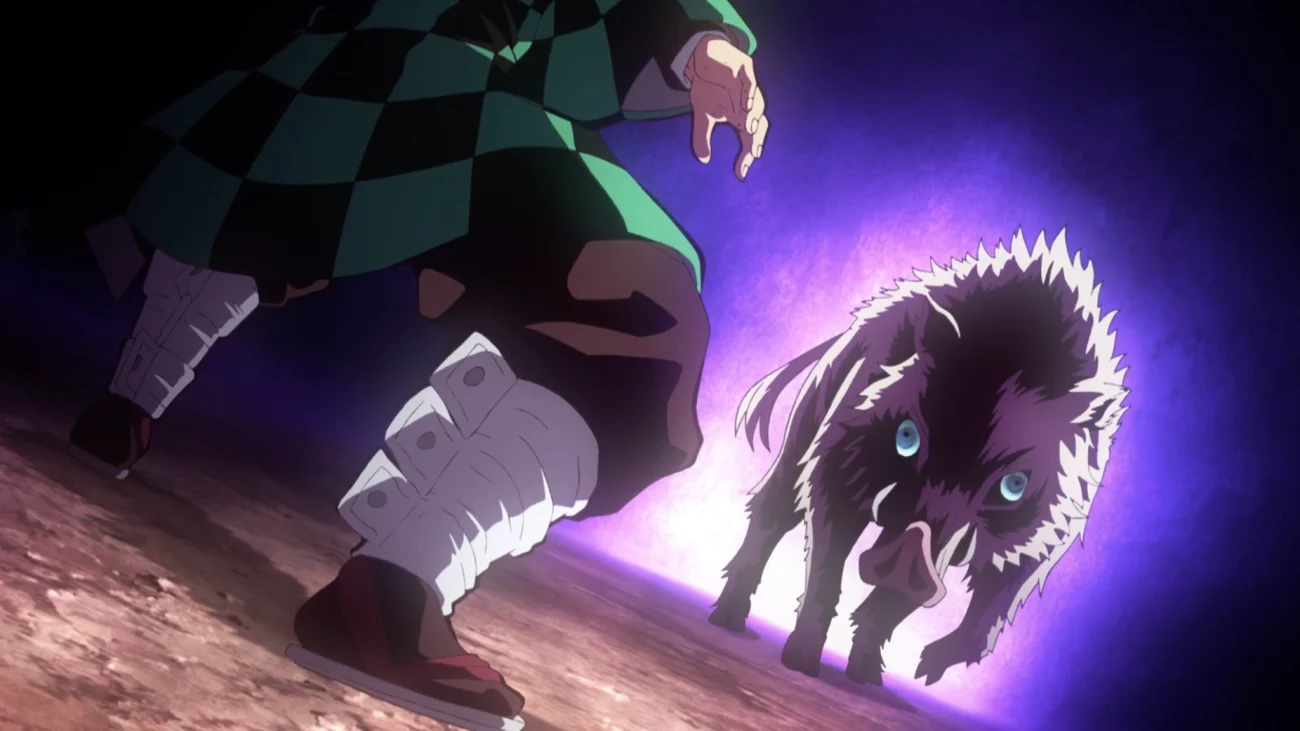
Inosuke’s boar’s head mask comes from the mother boar that raised him after he was separated from his human mother as an infant. The mask is more than intimidation—its fit preserves his habitual head posture and field of view from years of living among animals, which is why he can fight effectively with or without it in ‘Demon Slayer: Kimetsu no Yaiba’. When removed, his hearing and peripheral vision are already conditioned to compensate.
His upbringing on remote mountain terrain produced durable soles, callused hands, and tolerance for cold exposure, which reduces performance drop-off when fighting outdoors at night or in drafty structures. These environmental adaptations explain his mobility on uneven ground in the ‘Mount Natagumo’ arc and his stamina during prolonged engagements where less acclimated fighters would tire.
Hyper-Flexibility and Muscle Control
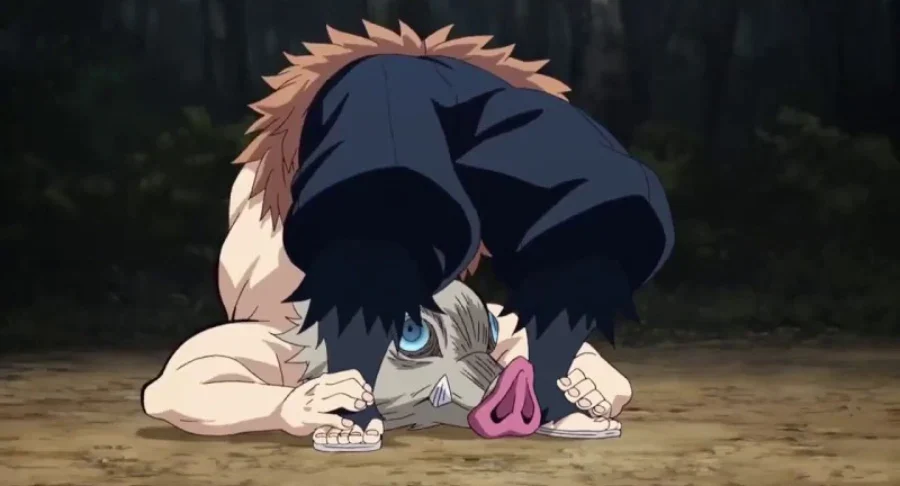
Inosuke exhibits extreme joint flexibility, repeatedly dislocating and resetting shoulders and arms to escape bindings or squeeze through confined spaces. He uses the capability tactically, such as altering shoulder width to slip past compressive restraints or to redirect strikes at the last moment in ‘Demon Slayer: Kimetsu no Yaiba’. The same flexibility supports sudden torso twists that power his crossing slashes.
He also demonstrates conscious muscle control, tightening or relaxing muscle groups to change body shape, manage bleeding, and stabilize after impacts. This control contributes to his ability to keep fighting after heavy hits during the ‘Entertainment District Arc’, where quick bracing and posture changes help him maintain offensive pressure despite damage.
Spatial Awareness Technique
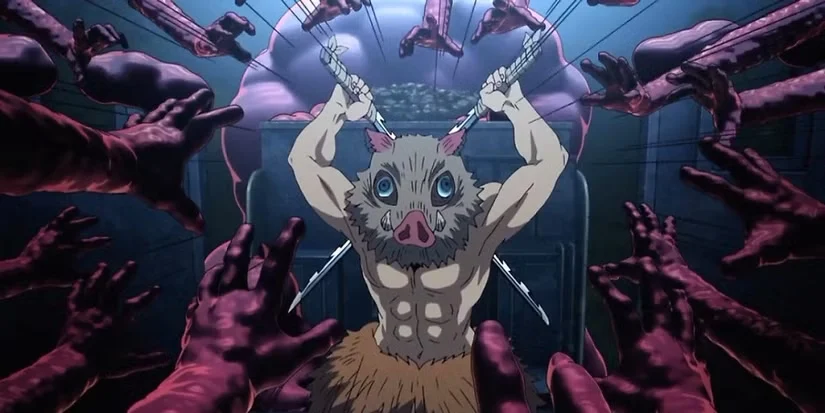
A signature of Beast Breathing is Inosuke’s “Spatial Awareness,” a battlefield sensing method that maps opponents by reading subtle vibrations, air currents, and movement cues. He uses it to pinpoint enemy positions across multiple rooms or dense foliage and to track fast targets he can’t see directly in ‘Demon Slayer: Kimetsu no Yaiba’. The technique is most effective when he can momentarily pause unnecessary motion and “feel” the area.
Spatial Awareness also speeds target prioritization. In cave systems, trains, or multi-level buildings, he can mark the strongest hostile presence and chart a direct route, cutting down response time for the team. This explains coordinated rushes during ‘Mugen Train’ and rapid pivots through alleys in the ‘Entertainment District Arc’, where seconds matter against Upper Rank demons’ split-second kill windows.
Poison Resistance and Vital-Organ Control
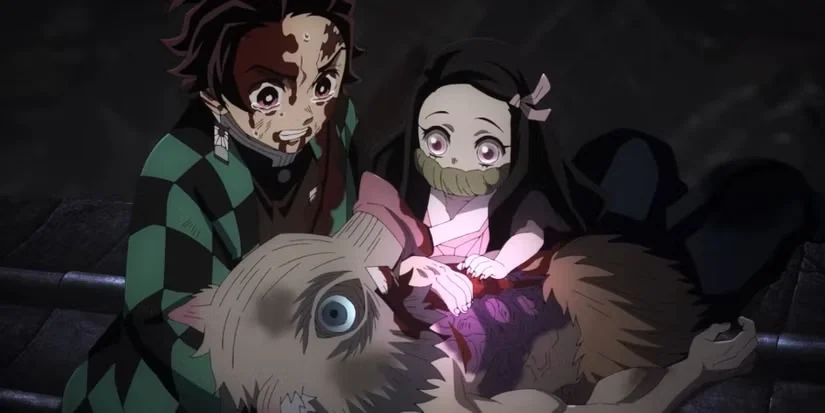
Inosuke shows notable resistance to toxins, enduring demon poisons that incapacitate others more quickly. Repeated exposure to natural hazards in the wild—venomous bites, contaminated water, and rotten food—provides a plausible baseline for his tolerance as depicted in ‘Demon Slayer: Kimetsu no Yaiba’. In battle, this buys time for counterattacks or for allies to land finishing blows.
He also displays fine control over his internal organs’ positioning during extreme stress, which reduces the lethality of penetrating injuries. This phenomenon is highlighted during the ‘Entertainment District Arc’, where he survives a serious chest wound and returns to combat after rapid self-management and basic field care from allies. Together, these traits increase his survivability against demons that rely on toxins or surprise stabs.
Proven Corps Entry and Final Selection Outcome
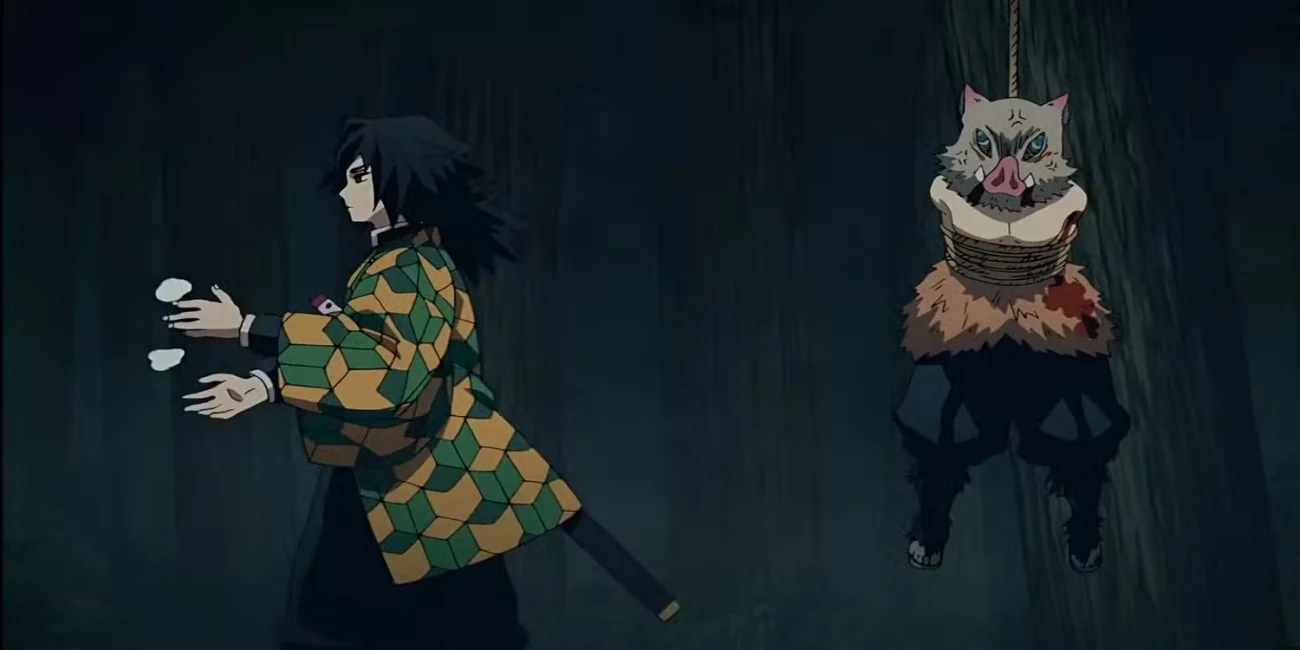
Inosuke passes the Demon Slayer Corps’ Final Selection on Fujikasane Mountain, confirming he can operate for seven days under demon threat with minimal resources. This standardized trial in ‘Demon Slayer: Kimetsu no Yaiba’ verifies not only combat ability but also endurance, navigation, and resourcefulness in a controlled environment.
After entry, new slayers receive a uniform, a Kasugai crow for communications, and access to Nichirin steel through swordsmiths and ore selection. Inosuke immediately diverges to maintain his dual-sword, serrated approach, and his early post-Selection encounters establish a baseline for his growth across ‘Mount Natagumo’ and ‘Mugen Train’.
Team Coordination with Tanjiro and Zenitsu
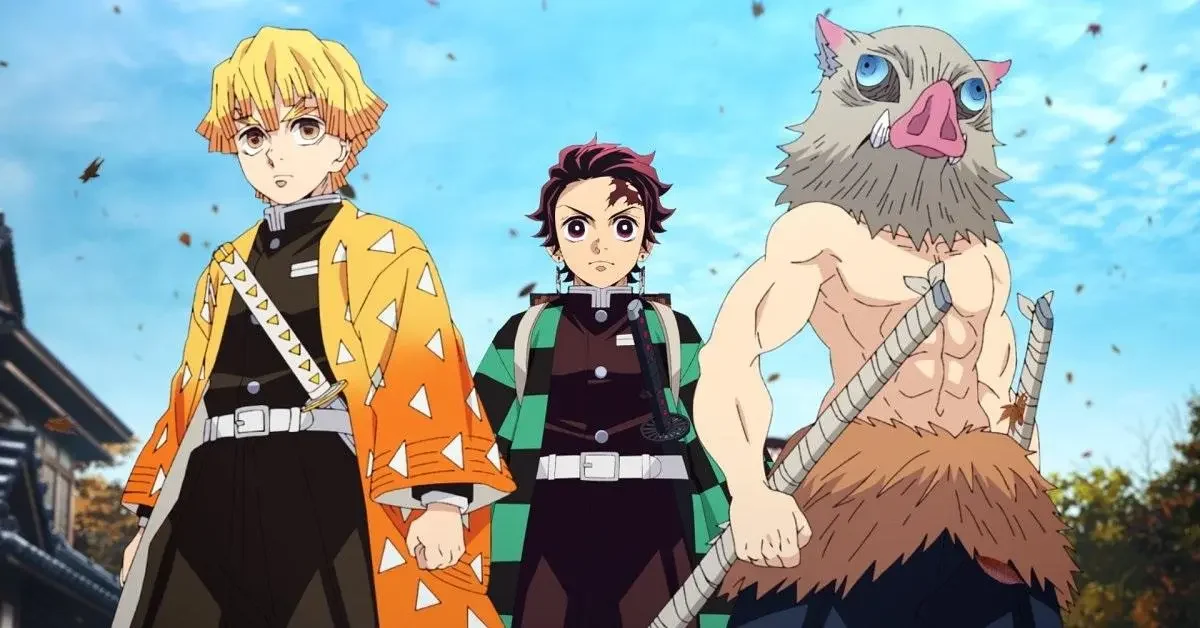
Although self-taught, Inosuke adapts to team operations alongside Tanjiro and Zenitsu, combining Beast Breathing’s aggressive pressure with Water and Thunder styles seen throughout ‘Demon Slayer: Kimetsu no Yaiba’. He regularly takes the flanking or breakthrough role, creating openings for precision strikes or rescues when allies are pinned.
This coordination is especially visible in confined settings where roles must be strict—the trio divides tasks such as crowd control, guard disruption, and finishing cuts during ‘Mugen Train’ and the ‘Entertainment District Arc’. Over time, Inosuke adopts shared signals and timing conventions, which raises their joint success rate against higher-rank demons and complex multi-target scenarios.
Documented Battle Feats Against High-Tier Demons
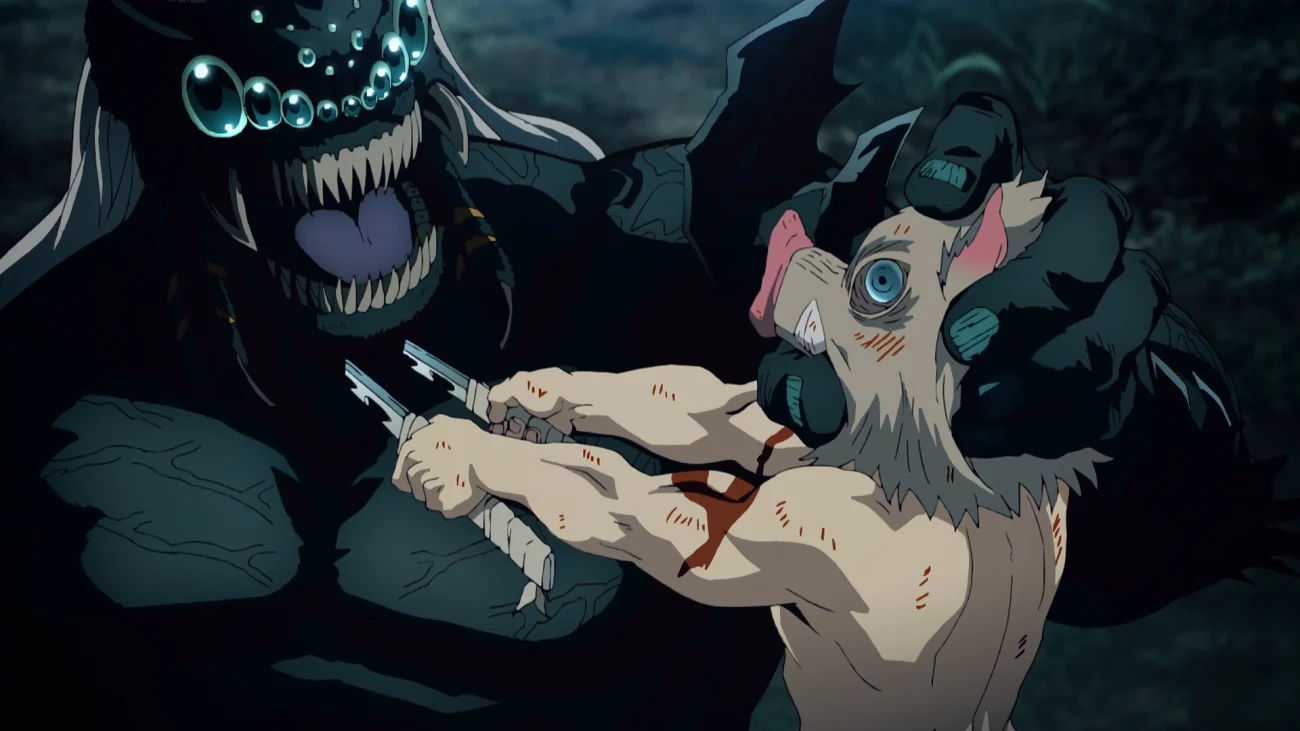
Inosuke contributes to victories against powerful demons across several arcs, including the Spider Demon family on ‘Mount Natagumo’ and the duo of Daki and Gyutaro in the ‘Entertainment District Arc’. His role typically involves rapid gap-closing, structural destruction to break enemy setups, and relentless pursuit when targets attempt to flee or relocate.
He also proves effective in protecting civilians in transit and evacuations, such as clearing carriages and neutralizing threats aboard ‘Mugen Train’. These documented outcomes show he isn’t limited to duels—he handles mission constraints like hostage risk, moving platforms, and time pressure that appear repeatedly in ‘Demon Slayer: Kimetsu no Yaiba’.
Naming Conventions and Form Library
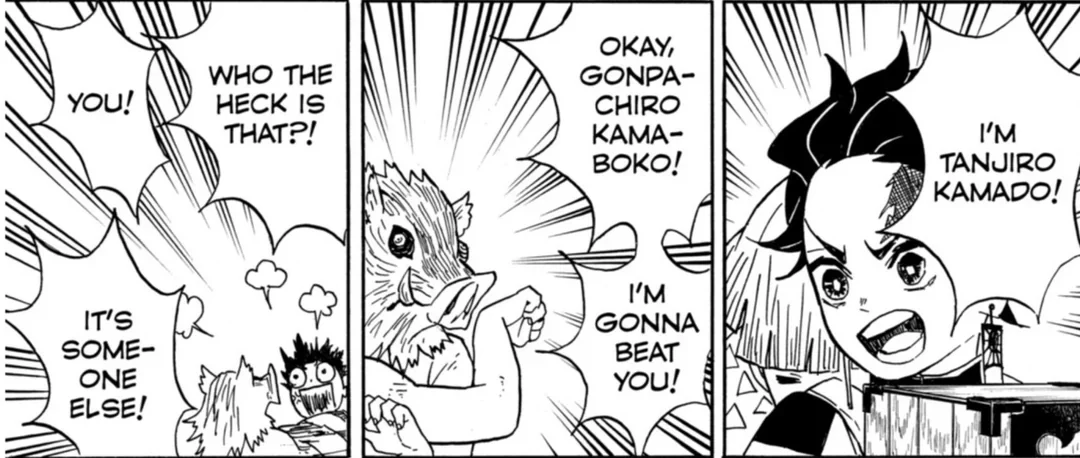
Inosuke’s techniques are organized under “Fang” nomenclature, each with a distinct motion pattern and purpose. Forms like “Fourth Fang: Slice ‘n’ Dice” and “Seventh Form: Spatial Awareness” indicate whether a move is meant for cutting, pinning, or sensing in ‘Demon Slayer: Kimetsu no Yaiba’. The consistent naming makes it easier to track his tactical choices across episodes and chapters.
His library covers offense, defense, mobility, and detection, which reduces downtime during transitions—he can switch from a multi-hit barrage to a guard-breaking bite motion without changing stance families. This breadth is one reason he remains effective in long fights where single-purpose styles might stall against regenerating demons or shifting terrain.
Share your favorite Inosuke moment from ‘Demon Slayer: Kimetsu no Yaiba’ in the comments!