


Top 10 Coolest Things About Spider-Man




Spider-Man has been swinging through comics, games, and screens for decades, and there’s a lot under the mask besides quips and webbing. From the science behind his gadgets to the way his powers actually work, the character packs a surprising amount of detail that makes him stand out among superheroes.
This list breaks down ten core elements that define Spider-Man—how they function, where they came from in the stories, and why they’ve mattered across comics, animation, games, and live-action. Each section focuses on concrete information, so you can see exactly what makes your friendly neighborhood hero tick.
Spider-Sense
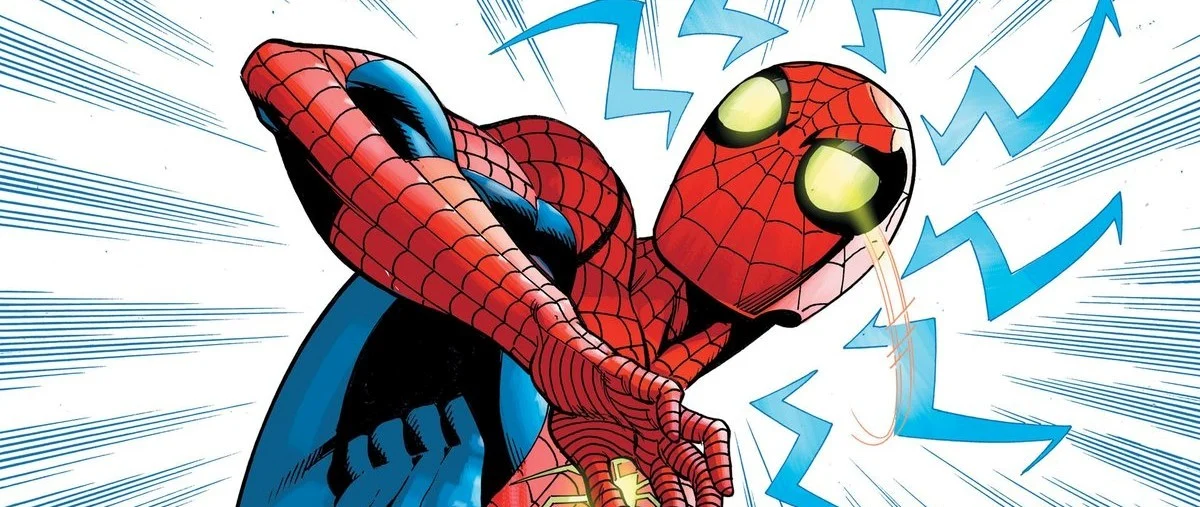
Spider-sense is a precognitive danger sense that alerts Spider-Man to immediate threats before they fully materialize, allowing him to react faster than ordinary reflexes would permit. In practice, it can warn him of incoming projectiles, concealed traps, and ambushes even when he can’t see the source, and writers have shown it scaling in intensity based on the severity or proximity of the threat.
Beyond simple warnings, spider-sense often integrates with his agility and balance, guiding mid-air adjustments, acrobatic evasions, and optimal escape routes. The ability has also been depicted as sensitive to deceit and illusions, helping him filter false stimuli during fights and investigations, and some storylines have demonstrated that specialized frequencies, chemicals, or psychic interference can dampen or disrupt it.
Web-Shooters and Web Fluid

Spider-Man’s standard loadout includes wrist-mounted, spring-loaded web-shooters that fire a shear-thinning polymer he invented and mixes himself. The cartridges are replaceable, and the trigger mechanism is typically pressure-sensitive with safety interlocks to prevent misfires; different nozzle settings let him switch among strands, nets, bolas, and web-bullets.
The web fluid cures into high-tensile filaments that can support multi-ton loads over short durations, adhere to a wide range of surfaces, and biodegrade after a set time to avoid long-term environmental impact. He also fabricates variants—such as insulating webs for electronics, impact-absorbing foam, and dissolver compounds—tailored for specific missions and adversaries.
Wall-Crawling
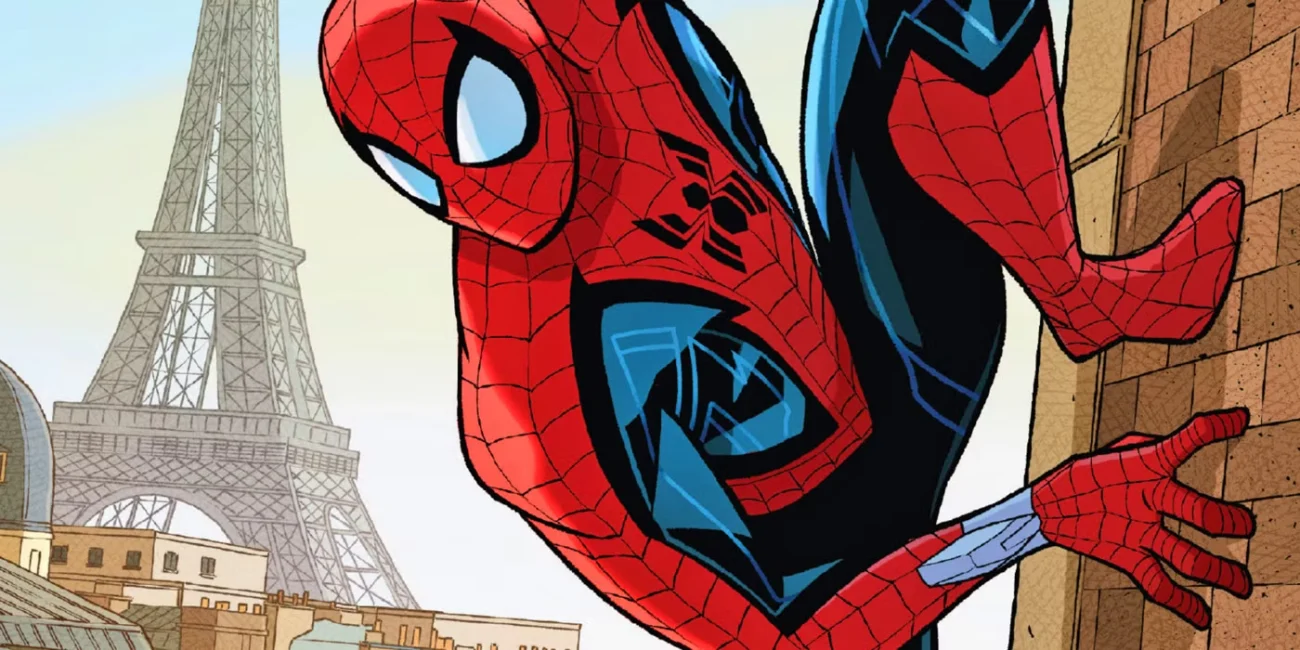
Spider-Man’s wall-crawling operates through microscopic contact forces across his skin that generate adhesion to surfaces without visible hooks or suction. Canon explanations often reference electrostatic attraction or intermolecular forces scaled up to human size, enabling controlled stickiness that he can increase or release at will.
He can anchor with hands, feet, or larger portions of his body while maintaining mobility, which lets him sprint along vertical planes, hang inverted for extended periods, and redistribute weight during combat. The adhesion works on glass, metal, and masonry, and has been shown to falter only under conditions like intense lubrication, electrical interference, or specialized counter-materials engineered by his enemies.
Superhuman Agility and Strength
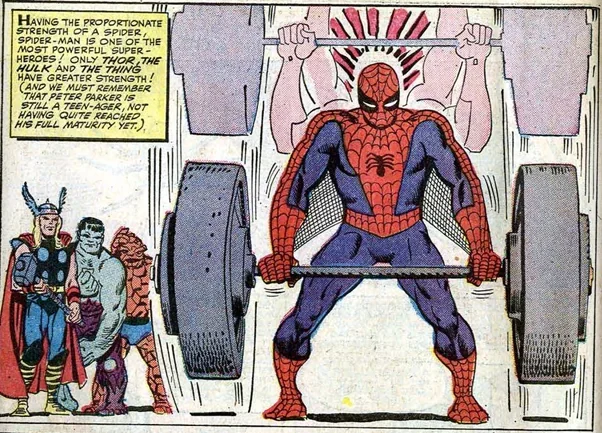
Spider-Man’s physical profile combines enhanced proportional strength—frequently cited in the multi-ton range—with extreme agility, balance, and acrobatic coordination. This mix allows standing vertical leaps, rapid acceleration over short distances, and safe deceleration from high-speed swings that would injure an unenhanced human.
In combat, he leverages elastic movements and momentum conservation for efficient throws, holds, and non-lethal takedowns. His tendons and connective tissues tolerate high-G turns, and his recovery rate outpaces normal human healing, enabling him to endure prolonged engagements and return to activity after impacts that would typically cause incapacitation.
The Iconic Costume and Utility Upgrades

The classic red-and-blue suit uses a tight, flexible fabric for aerodynamic movement, with raised web patterns and contrasting fields to enhance visibility of limb positions during motion capture in illustrations and choreography. The mask’s white eye lenses hide facial identity while allowing peripheral awareness; some versions include adjustable apertures to modulate light intake.
Across eras, Spider-Man has integrated practical upgrades such as impact-damping padding, emergency GPS or comms, rebreathers for underwater movement, and electrically insulated layers for tackling live circuits. Specialized suits—stealth configurations, insulated variants for extreme temperatures, and armor-reinforced designs—appear when story requirements call for countermeasures against particular threats or environments.
Scientific Genius and DIY Engineering

Peter Parker’s background emphasizes formal training in chemistry, physics, and engineering, which he applies to inventing and maintaining field technology like web fluid, tracers, and compact sensor arrays. He routinely builds or repairs lab-grade equipment on limited budgets, using reclaimed parts, 3D-printed housings, and custom microcontrollers.
This scientific approach extends to forensic problem-solving, where he analyzes residue, circuitry, and materials to profile adversary tech or crime-scene conditions. In crossovers and team settings, he contributes to collaborative R&D, prototypes counter-tech for specific villains, and documents experimental results in detailed lab notes that carry over across story arcs.
The Rogues’ Gallery

Spider-Man’s adversaries span technologically augmented criminals, mutated organisms, and corporate or scientific antagonists whose methods reflect focused themes—flight and magnetism, illusion and hypnosis, animal-themed enhancements, and symbiotic organisms. Many foes originate from experiments, industrial accidents, or power-driven research that echo the hero’s own scientific milieu.
Recurring villains often form alliances or rivalries that evolve over time, generating combined threat profiles and forcing Spider-Man to adapt tactics. Devices like anti-web coatings, sound-based weapons, null-gravity traps, and AI-guided drones repeatedly push him to iterate on equipment, countermeasures, and investigative techniques for future confrontations.
The Daily Bugle and Photojournalism

Within the civilian sphere, Peter Parker’s association with the Daily Bugle frames an information-driven look at superheroes and public perception. Freelance photojournalism gives him legitimate access to breaking news sites, press briefings, and municipal response activity, creating a grounded pipeline for tracking incidents that may require Spider-Man’s intervention.
This professional angle also introduces practical challenges—meeting editorial deadlines, handling image rights, and maintaining metadata integrity—while navigating ethical standards like avoiding staged content or conflicts of interest. Over time, newsroom roles, editorial policies, and legal considerations have influenced how Spider-Man’s actions are reported and how sources and evidence are documented.
The Spider-Verse and Alternate Realities

The Spider-Verse concept assembles multiple spider-themed heroes across parallel realities, each with distinct origins, power variations, and cultural contexts. These stories establish interdimensional travel frameworks, shared adversaries with multiversal reach, and inheritance rules for abilities that differ by universe.
Collaborations among counterparts enable technology exchanges—like cross-universe communicators, dimensional anchors, and harmonized tracer signals—along with training protocols that standardize web tactical handoffs and formation flying. These narratives catalog variant gear, local laws, and environment-specific hazards, building a reference map for coordinated operations across worlds.
New York City as a Functional Playground

Spider-Man’s movement system is optimized for dense urban architecture, and New York City’s high-rise clusters, bridge spans, and narrow corridors provide ideal swing anchors and wind tunnels. The city’s transit hubs, waterfronts, and industrial zones create varied tactical arenas that affect line-of-sight, acoustics, and crowd dynamics during emergencies.
Emergency services integration—police scanners, fire codes, and evacuation procedures—appears frequently in stories, showing how Spider-Man cooperates with or navigates around official responses. Weather conditions, traffic patterns, and construction scaffolding influence patrol routes and swing efficiency, with maps and waypoints helping him prioritize coverage during multi-incident nights.
Share your own favorite Spider-Man detail or story element in the comments so everyone can compare notes and swap recommendations!