


Top 15 Movie Redheads, Ranked

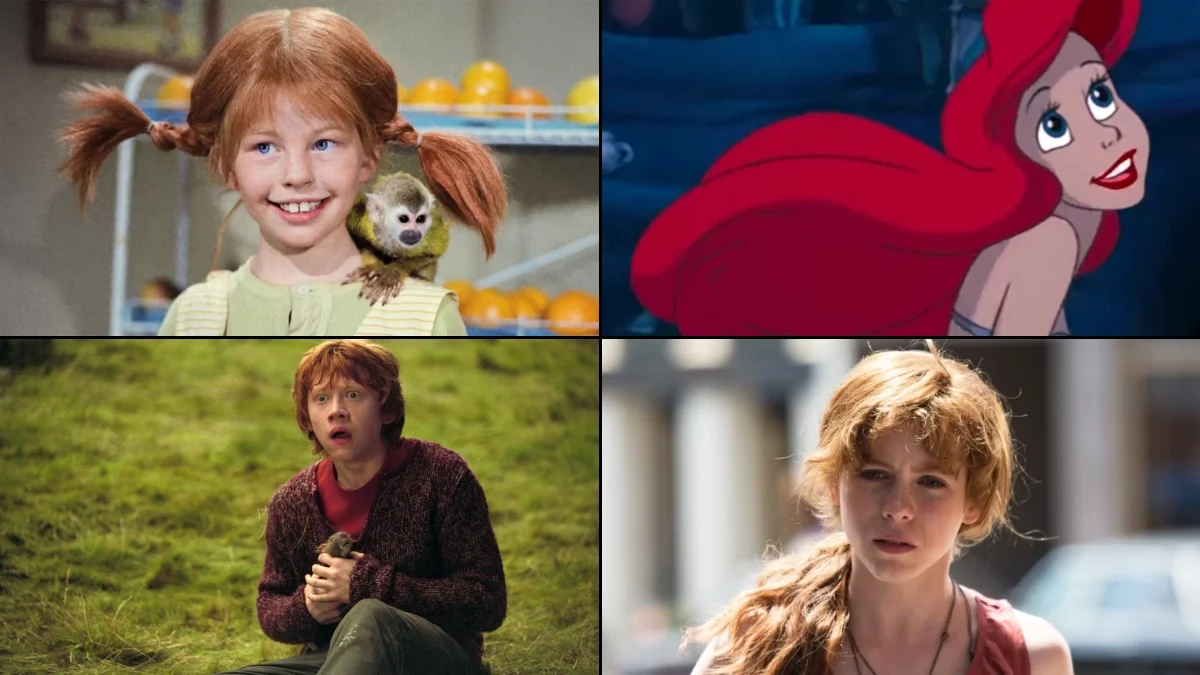


Redheads show up across genres and eras, from animated adventures to superhero epics and horror staples. This list spotlights characters on the big screen whose red hair is part of their instantly recognizable silhouette, whether they’re saving kingdoms, cracking cases, or upending entire story worlds. It’s about who the characters are on-screen and what they actually do in their movies.
Each entry includes concrete details—roles in the plot, defining traits, and specific actions or abilities—so you can place the character in context without needing a rewatch. Titles appear in single quotes for quick reference, and everything here focuses strictly on the characters as written and portrayed in their films.
Poison Ivy

In ‘Batman & Robin’, Dr. Pamela Isley becomes Poison Ivy after an experiment leaves her with plant-based toxins in her bloodstream; her abilities include pheromone manipulation and immunity to poisons. Within the film’s storyline, she teams with Bane, establishes a lair called the Turkish Baths, and orchestrates public spectacles using bioluminescent flora and airborne sedatives.
The character’s visual signature combines leaf-themed costumes with vivid red hair that contrasts against Gotham’s neon-soaked setpieces. Her tactics in the movie center on environmental rhetoric turned criminal strategy, using botanical weaponry, vine-like restraints, and gas dispersal to incapacitate crowds and target Bruce Wayne’s charity events.
Tintin
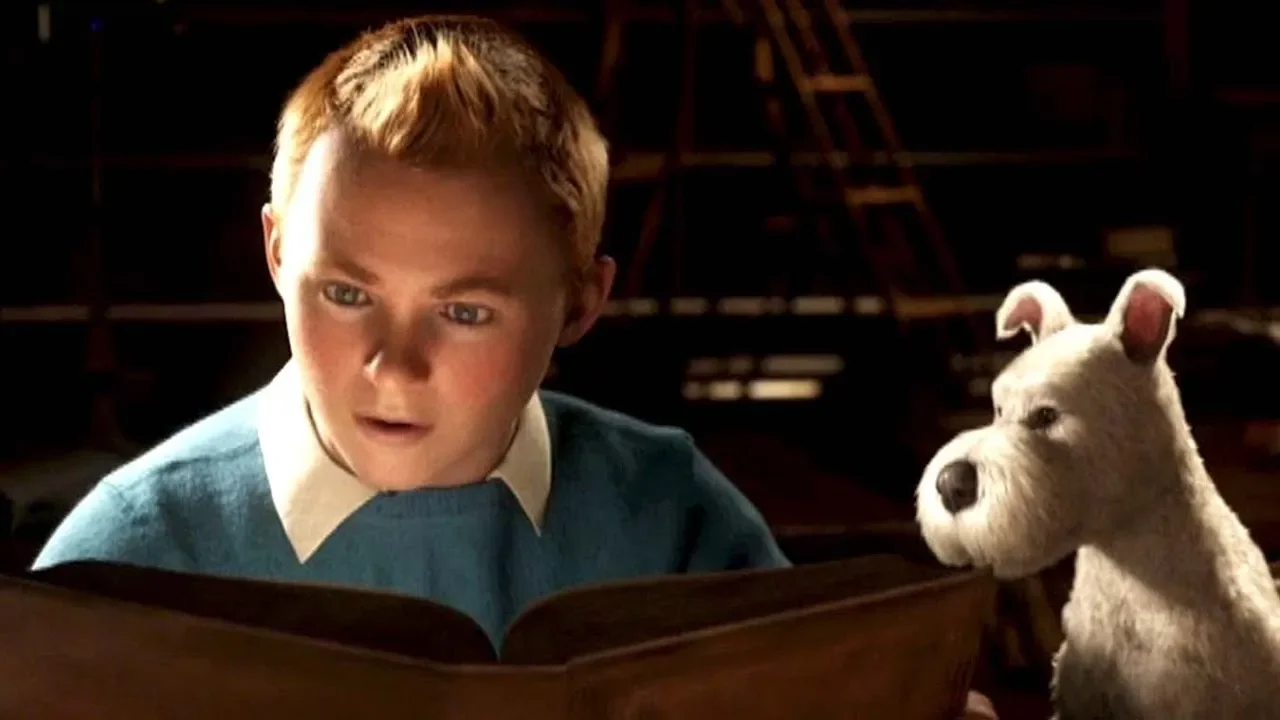
In ‘The Adventures of Tintin’, the young reporter relentlessly follows clues from a model ship to a centuries-old treasure, moving the plot across deserts, open seas, and a North African port. He partners with Captain Haddock, whose family history ties directly to the mystery of Sir Francis Haddock and the Unicorn.
Tintin’s red quiff is a constant in chase sequences, newsroom interludes, and stealth breaks, visually anchoring him in busy action frames. The film showcases his investigative process—decoding scrolls, tracing smuggling routes, and leveraging quick thinking during a market kidnapping and a cargo-plane escape.
Pippi Longstocking
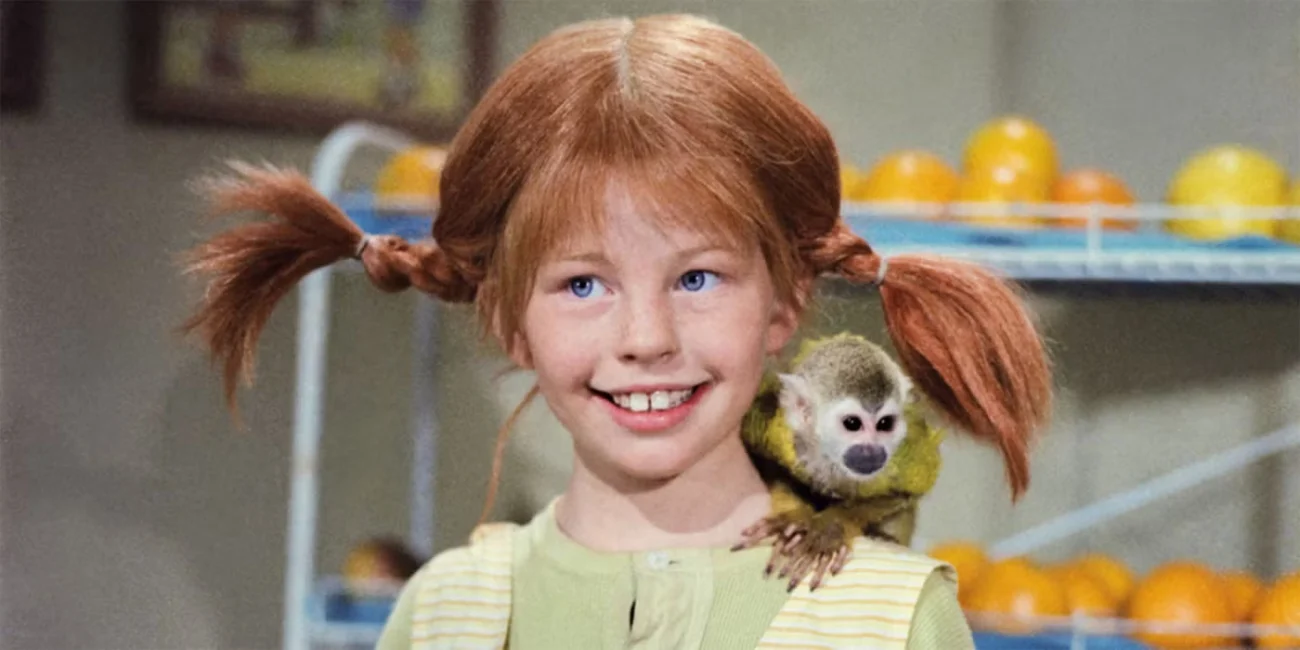
‘The New Adventures of Pippi Longstocking’ presents Pippilotta Victualia Rullgardina Krusmynta Efraimsdotter Långstrump as a fiercely independent child living at Villa Villekulla with her horse and monkey, Mr. Nilsson. She demonstrates unusual strength, lifts adults with ease, and navigates adult institutions with literal-minded logic.
Pippi’s bright red braids serve as a visual shorthand for her rule-bending presence in every scene, from schoolroom showdowns to a town-wide search. The film uses her resourcefulness—homemade contraptions, improvised rescues, and direct negotiation with officials—to counter threats from well-meaning guardians and opportunistic schemers.
Beverly Marsh

In ‘It’ and its continuation, Beverly Marsh grows from an isolated teen into a central member of the Losers’ Club, whose unity provides the means to confront the entity haunting Derry. She locates critical evidence in her home bathroom, witnesses the “deadlights,” and later returns to the town as an adult to finish what the group began.
Her red hair is repeatedly emphasized in moments of danger and solidarity, framing scenes of friendship, sewer expeditions, and the retrieval of tokens that anchor each member’s past. Beverly’s arc tracks survival strategies—secret communications, defensive improvisation, and collaborative planning—to counter cycles of fear and memory.
Chucky

In ‘Child’s Play’, the Good Guy doll is inhabited by the criminal Charles Lee Ray after a ritual transfer, creating a murderer who exploits his toy-sized body for stealth. The character manipulates adults’ disbelief, sabotages elevators, and uses household tools as weapons to frame others and evade capture.
Chucky’s orange-red hair and overalls combine with the doll’s plastic grin to produce a recognizable figure in apartment corridors and toy-store aisles. The film documents his methodical approach: locating incantation materials, attempting further transfers to human hosts, and targeting witnesses who piece together the pattern of deaths.
Annie
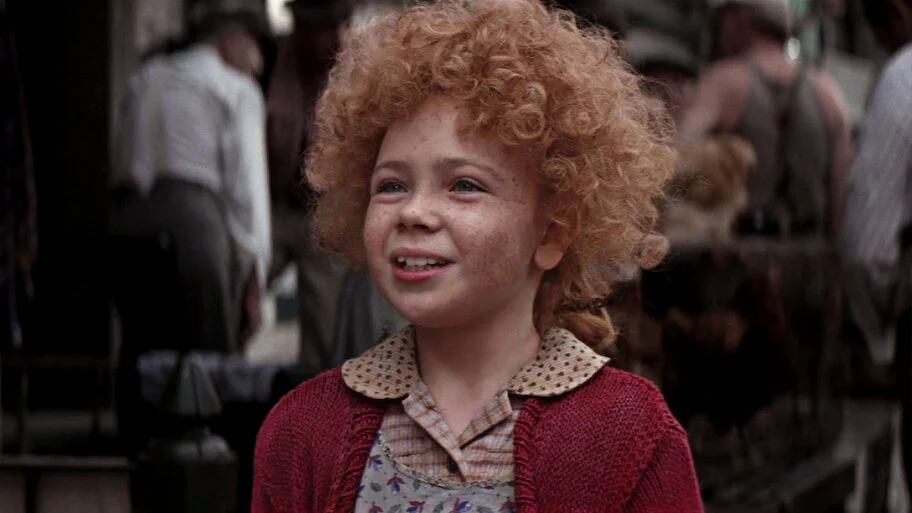
‘Annie’ follows the optimistic orphan who leaves Miss Hannigan’s overcrowded home for Oliver Warbucks’s mansion, where she becomes the focus of a city-wide search for her birth parents. The plot turns on Annie’s public appearances, a staged kidnapping scheme, and the use of newspaper and radio to reach leads.
Annie’s curly red hair is inseparable from her presence in musical numbers, press photos, and a climactic rescue. The character advances the story by bridging social worlds—tenement streets, municipal offices, and a billionaire’s estate—bringing disparate figures into cooperation through letters, reward posters, and adoption proceedings.
Giselle
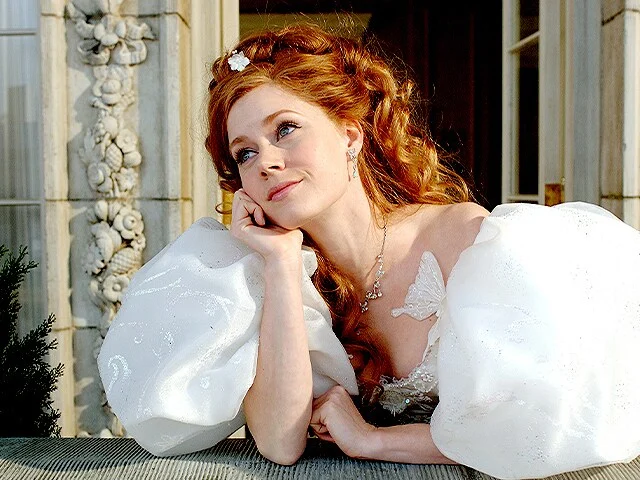
In ‘Enchanted’, Giselle crosses from an animated kingdom into modern-day New York City, where she treats everyday problems with fairy-tale logic that both complicates and solves conflicts. She navigates legal constraints without documentation, establishes a dressmaker’s niche using repurposed materials, and forms new alliances with a divorce lawyer and his daughter.
Her voluminous red hair signals her origin in Andalasia’s storybook aesthetic while contrasting with subway platforms, office interiors, and a Times Square ballroom. The character introduces musical solutions—improvised street-cleaning choreography and a ballroom confrontation—that reframe romantic commitment and villainy in a contemporary setting.
Jean Grey
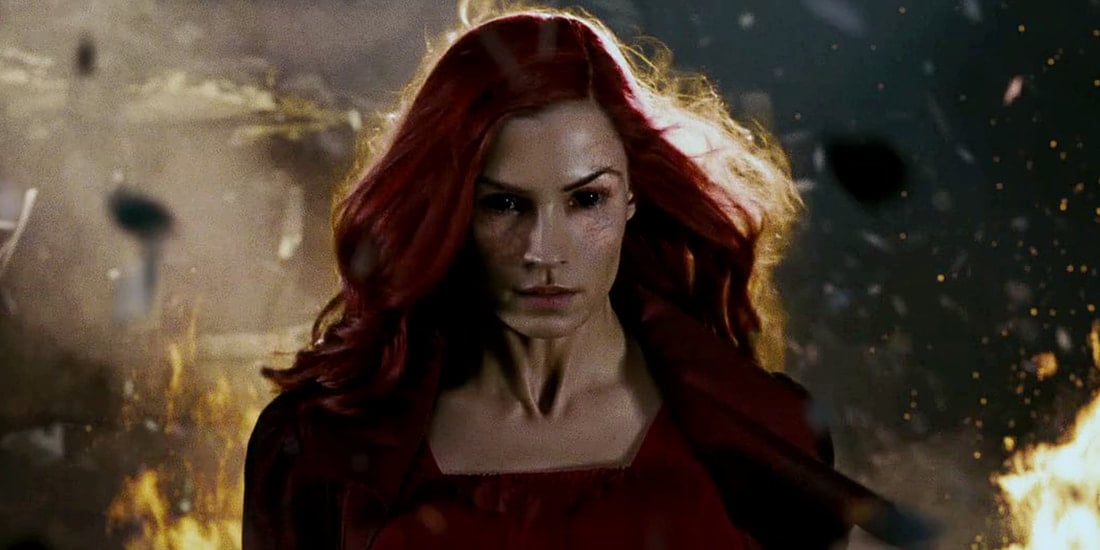
Across the ‘X-Men’ films, Jean Grey operates first as a powerful telekinetic and telepath, later manifesting the Phoenix Force with destructive potential. She participates in high-stakes missions including Liberty Island, Alkali Lake, and space-rescue operations, where her abilities alter the outcome of battles and political negotiations.
Jean’s red hair is a steady visual anchor through transformations that affect uniforms, environments, and team dynamics. The films chart her training, mental safeguards, and eventual breakdown of psychic barriers, linking her power surges to plot pivots like team realignments, memorial services, and disputes over mutant governance.
Princess Fiona
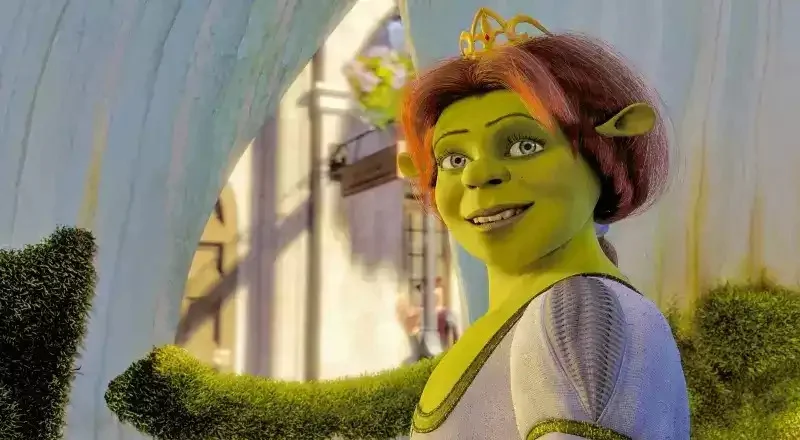
In ‘Shrek’ and its sequels, Princess Fiona balances human and ogre forms under a transformation curse, a condition that dictates timelines and motivates quests. She deploys martial-arts skills during ambushes, organizes resistance cells in Far Far Away, and leads coordinated efforts against corporate-style villain schemes.
Her red hair remains a consistent trait in both forms, connecting fairy-tale lineage with the swamp’s more grounded social world. The character’s actions include negotiating with monarchs, redirecting public opinion through public performances, and rethinking royal roles to prioritize community over ceremonial traditions.
Anna

‘Frozen’ centers much of its movement on Anna’s decision-making—pursuing her sister into a blizzard, bargaining with mountain traders, and coordinating with citizens during a power vacuum. She initiates critical meetings, secures transport, and manages diplomatic misunderstandings created by sudden winter conditions.
Anna’s auburn-red hair, marked by distinct braids, functions as part of her silhouette in ice palaces, village squares, and castle corridors. The film uses her persistence—door-knocking, map-following, and contract-making—to translate personal loyalty into concrete actions that stabilize a kingdom facing magical and logistical disruptions.
Ron Weasley

In the ‘Harry Potter’ films, Ron Weasley contributes strategic thinking and chess-derived tactics, notably during early underground challenges and later during covert operations. He participates in key recoveries of magical items, aids in decoding protective mechanisms, and assists with the logistics of movement while under pursuit.
Ron’s red hair aligns him with the Weasley family’s presence across settings like the Burrow, Hogwarts common rooms, and makeshift camps. His actions include safeguarding information, securing disguises, and coordinating transport, which facilitate group survival and the successful execution of multi-part plans.
Jessica Rabbit
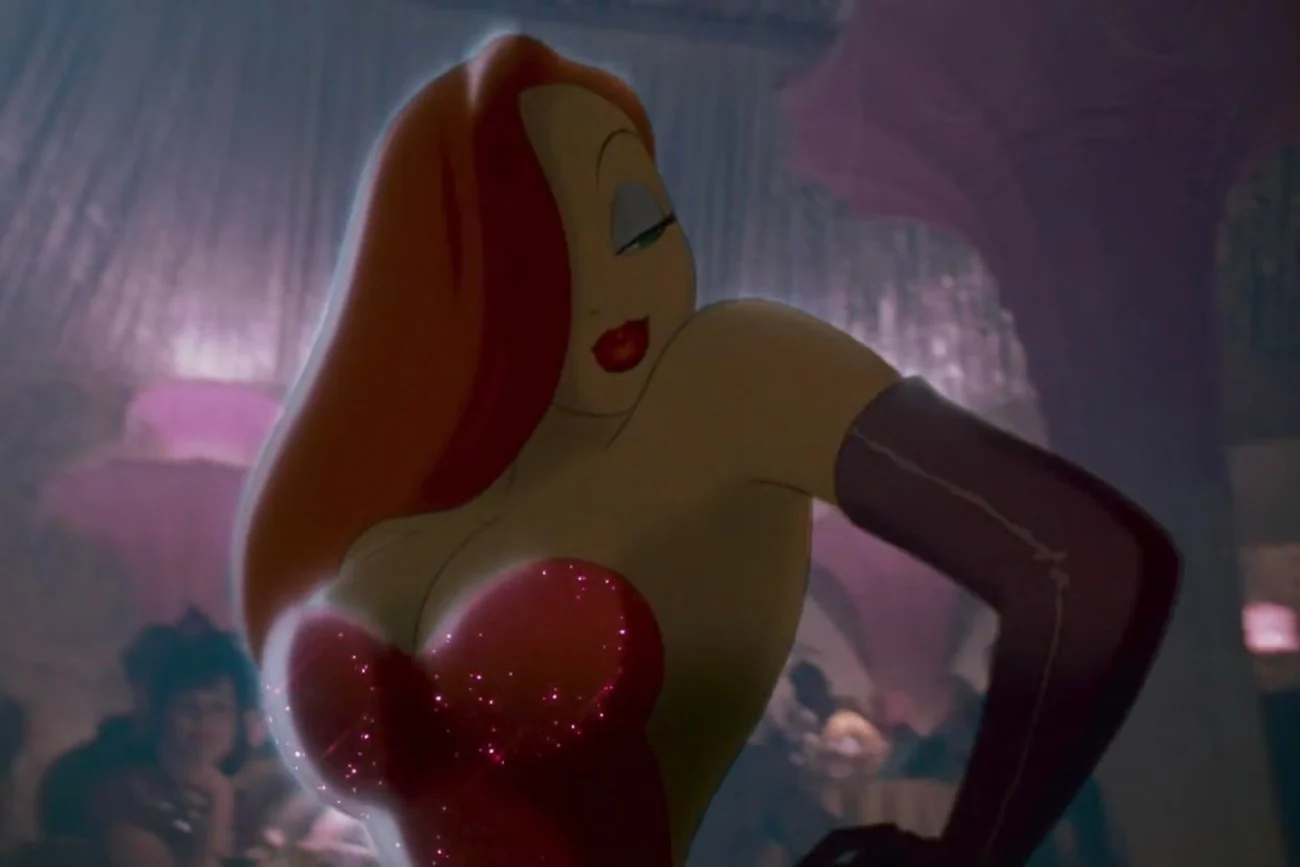
In ‘Who Framed Roger Rabbit’, Jessica Rabbit navigates a hybrid world of Toons and humans with precise control over stagecraft, information access, and blackmail evidence. She stores, retrieves, and trades items like photographic negatives and props, directing the flow of clues that Detective Valiant follows.
Her long red hair frames performances at the Ink and Paint Club and serves as a visual throughline during interrogations and alleyway exchanges. The character manipulates contracts, safe keys, and witness statements to expose industrial schemes tied to real-estate acquisition and transit infrastructure.
Natasha Romanoff / Black Widow

Within the Marvel films, Natasha Romanoff functions as a tactician and undercover specialist who carries out extractions, interrogations, and data wipes under tight deadlines. She participates in operations from Stark Expo security to aerial engagements over Washington, D.C., using grapples, batons, and encryption-breaking tools.
Her red hair changes length and style across missions while remaining a persistent identifier in briefing rooms, safehouses, and helicarriers. The character’s documented activities include reversing surveillance systems, recovering classified drives, and executing “ghost protocol” exits that reset identities and alliances.
Princess Merida

In ‘Brave’, Merida’s archery, map reading, and horse handling create a practical skill set that propels a dispute over clan succession and tradition. She negotiates with clan leaders, consults a woodcarver-witch, and deciphers symbolic tapestries to address a family curse that threatens political unity.
Merida’s curly red hair is integrated into the film’s visual language, reacting to wind, speed, and motion during forest pursuits and hilltop meetings. The character uses treaty knowledge, coded heraldry, and public addresses to redirect a tournament’s outcome and repair inter-clan relations.
Ariel

In ‘The Little Mermaid’, Ariel gathers human artifacts, studies surface culture, and ultimately brokers a contract that trades her voice for legs, setting off timed conditions she must meet to remain human. She maintains a catalog of objects, leverages seabed contacts, and coordinates with allies to interrupt a royal ceremony under false pretenses.
Ariel’s long red hair distinguishes her in underwater scenes and on coastal promenades, creating continuity between two worlds as she adapts to land-based movement and etiquette. The narrative tracks her collection methods, deal terms, and final contract resolution, where signatures, trident authority, and witness intervention determine outcomes.
Share your picks in the comments—who else belongs on this big-screen redhead list?