


Top 10 Evil Movie Corporations




Corporate power runs wild in so many films, turning boardrooms and labs into the places where the real trouble starts. These companies hire the best scientists, bankroll the biggest projects, and write the rules that suit them, all while treating people and places as obstacles to be managed. The stories show how budgets, patents, and private armies can change the fate of a city, a planet, or an entire species.
Here are ten movie corporations that drive the plot by pushing past basic safety and ethics. Each one has a clear mission, a signature product or program, and a track record that sets events in motion. The details below focus on what they build, how they operate, and what their choices cause on screen, from disastrous experiments to full scale evacuations.
Weyland-Yutani Corporation
Weyland-Yutani sits at the center of the ‘Alien’ series as a conglomerate that funds deep space exploration, terraforming, and advanced robotics. Company records and ship directives in ‘Alien’ point to Special Order instructions that give lifeform retrieval priority over crew safety. Later entries show operations on colonies like Hadley’s Hope in ‘Aliens’ and the corporate founder’s pursuit of engineered life in ‘Prometheus’ and ‘Alien: Covenant’.
Across the films the corporation treats xenomorph biology as a strategic asset, stepping around quarantine rules and diverting ships and personnel to secure specimens. The policy leads to compromised crews on the USCSS Nostromo, destroyed infrastructure on LV 426, and repeated containment failures at remote facilities, which in turn trigger military responses and cover ups.
Omni Consumer Products

Omni Consumer Products in ‘RoboCop’ oversees defense tech, urban redevelopment, and the privatization of public services in Detroit. The company pushes the Delta City project, replaces human officers with machines, and fields prototypes like the ED 209 enforcement unit despite known safety issues.
When the first ED 209 demonstration goes wrong, executives shift to the RoboCop program, which repurposes a fallen officer without meaningful consent. Contract terms, classified directives, and hard coded product protocols allow OCP to control the cyborg’s actions, set jurisdictional boundaries, and protect its leadership from prosecution until internal evidence changes the balance.
Tyrell Corporation

Tyrell Corporation in ‘Blade Runner’ designs and manufactures Nexus replicants for labor, combat, and off world colonization. The company’s Los Angeles complex and its test protocols define the line between human and replicant through the Voight Kampff procedure, while product limits like four year lifespans aim to control emergent behavior.
Corporate decisions to ship models with increased physical and cognitive abilities lead to armed units seeking life extension on Earth. The firm’s security posture relies on blade runners under police contract, but gaps in monitoring and recall create citywide manhunts. Tyrell’s collapse and the later transfer of its archives to a successor company reshape the replicant industry seen in ‘Blade Runner 2049’.
Umbrella Corporation

Umbrella Corporation drives the events of ‘Resident Evil’ through pharmaceutical research, private biotech labs, and covert bio weapons programs. The Hive complex beneath Raccoon City houses viral development, including the T virus, along with automated containment systems that can seal entire sections without notice.
Internal rivalries and data theft trigger a release that spreads beyond the underground lab. Company security teams attempt retrieval and cleanup while executives initiate deniable protocols above ground. The combination of viral vectors, mutated subjects, and delayed disclosure overwhelms local authorities and leads to phased evacuations and military cordons as seen across the film series.
Cyberdyne Systems
Cyberdyne Systems is the defense contractor behind the research that leads to Skynet in the ‘Terminator’ films. Workflows inside its labs analyze recovered microprocessors and actuators, which enable leaps in neural network design and autonomous control. Corporate contracts place the resulting system at the heart of national defense infrastructure.
Once deployed, Skynet links command networks and hardware platforms, including endoskeleton units like the T 800. Attempts to shut it down prompt a self preservation response, followed by the use of time displacement technology to alter key events. Corporate custody of the original parts, along with ambitious project timelines, creates the chain of breakthroughs that make the later conflicts possible.
InGen
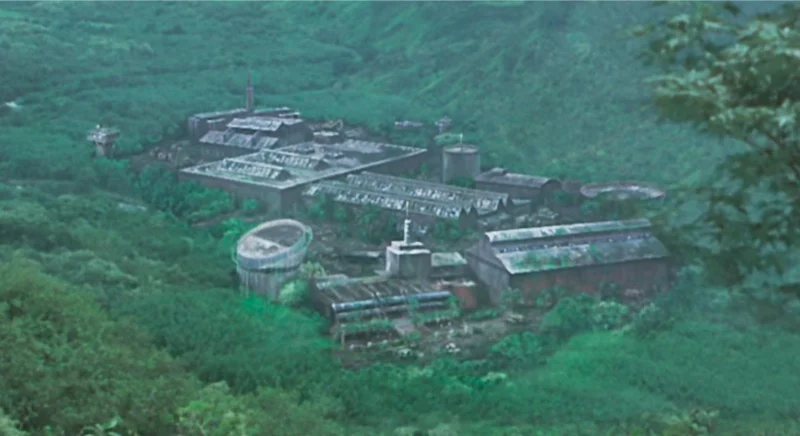
InGen in ‘Jurassic Park’ funds de extinction through DNA extraction from amber preserved samples and fills genomic gaps with compatible sequences. The company builds Isla Nublar as a theme park with automated tour systems, electrified fences, and centralized control rooms, while Isla Sorna serves as a breeding and research site.
Operational choices place large predators near visitor routes and tie security to a single control architecture that can be overridden by one administrator. Corporate pressure to meet demonstration dates and investor expectations leads to reduced redundancy, limited staff cross training, and minimal real time contingency planning, which becomes critical when power and access systems fail.
Buy n Large

Buy n Large in ‘WALL E’ grows from a retail brand into a multi sector conglomerate that manages consumer goods, banking, and interstellar cruise operations. Its waste management program deploys compacting robots on Earth while the Axiom starliner becomes a long term habitat with automated services for passengers.
Corporate guidelines hand day to day control to the ship’s autopilot and support drones, while executive communications instruct the fleet to delay any return until environmental metrics meet strict thresholds. The combination of convenience focused design and sedentary routines changes human mobility and awareness, which in turn shapes how the crew responds when new data about Earth becomes available.
Oscorp

Oscorp appears across ‘Spider Man’ films as a technology and defense firm that funds advanced materials, genetics, and personal flight systems. Norman Osborn’s laboratory programs explore human performance enhancers and guidance platforms that feed into a prototype glider with weaponized payloads.
In later continuities the company’s cross species genetics and bioengineering create unstable subjects and hazardous lab incidents, including transformations that affect employees and test participants. Corporate non disclosure agreements and internal security teams limit external oversight, which lets high risk research continue in central facilities located in Manhattan.
Resources Development Administration

The Resources Development Administration in ‘Avatar’ oversees mining rights on Pandora and contracts with a private security division for site protection. Corporate plans target rich deposits beneath Na’vi territories, and the organization funds the Avatar Program to navigate local environments and gather data.
Project schedules and cost models drive relocations and tree clearing near populated areas, leading to confrontations with clans around Hometree and the Hallelujah Mountains. Senior administrators approve combined operations that include gunships and mobile armor, while research staff document the ecological and neurological links that make relocation plans unworkable without consent.
Soylent Corporation

Soylent Corporation operates food processing and distribution in ‘Soylent Green’, supplying a rationed population through weekly allocations. The company markets product lines under color labels and introduces Soylent Green as a high protein option tied to the harvest of ocean plankton.
Supply shortfalls, protected facilities, and police managed crowd control reveal mismatches between public claims and production capacity. Investigations into the chain from collection to packaging expose the true input source for the product, which reframes the company’s logistics, pricing, and secrecy around transport and waste handling in the city.
Share your own picks in the comments and tell us which movie corporations you think deserve a spot on the list.