‘Victorian Psycho’ Ending Explained: What Happens to Winifred Notty and Why It Matters

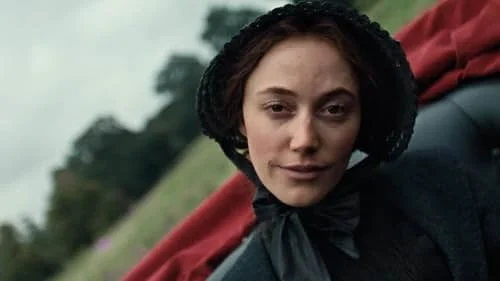
The ending of ‘Victorian Psycho’ leaves Winifred Notty at the center of a public spectacle, with a final line that echoes the film’s first. Zachary Wigon’s film, adapted for the screen by Virginia Feito from her own novel, arrives in theaters on November 13.
Explaining the ‘Victorian Psycho’ ending means looking at three things. These are the massacre that comes before it, Winifred’s fate in the town square, and the question of who carries her darkness forward. Critics have not agreed on whether the final stretch works, and one review noted the ending may lose some viewers. Spoilers follow for the entire film.
What Happens to Winifred Notty in the Final Scene
After the bloodbath, Drusilla tells the police that Winifred killed everyone in the mansion. The officers are stunned by the carnage and take Winifred into custody. The film then moves from the house to the public square.
There a man sells pamphlets about the monster of Ensor House, the crowd trades theories about what happened inside, and a puppet show tries to supply answers. The scene turns a private horror into entertainment for the town.
Winifred is hanged in the square while the crowd gathers with barely contained excitement. The last line of the film rearranges the first, as she once again calls herself “the sanest person I’d ever met.” The film suggests she is both sane and insane, and that the society around her helped bring her here.
The Ensor House Massacre That Sets Up the Ending
The rampage begins when Miss Lamb, played by Thomasin McKenzie, confronts Winifred about her private behavior. Winifred cuts her down before Lamb can tell anyone what she knows. The film shows that her victims are not chosen by any logic beyond her own impulses.
After Mr. Pounds dismisses her, Winifred walks off the property with her luggage and later returns with a rifle fitted with a bayonet. She walks into a dining room where the family greets her with smiles and applause, but the reflection in a spoon reveals what is really happening, and she kills the family and staff. The warm welcome only exists inside her head.
That blur between hallucination and reality is built into the filmmaking. In an interview with Gizmodo, Wigon said the sound design uses a chime for moments when Winifred feels connected to her darkness and a staticky sound for moments when reality slips away. One review described the climax as floating between Winifred’s dreamlike state and the nightmare of reality.
Fred and Drusilla and the Passing of the Darkness
Early in the film, Winifred tells Andrew that a demon named Fred lives inside her. It is unclear at that point whether she is telling the truth or simply trying to frighten him. The film leaves that question open for most of its running time.
The answer arrives at the gallows, where Winifred looks into the crowd with the noose around her neck and sees Drusilla wearing a crooked smile. Screen Rant reads this as a transference of evil, with the cycle starting over as Drusilla takes up the mantle.
The film plants this idea earlier. As Mr. Pounds chokes Winifred, Drusilla stabs him in the back, and the same analysis treats the moment as the first passing of Fred. Drusilla has been neglected and abused by her parents, which gives her own turn toward violence a motive. Wigon has said the film is fairly faithful to the novel, though he stressed that cinema has its own rules.
How Critics Have Read the ‘Victorian Psycho’ Ending
Fangoria’s review acknowledged that the ending might lose some viewers, but argued the film never claims Winifred’s actions are acceptable, only that they are usually earned. That reading treats the hanging as a consequence rather than a verdict.
Other reviewers were less convinced. Film Yap placed the movie somewhere between camp and a poor film, and said viewers end up wishing the movie would find an ending as much as Winifred does. The Cosmic Circus felt the staging added little meaning, though it credited the cast with keeping the film watchable.
The ending does connect to the idea Wigon says drew him to the story. He described the film as “putting one character’s madness into conversation with the accepted madness of a society.” The eager crowd at the gallows suggests that Winifred is not the only person in the town who treats violence as a show. Did the crooked smile on Drusilla’s face convince you that Fred has found a new home, or does Winifred’s belief in her own sanity still hold up for you.