‘Wild Horse Nine’ Ending Explained: What Chris’s Final Request Means for Lee

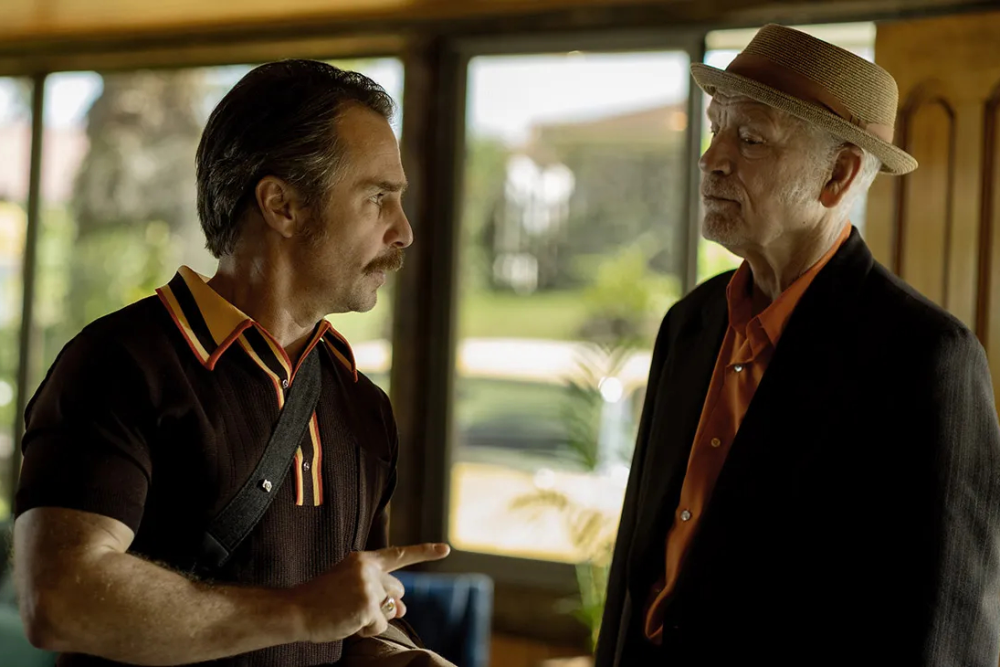
The ending of ‘Wild Horse Nine’ lands with a bleak quiet that Martin McDonagh builds toward from the opening scenes. The film is a black comedy set against a real historical backdrop, and it opened in the United Kingdom and the United States on November 6 through Searchlight Pictures. John Malkovich plays Chris, a veteran CIA officer with terminal cancer, while Sam Rockwell plays Lee, his protégé.
This breakdown covers what happens in the closing stretch and why the ‘Wild Horse Nine’ ending explained by most viewers points toward grief rather than victory. The story begins shortly before the 1973 Chilean coup, when bureau chief MJ sends the two officers from Santiago to Easter Island. Spoilers follow for everything that happens on the island.
Why Chris Asks Lee to Help Him Die
The emotional center of the film is Chris’s illness. He is dying of cancer and does not want to endure a long fight with it, so he asked Lee to take him to Easter Island where Lee could kill him peacefully without a police investigation. Chris no longer remembers making that request, which leaves Lee conflicted and devastated.
That fading memory shapes how Chris moves through the story. He leaves notes for himself so he can remember things later, and one of them warns him not to trust Lee. The AP described the film as a mournful tale of regret and atonement at the end of a life of violence, with Chris’s thoughts scattering as death approaches.
The request comes to a head at the island’s famous statues. According to one detailed recap, Chris stands before the Moai at Ahu Tongariki in a casual Hawaiian shirt and asks Lee to fire the fatal shot. Lee struggles with the request, and their last exchange keeps the same mix of affection, irritation and dark humor that has defined their friendship.
One festival review framed the trip as a bittersweet pact in which Chris wants to die on his own terms. That reading helps explain why the scene plays as tender rather than shocking, even as it leaves Lee holding the heaviest burden.
Lee’s Choice on Easter Island
Lee spends much of the story caught between two obligations. MJ knows Chris plans to write a memoir and has tasked Lee with finding out what is in it. MJ is especially interested in what became of the rifle linked to the JFK assassination, and he tells Lee to kill Chris once the information is secured.
The tension breaks after Chris talks too freely. The recap says MJ learns how much Chris has told the two Chilean students and sends a tactical team to the island, and the confrontation reaches its peak at Rano Raraku. Lee chooses to defend Chris and the students and turns his weapon on his fellow CIA operatives.
The cost is steep. Monica is killed in the shootout and Alicia is severely wounded. A Sight and Sound review argued that the film gives Monica little to do beyond serving as an idealistic vessel for Chris’s tentative redemption.
Lee’s decision also ends the balancing act he has attempted throughout the story. Once he turns on his colleagues, the compromise between his loyalty to Chris and his loyalty to the agency becomes impossible. He ends up shielding the man he must then help to die.
What Happens to Alicia and the Chilean Coup
Alicia’s fate offers the only thin thread of hope. She survives her wounds, and Lee helps her escape the island and go into hiding with the classified documents. The film does not show whether she will ever expose what she carries, so her survival is not the same as justice.
The epilogue then delivers the film’s sharpest irony. Despite Chris’s disclosures and the bloodshed on the island, the American backed coup in Chile succeeds. The coup was already set for September 11, so the story’s private tragedy plays out against a political outcome that never changes.
The last scene finds Lee alone and drinking. He sits in a beachside bar until MJ calls with an account that frames the massacre as a training exercise gone wrong. The call shows how easily the agency reclaims the narrative and leaves Lee with little power to challenge it.
It also helps to remember what kind of story this is. The film is a fictional dark comedy and satire rather than a true story, even though it is set against a real historical backdrop.
What the Ending Means for the CIA Story
McDonagh has been open about where the political edge came from. In a conversation with The Film Stage, he said the idea began with examining what the CIA did in Chile, and that the JFK thread was folded in later. He added that the goal was not to portray present day geopolitics, yet seeing the film with an audience makes those parallels hard to miss.
That context explains why the ending refuses a thriller’s usual payoff. Chris’s disclosures matter to the people around him, yet the machinery of the agency keeps moving. The film treats loyalty, secrecy and mortality as personal burdens rather than levers that can change history.
Critics have largely embraced that approach. The film holds a 90 percent positive score from 39 critics on Rotten Tomatoes and an 80 on Metacritic, and Malkovich won the Volpi Cup for Best Actor at Venice. Even so, the AP noted that Chris’s decline makes it hard for Lee to separate the nonsense from the truths in his chatter.
That uncertainty is what makes the final act linger. If you have seen the film, tell us in the comments whether you think Chris truly wanted Lee to pull the trigger at the feet of the moai, or whether his fading memory made that choice less his own than it appeared.