‘Young Washington’ Ending Explained How The Final Battle Reshapes The Story Of America’s First President



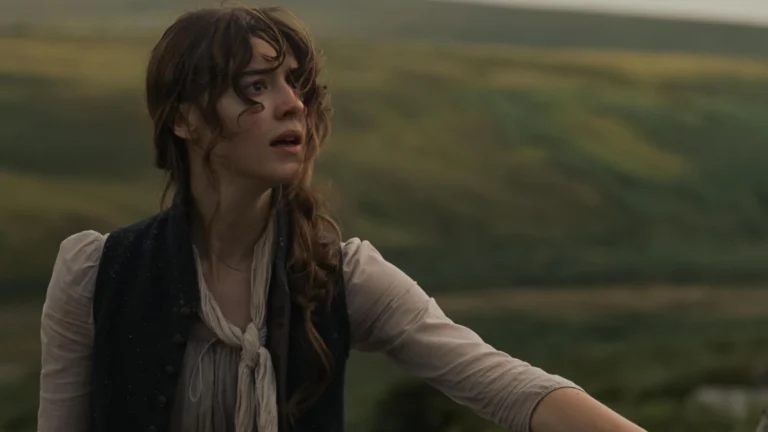
‘Young Washington’ arrived in theaters as part of the countdown to America’s 250th anniversary, closing with a battlefield sequence that draws a direct line between a young officer’s failures and the man who would eventually lead a revolution. Directed by Jon Erwin, the film follows George Washington from his early ambitions in colonial Virginia through his first independent military command, which ended in disaster. For viewers walking out of the theater, the final act leaves plenty to unpack about what the movie is actually trying to say about its subject.
The film tracks Washington’s early experiences and command during the French and Indian War, following his journey from a denied commission to a defining moment on the battlefield. William Franklyn-Miller stars as the future president, and the ending of ‘Young Washington’ has already split audiences and critics over how it frames his survival against overwhelming odds.
The Final Battle Sequence That Gives ‘Young Washington’ Its Title
In 1743, after the death of his father Augustine, George Washington meets his older half brother Lawrence, who tutors him in land surveying since George is not given a formal education. By 1753 in Williamsburg, Virginia, George is denied a commission into the British Army simply because of his colonial background, a rejection that fuels much of his frustration throughout the film. After Lawrence dies from tuberculosis, a demoralized George resigns from the Virginia Regiment entirely, only for his mother to renew his belief that he is protected by Providence.
In 1755, George re-enlists under British General Edward Braddock, serving as an aide-de-camp on the Braddock Expedition to retake Fort Duquesne, though he falls ill with dysentery along the way. On July 9, 1755, Braddock’s forces are ambushed by French and Canadian troops under Captain Daniel Liénard de Beaujeu, and it is during this chaos that George wakes from his illness and joins the fight. Braddock is killed in the ambush, and under Gage’s command, Washington rallies the army to form a rear guard that allows the British to retreat.
By the end of the climactic battle, George sustains four bullet holes in his coat, one bullet hole through his hat, and has two horses shot out from beneath him, yet walks away unharmed. A critic writing for Deadline described the battle work as genuinely impressive, noting they got more out of the sequences than expected and calling them well worth seeing on the big screen.
Weighing The Historical Accuracy Of ‘Young Washington’
Most critics agree the film gets the main events leading up to the French and Indian War correct, though it leaves out or softens some of the harder parts of Washington’s story. Plugged In critic Paul Asay felt it was a powerful and largely accurate glance at a little noticed episode in American history, even while the movie takes a few liberties with some of the minor threads, including the romance between Washington and Sally Cary.
One reviewer for The Collision argued the movie’s final battle is shown as a more hopeful and inspiring victory than it really was, when in history the battle ended in a crushing defeat. A Roger Ebert critic also noted that while the film shows enslaved people working in the Washington household, it never depicts the specific enslaved individuals that Washington’s mother references in her own dialogue. Meanwhile, a Hollywood Reporter critic focused on the production’s battle craft, noting that the film’s battle scenes were based on careful research.
The film also depicts Washington’s earlier defeat at Fort Necessity, and history supports portraying him as a young, inexperienced commander who was overwhelmed, with about 600 French soldiers and 100 Native American allies surrounding his position according to Biography.com. A translation mistake during that episode caused Washington to unknowingly sign a document describing Jumonville’s death as an assassination, a detail the film folds into its portrait of his early mistakes.
The Providence Framing Splitting Audience Reactions
Near the end of the film, a Native American leader tells Washington that his people have a legend about a spirit of protection that shields those who are chosen and walk in destiny, declaring that the Creator chose him. It is a heavy, almost mythic note to end on, and it has already sparked debate among viewers about whether the film leans too hard into destiny framing for a man who was, at that point in his life, still just a young colonial soldier.
The response to how ‘Young Washington’ wraps up has been split. One reviewer admitted the film left them wishing it were a better film overall, noting it is not bad but simply not as compelling as it should have been, while audience reactions on Rotten Tomatoes tell a different story in many cases, with some viewers calling it an outstanding movie that should be shown in high schools and others finding it flat despite solid performances.

The film premiered at the Tribeca Festival on June 13, 2026, and was released in the United States by Angel Studios on July 3, 2026, with the movie expected to gross around 15 million dollars in its opening weekend in the United States and Canada. That commercial context adds another layer to how the ending is being discussed, since a modest opening puts extra weight on word of mouth around the film’s closing message.
No Post Credits Scene To Wait For After ‘Young Washington’
For fans wondering whether there is anything extra waiting once the credits roll, the answer is simple. Confirmation has circulated that there is no post credits scene in ‘Young Washington,’ so audiences invested in the ending do not need to stay seated once the film fades to black.
The cast rounding out this chapter of Washington’s life includes Mia Rodgers as Sally Fairfax, Ben Kingsley as Robert Dinwiddie, Andy Serkis as Edward Braddock, Kelsey Grammer as Thomas Fairfax, and Mary Louise Parker as Mary Ball Washington. Their performances anchor a story that spends more time on personal setbacks than on any single spectacle, which is part of why the ending’s mythic tone feels like such a departure for some viewers.
The mixed reactions seem to hinge almost entirely on how much weight audiences are willing to give that final battlefield speech and the providence angle that closes out the story. Whether you walked away moved by Washington’s survival against impossible odds or skeptical of the film’s destiny heavy framing, what did you make of that closing legend and the leap it takes from a failed young officer to the man history remembers.