


Zefan and the Cost of Being Understood

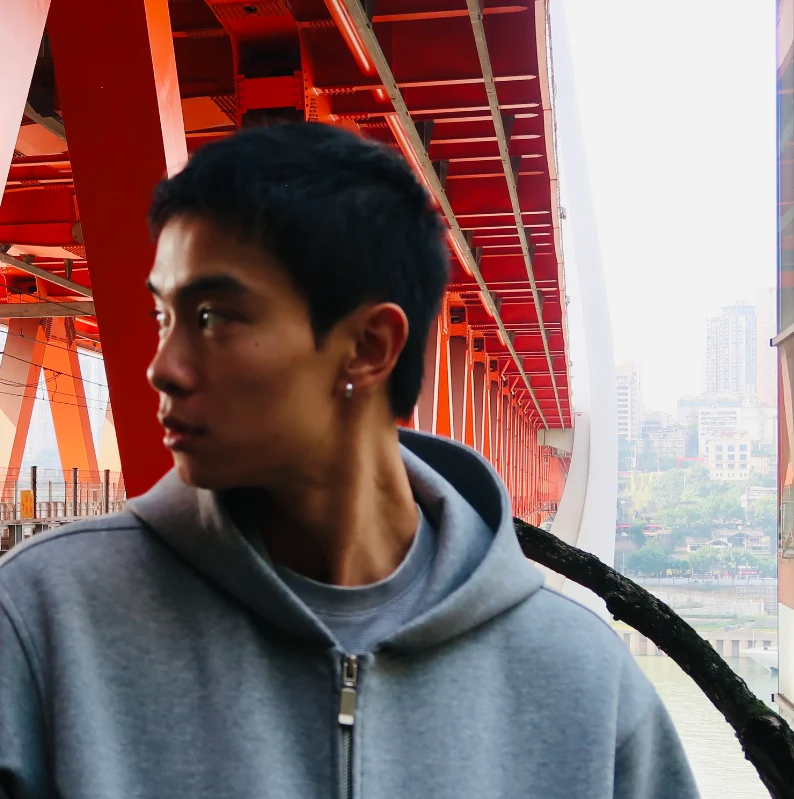
Image: Film director Zefan | Source: zefanwang.com
There are young filmmakers who arrive with style, and young filmmakers who arrive with themes. Zefan Wang arrives with something rarer and harder to fake: a distinct grammar of miscommunication. His films keep circling the problem of not being understood—verbally, visually, emotionally.
That sounds almost too broad until you notice how insistent it is in his work. In Zefan’s films, miscommunication is never simply verbal. It can be memory interfering with the present, or fantasy dressing itself up as conviction. It can be mistranslation, embarrassment, desire and class differences all arriving at once and making a mess of what should have been a plain human exchange.
Born and raised in Ganzhou, China, Zefan studied international economics at Nankai University before completing his MFA in Film at Columbia University. His recent work has received international recognition. Kubrick, Like I Love You won the Bronze Medal in the Narrative category at the 52nd Student Academy Awards, as well as a Special Mention at the 19th FIRST International Film Festival. That early recognition has come with something even more substantial than accolades for a young filmmaker: a body of work that reveals a distinct directorial sensibility and a coherent concern: how communication distorts, malfunctions and breaks down in our everyday experience.
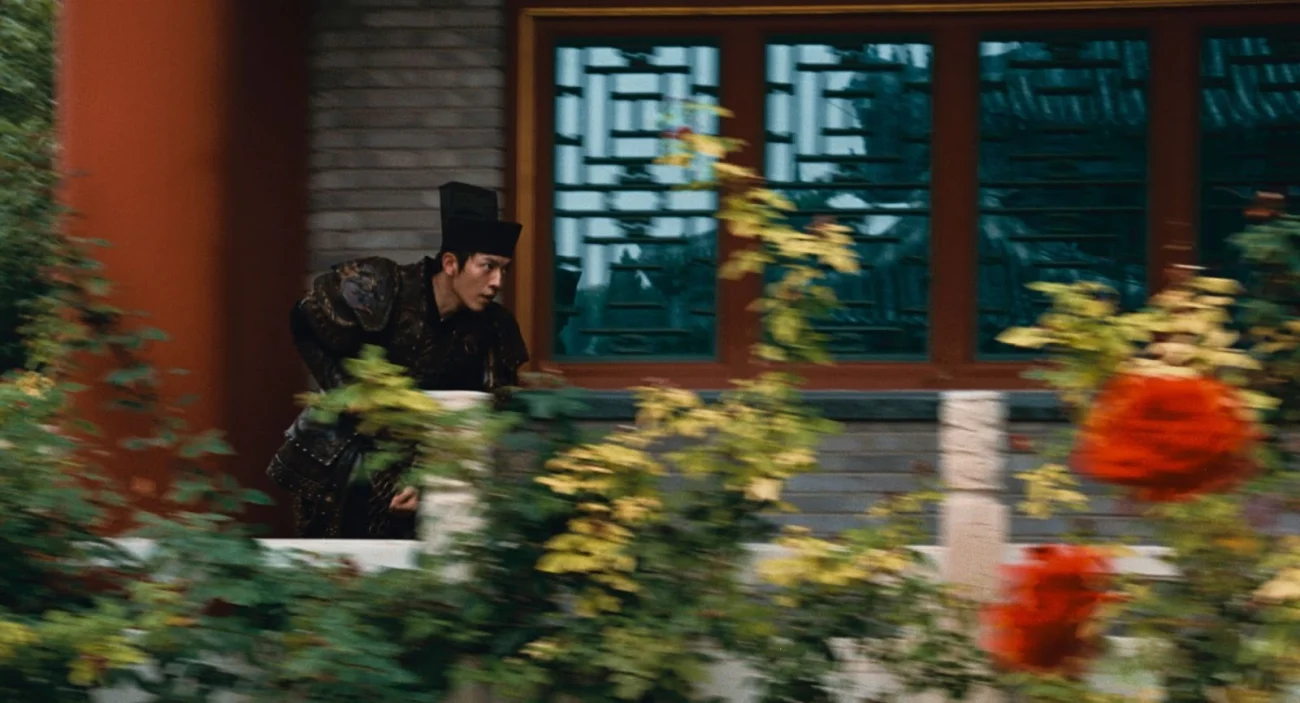
Still from Kubrick, Like I Love You (2025)
That concern is central to Kubrick, Like I Love You. On the surface, the premise is comic: Fei, a young cinephile, horrified that his girlfriend Lou does not know Kubrick, Renoir, Bergman, or Tarkovsky, has decided to break up with her. But his every attempt to move forward is derailed by the memories and fantasies through which he has learned to process his life. His conflict is not just romantic indecision, but an inability to communicate without first filtering reality through mediation, fantasy or even mythology.
And this is where Zefan’s formal instinct comes into play. To demonstrate that voluntary detachment from reality, the film incorporates dynamic formal variations, constantly breaking the fourth wall and jumping across different time and space with a refreshing stylistic playfulness. ShortStick highlights the film’s “confident blend of tones and the formal experimentation” in the form of “rear projection, costume drama fantasy sequences, photo booth freeze-frames, black-and-white confessionals, direct-to-camera dialogue, and a charmingly frank voiceover.” However, the stylistic play in the movie never floats free of the character’s trajectory. It gives form to a consciousness that keeps revising the present while living through the past.
At FIRST, the recognition came with a different emphasis. In the 19th edition of the festival, the jury—chaired by Isabelle Huppert—praised the film’s distinctive and mature cinematic language, noting its “bright rhythm that conceals an edge underneath”, and its movement into “the hidden psychological maze of intimacy”. That pairing of responses feels accurate: the formal assurance and the emotional depth are harmoniously combined under a comedic surface. Here, humor is not used to escape emotional seriousness. Instead, it exposes the protagonist’s vanity and self-deception. Under the inviting surface of a romantic comedy, the film is actually a study of embarrassment, self-mythology, and emotional cowardice. What makes Kubrick, Like I Love You compelling is not simply its comedic elements or formal agility, but how both of these uncover the inner blockage the protagonist cannot articulate—the miscommunication with himself.
The same preoccupation appears in another register in XXX, Mon Amour, Zefan’s 13-minute short that won Best Film in the International Communication Program at the 11th Chongqing Youth Film Festival. The film follows a homesick Chinese drifter in Paris, moving through the city looking for “the best cigarette in town” with a local woman who fetishizes cups. Here the subject matter is more whimsical and the formal experiment more unfettered, combining stock footage and real street interviews conducted by Zefan himself. But the thematic traction is recognizably alike. What emerges is less a diaspora film of alienation than a comedy of connection—misunderstood yet still authentic connection.

Still from XXX, Mon Amour (2024)
Zefan has described filmmaking as a process of closing the gap between “the film in your head and the film you actually got.” For him, communication is not only a subject inside the films; it is also a central question of making them. Directing challenges one to explain elusive ideas and often private vision clearly to collaborators—cinematographers, actors, art directors and more—so that the finished film can come as close as possible to its conception. Working across languages and cultures would only make this challenge sharper. As an international filmmaker, Zefan sees his journey as one of continually searching for better forms of communication—literal, professional, and artistic—and continuing to learn from the inevitable gaps in between.
That may be why communication in Zefan’s films is never only linguistic: he realizes it is inherent in every aspect of filmmaking. It is visual, social and emotional. His background—moving from economics into filmmaking and working across languages and cultural contexts—seems to have sharpened this particular attention of his to different systems of exchange. People in his films, as well as the films themselves, are always withholding, negotiating and translating: with others, with audiences and with themselves.
Though he is early in his career, Zefan’s films already share a distinct internal logic. They don’t feel like a young director merely trying on different styles. They are anchored by a recurring friction that feels genuinely his: the basic need to be understood, and the complex, often clumsy ways we manage to complicate it.
In a film culture that often rewards instant readability, Zefan is drawn to what gets misspoken, mistranslated, or only partially understood. That is where his films begin to feel most like their own: in the gap between inner experience and its imperfect yet resonant arrival in the world.
Author:
Liam Atkins is an independent journalist who explores contemporary art, cinema, and visual culture.