33 Years Ago, a BBC Horror Documentary Caused Mass PTSD — and Was Banned as a Result

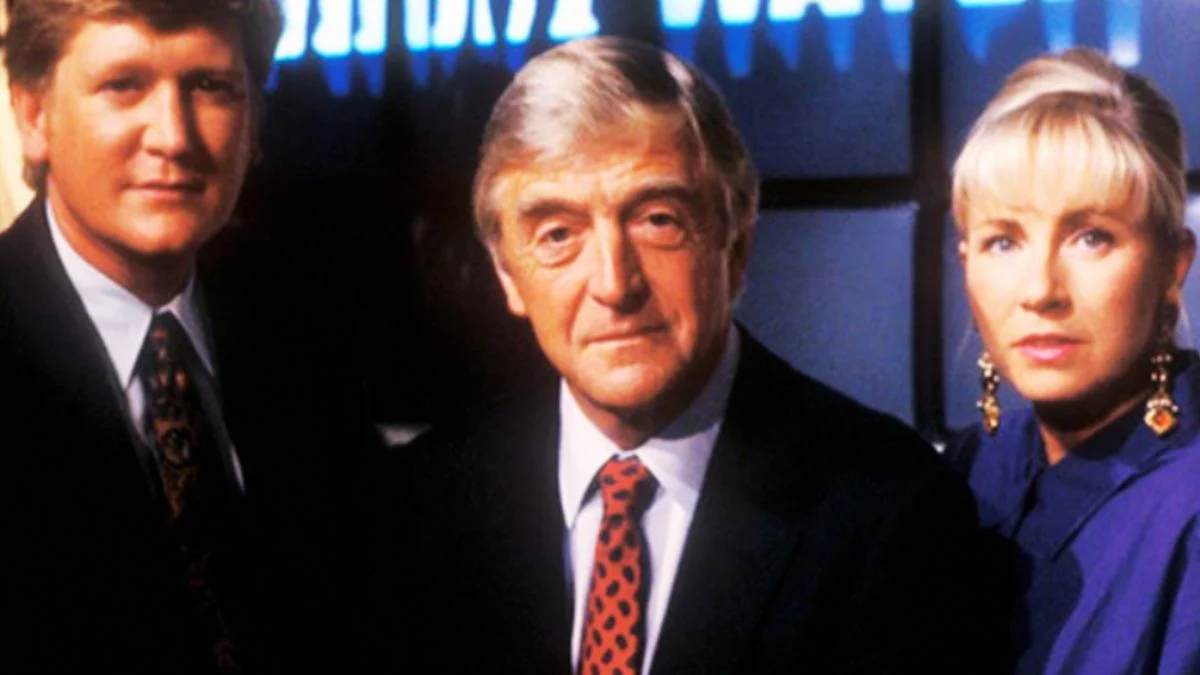

In 1992, the BBC aired a Halloween special that would go down as one of the most shocking moments in British television. The program was called Ghostwatch, a fake documentary about a haunting in a suburban house.
It looked so real that many viewers believed they were watching an actual live broadcast. What followed was chaos, panic, outrage, and even claims of psychological trauma.
The show was written by Stephen Volk and directed by Lesley Manning. It was part of the BBC’s drama series Screen One, but it was presented as a live event, supposedly investigating strange ghost activity in a London home.
Well-known TV personalities like Michael Parkinson, Sarah Greene, Mike Smith, and Craig Charles appeared as themselves, which only made the illusion stronger. Many people didn’t realize it was pre-recorded and completely fictional. When strange things started happening on screen, objects moving, children screaming, and presenters being attacked, viewers thought it was real.
That night, the BBC received an estimated one million phone calls. Some people called to complain, while others just wanted to know what was happening. Newspapers the next day accused the BBC of scaring the nation. The outrage was compared to the panic caused by Orson Welles’ 1938 radio play The War of the Worlds, which had also fooled listeners into thinking an alien invasion was happening.
One of the biggest criticisms was that familiar presenters, especially Sarah Greene from children’s TV, made parents think the show was safe for kids. It wasn’t. Near the end, Greene’s character gets trapped in a dark cupboard while a ghost howls nearby, and Parkinson appears to be possessed on live television.
Many viewers were deeply disturbed. Some even claimed the BBC had gone too far by trying to trick people.
The controversy didn’t end there. A tragic story followed the broadcast. An 18-year-old factory worker named Martin Denham took his own life five days after watching Ghostwatch.
His family said he was frightened by the show and couldn’t separate fiction from reality. In his note, he wrote, “If there are ghosts, I will be with you always as a ghost.” His parents blamed the BBC, saying he had been “hypnotized and obsessed” by what he saw. The Broadcasting Standards Commission later ruled that the BBC had a duty to make it clearer that the show was not real. They said the program was too distressing and too graphic for the time it aired.
Doctors even reported cases of children developing symptoms of post-traumatic stress disorder after watching Ghostwatch. In 1994, two child psychiatrists, Simons and Silveira, published a report in the British Medical Journal about two boys who suffered anxiety and nightmares after the broadcast.
They said these were the first recorded cases of PTSD caused by a television show. More reports followed, though later studies said most of the children’s symptoms were short-lived.
Because of the public reaction, Ghostwatch was never shown again on British television. The BBC quietly put it away, almost pretending it had never happened. But over time, it gained a kind of cult status.
The British Film Institute released it on video and DVD years later, and it even appeared on streaming services like Shudder in 2017. In 2022, a 30th anniversary Blu-ray came out with a new documentary called Do You Believe in Ghosts?
The show’s influence didn’t disappear either. Stephen Volk once said that illusionist Derren Brown told him Ghostwatch had inspired his own controversial show Séance. Volk said, “I’m very proud that he rates the show I wrote.” Fans have also noticed similarities between Ghostwatch and later horror classics like The Blair Witch Project and the 2020 online horror film Host.
Volk himself later wrote a short story called 31/10, a sequel about returning to the haunted studio ten years later. It won several award nominations and kept the Ghostwatch legend alive.
More than thirty years later, Ghostwatch is remembered not just as a TV drama, but as a warning about how powerful television can be. What was meant to be a Halloween thrill turned into a national trauma, and it showed that sometimes, pretending can be more dangerous than the real thing.
Have something to add? Let us know in the comments!