‘Hell’s Paradise’: Elemental Attributes Explained!

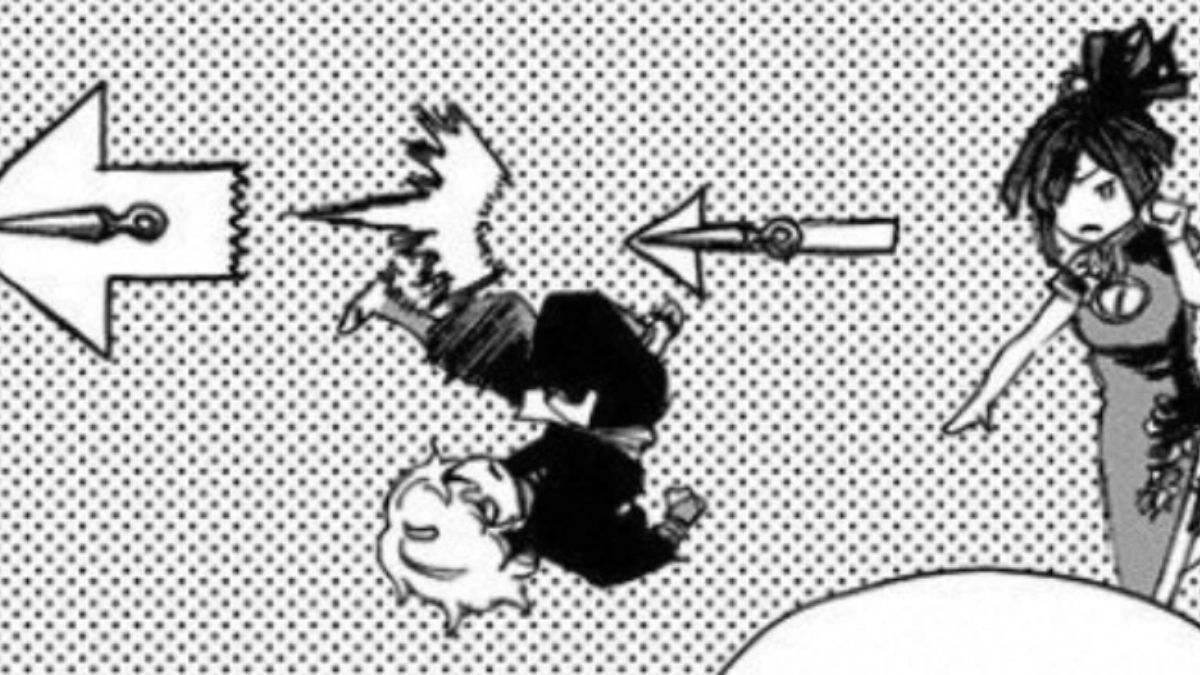

Seeing how the Hell’s Paradise series is truly one of the season’s biggest hits, we have decided to dedicate yet another article to the wonderful world of this manga and reveal some additional information about one of the major concepts of the series – the Tao system. But, this article is not going to be related directly to the concept of Tao but rather to a component of the Tao system that has to do with the five-element system. These five elements form the basis of each character’s elemental attribute, which is actually just a manifestation of a character’s Tao. In this article, we will explain everything about the elemental attributes, as they will be quite important later in the story when the usage of Tao becomes more common.
The Tao system of power in Hell’s Paradise also encompasses a system based on the five main elements – Earth, Wind, Water, Fire, and Metal (or Gold). These five elements are the basis for determining a character’s elemental attribute. These attributes are important for the flow of a battle, as they actually influence the fighters’ Tao upon contact, either by replenishing it and making it stronger (Sōsei), or by draining and weakening it (Sōkoku).
The rest of this article will focus on the five elements that are part of the larger Tao system and their role in the overall lore of Hell’s Paradise, as well as the importance of this component for the story of the manga and, especially, the battles portrayed in it. The five elements are an essential part of the Tao system and, with it, the story and its fights, as they enabled many characters to become much stronger, which is why we will tell you everything you need to know. Be careful, though, as the article will be filled with spoilers.
The five elements are closely related to Tao in Hell’s Paradise
Before explaining everything, let us give you a short introduction. First of all, we want to say that elemental attributes might be an enigma to you at this moment, but trust us – they’ll become crucial. In fact, if you’ve ever read anything about the characters of Hell’s Paradise, you’ve probably noticed that each of them does have an elemental attribute, although you probably did not understand what that meant at the time. Well, first of all, we have to say that the five elements are closely related to the concept of Tao in the series.
In the series, Tao is the name of the life force energy that is present in living and non-living things, regardless of their origin. Everything in the world has Tao, but not everyone can use it. The process of learning and mastering Tao is quite difficult, but if a person manages to do it, they will gain god-like powers and abilities. This is why Tao is going to be quite important in the future of the series, especially its fights when the protagonists start facing off against the Tensen.
The five elements are actually a segment of Tao in Hell’s Paradise. It is actually based on the real-world concept of Wuxing in Taoism. The Five Elements Theory is actually a theory for describing nature. The five-element theory describes laws according to which dynamic transformation processes (changes) in the realm of life take place. The five elements – wood, fire, earth, metal, and water – as building blocks of the human organism are derived directly from nature. Their (abstract) properties allow conclusions to be drawn about the relationships between earth, man, and heaven within these spheres.
The five elements represent phases of change in processes or action qualities. They are, therefore, not elements in the sense of components but rather aspects of a dynamic process that is experienced as cyclical and is usually represented in a circle divided into five in a clockwise direction. However, the idea of organic processes as cyclic does not mean a constant, monotonous repetition but also includes an evolution (usually thought of as linear in the West): each run of the cyclic process changes the starting point for the following run.
The changing phases in the process are often illustrated by the sequence of the seasons: water is at the bottom as a dormant starting point and an essential part of every dynamic that corresponds to winter. Wood follows as a preparatory, expanding phase (early) spring. Fire is the culmination of the actual action; it stands for summer. Earth stands for the changing aspect that brings about evolution in the cyclical process (such as metamorphosis towards fruiting) and late summer. Metal concentrates and structures the action. This ensures the effect of the action, according to the autumn maturation. This is followed by the resting phase (water).
The five-element cycle is, as you can deduce for yourselves, one of the most important concepts in Taoist philosophy. It works similarly in Hell’s Paradise. The five elements are actually related to each other, and how they interact with each other influences the flow of the battle. Each element has one element it works with well and another it doesn’t work that well with. Based on that compatibility, when an elemental affinity comes into contact with another one, it will either make the other one stronger or replenished (this process is called Sōsei), or it will make the other weaker (called Sōkoku). The relationships between the elements are as follows:
- Wood (木, Moku, Pinyin: Mù) strengthens Fire and weakens Earth.
- Fire (火, Ka, Pinyin: Huǒ) strengthens Earth and weakens Metal.
- Earth (土, Do, Pinyin: Tǔ) strengthens Metal and weakens Water.
- Metal (金, Kin, Pinyin: Jīn) strengthens Water and weakens Wood.
- Water (水, Sui, Pinyin: Shuǐ) strengthens Wood and weakens Fire.
The cycles are quite easy to activate, as you only have to be in contact with a person for your elements to interact. For example, although Fuchi is not able to perceive Tao as the other characters, he is still able to use his Metal Tao when he is near Tōma, because Tōma’s Earth Tao strengthens Metal Tao. In the case of the Tensen, the Tao can be strengthened through a special art of lovemaking.
Before we end this article, here is a list of characters with known elemental attributes:
| Wood | Rokurota, Yamada Asaemon Sagiri, Yamada Asaemon Shion, Tao Fa, Yui, Yamada Asaemon Eizen, |
| Fire | Gabimaru, Tamiya Gantetsusai, Ju Fa, Yamada Asaemon Tenza, |
| Earth | Mu Dan, Rien, Aza Toma, Yuzuriha, Iwagakure chief, Yamada Asaemon Jikka, Yamada Asaemon Kisho, |
| Metal | Yamada Asaemon Fuchi, Aza Chobei, Gui Fa, Hoko, |
| Water | Yamada Asaemon Isuzu, Mei, Nurugai, Ran, Yamada Asaemon Shugen, Zhu Jin, Yamada Asaemon Tensa |
And that is the gist of it here. As we’ve said, all of this might seem abstract at this moment as the series hasn’t really explored this segment too much yet, but we know that the elemental attributes are going to become extremely important, which is why we have written this to prepare you for the whole experience.