Jujutsu Kaisen: What Is Marimekko & What Does It Have To Do With Gojo’s Shirt?


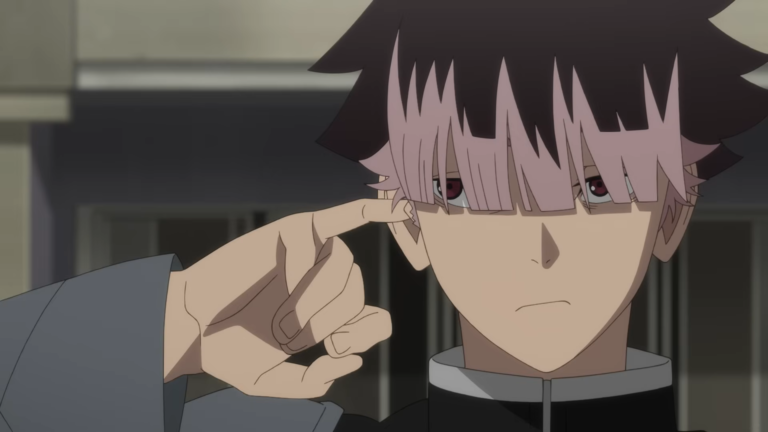
Gege Akutami, the author of Jujutsu Kaisen, is known for putting in a lot of pop-culture references in his magnum opus, a lot of which are, of course, related to contemporary culture. We’ve already talked about the OPP, Digimon, and Momotetsu references here on Fiction Horizon, but the most recent episode – amidst all the fighting – still managed to squeeze in a pop culture reference during a brief flashback scene involving Yuji, Megumi, and Nobara. Nobara was the one who mentioned Marimekko when she observed Gojo’s shirt, but what is Marimekko, and what does it have to do with Gojo’s shirt in the first place? Keep reading to find out!
It all started when Nobara ruined a shirt
While we know that the Shibuya Incident Arc is focused on fighting, the arc has also provided us with a significant amount of background information and some pretty nice flashback scenes. The most recent episode showed us a scene with Nobara, Megumi, and Yuji, who were together drinking coffee and waiting for their mentor – Satoru Gojo – to come and meet them. This scene is relevant to this article’s story, so we will tell you what happened there in the series.
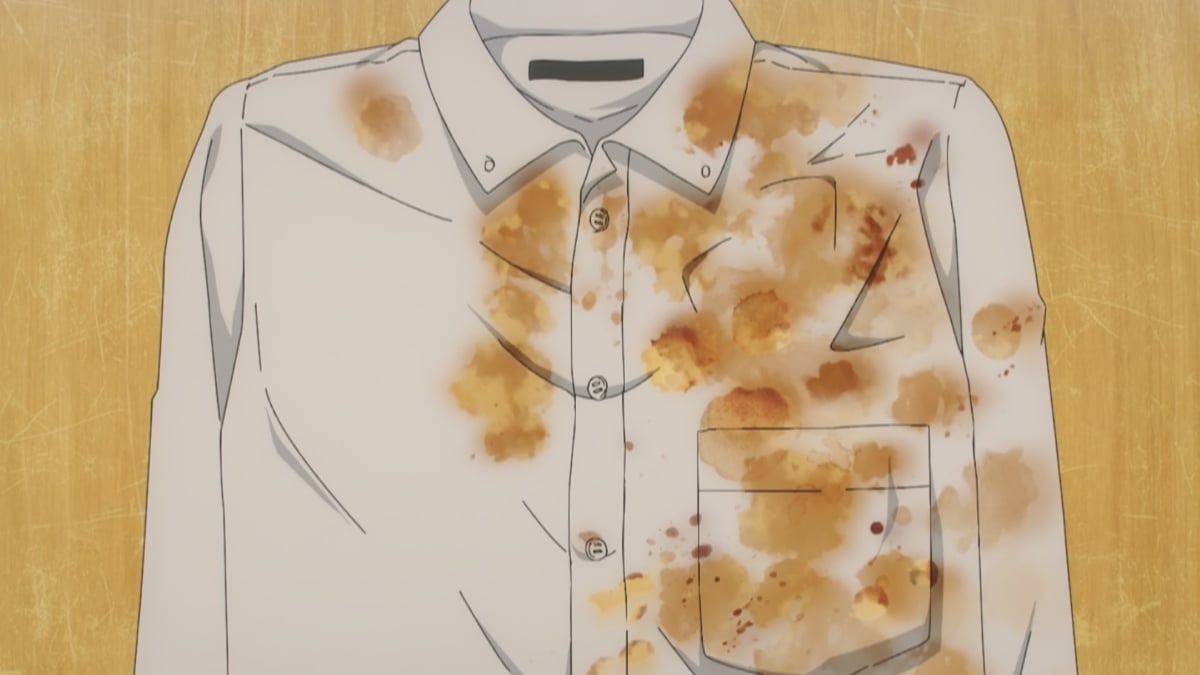
So, while they’re waiting for Gojo, we find out that Ichiji left one of Gojo’s shirts with them; it was a new, freshly cleaned shirt that they had to give to Gojo, who was going to meet them at the coffee shop. But Nobara accidentally spilled her coffee all over Gojo’s white shirt, so you can imagine how horrible it was in the end. Sure, Nobara tried to get away with it by claiming that Ijichi was more to blame for leaving the shirt with them in the first place, but neither Yuji nor Megumi supported her at that moment.
They then proceeded to “clean” it, but they only made things worse, as the coffee stain was just dispersed to other places. Nobara then claimed that it was probably a cheap shirt, comparing the spotted print to a marimekko. Megumi then proceeded to check the price, and once they found out it cost an incredible 250,000 Yen (around $1,700), they were shocked. Nobara tried to make Yuji and Megumi pay for the shirt alongside her (she would give 90,000, and the two of them 80,000 each), but then Gojo arrived, and was shocked to see what became of his shirt.
And that is the whole story. The plot then switched back to Shibuya, and we were left with a major question – what is a marimekko?
Marimekko is a fashion company
Well, we have already said that Akutami likes to include pop culture references in his work (OPP, Digimon, etc.), and Marimekko is actually one such reference. So, what is Marimekko really?
Marimekko is the name of a Finnish fashion company that sells clothing and household goods of its own design, primarily in company-owned stores. The Marimekko company was founded in 1951 by Armi and Viljo Ratia. The company was significantly influenced by the designer Maija Isola, who worked at Marimekko for four decades.
The aim is to halve the carbon dioxide emissions of production. Alongside that, the other proclaimed goals are: design of timeless, durable, functional products; inspiration and engagement from customers and employees; promote responsible practices in the supply chain; resource efficiency and environmental protection; and offering inspiring and responsible workplaces. The shops are characterized by their simple design.
A special feature of Marimekko is that the design changes from year to year but is always based on the same basic principles: T-shirts (which are always available in a long-sleeved version) typically have two-tone horizontal stripes, and the unisex shirts have two-tone vertical stripes. There are only a few color combinations each year. Large floral motifs, but with simple color combinations, are often a typical annual design. Marimekko’s design also stands out for its simplicity in all other areas. Marimekko’s design became particularly famous in the 1960s and 70s.
Have something to add? Let us know in the comments below!