Top 10 Coolest Things About Ash Ketchum



Ash Ketchum is the long-running protagonist of the ‘Pokémon’ anime, introduced as a rookie Trainer from Pallet Town who sets out to travel, catch Pokémon, and compete in regional competitions. Across decades of storytelling, he visits multiple regions, challenges Gym Leaders and conferences, and grows his roster with partners that reflect the mechanics and species introduced in each generation of the games. His journey connects to key pillars of the franchise: exploration, battling, friendship with Pokémon, and structured competition.
Over time, Ash’s milestones include earning Gym Badges in several regions, winning tournaments, and taking on special facilities like the Battle Frontier. He becomes the first Champion of the Alola League and later achieves the title of Monarch in the Pokémon World Coronation Series, which is the anime’s global ranking circuit for Trainers. Alongside those competitive achievements, the series documents how he meets companions, studies new battle styles, and adapts to new phenomena such as Mega Evolution, Z-Moves, and Dynamaxing.
A Journey Through Every Major Region

From his start in Kanto, Ash travels through Johto, Hoenn, Sinnoh, Unova, Kalos, Alola, and Galar, plus side locales like the Orange Islands and the Battle Frontier. Each move to a new region introduces him—and viewers—to newly discovered Pokémon species, regional variants, and local competitive structures such as Gym systems, leagues, and special trials. The series uses these moves to showcase regional ecosystems and customs, including contests, trials on Akala and Ula’ula, and the World Coronation Series battles held at venues tied to Galar.
As new game mechanics enter the franchise, Ash encounters them as regional features rather than isolated gimmicks. In Kalos he works with Key Stones and Mega Evolution, in Alola he learns Z-Moves and island trials instead of Gyms, and in Galar he competes under the World Coronation Series while encountering Dynamax and Gigantamax battles. This structure allows the anime to align with each generation’s ruleset and to integrate those systems into his training methods and match strategies.
Championship Hardware and Historic Titles

Ash becomes Orange League Champion after completing the Orange Archipelago challenges, which differ from standard Gym battles by emphasizing unique tasks and rule sets. Later, after traveling and training across multiple regions, he clears the Battle Frontier challenge in Kanto by defeating Frontier Brains who use specialized facilities and battle formats, earning the Frontier Symbols that mark that accomplishment.
His later career adds two landmark competitive results. In Alola, he wins the region’s first official Pokémon League at the Manalo Conference. In the World Coronation Series, he rises through a global ranking ladder, enters the Masters Eight, and defeats top-ranked Trainers to become the Monarch, a title presented in the anime as the world champion status within that circuit.
A Partner Bonded From Day One: Pikachu

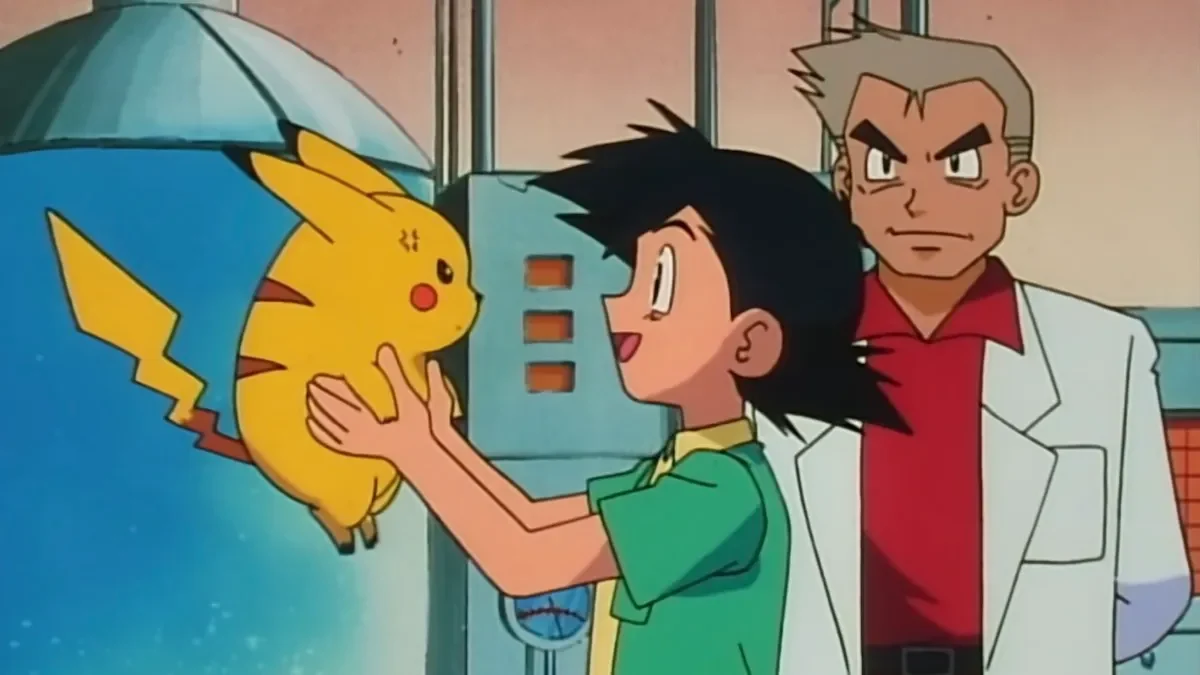
Ash’s first Pokémon is Pikachu, obtained from Professor Oak after he oversleeps on the day Starter Pokémon are assigned. Pikachu initially resists Poké Balls and formal training but quickly becomes Ash’s constant partner in travel and battle. Over the years, Pikachu’s core moveset evolves—commonly featuring Thunderbolt, Quick Attack, and Iron Tail—and adapts to new strategies like using Electro Web for positioning and defense.
Pikachu also participates in region-specific mechanics alongside Ash’s other Pokémon. In Alola, Pikachu performs Z-Moves such as the high-powered 10,000,000 Volt Thunderbolt under Ash’s direction. In Galar, Pikachu experiences Dynamax-related battles as part of Ash’s World Coronation Series run, appearing in matches that highlight how the anime integrates game mechanics into televised competition formats.
Creative Battle Tactics With Real Competitive Payoff

Ash’s battles emphasize improvisation and environment use. He develops techniques such as ordering his Pokémon to spin to redirect projectiles, leveraging terrain—water, ice, rock formations—for mobility, and creating feints that exploit line-of-sight and timing. One widely referenced tactic is the “Counter Shield,” in which a Pokémon spins while emitting a move like Thunderbolt to create a defensive, contact-disrupting field that doubles as chip damage.
He also trains type-unfavorable matchups to prepare for tournament randomness. Notable examples include victories achieved by exploiting secondary typings, status timing, or field effects rather than relying solely on type advantage. This approach appears throughout conferences and facility challenges, showing how the anime models competitive adaptability, move synergy, and stamina management across multi-round events.
A Deep and Varied Pokémon Roster

Ash’s teams reflect each region’s biodiversity and mechanics. Early standouts include Butterfree, Pidgeot, Snorlax, and Charizard; later rosters add powerhouses like Sceptile, Infernape, Greninja, and Lycanroc. In the World Coronation Series arc, he fields Dragonite, Gengar, Lucario, Sirfetch’d, Dracovish, and Pikachu, a lineup built to cover multiple roles—from setup and speed control to bulky offense and utility.
Some partners are tied to special phenomena unique to the anime. Ash’s Greninja exhibits the “Bond Phenomenon,” a form change linked to synchronization in battle. Lucario develops Aura mastery that culminates in Mega Evolution when Ash acquires the necessary Key Stone and Lucarionite. Gengar demonstrates Gigantamax capability, and Lycanroc’s Midnight and Dusk forms highlight regional evolution pathways introduced during the Alola storyline.
Learning From—and With—Traveling Companions

Across regions, Ash travels with companions who contribute skills tied to local culture and battle specialties. Misty and Brock provide early guidance on Water- and Rock-type strategies and general fieldcraft. May and Dawn introduce him to Contest-style performance and movement, which later inform techniques like spins and coordinated move execution during battles.
In later journeys, companions such as Iris and Cilan add Dragon-type expertise and tasting-based battle analysis, while Serena, Clemont, and Bonnie bring Kalos-specific technology and performance training into the mix. In Alola, classmates like Kiawe, Sophocles, Mallow, and Lillie represent the region’s school-based approach to learning, and in the World Coronation Series era, Goh and Chloe help connect research-focused exploration with ranked battling and regional travel logistics.
Respectful Goodbyes and Responsible Releases
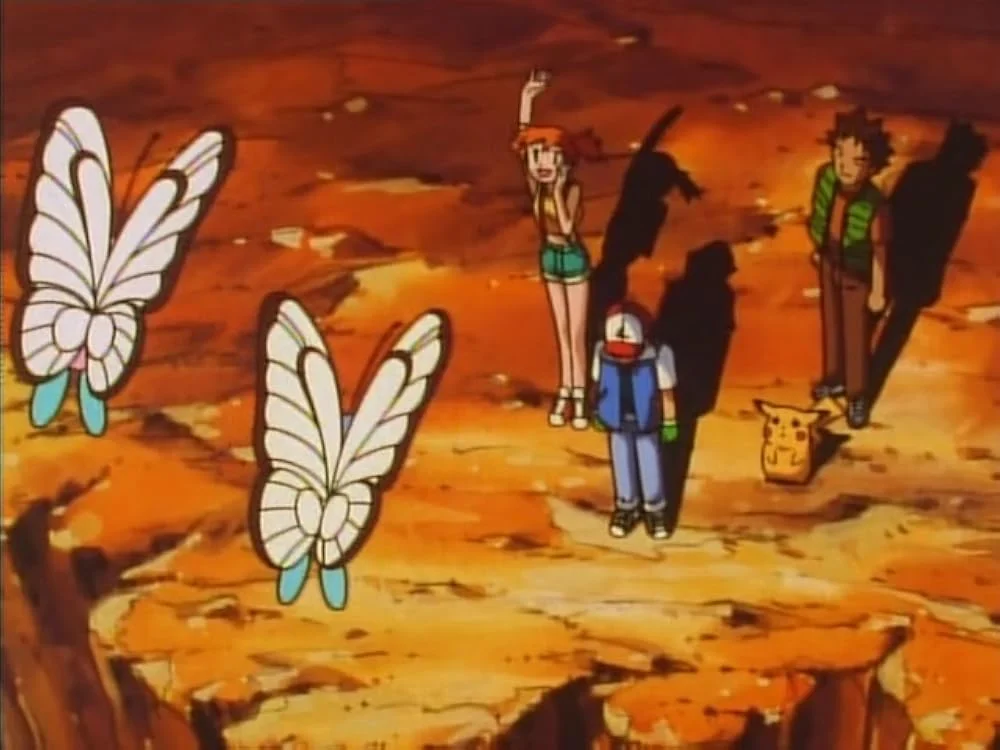
The anime documents several instances where Ash parts ways with Pokémon for reasons tied to their growth or well-being. Butterfree is released to join its mate after a migration event, Lapras returns to its herd after serving as primary water transport through the Orange Islands, and Pidgeot remains to protect a local flock. Goodra returns to its wetland habitat to defend it, and Greninja stays behind to address a regional threat tied to invasive vines.
Other separations occur through training arrangements and long-term development. Charizard spends extended time at the Charicific Valley to increase its strength before rejoining Ash in later arcs. Primeape leaves to train under a specialized coach, and the anime revisits several of these Pokémon in guest appearances or flashbacks to show progression, confirming that departures are incorporated into continuity rather than treated as closed endings.
Recognizing and Adopting New Game Mechanics
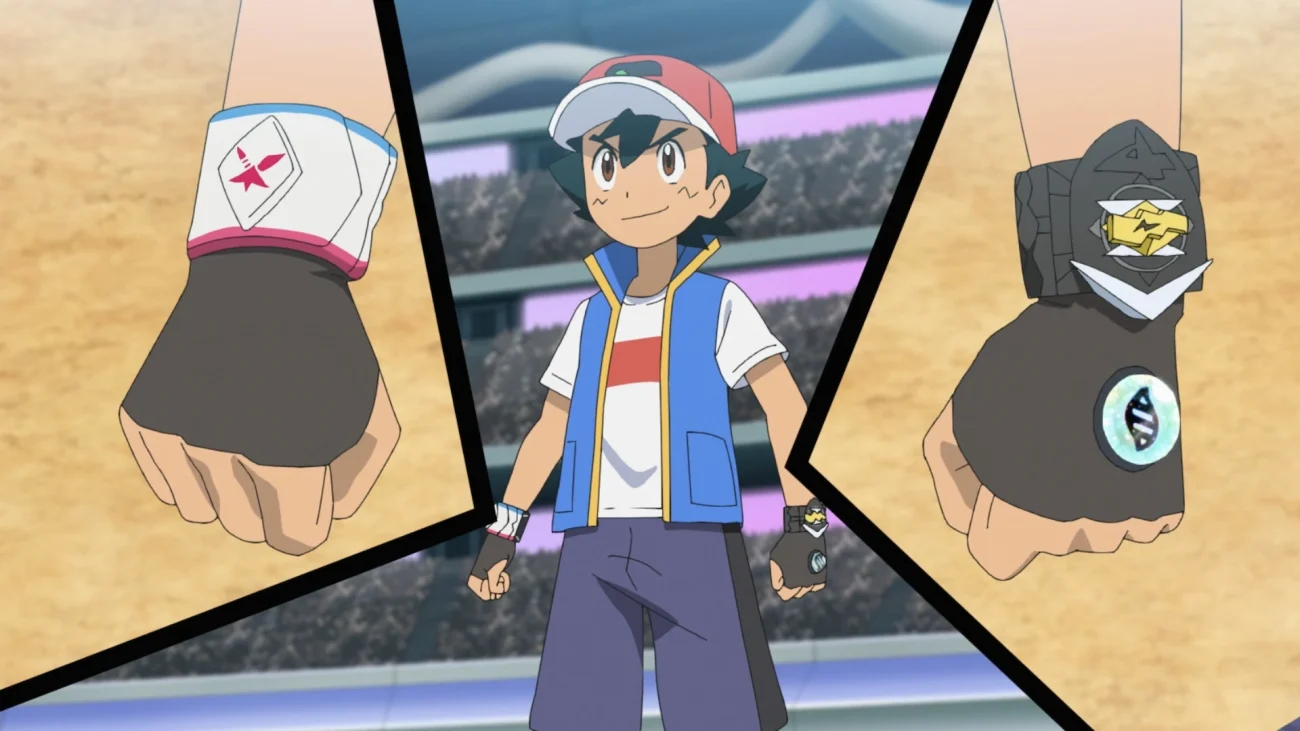
Ash’s training logs mirror the franchise’s mechanical timeline. In Kalos, he acquires a Key Stone and partners with Lucario to unlock Mega Evolution, integrating Mega-related strategy like move chaining and resilience management. In Alola, he learns Z-Move execution through dance-like poses and Z-Crystals, coordinating timing and move amplification with partners such as Pikachu and Lycanroc.
During the Galar-focused arc, Ash participates in battles where Dynamax and Gigantamax are permitted under competition rules, leading to matches that involve Max Moves and stadium-scale presentation. The anime uses these mechanics to adjust pacing and tactics—Max Moves alter weather or terrain, Z-Moves deliver single-turn power spikes, and Mega Evolution reconfigures stat distribution mid-battle—so Ash must select the appropriate system based on the opponent and format.
From Local Badges to Global Ranking: The World Coronation Series
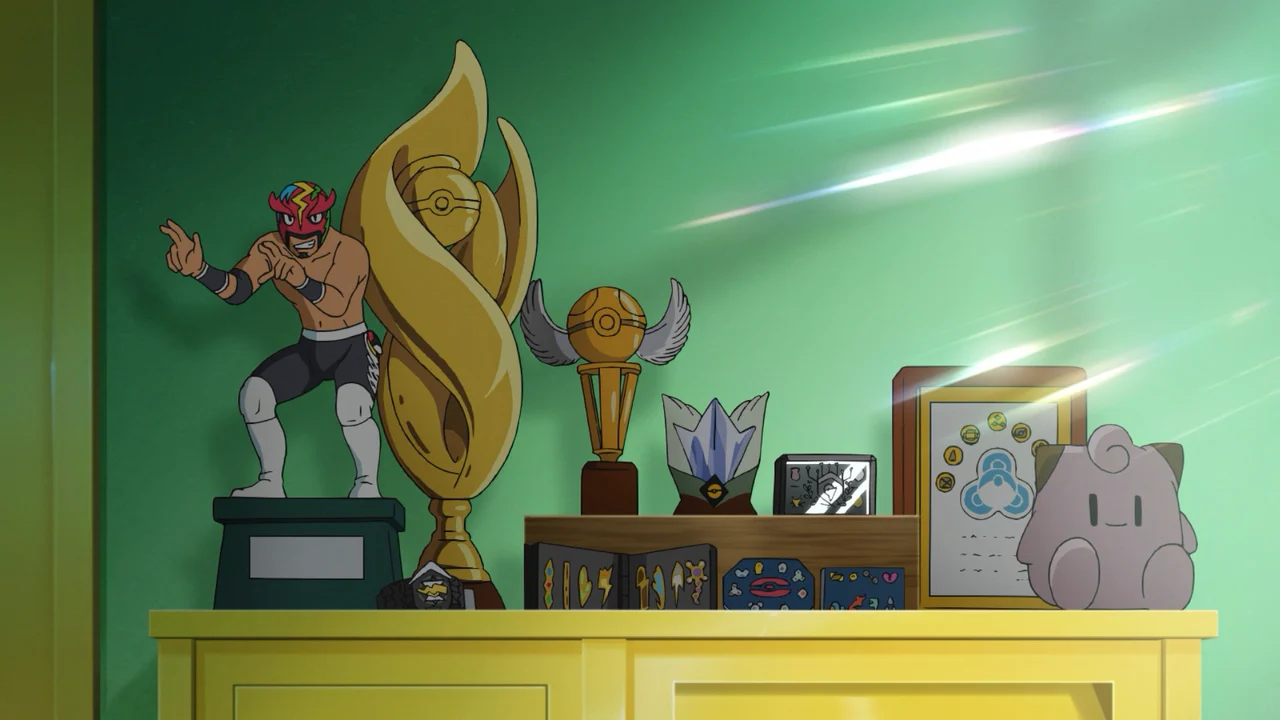
To enter the Masters Eight, Ash competes in official World Coronation Series matches that raise his ranking across tiers such as Normal, Great, and Ultra Class. These sanctioned battles occur in various regions and are officiated with standardized rules that allow cross-regional mechanics when permitted by the host venue. Progress is tracked numerically, creating a season-long arc that connects one-off episodes into a ladder-climb narrative.
In the final stages, he faces and defeats Elite Four–level and Champion-caliber opponents to qualify for the Masters Eight bracket. The tournament culminates in a final match where he secures the Monarch title, establishing him within the anime as the top-ranked Trainer in that global system. The arc functions as a capstone assessment of his multi-region experience, team-building decisions, and integration of different power-up systems.
Voice Acting, Naming, and Character Design Details
Ash is voiced in Japanese by Rika Matsumoto, with notable English-language portrayals by Veronica Taylor and Sarah Natochenny across different eras of the dub. His Japanese name, Satoshi, references Satoshi Tajiri, the creator of the original games, linking the character’s identity to the franchise’s origin. These casting and naming choices anchor the character in the broader creative history of ‘Pokémon’.
His visual design evolves subtly between regions. Hat designs change per arc, often matching the current games’ branding; the jacket, gloves, and backpack shift to reflect regional climates and athletic motifs; and his Pokédex model updates as new generations debut. The anime also uses recurring props—like the cap and the Poké Ball belt—to maintain continuity as he moves through different art styles and animation pipelines connected to new seasons of ‘Pokémon’.
Share your favorite Ash Ketchum milestone in the comments!