‘The Terror: Devil in Silver’ Draws Its Horror From Real American Failures, Not a Single Historical Event

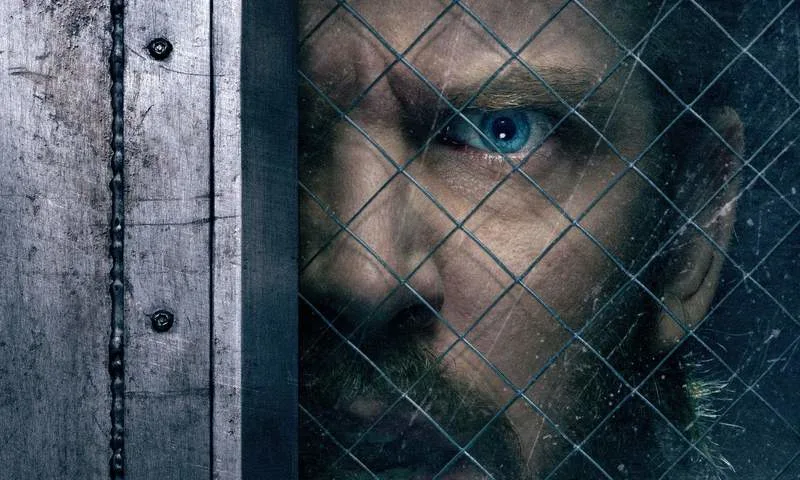

The question of whether ‘The Terror’ is grounded in reality has followed this anthology series since its debut. For two seasons, AMC leaned firmly on documented history, using real tragedies as the bones of each story before layering in the supernatural. With the third season, subtitled ‘Devil in Silver’, the answer is more complicated and arguably more unsettling.
The Terror returns to AMC+ and Shudder with a six-episode season adapting Victor LaValle’s novel, ‘The Devil in Silver’, with Dan Stevens leading the story as Pepper, a blue-collar man who finds himself committed to the fictional New Hyde Psychiatric Hospital through a combination of bad luck and one hell of a temper. Unlike its predecessors, this installment is not reconstructing a moment from the history books. But that does not make it any less real.
The Terror Anthology’s Historical Roots
The first season of ‘The Terror’ is based on the real-life events of Captain John Franklin and his ill-fated 1840s voyage to explore the Northwest Passage, a journey from which he and his crew would never return. The series is based on a novel by Dan Simmons published in 2007 of the same name, which formed the basis of the events of the first season.
Each standalone season explores a different historical period and narrative, with the first a depiction of Captain Sir John Franklin’s expedition to the arctic in the 1800s and the second set in an internment camp for Japanese Americans during WWII. That structure gave the franchise a specific identity, one that audiences and critics came to expect. Grounded tragedy plus supernatural amplification.
‘Devil in Silver’ returns to the series’ literary roots, drawing on Victor LaValle’s 2012 novel of the same name, with LaValle serving as showrunner alongside Halt and Catch Fire’s Chris Cantwell. This marks a meaningful shift, but the thematic DNA of the franchise remains entirely intact.
Victor LaValle’s Novel and Its Personal Origins
Based on author Victor LaValle’s novel, ‘Devil in Silver’ is one part supernatural thriller, one part full-throated condemnation of the American mental health industry’s worst failings, and one part character study. A horror story populated by monsters both human and otherwise, it is thoroughly unsettling in more ways than one.
What grounds the fiction in something palpably real is the book’s origin. According to LaValle, the book began with a personal incident. Someone close to him was committed to a mental hospital in New York. On his first visit he found that person tied to the bed with restraints. On the second visit, the same. On the third visit, when they were alone, he asked when the staff took the restraints off. The person looked exhausted and said they never did. The plot lines and characters did not come to LaValle until 2010, but the seed of the novel was planted that day.
LaValle himself has described the project as being rooted in a lifetime of dealing with family members facing mental health issues and neurodivergence, and watching them be rarely helped by a system he describes as “busted,” while still loving those people because they were his family. That emotional weight informs every scene of the adaptation.
The American Mental Healthcare System as the True Horror
New Hyde Hospital, as depicted in the show, is understaffed, overcrowded, and low on funding. Its patients, who are often the most vulnerable and marginalized, are left isolated and trapped in a system that fails those both inside and outside of it. This portrait is not invented for dramatic effect.
LaValle’s source novel also directly references the real death of Esmin Green at King’s County Hospital in Brooklyn in 2008, as well as the mistreatment of public citizens by the NYPD, and the sometimes tense race relations in New York City. Those real-world anchors give the fiction a hard, factual edge.
Co-showrunner Chris Cantwell has noted that the show’s supporting characters each carry real diagnoses, and that it was important to the production not to generalize mental illness. In his words, they are real neurodivergent people, and the cast researched neurodivergence, carrying individualized diagnoses and medication regimens into their performances. That level of research pulls the horror away from abstraction and toward something recognizable.
What the Show Invents and What It Reflects
Pepper, the central character, is a working-class man from Queens who finds himself unexpectedly committed to the fictional New Hyde Psychiatric Hospital after the police who arrest him are too lazy to fill out the paperwork to book him properly. As he slips through a series of horrifying cracks in the medical and legal systems meant to protect the most vulnerable, he becomes trapped in a world that is frightening enough without the threat of the mysterious dark force lurking behind a silver door.
This marks ‘The Terror’s’ first contemporary plotline after two previous seasons set against the backdrops of the 19th century and World War II, respectively, with Emmy Award nominee Karyn Kusama directing the first two episodes. The move into the present day is significant. It implies that the horror being depicted is not safely confined to history.
The oppressive and abusive nature of psychiatric hospitals as depicted in ‘Devil in Silver’ fearlessly embraces the invasive horrors of these institutions in order to tell an unnerving new story that depicts a very visceral, timely side of terror that, in some respects, is the most disturbing of the anthology series’ three seasons. The supernatural entity lurking behind the silver door is terrifying, but the show makes clear that the institution itself is the more enduring monster.
If you have been following ‘The Terror: Devil in Silver’ and find the systemic horror hitting harder than the supernatural scares, share your thoughts on how LaValle’s vision of the American mental healthcare system lands for you in the comments.